Your Brand Is Being Talked About Right Now – Are You Listening?
Reputation monitoring software is a category of tools that tracks what people say about your business online – across review sites, social media, news outlets, search engines, and even AI tools like ChatGPT – and alerts you in real time so you can act fast.
Here’s a quick summary of what reputation monitoring software does:
| Feature | What It Does |
|---|---|
| Brand mention tracking | Finds every time your business name appears online |
| Sentiment analysis | Classifies mentions as positive, neutral, or negative |
| Real-time alerts | Notifies you the moment a new review or mention appears |
| Multi-channel coverage | Monitors Google, social media, review sites, news, and AI search |
| Competitor tracking | Shows how your reputation compares to competitors |
| Crisis detection | Flags sudden spikes in negative sentiment before they escalate |
Think of it as a 24/7 watchdog for your brand’s online image.
Every day, potential customers search your business name on Google, read your reviews on Yelp or Google Maps, and – increasingly – ask AI tools like ChatGPT where they should go. What those platforms say about you shapes whether a customer picks up the phone or clicks away.
The problem? Most small business owners have no idea what’s being said. A bad review sits unanswered for weeks. A negative autocomplete suggestion silently drives customers away. A Wikipedia edit changes your founding date and feeds the wrong information into AI answers.
That’s a real business problem – and it’s exactly what reputation monitoring software is designed to solve.
Without active monitoring, you’re flying blind. With it, you’re in control of the narrative.
I’m Bernadette King, founder of King Digital Marketing Agency, and I’ve spent years helping franchise owners and local businesses use reputation monitoring software to turn their online presence from a liability into a competitive advantage. In this guide, I’ll walk you through the best tools available in 2026, what to look for, and how to choose the right fit for your business.
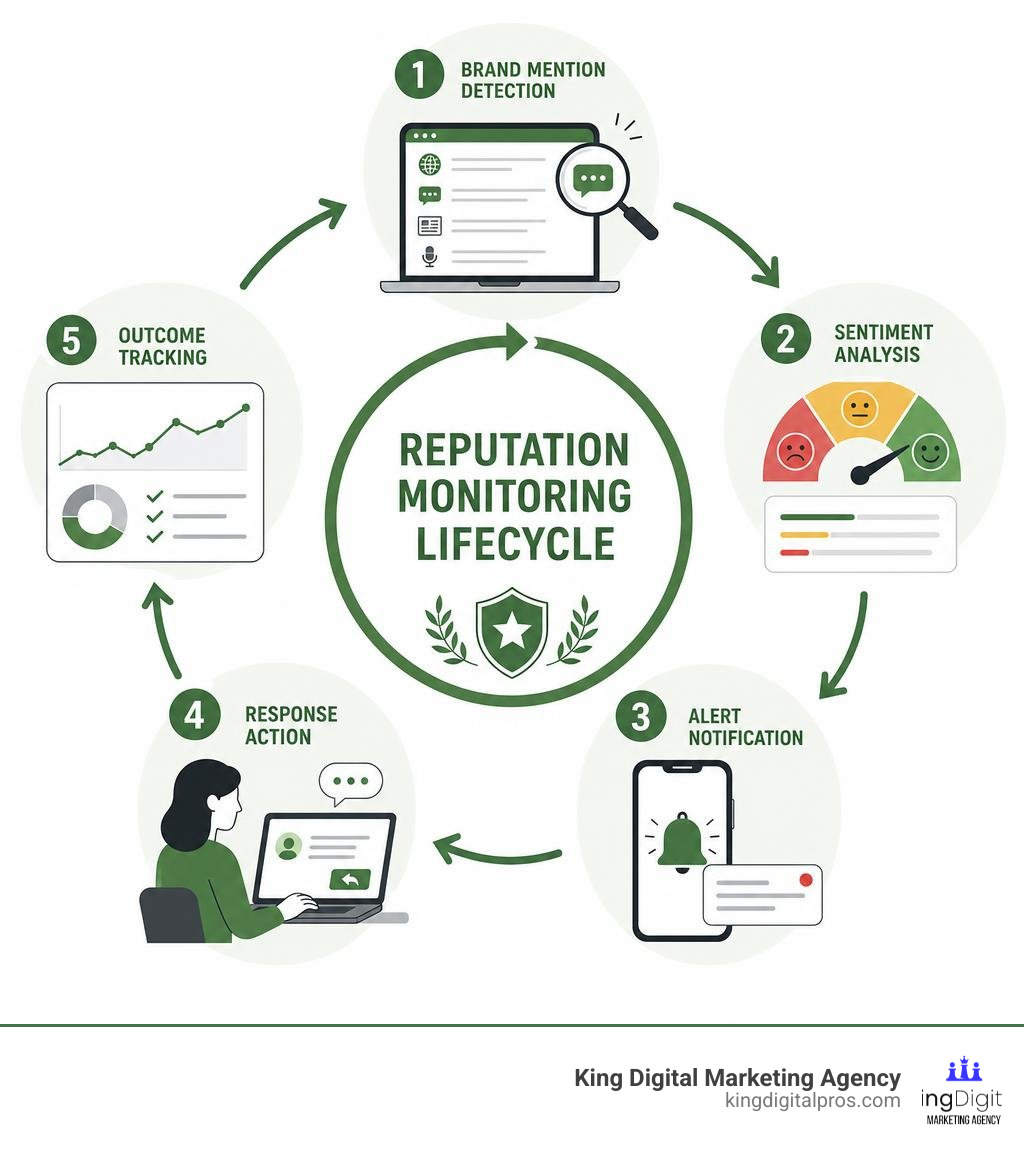
Reputation monitoring software terms made easy:
What is Reputation Monitoring Software and How Does It Work?
At its core, reputation monitoring software works by acting as a digital vacuum cleaner. It constantly sweeps the internet – scanning blogs, forums, social networks, review sites, and news articles – looking for specific keywords associated with your business. These keywords typically include your brand name, product names, key executives, and even your closest competitors.
Once the software detects a brand mention, it doesn’t just send you a raw link. It processes that mention using a natural language processing (NLP) engine to perform sentiment analysis. The AI evaluates the context and tone of the text, immediately classifying it as positive, neutral, or negative.
If the software spots a negative mention or a sudden drop in sentiment, it triggers real-time alerts. This ensures that instead of discovering a customer complaint three weeks late, your team is notified within minutes. If you want to dive deeper into building a solid monitoring routine, check out our guide on How to Master Brand Reputation Monitoring Without Losing Your Mind.
Modern platforms like AI-Powered Reputation Monitoring have taken this a step further by monitoring non-traditional channels. They track Google Autocomplete suggestions (flagging terms like “scam” or “lawsuit” next to your name) and keep tabs on Wikipedia edits, which directly feed into Google’s Knowledge Panels and voice assistants.
Key Features of Modern Reputation Monitoring Software
When you’re shopping for reputation monitoring software, you’ll find that basic tools simply scrape the web, while advanced platforms offer a complete operating system for your brand’s digital presence.
The best platforms rely on several core features:
- Omnichannel Tracking: The ability to gather mentions from diverse sources, including social platforms, online reviews, podcasts, and video descriptions, in a single dashboard.
- Advanced NLP Engines: AI that understands sarcasm, industry jargon, and multi-lingual reviews so you get accurate sentiment classification without manual sorting.
- Automated Tagging and Classification: The software automatically categorizes incoming feedback by topic (e.g., “customer service,” “product bug,” or “pricing”) so the right team can address it.
- Review Generation and Survey Triggers: Tools that don’t just monitor existing reviews, but actively help you request new, positive feedback from happy clients.
To see how these features come together in a complete business strategy, read our Online Reputation Management Systems Complete Guide.
Traditional Social Listening vs. Dedicated Reputation Software
Many businesses make the mistake of using traditional social listening tools and assuming their reputation is covered. While there is some overlap, the two serve entirely different purposes.
Traditional social listening tools focus on marketing analytics. They tell you how many people are talking about a topic, track broad industry trends, and calculate your share of voice. They are great for high-level research, but they fall short when you need to take immediate action on a specific customer issue.
Dedicated reputation monitoring software is operational. It doesn’t just track data; it provides built-in ticketing systems, Service Level Agreement (SLA) tracking, and structured escalation workflows. For example, platforms like the Product Overview | Aiplex Bridge Reputation Management Platform allow enterprise teams to assign incoming negative mentions to specific support agents, enforce response deadlines, and require manager approval before a reply goes live.
The Business Benefits of Active Brand Tracking
Investing in reputation monitoring software isn’t just about avoiding bad press; it’s a direct driver of business growth. When you actively track your brand, you build a foundation of trust that makes it easier to close sales and retain customers.

In 2026, online credibility is your strongest currency. According to industry data, businesses that actively manage their online feedback see massive returns. For example, some organizations have improved their brand reputation scores by up to 20% simply by using tracking tools to understand and respond to user sentiment. Others have successfully managed major rebrands, finding that tracking response data in real time allowed them to maintain a 94% positive public perception throughout the transition.
Active tracking also provides a major boost to your local search presence. To understand why this is so critical for smaller organizations, explore Why Online Business Reviews Matter for SMBs in 2026.
Crisis Detection and Mitigation
A brand crisis rarely starts as a massive news story. It usually begins with a single unanswered social media post, a localized product glitch, or an unhappy customer review that slowly gains traction.
With reputation monitoring software, you establish an early-warning system. Advanced anomaly detection algorithms monitor your baseline volume of mentions. If there is a sudden spike in negative sentiment, the system immediately flags it.
Using tools like Your brand’s online reputation, under control, you can calculate a real-time risk index. The software can even generate prioritized action plans and pre-formatted removal drafts if a high-authority site publishes false information about your business. This allows your public relations team to step in and resolve the issue before a minor hiccup turns into a full-blown viral crisis.
Improving Customer Engagement and Response Times
When customers leave feedback online, they expect a fast response. A delayed reply signals to the public that you don’t care about your customer experience.
By unifying all reviews and direct messages into a single inbox, reputation monitoring software eliminates the need to log into dozens of different websites daily. Your team can respond to Google reviews, Facebook comments, and app store feedback from one screen.
This streamlined workflow dramatically reduces response times, often keeping them under the critical 24-hour mark. Fast, personalized responses show prospective buyers that you are attentive and engaged, which directly builds brand loyalty. For a step-by-step approach to managing these interactions, see our guide on Customer Feedback Simplified: A Guide to Managed Review Response.
Key Channels Covered by Modern Monitoring Platforms
Your digital footprint is spread across a massive web of platforms. If you are only monitoring Google and Facebook, you are missing a huge portion of the conversation.

Modern reputation monitoring software must cover a diverse range of channels to be effective. Developers and SaaS companies, for example, rely on tools like Social Media Monitoring Features & Brand Monitoring to track developer-heavy spaces like GitHub, Hacker News, Reddit, and Stack Overflow, alongside mainstream channels like LinkedIn, YouTube, and podcasts.
Review Sites and Local Search Directories
For local businesses operating in New Mexico – whether you are a medical practice in Santa Fe, an HVAC company in Rio Rancho, or a retail shop in Albuquerque – local search directories are your lifeblood.
Your Google Business Profile, Yelp listings, and industry-specific directories (like TripAdvisor or Healthgrades) are often the very first things potential local customers see. If you have negative, unanswered reviews sitting on your Google Maps listing, your local search rankings will suffer.
Using dedicated tools to monitor these directories ensures that you never miss a local review. If you want to dominate your local market, mastering these map listings is essential. Learn how to optimize your presence with our guide on Mastering Google Maps Review Management for Local Businesses.
AI Search Engines and Generative Discovery
The way people find businesses has fundamentally changed. In 2026, consumers aren’t just searching on Google; they are asking AI platforms like ChatGPT, Gemini, Perplexity, and Claude for recommendations.
This shift has created a new field known as Generative Engine Optimization (GEO). If ChatGPT tells a user that your business has “mixed reviews” or “frequent customer service complaints,” you lose that customer before they ever visit your website.
Modern reputation monitoring software tracks how AI models describe your brand. Because these AI engines pull their data from Wikipedia, major news outlets, and structured review sites, monitoring these root sources is the only way to ensure the AI speaks highly of your business.
Strategic Implementation and Software Selection
Choosing the right software requires balancing your operational needs with your budget. The market offers everything from affordable, single-user tools to enterprise-level platforms.
To help you understand the landscape, here is a breakdown of the pricing and capabilities of some of the top reputation systems available:
| Platform | Starting Price | Best For | Key Capabilities |
|---|---|---|---|
| Mention.com | ~$49/month | Startups & Small Teams | App brand mentions, social media tracking |
| AppFollow | ~$55/month | Mobile App Businesses | App store review management, translation tools |
| Reputation.com | ~$99/month | Mid-Market Brands | Local listings, review management, sentiment metrics |
| AppTweak | ~$99/month | App Marketers | ASO, ad insights, app store monitoring |
| Brand24 | ~$149/month | Growing Businesses | Keyword tracking, mention volume, sentiment analysis |
| Statusbrew | ~$179/month | Social Teams | Shared inbox, team collaboration, basic workflows |
| Sprout Social | ~$249/user/month | Agencies & Social Teams | Social publishing, unified inbox, listening tools |
| Birdeye | ~$299/location/month | Multi-Location Brands | Reviews AI, Listings AI, local messaging tools |
For advice on navigating these options without overspending, check out our resource on How to Choose Online Reputation Management Packages Without Breaking the Bank.
How to Choose the Right Reputation Monitoring Software
When selecting your software, don’t just look at the price tag. Consider how the tool fits your specific business structure.
If you manage a franchise with locations across Albuquerque, Corrales, and Los Alamos, you need a platform built for multi-location brands. Tools like Reputation Management Tools for Multi-Location Brands are designed to aggregate data from multiple physical locations while giving local managers the ability to respond to their own reviews.
Ensure the software offers the right level of API access so you can export your data if needed, and check whether it supports the specific review platforms that matter most to your industry.
Integrating Reputation Monitoring Software with Your Tech Stack
Your reputation software shouldn’t exist on an island. To maximize its value, integrate it with the tools your team already uses every day.
- CRM Integration: Connect your monitoring tool to platforms like Salesforce or HubSpot. If a customer leaves a 1-star review, their CRM profile should update automatically, alerting their account manager to reach out.
- Helpdesk Integration: Route negative reviews directly into support systems like Zendesk or Freshdesk as support tickets, ensuring they are resolved using your standard customer service workflows.
- Slack & Teams Alerts: Push real-time alerts for high-risk negative mentions directly into your team’s communication channels so your PR or support teams can coordinate instantly.
To learn how to streamline these processes and save time, read The Lazy Person’s Guide to Automated Review Management.
Frequently Asked Questions About Reputation Monitoring
What is the difference between brand monitoring and reputation monitoring?
While they sound similar, they have different scopes and actions. Brand monitoring is a broad practice that tracks any mention of your company online to help with marketing and SEO. Reputation monitoring is highly focused on trust, credibility, and sentiment. It includes operational workflows to respond to feedback, resolve customer complaints, and actively shape public perception.
How does AI improve the accuracy of sentiment analysis?
Older sentiment analysis tools relied on simple keyword matching (e.g., classifying any post with the word “good” as positive). Modern AI uses Natural Language Processing (NLP) to understand context, sarcasm, and sentence structure. This means the software can tell the difference between “This product is good” and “Oh great, another delayed shipment, just good,” leading to highly accurate automated sorting.
Can reputation monitoring software help remove negative search results?
The software itself cannot delete content from third-party websites, but it gives you the tools to take action. Some modern platforms generate automated, AI-powered removal drafts based on terms of service violations (such as spam or fake reviews) that you can submit to Google or Yelp. For legitimate complaints, the software helps you resolve the issue with the customer, which often prompts them to update or delete their negative review.
Conclusion
In 2026, your online reputation is too important to leave to chance. Whether you are running a local business in Santa Fe, Rio Rancho, or Albuquerque, staying on top of what customers and AI search engines are saying about you is critical for survival and growth.
At King Digital Marketing Agency, we specialize in helping local businesses claim their space online. We focus on optimizing your Google Business Profile and managing your map listings to ensure your business stands out in local searches. Let us help you turn your customer feedback into a powerful engine for local visibility.
Ready to take control of your online presence? Explore our Review Management Services today, and let’s make sure your brand’s reputation is squeaky clean.
