Why Every Business Needs Feedback Tracking Software in 2026
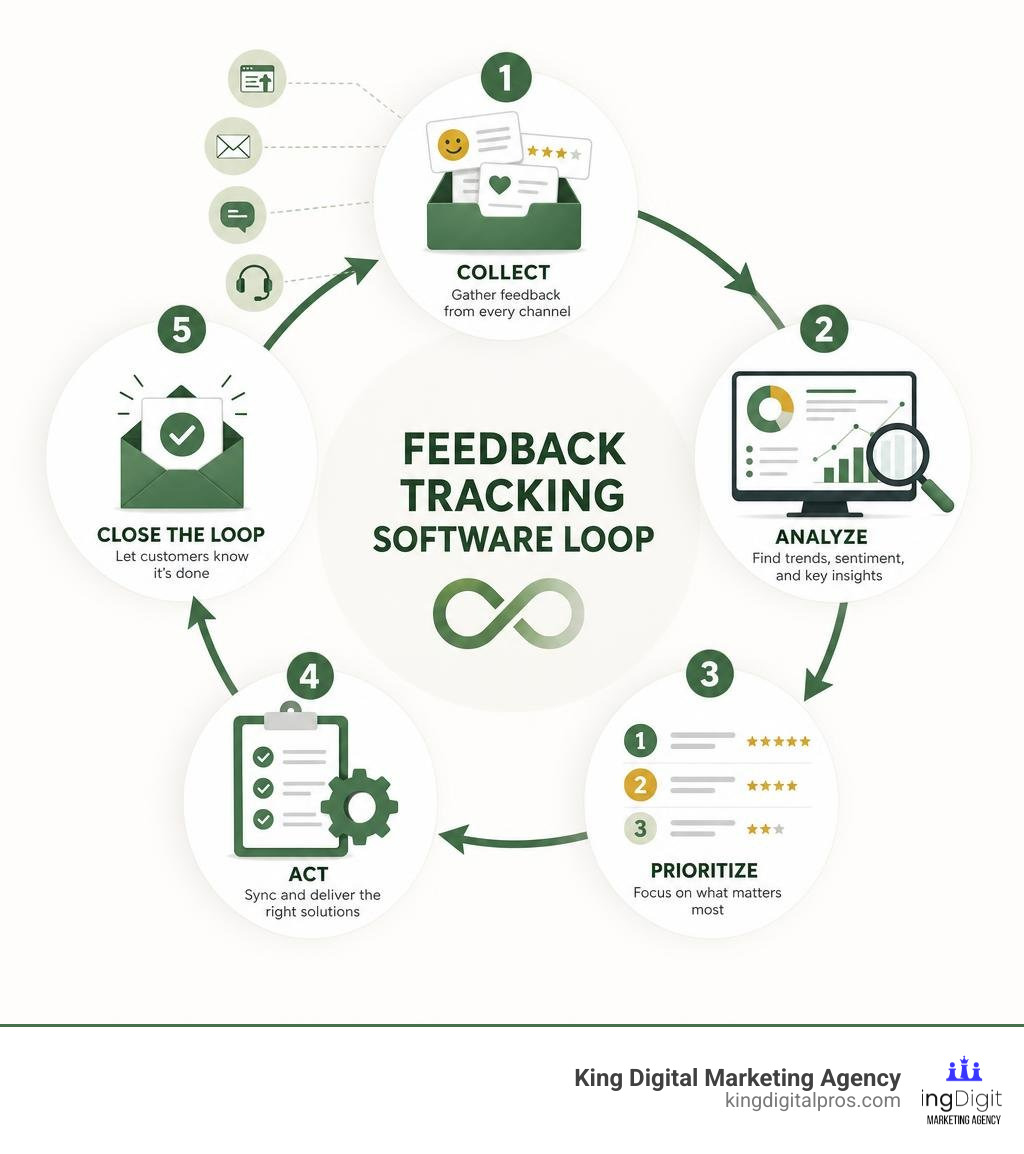
Feedback tracking software is a dedicated platform that collects, organizes, analyzes, and acts on customer input – from feature requests and bug reports to surveys and support conversations – all in one place.
Quick answer: What does feedback tracking software do?
| Function | What It Means for You |
|---|---|
| Collect | Captures feedback from surveys, widgets, email, chat, and support tickets |
| Organize | Centralizes all input into one searchable inbox |
| Analyze | Uses AI to detect sentiment, spot trends, and group similar requests |
| Prioritize | Ranks issues by volume, revenue impact, and customer segment |
| Act | Syncs to tools like Jira, Slack, and HubSpot to move work forward |
| Close the loop | Notifies customers when their request ships |
Most businesses are losing valuable customer insight every single day. Feedback arrives in emails, Slack messages, support tickets, and sales calls – scattered across tools, read by different people, and almost never connected to a product decision.
The result? Teams spend 40+ hours a month manually reading and tagging feedback instead of building. Customers with the same problem look like 30 separate issues instead of one loud signal. And the features that actually matter to revenue get buried under whoever shouted loudest.
That is not a workflow problem. It is a visibility problem.
Modern feedback tracking platforms solve this by replacing spreadsheets and inboxes with a structured system – one where every piece of customer input is automatically scored, categorized, and connected to the people who can act on it.
I’m Bernadette King, founder of King Digital Marketing Agency, where I help local businesses and franchise owners turn customer signals into sustainable growth strategies – and feedback tracking software is one of the most underused tools I see in our clients’ digital stacks. In this guide, I’ll walk you through the best platforms available in 2026, what to look for, and how to choose the right fit for your business.
Learn more about feedback tracking software:
Why Modern Businesses Need Dedicated Feedback Tracking Software
Relying on standard spreadsheets, shared email folders, or basic survey tools to monitor customer sentiment is a recipe for silent churn. When customer opinions are scattered across multiple systems, patterns stay hidden, and critical issues go unnoticed. By the time a customer’s frustration becomes obvious, they have often already decided to leave.
Dedicated feedback tracking software bridges the gap between raw user input and strategic execution. Unlike traditional tools that merely collect responses, modern tracking software acts as a central nervous system for customer evidence. It ensures that every support ticket, sales call, and casual email is preserved, categorized, and translated into actionable tasks.
For businesses operating in competitive local markets – from Albuquerque to Santa Fe and Rio Rancho, NM – managing this input efficiently is vital. Local service providers and SaaS startups alike must keep a pulse on what their users actually experience. To explore how to establish these pathways, check out our comprehensive guide on online feedback solutions.
Without a unified dashboard, your team is susceptible to the “loudest voice bias,” where a single vocal customer dictates your roadmap over the quiet majority. Centralizing this data allows you to make decisions based on concrete volume, sentiment, and revenue impact rather than gut feelings.

Core Features of Modern Feedback Management Platforms
To move away from manual triage chaos, a modern feedback platform must offer a suite of integrated tools designed to capture the entire customer journey. These core capabilities include:
- In-App Widgets & Visual Annotation: Allowing users to submit feedback, report bugs, or request features directly within your application, complete with automatic screenshots and console logs.
- Feature Voting & Public Portals: Giving your user base a transparent space to submit ideas, upvote feature requests, and see what your team is actively planning.
- Centralized Inbox: Consolidating inputs from email, chat, app stores, and social channels into a single, searchable repository.
- Automated Status Workflows: Moving items seamlessly from “Under Review” to “Planned,” “In Progress,” and “Completed” while updating the original contributors automatically.
The table below highlights how different feedback channels perform regarding response times and overall management efficiency:
| Feedback Channel | Collection Method | Typical Triage Time | Actionability Level |
|---|---|---|---|
| In-App Widget | Visual capture & metadata | < 5 minutes (automated) | High (includes technical context) |
| Public Portal | Feature boards & upvotes | < 10 minutes (community moderated) | High (prioritized by demand) |
| Support Tickets | Conversational text | 2-3 hours (manual routing) | Medium (requires context matching) |
| Standard Surveys | Email questionnaires | Days (batch processing) | Low (isolated from delivery workflows) |
AI-Powered Capabilities in Feedback Tracking Software
Artificial Intelligence has transformed feedback management from a tedious administrative task into an automated science. Platforms like FlagUp utilize advanced machine learning to reduce manual feedback work by 85%, saving teams up to 30 hours per week on triage.
AI-driven capabilities include:
- Sentiment Analysis: Automatically scoring every incoming submission as positive, neutral, or negative. This allows customer success teams to quickly identify accounts at risk of churning before they disengage.
- Auto-Categorization: Grouping feedback by topic, feature area, or technical severity. AI engines can cluster thousands of comments into clear, development-ready themes.
- Smart Duplicate Detection: Merging identical feature requests or bug reports automatically. This prevents your backlog from getting bloated and ensures that 30 customers with the same problem are recognized as a single, high-priority signal.
Tools like Kyvvo process customer feedback 10x faster using AI auto-triage, proving that horizontal AI tools like ChatGPT cannot match the efficiency of purpose-built feedback analytics systems.
Integrations with Existing Tech Stacks
Feedback is only useful if it flows directly into the tools your team uses every day. Modern software must act as a bridge between your customer-facing teams and your development pipelines.
By integrating with platforms like Slack, Microsoft Teams, or Discord, your product managers can receive real-time alerts whenever critical feedback is submitted. Bi-directional sync with engineering tools like Jira, GitHub, Linear, or Trello ensures that when a developer closes a ticket, the status is updated on the public roadmap, and the customer is notified.
Furthermore, connecting your feedback tracker to CRM systems like HubSpot (which supports over 288,000 customers globally) or Salesforce allows you to attach customer profile data – such as account value and subscription tier – directly to feature requests. This integration ensures that your sales and customer success teams can easily track opportunities. To understand how to align customer data with sales performance, read our guide on customer feedback management software and explore how to manage leads effectively with lead manager software or a dedicated lead tracker.
How to Prioritize Feature Requests and Close the Feedback Loop
The ultimate challenge in product management isn’t finding ideas – it’s deciding what to build next. Traditional feature voting can sometimes turn into a popularity contest, but sophisticated teams prioritize requests based on business impact.
By linking feedback with CRM data, you can calculate the exact revenue impact of any given feature request. For example, a request with 10 votes from enterprise accounts worth $100,000 in annual recurring revenue (ARR) should easily take priority over a request with 100 votes from free-tier users.
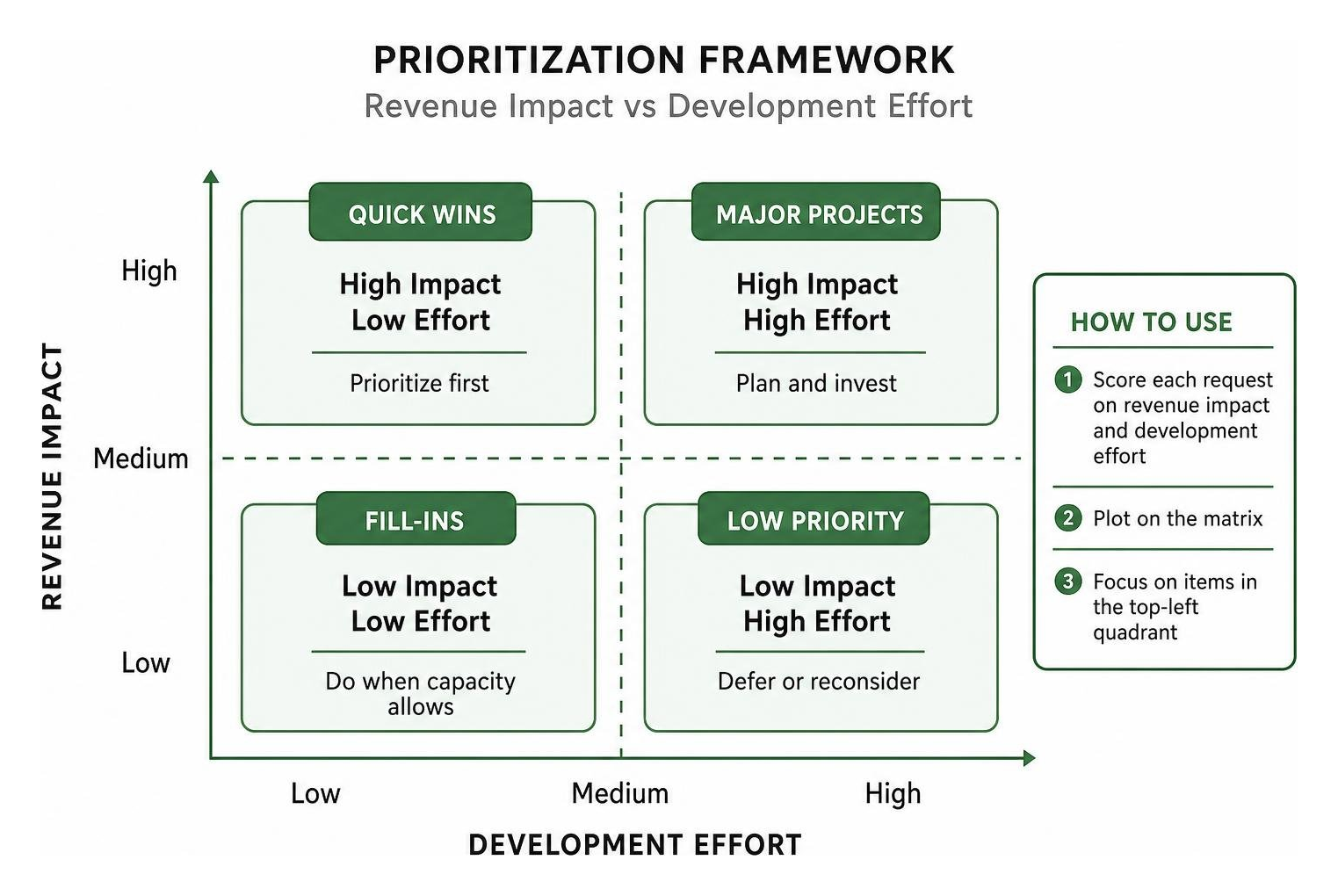
This systematic approach prevents the “loudest voice” bias and aligns your product roadmap directly with business growth.
Closing the Loop with Feedback Tracking Software
Collecting feedback without following up is a fast way to lose customer trust. Closing the feedback loop means letting users know that their voices were heard and that their input directly influenced the product.
Using platforms like ChirpBack, teams can automatically notify every user who voted for or commented on a feature once it has been shipped. This automated system eliminates the need for manual outreach and makes customers feel valued, which can significantly boost retention.
Sharing public roadmaps and interactive changelogs keeps your user community engaged and excited about your product’s evolution. When customers see that their requests are actively being developed and shipped, they are much more likely to remain loyal advocates.
Measuring the ROI of Feedback Management
Investing in specialized feedback tracking software yields clear, measurable returns across several departments:
- Reduced Support Volume: By giving users a transparent way to view known bugs and planned features, companies can deflect duplicate support tickets. For instance, Canny has helped teams reduce inbound support volumes by up to 20%.
- Time Savings: Automation tools save product managers and customer success reps hours of manual work. Userback users report reducing feedback review times from several hours a week to under 10 minutes.
- Optimized Performance: Consistently tracking user sentiment ensures your development team focuses on high-impact updates. This continuous optimization acts like the fine-tuning described in research on performance optimization by LANL, where tracking “good vibrations” and resonance leads to superior structural performance.
- Operational Alignment: Just as local enterprises rely on Managed IT Services in Rio Rancho, New Mexico to keep their digital infrastructure secure and operational, product teams need stable feedback pipelines to keep their development cycles aligned with real-world demand.
Additionally, managing feedback systematically is comparable to how non-profit organizations optimize resources using the best grant management software – it introduces structure, clear accountability, and data-driven prioritization to what is otherwise a chaotic process.
Frequently Asked Questions about Feedback Tracking
What is the difference between feedback tracking software and a standard survey tool?
Standard survey tools are designed to collect answers to specific questions you ask. In contrast, feedback tracking software captures unsolicited signals—such as bug reports, visual annotations, and feature requests—and centralizes them in an actionable inbox. It also provides visual context (like screenshots and session replays) and integrates directly with your development tools to close the loop.
How does feedback tracking improve customer retention?
It prevents silent churn by surfacing negative sentiment and recurring pain points before customers decide to leave. By systematically addressing user issues and notifying customers when their requests are built, you build trust and show users that you value their input.
Is feedback tracking software secure for enterprise data?
Yes. Reputable feedback tracking platforms prioritize enterprise-grade security. They maintain SOC 2 Type II compliance, adhere strictly to GDPR data privacy regulations, and secure all customer data using industry-standard encryption both in transit and at rest.
Conclusion
Implementing the right feedback tracking software is essential for turning customer conversations into strategic growth. By centralizing scattered signals, leveraging AI for smart triage, and closing the loop with automated updates, you can build a more loyal customer base and make confident, data-driven decisions.
At King Digital Marketing Agency, we specialize in optimizing local visibility and managing customer review profiles to help businesses throughout Albuquerque, Rio Rancho, Santa Fe, and surrounding New Mexico communities grow. Just as product teams use feedback trackers to build better software, we help local businesses manage their online reputation and map listings to attract more customers.

Ready to optimize your local reviews and elevate your online presence? Learn how we can help you manage your reputation and dominate local search: Optimize your local reviews with King Digital
