
Dental Web Design That Turns Local Searches Into Appointments
Effective dental web design makes it easy for nearby patients to find your practice, trust your team, and book an appointment from a phone. Start with these essentials:
- Build fast, mobile-first pages for each core service and location.
- Put click-to-call and online scheduling where patients can see them right away.
- Use real team photos, clear provider bios, reviews, and patient-approved treatment results.
- Make insurance, financing, hours, and emergency options simple to find.
- Support local SEO with accurate location information, helpful service content, and structured data.
More than 60% of dental patients book online from mobile devices. Your website is not just a brochure in 2026. It is a local search asset, a trust-building tool, and part of your front-office workflow. It should also protect patient data, work with scheduling and portal tools, and remain accessible to people using screen readers or keyboard navigation.
The right option depends on your goals. A template can be a quick, lower-cost start, while a custom site offers stronger branding, flexible integrations, and more control over speed, SEO, and conversion paths. This guide will help you compare those tradeoffs without getting lost in technical jargon.
I am Bernadette King, a digital marketing strategist who helps small businesses improve search visibility, paid campaigns, and conversion-focused content. My approach to dental web design focuses on practical local growth: helping the right patients find clear information and take the next step.
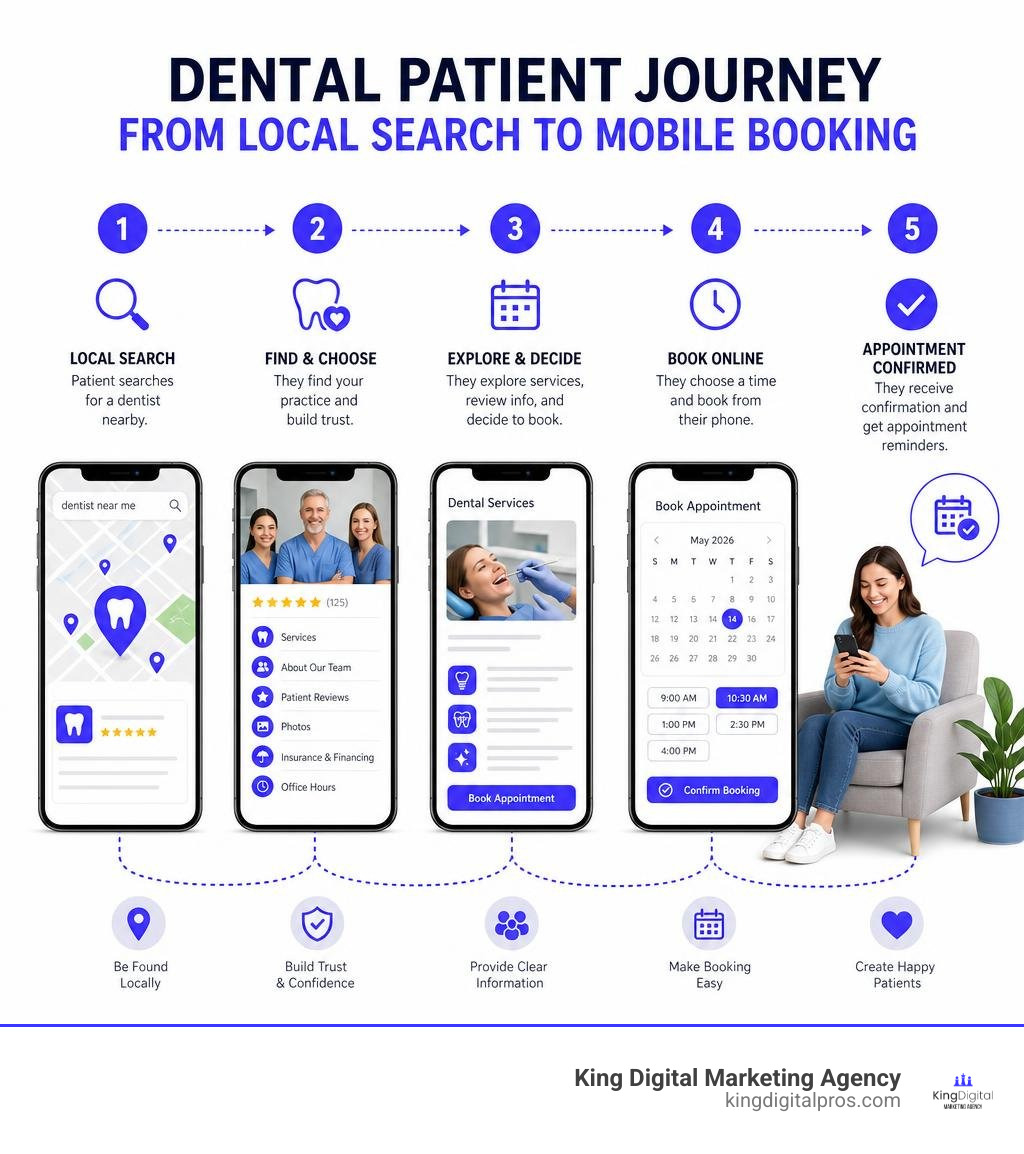
Dental web design terminology:
Core Elements of Modern Dental Web Design That Drive Patient Growth
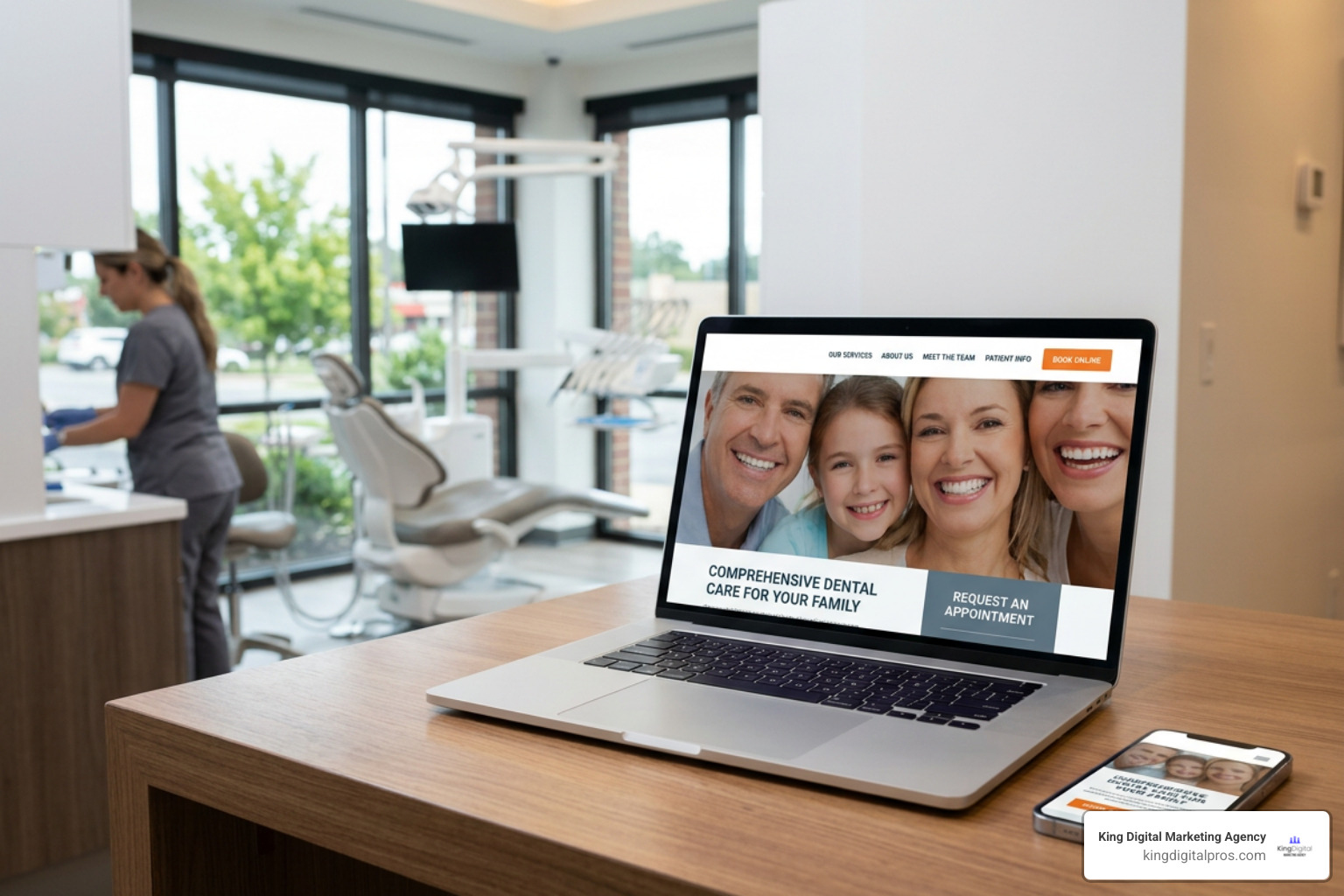
When prospective patients land on your site, they are rarely browsing for leisure. Most are experiencing dental discomfort, seeking to replace missing teeth, or looking for an approachable family dentist nearby. The digital experience must immediately relieve anxiety and provide intuitive pathways to clinical solutions.
To convert casual visitors into booked appointments, your website architecture requires thoughtful assembly. Incorporating the foundational components of high converting websites ensures that visitors find what they need within seconds of arriving.
- Prominent Above-the-Fold Calls-to-Action (CTAs): Direct options to “Schedule Online” or “Call Practice” must remain front and center without requiring scrolling.
- Intuitive Service Taxonomy: Clear categorization separating preventive care, restorative treatments, cosmetic enhancements, and surgical procedures keeps navigation seamless.
- Anxiety-Reducing Aesthetics: Calming palettes (soft blues, warm earth tones, clean whites), open whitespace, and readable typography eliminate visual friction.
- Emergency Care Callouts: Immediate guidance and direct phone links for urgent dental trauma or acute tooth pain.
- Real-Time Trust Anchors: Transparent reviews, clinician credentials, and clear office policies positioned next to booking conversion points.
Custom Dental Web Design vs. Template Solutions
Choosing how to build your digital presence fundamentally impacts long-term patient acquisition and brand equity. While pre-made marketplace templates offer an entry-level starting point, custom and turnkey healthcare frameworks deliver superior code hygiene, custom conversion paths, and scalable technical search benefits.

| Feature / Metric | Marketplace Templates | Turnkey Dental Frameworks | Fully Custom Dental Builds |
|---|---|---|---|
| Initial Investment | $1,500 – $3,500 | $5,000 – $8,000 | $10,000 – $25,000+ |
| Launch Timeline | 1 to 3 Weeks | 3 to 6 Weeks | 8 to 14 Weeks |
| Code Cleanliness & Speed | Heavy code bloat; slower load | Streamlined; performance-tuned | Hand-optimized; ultra-fast |
| SEO & Schema Flexibility | Basic / Rigid metadata | Full structured data support | Completely bespoke schema architecture |
| Practice Differentiation | Low (cookie-cutter look) | High (tailored practice branding) | Distinctive, proprietary identity |
| Practice Management Integration | Basic embedded iframes | Direct API / seamless tool sync | Deep multi-system clinical integration |
Template-based solutions often drag down performance with unused plugins, rigid scripts, and generic layouts shared by hundreds of other clinics. In contrast, tailored development gives you full ownership over page speed budgets, semantic heading structures, and clinical conversion funnels designed around your high-value procedures.
Essential Dental Web Design Standards for 2026
Modern search algorithms and consumer habits demand uncompromised performance. With over 60% of patient bookings initiating on mobile phones, reviewing our Mobile Optimization Guide for Albuquerque Small Businesses underscores why desktop-only thinking is obsolete.
- Mobile-First UX and Thumb-Friendly Navigation: Sticky bottom navigation bars with dedicated booking buttons and direct click-to-call prompts prevent drop-offs on small screens.
- Core Web Vitals and Page Speed: Understanding why website speed is important for SMB growth protects your bottom line; keeping Largest Contentful Paint (LCP) under 2.5 seconds directly correlates with higher appointment volume.
- Subtle Micro-Animations: Interactive elements, such as before-and-after smile comparison sliders and smooth accordion FAQs, keep users engaged without bloating load times.
Patient Trust, Compliance, and Practice Workflow Integration
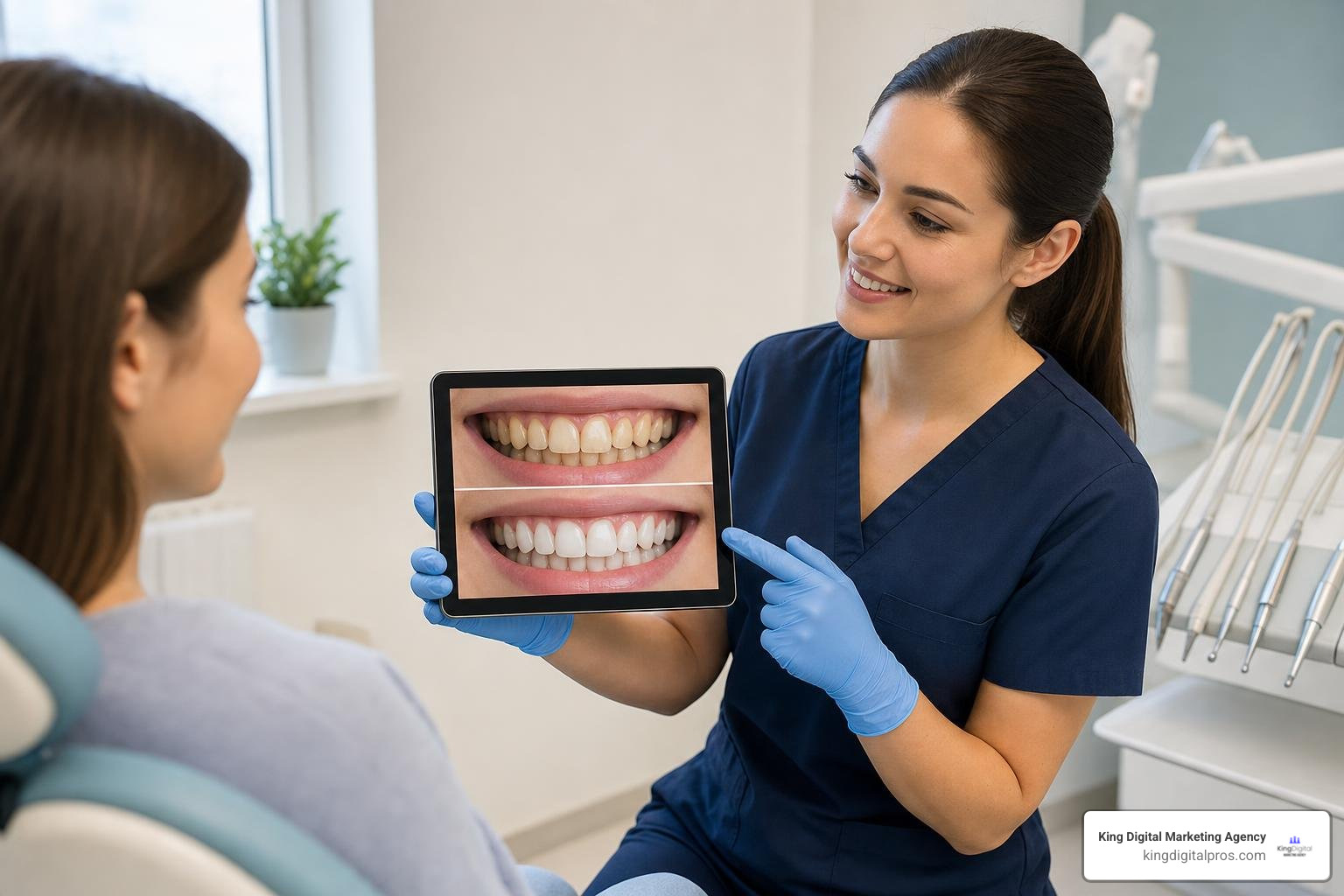
Clinical excellence alone does not fill chairs if prospective patients feel intimidated or uncertain. Trust is the primary currency of healthcare web design. Combining social proof, transparent clinical results, and community involvement – such as highlighting oral health initiatives like Smiles Across New Mexico – shows patients that your practice is deeply rooted in local health outcomes.
Custom Photography, Video Tours, and Accessibility Compliance
Stock photography featuring models with impossible veneers does little to build genuine trust. Patients want to see the real faces of the clinicians and hygienists who will be caring for them.
- Authentic Team Videography: A short 60-second video introduction from the lead dentist addressing treatment philosophy immediately demystifies the first visit.
- Virtual Operatory Tours: Highlighting state-of-the-art sterilizations, modern 3D CBCT imaging, and comfortable patient chairs reduces dental phobia.
- ADA & WCAG 2.1 Compliance: Healthcare websites must remain accessible to every patient. This means implementing high-contrast text ratios, resizable typography, full keyboard-only navigation paths, descriptive alt text on all procedural imagery, and screen reader compatibility.
Online Scheduling, Patient Portals, and Insurance Clarity
A dental website must serve as an active extension of your front office. By integrating real-time scheduling widgets compatible with major Practice Management Software (PMS) such as Dentrix, Eaglesoft, or Open Dental, patients can book appointments 24/7 without playing phone tag.
To maintain strict regulatory compliance, all digital intake forms, chatbot inquiries, and payment systems must adhere to HIPAA regulations, supported by executed Business Associate Agreements (BAAs). Furthermore, address the number one point of patient friction: financial clarity. Clearly outline accepted PPO networks, explain financing alternatives like CareCredit or in-house dental wellness plans, and keep explanations transparent to avoid alienating uninsured visitors.
Maximizing Search Visibility and Patient Conversion Rates
A stunning practice website is useless if local patients cannot find it when searching for dental care. Dominating local search results requires combining technical on-page architecture with advanced local optimization. Reviewing the complete guide to SEO-friendly website design illustrates how content structure directly impacts organic rankings.
- Local Map Pack Dominance: Connecting Google Business Profiles to hyper-localized landing pages optimized for specific surrounding communities.
- Answer Engine Optimization (AEO): Crafting concise, definition-first procedural descriptions that search engines and AI assistants can extract for quick answers.
- Medical & Dental Schema Markup: Implementing structured data (Dentist, MedicalProcedure, FAQPage, AggregateRating) to display star ratings, opening hours, and service menus directly within search engine results.
Conversion Rate Optimization and High-Value Treatment Acquisition
Attracting visitors is only half the battle; turning them into scheduled high-value cases requires systematic conversion architecture. Applying principles from our Conversion Optimization Complete Guide helps practice owners capture high-production cases like dental implants, full-mouth restorations, and clear aligners.
- High-Intent Treatment Funnels: Dedicated service pages featuring detailed procedure explanations, transparent recovery expectations, candidate criteria, and patient financing calculators.
- Frictionless Lead Capture: Simplified contact forms requiring only essential details (Name, Phone, Preferred Time) to prevent form abandonment.
- Hygiene Recall Automation: Embedded digital portals allowing existing patients to quickly rebook routine preventive cleanings, protecting recurring practice revenue.
Frequently Asked Questions About Dental Web Design
How much does professional dental website design typically cost?
Costs vary based on scope, customization, and functionality. Turnkey dental frameworks and managed subscription websites typically start between $3,000 and $6,000, while fully custom, multi-location practices with custom videography, custom patient portal integrations, and bespoke SEO architecture range from $10,000 to $25,000+.
Why is mobile-first responsive design critical for dental practices?
More than 60% of all online dental bookings and emergency toothache searches occur on mobile smartphones. A mobile-first design ensures fast load speeds, accessible click-to-call buttons, and seamless form completion on touchscreens, directly impacting your patient acquisition rate.
How does an optimized dental website improve local SEO and search rankings?
An optimized site features structured local schema markup, location-specific service pages, fast Core Web Vitals, and direct synchronization with your Google Business Profile. This technical foundation signals local relevance and clinical authority to search engines, helping your clinic rank higher in the local map pack.
Conclusion
A well-crafted dental practice website is the central engine of your practice’s growth strategy. It works around the clock to educate patients, reduce clinical anxiety, fill open operatory chairs, and build long-term brand equity. When custom design, technical SEO, HIPAA compliance, and frictionless scheduling align, your practice establishes a reliable system for consistent new patient acquisition.
If you are ready to elevate your practice’s online presence, explore how our team at King Digital Marketing Agency builds high-performing digital assets through our professional dental website design services. We help you turn local search visibility into lifelong patient relationships.
