How to Evaluate and Choose the Best Website Designers
When you search for the best website designers, you will find thousands of portfolios filled with gorgeous typography, crisp hero images, and smooth micro-animations. However, eye-candy alone does not pay the bills or generate predictable revenue for your business. True evaluation standards require looking far past initial visual aesthetics to evaluate real business metrics, conversion strategies, search engine performance benchmarks, and long-term technical stability.
To separate high-performing web design professionals from visual decorators, inspect their past client outcomes with analytical rigor. Did their redesign decrease bounce rates across mobile and desktop devices? Did it increase qualified inbound leads, phone inquiries, or sales checkout speed? A visually stunning layout that fails to convert visitors into active customers or form submissions is an expensive digital ornament. Reviewing custom work strategies in Web Design That Builds Credibility and Grows Your Leads highlights how strategic site structure, intuitive visual hierarchy, and clear calls to action directly drive measurable bottom-line revenue.
Agency vs Freelancer vs Template: Selecting the Right Best Website Designers
Choosing the right design partner depends heavily on your available budget, internal technical resources, project timeline, and overarching growth targets. Understanding the operational tradeoffs between full-service digital agencies, independent freelance specialists, and pre-built website templates ensures you do not overspend on unnecessary management layers or underpower a mission-critical commercial project.
- Web Design Agencies: Agencies bring a multidisciplinary team to your campaign, including UX/UI architects, front-end coders, conversion copywriters, graphic designers, and technical SEO specialists. They are built for growth-focused SMBs and enterprise platforms requiring complex custom functionality, multi-layered user journeys, deep API integrations, and ongoing marketing alignment.
- Freelance Designers: Independent specialists provide agile communication, direct accountability, and highly focused design execution. They are ideal for small to mid-sized businesses with direct project goals, transparent budgets, fixed timelines, and a need for direct line-of-sight collaboration without agency overhead.
- Design Templates: DIY site builders and pre-made commercial templates allow solopreneurs and early-stage setups to get online quickly on micro-budgets. However, templates carry strict customization constraints, bloated codebases, rigid backend logic, and potential performance drag that can penalize your rankings on modern search engines.
| Criteria | Web Design Agency | Freelance Designer | Pre-Built Template |
|---|---|---|---|
| Best For | Scalable builds, SEO & custom UI | Direct collaboration & focused scope | Micro-budgets & rapid launches |
| Typical Cost | $10,000 – $100,000+ | $3,000 – $15,000 | $500 – $2,000 |
| Project Timeline | 8 – 16 Weeks | 3 – 8 Weeks | 1 – 2 Weeks |
| Customization | 100% Tailored | High | Extremely Limited |
| SEO & Speed Focus | High / Comprehensive | Variable by candidate | Standard / Constrained |
Platform Expertise: Finding the Best Website Designers for Webflow, WordPress, and Framer
The Content Management System (CMS) supporting your site dictates how fast your pages load, how easily your team updates ongoing content, and how effectively search engine crawlers index your business services. When vetting prospective talent, hire someone who specializes in the right platform for your unique business model rather than a generalist who pastes static content into basic page builders.
- WordPress: The gold standard for content-heavy sites, complex publication workflows, custom local SEO architecture, and deep backend integration. To ensure long-term site safety and high loading speeds, work with designers who build custom, lightweight themes or utilize modular block frameworks rather than bloated, off-the-shelf page builders laden with unnecessary scripts.
- Webflow: A modern visual development environment that outputs clean, semantically correct HTML, CSS, and JavaScript. Webflow gives visual designers total creative freedom to build fully responsive, high-velocity websites with clean code logic and dynamic CMS collections without accumulating heavy technical code debt.
- Framer: Built for rapid sprint cycles, interactive landing pages, and venture-backed startup launches. Framer allows incredibly fast deployment, interactive component states, and smooth visual interaction tailored specifically for focused conversion funnels and product showcases.
Looking across industry showcases like the Awwwards Website Design Showcase demonstrates how cutting-edge technical execution, responsive grid design, and seamless user interaction elevate simple brand ideas into world-class digital experiences.
Key Factors in Vetting Candidates: Portfolio, Pricing, and Process

A smooth, successful web build is governed by disciplined workflows, strategic wireframing, clear milestone communication, and transparent technical execution. When vetting prospective talent, look for a structured, battle-tested methodology that guides your project seamlessly from initial concept to public deployment:
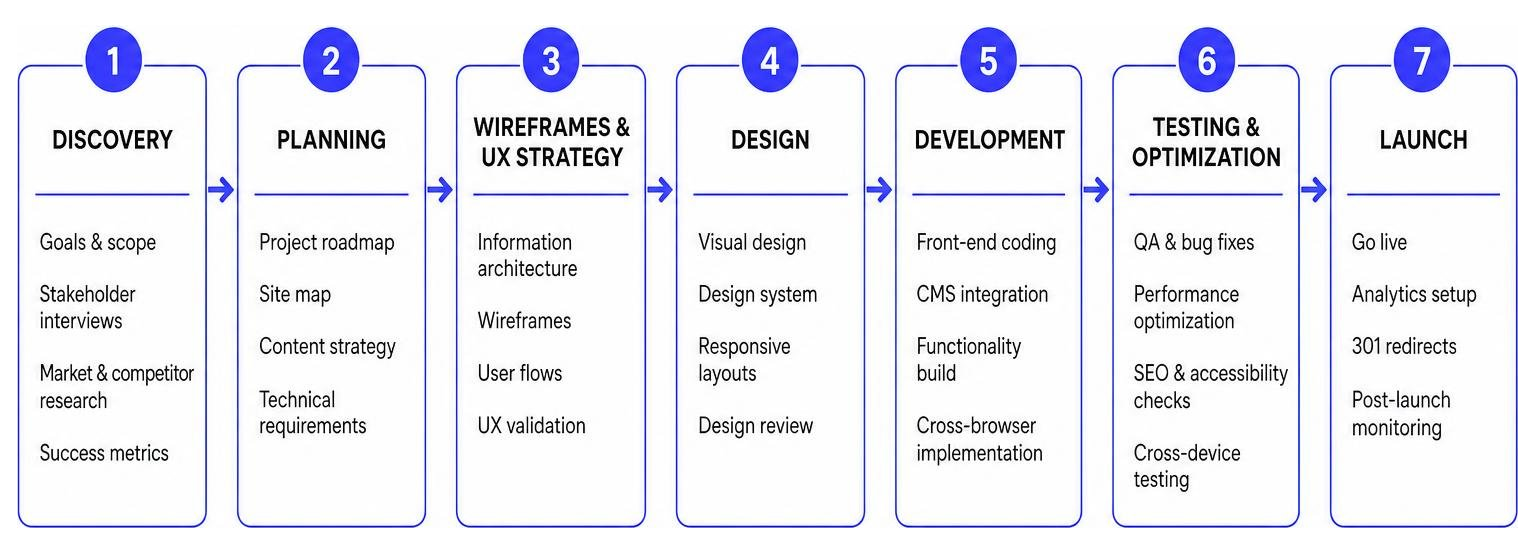
- Discovery and Research: Grounding visual layout decisions in deep market analysis, target audience personas, customer intent research, and rigorous competitor audits.
- Wireframing and UX Strategy: Mapping explicit information architecture, user journeys, and content hierarchy before touching brand colors or graphic styling. User experience studies from the Nielsen Norman Group UX Research consistently prove that clear navigation, predictable interface elements, and functional visual structure outperform decorative gimmicks every time.
- Speed and Technical Optimization: Ensuring ultra-fast performance across all viewport sizes and mobile devices. Optimizing image compression, leveraging clean CSS/JS execution, minimizing server request overhead, and deploying proper Schema markup can boost organic click-through rates by up to 40%.
- SEO Architecture: Integrating keyword target structures, metadata templates, breadcrumb paths, and internal link routing into the initial blueprint phase rather than attempting to tack them on after launch. Reviewing The Complete Guide to SEO Friendly Website Design underlines why build-stage optimization is essential for rapid search indexing and long-term organic visibility.
Professional web design projects generally require 8 to 16 weeks from kickoff to deployment depending on functional complexity and content readiness. Budget expectations run from $5,000 for standard small business sites to $100,000 or more for enterprise software platforms and multi-faceted e-commerce builds. Be cautious of candidates promising custom builds for rock-bottom prices; aggressive shortcuts almost always lead to poor code quality, security vulnerabilities, slow page loading, and weak search engine visibility.
Essential Questions to Ask Before Hiring a Web Designer

Before signing a binding service contract or transferring an initial financial deposit, protect your company’s valuable digital assets by asking these critical evaluation questions during your discovery call:
“Where will my domain name be registered?”
- Red Flag Answer: “We register it on our corporate account to keep technical management simple for you.”
- Correct Setup: Your domain name must always be registered in your own company account (e.g., GoDaddy, Namecheap, Cloudflare). Grant the designer temporary delegate or DNS access only so you retain permanent asset ownership.
“What platform are you using, and is anything proprietary?”
- Red Flag Answer: “We use our own custom internal page management software developed exclusively by our agency.”
- Correct Setup: Ensure your site is built on widely supported open-market platforms like WordPress, Webflow, or Framer so you are never held hostage or locked into a single agency or developer.
“Who owns the website content, custom graphics, and code?”
- Red Flag Answer: “You license the site framework while you maintain active payment on our monthly support fee.”
- Correct Setup: Your contract must explicitly state in plain legal language that you hold 100% intellectual property ownership of all written copy, customized visual graphics, brand assets, and custom code upon final payment.
“Will I have full administrator-level backend access?”
- Red Flag Answer: “We only give client-level editing rights so you don’t accidentally break layout formatting.”
- Correct Setup: You must be granted top-level master administrative credentials for your domain registrar, web hosting provider, content management system, and analytical tools.
“What happens if we choose to go our separate ways down the road?”
- Red Flag Answer: “The site architecture cannot be moved off our private server infrastructure.”
- Correct Setup: The designer should outline a clear offboarding handoff package containing walkthrough video training, complete site backups, database exports, and active plugin license transfers.
For a deeper dive into protecting your small business during a commercial web build, see Web Design for SMBs What You Need to Know.
Frequently Asked Questions About Hiring Web Designers
How much do professional website designers typically charge?
Custom small business websites typically start at $5,000 and range up to $15,000 depending on total page count, content creation needs, and custom functional integrations. Mid-market marketing sites and SaaS applications usually range between $15,000 and $40,000, while complex enterprise platforms and large e-commerce environments requiring custom API connections can exceed $100,000.
How long does a standard website design project take from start to finish?
A standard professional website build typically takes 8 to 16 weeks. This timeline encompasses thorough market research, user experience wireframing, conversion copy integration, custom visual design, front-end and back-end development, mobile responsiveness testing, cross-browser quality assurance, and final deployment setup.
Where do top web designers showcase their portfolio work?
Leading web design professionals showcase verified commercial builds on premier industry award platforms like Awwwards, creative design repositories like Behance and Dribbble, and detailed client case study pages published directly on their own portfolio sites.
Conclusion
Finding the best website designers comes down to looking far beyond surface-level visual graphics and thoroughly verifying technical capability, strategic conversion thinking, explicit asset ownership terms, and transparent project communication. By insisting on full master administrative access, open platform architecture, rigorous performance optimization, and conversion-focused UX standards, you turn your website project into a predictable growth driver rather than a risky expense.
At King Digital Marketing Agency, we understand that a high-performing website is only one foundational piece of your broader commercial growth strategy. We help local businesses across Albuquerque, Rio Rancho, Santa Fe, Corrales, East Mountains, Cedar Crest, Edgewood, Tijeras, Sandia Park, Los Alamos, Taos, and Grants pair custom web design strategy with expert Google Business Profile optimization and map listing management to drive qualified local customer phone calls and store visits.
Ready to build an authoritative digital presence that dominates regional search engine results and turns online traffic into loyal customers? Explore our comprehensive Digital Marketing Services Website Design Albuquerque options or get in touch with our expert team today!
