Why Review Tracking Software Matters for Local Businesses
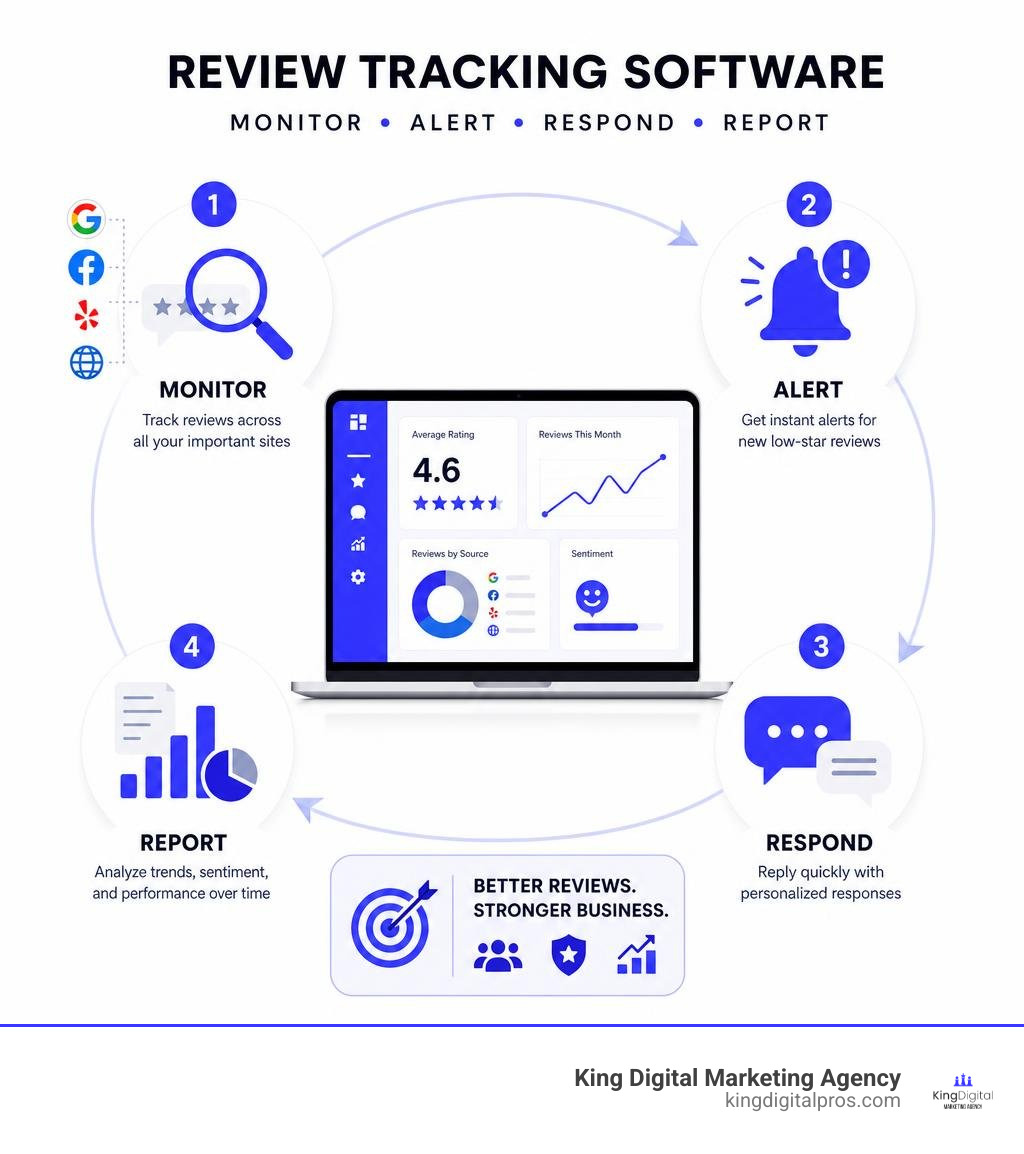
Review tracking software puts customer feedback from Google, Facebook, Yelp, and relevant industry sites into one place. It helps you spot new reviews, respond faster, track rating and sentiment trends, and find recurring issues before they hurt customer trust or local visibility.
For a busy local business, start by choosing a tool that can:
- Monitor the review sites your customers actually use.
- Send alerts for new low-star reviews.
- Support timely, personalized responses.
- Show review volume, average rating, response time, and common feedback themes.
The right platform turns reviews from a scattered, time-consuming chore into a useful source of marketing and service insight. Some tools focus on simple Google review requests for one location. Others support multi-location reporting, automated SMS and email campaigns, AI-assisted replies, competitor benchmarking, and analysis across 100 or more platforms.
I am Bernadette King, a digital marketing strategist who helps franchise owners and local businesses improve search visibility, reputation, and conversion-focused marketing. In this guide, I will help you compare review tracking software based on the workflows that save time and support measurable growth.
Explore more about review tracking software:
Understanding Review Tracking Software: What It Is and Who Needs It
Managing public customer sentiment across today’s web can feel like trying to sip from an open firehose. Potential buyers no longer look at just a single directory before deciding who to hire or where to visit. They check Google Maps, cross-reference ratings on Facebook, read niche consumer forums, and inspect critical one-star complaints to see how accountable a business really is.

At its core, a review tracking platform is a specialized system that centralizes feedback aggregation from dozens or hundreds of online platforms into a single operational inbox. Instead of having your team spend hours logging into individual channels manually, the software continuously pools incoming ratings, written testimonials, and buyer questions in real time.
Who genuinely needs this technology?
- Single-location service businesses that need to maintain a continuous stream of fresh customer ratings to rank in local map searches.
- Multi-location enterprises and regional franchises needing unified quality control across dozens of physical branches.
- Marketing agencies tasked with scaling reputation workflows and reporting return on investment across multiple client portals.
- E-commerce brands and SaaS companies that rely on review syndication and third-party software marketplace directories to drive sales conversions.
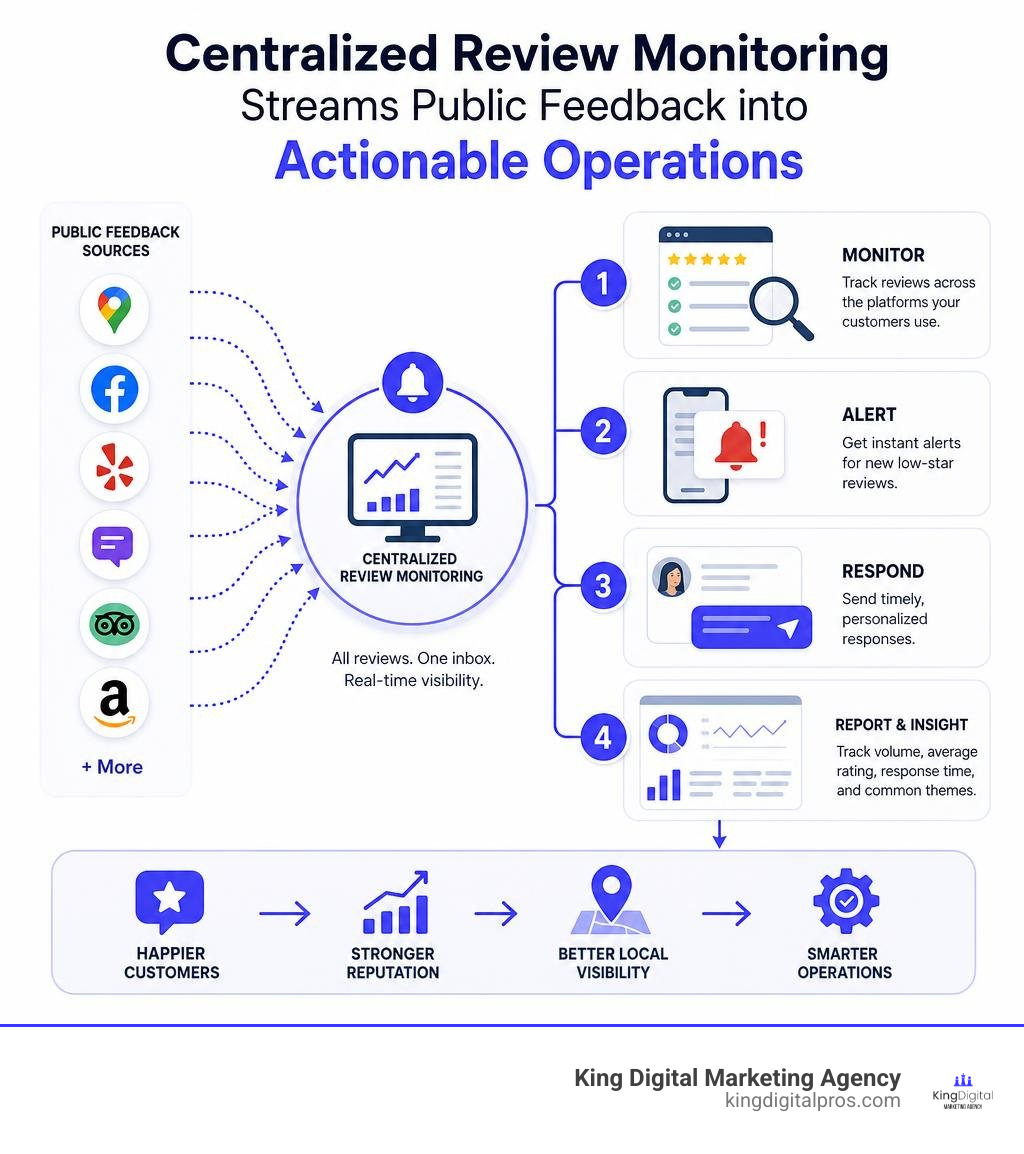
When review feeds are unified, your customer sentiment analysis shifts from reactive firefighting into an active growth channel. You can pinpoint operational bottlenecks, reward high-performing team members, and directly elevate your local search visibility.
Core Features to Evaluate in Modern Feedback Platforms
Choosing the right review tracking system requires looking past flashy sales pitches and evaluating the core architecture that drives everyday efficiency. The most powerful tools excel across four fundamental areas: multi-channel coverage, natural language processing (NLP), local visibility tracking, and seamless workflow connectivity.
Modern solutions connect directly with major directories such as Google Business Profile, Yelp, Facebook, Apple Maps, and Bing, alongside specialized vertical directories. Platforms like Birdeye monitor over 200 platforms with more than 3,000 integrations, Reputation aggregates from 250+ networks, and ReviewTrackers pulls feedback from over 100 sources.
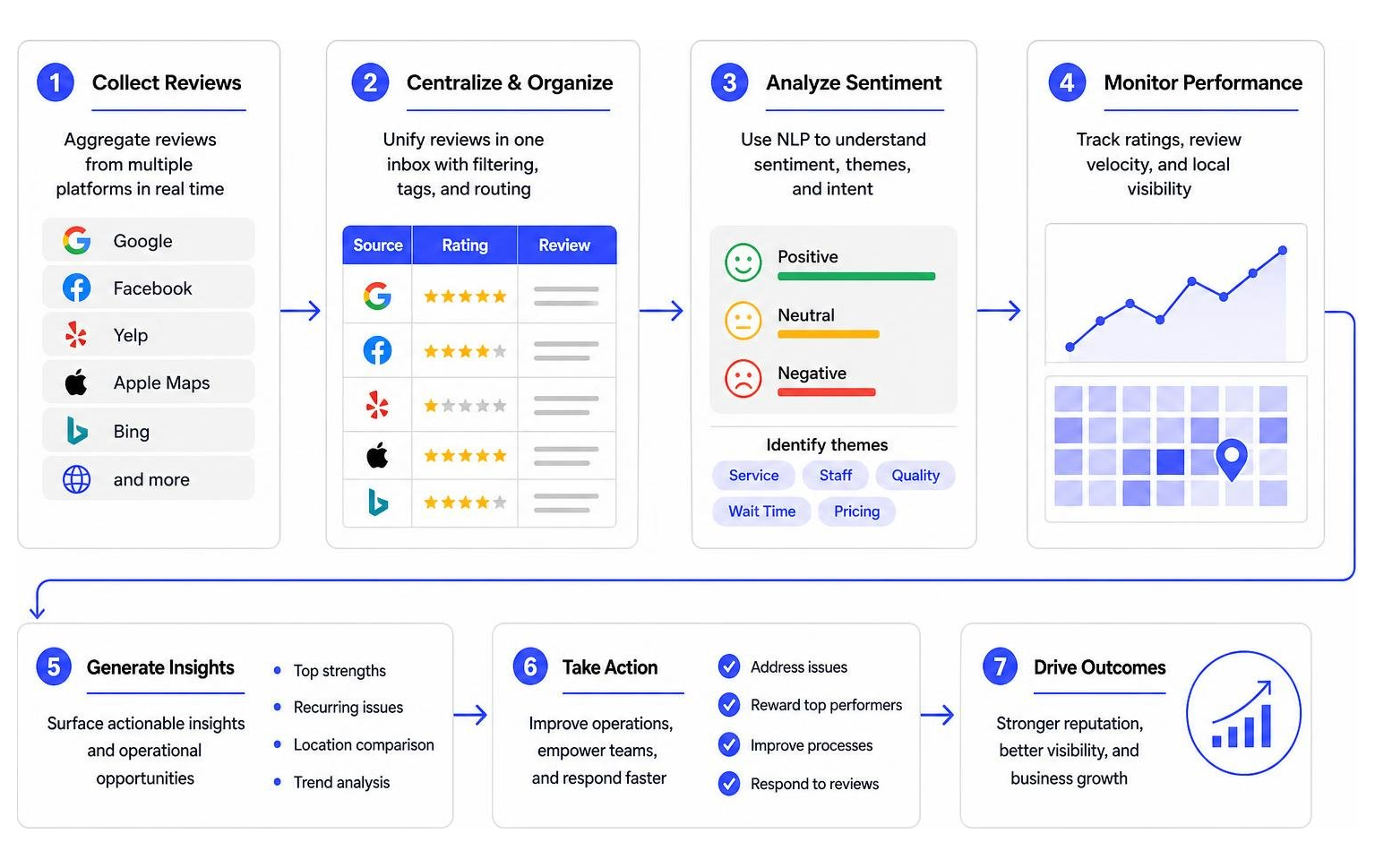
Comprehensive customer feedback management software also pairs review aggregation with geo-grid local rank tracking. These geo-coordinate heatmaps measure keyword ranking variance at specific neighborhood and street levels, helping you directly correlate review velocity with local map pack dominance.
Key Automated Capabilities in Review Tracking Software
Manual review collection is notoriously unpredictable. Customers often intend to leave a positive note, but life gets in the way. Automated review requests sent via SMS and email immediately following a transaction or completed appointment dramatically increase conversion rates.
Key automated capabilities to look for include:
- Trigger-based outreach: Sending immediate, automated review requests via text message or email the moment a service invoice is marked paid.
- Smart multi-step drip campaigns: Delivering automated follow-up nudges to clients who opened the initial message but didn’t complete a review.
- AI-assisted response engines: Utilizing natural language models to draft tailored, context-aware responses that reflect your exact brand tone and service details.
- Real-time anomaly alerts: Immediate push or email notifications when a negative review or rating drop occurs, allowing for swift service recovery.
Modern operations rely on structured digital tracking to eliminate human error. In civic administration, for example, municipalities have transitioned toward streamlined systems like electronic review tracking workflows to replace paper-based bottlenecks. In the same way, deploying automated review generation software ensures your feedback loop runs reliably in the background without burning staff hours.
Deep Sentiment Analysis and Competitive Benchmarking
Star ratings represent only surface-level data. A steady 4.5-star average can easily mask recurring operational defects like slow dispatch times or rude front-desk interactions.
Enterprise-grade tracking platforms utilize aspect-based text mining to extract underlying sentiment from written customer reviews. These tools analyze language syntax to group comments into clear categories, including pricing sentiment, staff demeanor, clean facilities, and response speed.
Crucially, robust online reputation monitoring software tracks competitor rating drift alongside your own listings. If a local competitor experiences a sudden decline in ratings due to price increases or staff turnover, your marketing team can adjust local campaigns to capture that shifting market share.
Comparing Platforms: Selecting the Right Architecture for Your Business Model
Not all review tracking tools serve the same operational goals. Comparing a lightweight single-location tool to an enterprise syndication platform is like comparing a food truck to a multi-national supply chain – both serve food, but their internal mechanics are entirely different.
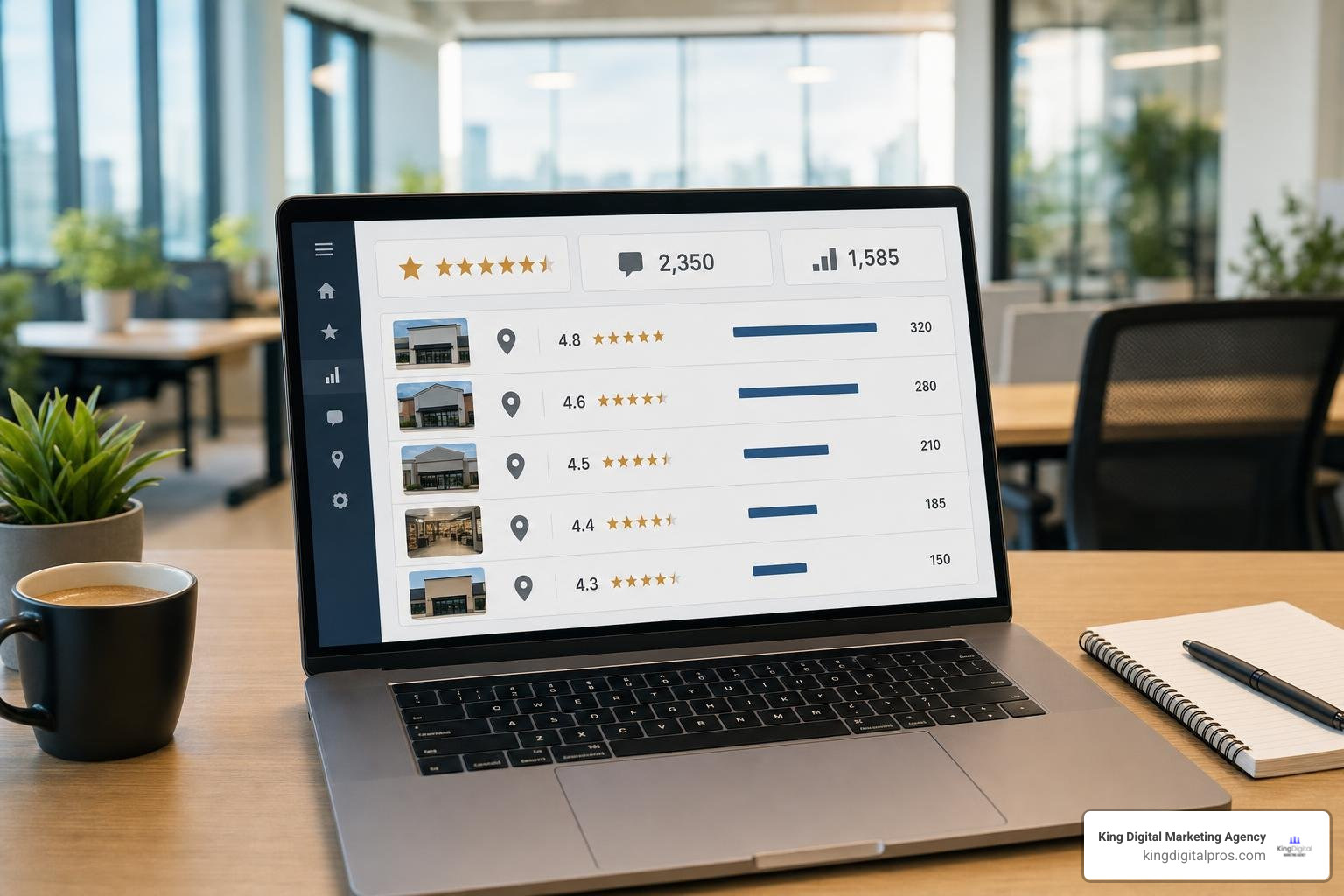
When selecting a tool, consider how the platform’s user base matches your organization. For instance, industry data shows that 84% of Reviews.io users and 100% of Housecall Pro users are small businesses. Meanwhile, 45% of Bazaarvoice reviewers, 48% of Experience.com users, and 86% of Shopper Approved clients come from mid-market companies. Furthermore, platforms like Bazaarvoice syndicate feedback across more than 2,300 retail partner sites.
| Business Model | Core Operational Priority | Typical Platform Architecture | Ideal Feature Set |
|---|---|---|---|
| Local SMBs & Storefronts | Google Maps visibility & review velocity | Direct API sync with Google Business Profile & Facebook | Automated post-job SMS prompts, QR code review invites, unified inbox |
| Multi-Location Franchises | Brand consistency & operational quality control | Location-level filtering & enterprise role permissions | NLP topic extraction, branch sentiment benchmarking, automated ticket routing |
| Marketing Agencies | Scalability & client proof-of-performance | Multi-tenant white-label dashboards | Custom-branded reporting, geo-grid rank maps, AI response approval queues |
| E-Commerce & SaaS Brands | Product conversions & directory social proof | High-volume syndication & visual content aggregation | Photo/video review extraction, retail partner syndication, G2/Capterra monitoring |
Tailoring Review Tracking Software for Agencies vs Single Locations
For marketing agencies, managing online reputation across dozens of business accounts requires specialized operational features. Agency-focused tools provide multi-client portals, custom white-label client reporting, and centralized response queues with tiered approval settings.
Agencies looking to deliver measurable results should consult our Google review management tool guide to align review volume with local search algorithms.
Meanwhile, online brands tracking product listings across marketplaces can utilize tools designed for e-commerce rating drift monitoring, which detect subtle 0.2-star rating drops that can reduce product sales conversions by up to 30%.
Field Service and Multi-Location Operational Integrations
For service companies (such as HVAC contractors, plumbers, electricians, and medical practices), review collection must fit naturally into daily field workflows. The most effective systems connect directly to Point of Sale (POS), ERP, or field service software like ServiceTitan, Jobber, and QuickBooks.
When a technician marks a service call completed, the review software immediately triggers a personalized SMS review invite. Connecting review software to field operations enables location-level filtering, allowing management to see which technicians regularly earn five-star praise and which branches struggle with service quality. Implementing these connected workflows helps boost local SEO through effective review management across every service territory you cover.
Pricing Models, Implementation, and Measuring Reputation ROI
Review tracking platforms generally operate on three primary pricing structures:
- Flat-Rate Monthly Subscriptions: Ranging from $29 to $199 per month, these tiers are typical for single-location small businesses and include standard review aggregation, basic automated request campaigns, and response templates.
- Per-Location Pricing: Common for multi-location brands and agencies, plans typically start between $10 to $80 per location per month, unlocking advanced features like location-level sentiment analysis and directory citation syncing.
- Enterprise Custom Licensing: Designed for large retail networks and e-commerce brands needing global syndication, custom API data pipelines, and dedicated account support, often billed annually.
When budgeting for your stack, exploring affordable review management tools helps ensure you select a platform that provides essential features without unnecessary enterprise overhead.
To evaluate whether your review software delivers a tangible return on investment, measure performance against four primary key performance indicators (KPIs):
- Review Velocity: The rate of new reviews acquired per month across your core profiles.
- Average Star Rating Trajectory: Upward or downward movement across primary platforms over rolling 90-day windows.
- Review Response Rate and Speed: The percentage of reviews answered and the average time elapsed before a customer receives a reply (aiming for under 24 hours).
- Local Map Pack Prominence: The direct correlation between increased review volume, keyword-rich testimonials, and improved search rankings on Google Maps.
Frequently Asked Questions About Online Review Tracking
How quickly should a business respond to negative online reviews?
Aim to respond to negative reviews within 24 hours. A fast, professional response shows prospective customers that your business takes accountability seriously. Using internal triage workflows and real-time alerts ensures your team can resolve issues quickly before public perception is damaged.
Can review management platforms filter out fake or fraudulent feedback?
Review platforms cannot unilaterally delete public reviews from third-party sites like Google or Yelp. However, modern tools use anomaly detection to flag suspicious review patterns, sudden rating attacks, or policy violations. The software helps compile timestamped evidence, allowing you to submit structured removal requests that follow FTC guidelines and platform policies.
How does consistent review tracking impact local SEO and Google Maps rankings?
Review velocity, overall rating score, response consistency, and keyword-rich customer feedback serve as major ranking signals for Google’s local algorithm. Regularly generating authentic reviews and actively replying signals to search engines that your business is open, active, and trusted by local consumers, directly boosting map pack rankings.
Conclusion
At King Digital Marketing Agency, we specialize in helping local businesses take complete control of their online presence. Our team focuses on optimizing Google Business Profiles and building map listing visibility that drives real customer inquiries.
Managing customer feedback should never be left to guesswork or sporadic manual checks. Partnering with our team for expert review management services gives you the tools, local SEO expertise, and reputation monitoring strategy needed to protect your brand, outrank local competitors, and turn satisfied customers into your best marketing asset.
