Definition and Scope: What Is Review Management Software?
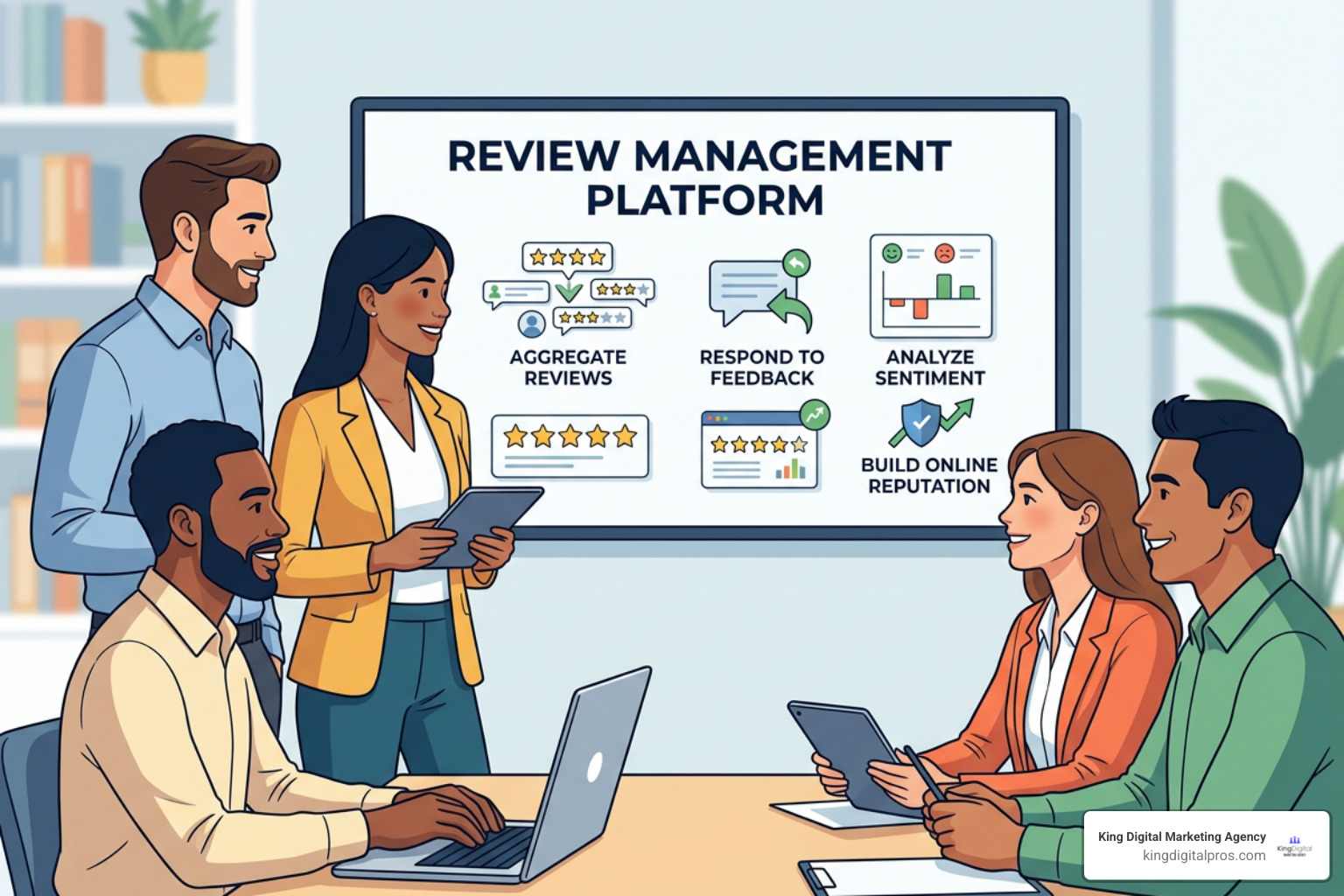
When business owners ask us what is review management software, we like to describe it as a central mission control center for your brand’s digital word-of-mouth. Instead of manually logging into dozens of individual review sites, directories, and social media networks every morning, a review management system aggregates feedback into a centralized inbox.
The primary scope of these platforms covers four key operational pillars:
- Aggregation and Centralized Monitoring: Pulling reviews from platforms like Google Business Profile, Facebook, Yelp, and industry-specific directories into one stream.
- Automated Generation: Sending structured post-transaction requests via text message, email, or QR codes to happy customers.
- Response Workflows: Allowing teams to reply directly to customer feedback using templates or AI assistance without leaving the dashboard.
- Sentiment Analysis: Using text processing to track ratings, monitor brand perception, and discover recurring operational issues.
Understanding what is review management software helps clarify the difference between basic review collection and holistic reputation tracking. While basic survey tools simply ask for feedback, dedicated review software manages the full lifecycle of your online public image.
How Automated Review Request Workflows Function
The real magic of modern software lies in automated review generation. Chasing down customers manually to ask for feedback is exhausting and inefficient. Automated review management software bridges this gap by connecting directly to your point-of-sale (POS) system, CRM, or scheduling tools.
Here is how an automated workflow operates in practice:
- Post-Purchase Triggers: When a patient finishes an appointment or a customer completes a project, your system automatically notifies your review software.
- Multi-Channel Requests: The platform sends a friendly, personalized follow-up via SMS or email asking about their experience.
- Frictionless Direct Links: The message includes a direct link or scannable QR code leading straight to your Google Business Profile or preferred review site.
- Smart Follow-Ups: If the customer opens the message but forgets to leave a rating, the software can send a gentle follow-up nudge a few days later.
By replacing manual effort with automated workflows, businesses systematically increase their review volume and recency. Exploring the ultimate guide to feedback and reviews management software reveals how these automated sequences reliably transform casual buyers into brand advocates.
Why Online Review Management Is Critical for Business Growth
Online review management is far more than a public relations task – it is a core engine for financial growth. Modern consumers trust online feedback just as much as word-of-mouth recommendations. In fact, research shows that 88% of consumers trust online reviews as much as personal recommendations from friends or family.

When potential customers search for local services in markets like Albuquerque, NM or Santa Fe, NM, they rarely scroll past the top-rated local options. High star ratings and high review counts immediately establish social proof, reducing buyer hesitancy and shortening the sales cycle.
How Customer Feedback Drives SEO and Local Search Visibility
Search engine algorithms prioritize local businesses that demonstrate trust, authority, and high customer engagement. Review quantity, quality, recency, and diversity are major local search ranking factors.
Regularly receiving fresh customer reviews directly improves your local search presence by:
- Boosting Local Pack Visibility: Google frequently features businesses with high ratings and active review velocity in the top three map listings (the “Local Pack”).
- Targeting Long-Tail Keywords: Customers naturally include specific keywords in their reviews (e.g., “best emergency plumber in Rio Rancho” or “great dental office in Corrales”), which enhances your search relevance.
- Increasing Click-Through Rates (CTR): Searchers are significantly more likely to click on a Google Business Profile boasting dozens of detailed 5-star ratings compared to a profile with few reviews or unaddressed low ratings.
Learning how to boost local seo effective review management helps businesses secure dominant rankings on Google Maps, driving consistent organic leads without requiring excessive ad spending.
Turning Customer Feedback into Direct Revenue
Investing in review management yields a direct, measurable return on investment. The financial impact of star ratings is substantial: research indicates that a single one-star increase on platforms like Yelp can boost overall business revenue by 5% to 9%.
Furthermore, businesses that actively respond to customer feedback see an average revenue increase of 12%. When prospective clients see a business actively engaging with its audience, resolving concerns, and thanking loyal customers, their confidence increases.
Deploying proactive positive review generation turn happy customers into your best salespeople builds long-term customer lifetime value and keeps your sales pipeline full.
Key Features, AI Automation, and Selection Criteria
Not all software solutions are built the same. Understanding what is review management software built for your specific business goals requires evaluating core capabilities, pricing structures, and technological integrations.
Determining What Is Review Management Software Best for Your Business Needs
Selecting the ideal platform depends on your business structure, local footprint, and current software stack. A solo practitioner in Taos, NM has vastly different software needs than a multi-location franchise spanning Edgewood, Tijeras, and Sandia Park.
To evaluate platforms effectively, consult comprehensive industry reviews like I Tested 8 Best Review Management Software: My Take to compare practical user experiences. Additionally, review the Zapier guide to review management software to understand how workflow integrations can streamline your tech stack.
| Business Type | Primary Software Focus | Key Features Needed | Recommended Setup |
|---|---|---|---|
| Local SMB (1-2 Locations) | Review Generation & GBP Management | SMS/Email Automation, Google Maps Integration, Simple Mobile App | Direct API to POS / CRM |
| Multi-Location Franchise | Centralized Governance & Multi-listing | Bulk Queueing, Role-Based Permissions, Regional Sentiment Benchmarking | Enterprise CRM + Central Inbox |
| Field Services / Home Care | Mobile Collection & Location Tags | Instant QR Codes, Technician Tagging, On-Site SMS Triggers | Mobile App POS Integration |
| E-Commerce / Retail | Product Review Syndication | Rich Snippets, Photo/Video Uploads, Google Shopping Sync | Web Store / Shopify Integration |
The Role of AI and Sentiment Analysis in Modern Software
Artificial Intelligence has transformed reputation management software from simple alert dashboards into intelligent, automated assistant platforms.
Modern AI features include:
- Natural Language Processing (NLP): Software automatically reads long reviews and tags core topics – identifying whether a 3-star rating was caused by long wait times, billing confusion, or parking issues.
- Smart Response Drafting: AI assistants create personalized, context-aware reply drafts in seconds, allowing managers to review, edit, and publish thoughtful responses rapidly.
- Sentiment Tracking: Instead of focusing strictly on overall star averages, AI tracks subtle shifts in customer emotion over time, giving management early warnings about service decline.
- Real-Time Critical Escalation: High-risk negative reviews containing specific keywords are flagged instantly, alerting top management to step in before an issue escalates online.
Creating an Effective Strategy and Response Best Practices
Having top-tier software is only half the battle; success ultimately comes down to your strategy and response standards.

Best Practices for Handling Positive and Negative Reviews
Responding to feedback professionally demonstrates to every future prospect reading your profile that customer service is a priority.
Managing Positive Reviews
- Express Genuine Thanks: Address the reviewer by name and thank them for taking the time to share their experience.
- Highlight Specific Strengths: Reinforce positive mentions (e.g., “We are so glad you loved our fast turnaround time!”).
- Maintain Professional Courtesy: Keep responses concise, warm, and tailored. Avoid overly robotic copy-pasting.
Mastering Negative Reviews
- Act Quickly: Strive to respond within 24 to 48 hours. Over half of online reviewers expect a fast business response to negative feedback.
- Show Empathy and Own the Experience: Avoid getting defensive. Acknowledge their disappointment courteously (e.g., “We hold ourselves to high standards, and we are sorry to hear we missed the mark during your visit.”).
- Move the Conversation Offline: Never argue publicly. Provide a direct contact phone number or email address where a management team member can address their concern privately.
- Report Policy Violations: If a review contains abusive language, clear spam, or fake claims from non-customers, utilize platform flagging procedures rather than engaging aggressively.
Consulting resources like mastering google maps review management for local businesses will help your team manage negative feedback professionally while protecting your search presence.
Promoting Reviews Across Marketing Channels
Once you accumulate glowing 5-star feedback, put those testimonials to work across your broader marketing efforts:
- Website Conversion Widgets: Display live, verified review carousels on landing pages to convert casual visitors into qualified leads.
- Social Proof Visuals: Turn glowing customer comments into branded social media images for organic posts and local ad campaigns.
- Email Marketing Integration: Include top customer quotes in email newsletters and promotional drop campaigns to build trust with prospects.
Frequently Asked Questions About Review Management Software
How quickly should a business respond to online reviews?
Businesses should aim to respond to all online reviews within 24 to 48 hours. Responding quickly to positive feedback shows appreciation while tackling negative reviews rapidly demonstrates proactive customer care. Fast response times help de-escalate customer frustration and signal to search engines that your business actively manages its online profiles.
Can review management software automatically remove negative reviews?
No, review management tools cannot directly delete real negative reviews from public platforms like Google, Yelp, or Facebook. However, they streamline the process of identifying, tracking, and flagging fake, offensive, or policy-violating reviews for removal by platform moderators. For legitimate critical feedback, the software enables quick outreach to turn an unhappy customer into a satisfied, repeat client.
Does review management software help improve local SEO rankings?
Yes, review management tools directly support local search engine optimization. By automating review requests, platforms help maintain a steady influx of fresh ratings, increase total review volume, and improve overall star averages. Furthermore, when clients include local keywords in their feedback and businesses respond regularly, search engine algorithms view the listing as authoritative and active, boosting rankings on Google Maps.
Conclusion
Understanding what is review management software gives local business owners a powerful edge in today’s digital market. By unifying your feedback channels, automating review requests, leveraging AI response drafting, and showcasing positive ratings across your website, you turn public feedback into a core revenue generator.
Managing your brand’s digital reputation doesn’t have to feel like a full-time job. Partnering with dedicated local marketing professionals ensures your business profiles stay fully optimized, active, and tailored to attract local clients across Albuquerque, Rio Rancho, Santa Fe, and surrounding communities.
Ready to dominate your local map listings, protect your public reputation, and turn customer feedback into direct business growth? Explore our specialized review management services at King Digital Marketing Agency today to claim your local market leadership!
