How to Compare a White Label Reputation Management Platform
A white label reputation management platform lets an agency offer review monitoring, review requests, response tools, reporting, and sometimes removal or suppression services under its own brand. When comparing options, focus first on the delivery model, then confirm the platform can handle your clients’ locations, reviews, brand voice, and existing local SEO tools.
Use this quick checklist:
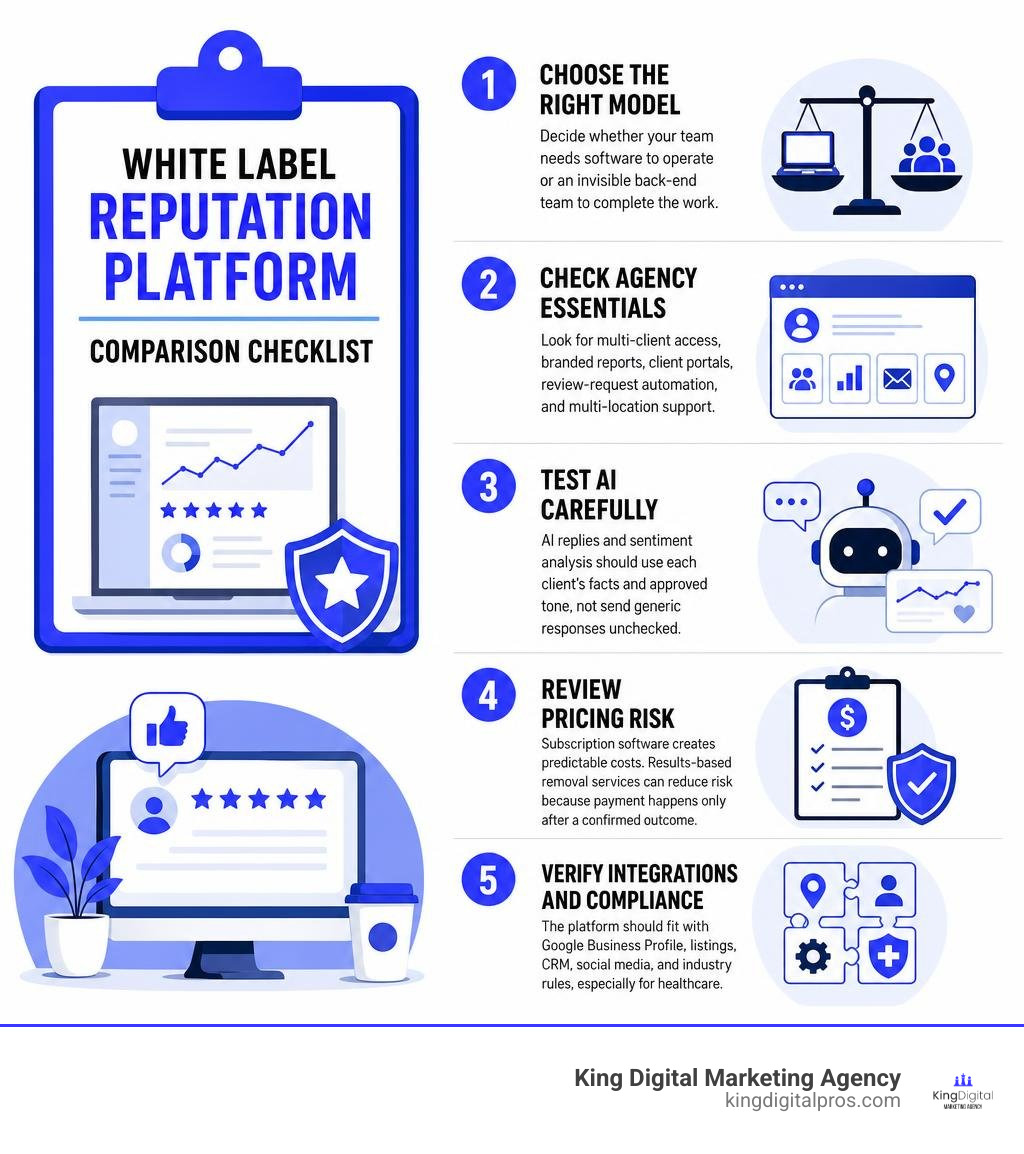
- Choose the right model: Decide whether your team needs software to operate or an invisible back-end team to complete the work.
- Check agency essentials: Look for multi-client access, branded reports, client portals, review-request automation, and multi-location support.
- Test AI carefully: AI replies and sentiment analysis should use each client’s facts and approved tone, not send generic responses unchecked.
- Review pricing risk: Subscription software creates predictable costs. Results-based removal services can reduce risk because payment happens only after a confirmed outcome.
- Verify integrations and compliance: The platform should fit with Google Business Profile, listings, CRM, social media, and industry rules, especially for healthcare.
The right choice helps agencies protect brand consistency while turning reputation work into a repeatable, profitable service. It can also give busy local businesses a clearer view of reviews, incorrect listings, and customer concerns without adding another complicated dashboard to their day.
I am Bernadette King, a digital marketing strategist who helps small businesses and franchise owners improve local visibility through SEO, paid media, and conversion-focused content. My work with scalable local marketing systems informs how I assess a white label reputation management platform for practical client outcomes and agency growth.
Simple guide to white label reputation management platform terms:
Understanding White-Label Software for Agency Growth
Scaling an agency requires expanding high-value services without dramatically inflating your internal payroll or operational overhead. In local markets across Albuquerque NM, Rio Rancho NM, and Santa Fe NM, client demand for review generation, sentiment tracking, and listings protection is at an all-time high. Building proprietary software from scratch is prohibitively expensive, making white-label technology the fastest route to reliable service expansion.
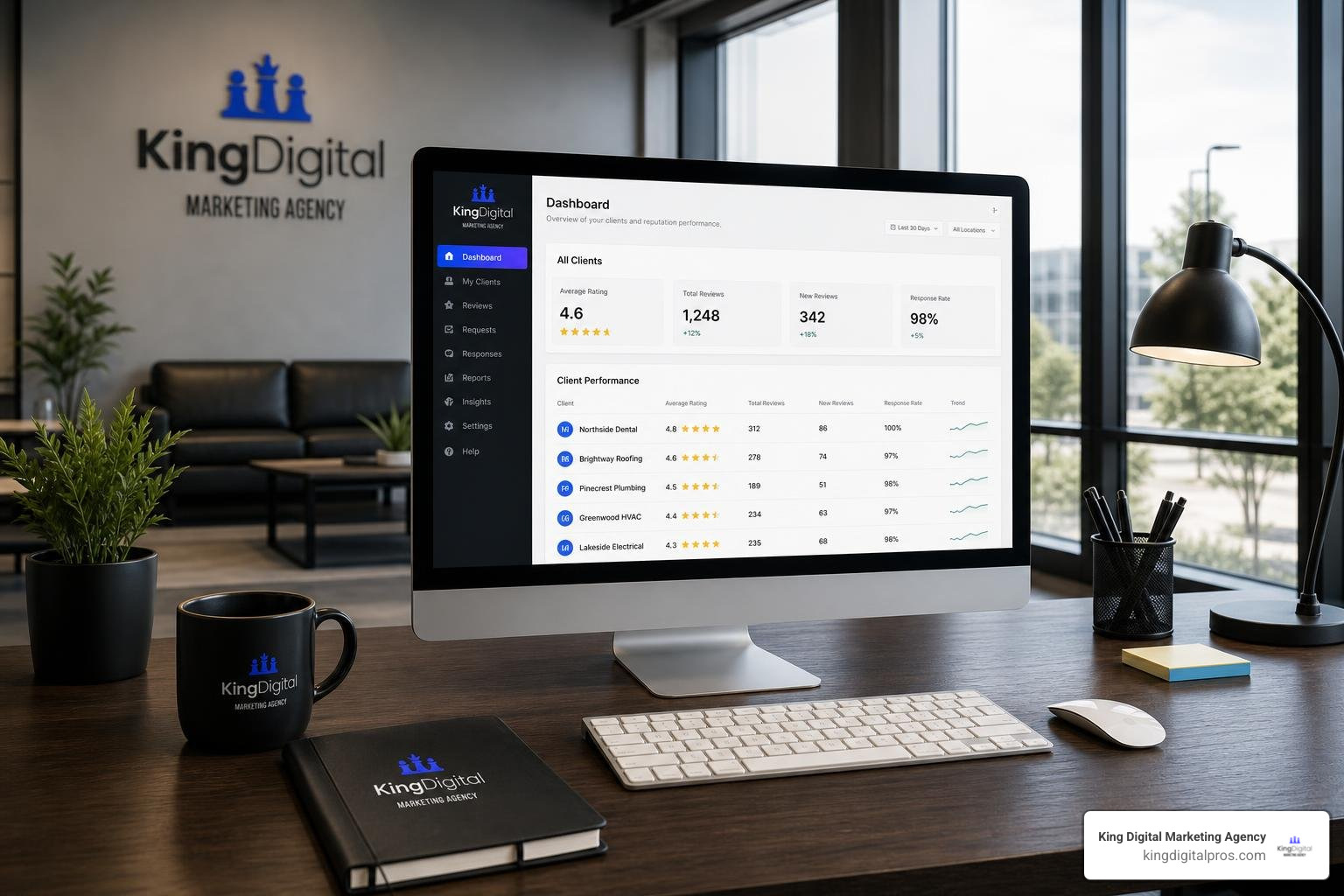
When we evaluate white-label infrastructure, agency scalability hinges on brand consistency. Your clients should see your logo, custom domain, and brand color palette across every touchpoint – from daily email alerts to automated PDF reports. This seamless experience builds long-term brand equity and strengthens client retention, positioning your agency as a comprehensive digital marketing partner rather than an unbundled vendor.

A dedicated partner infrastructure allows you to deploy tools such as White-Label Reputation Management Software [Free Trial] quickly across multiple client accounts, eliminating custom coding while preserving your distinct agency identity.
Key Features to Demand from a White Label Reputation Management Platform
Evaluating software platforms requires looking past basic interfaces to inspect core functionality. A top-tier platform must serve as a command center for your entire agency team while delivering a friction-free experience for your clients.

The table-stakes features every agency needs include:
- Centralized Universal Inbox: Consolidates reviews from Google Business Profile, Facebook, industry directories, and niche review portals into a single stream for rapid triage.
- Automated Review Generation: Triggers multi-channel outreach via SMS, automated email sequences, and on-site QR codes following a completed transaction.
- Multi-Location Hierarchy: Organizes parent-child account structures for franchises, regional chains, and multi-service businesses across territories like Corrales NM, Los Alamos NM, and Taos NM.
- Customizable Reporting Engines: Generates scheduled, automated PDF summaries highlighting review velocity, sentiment shifts, and local search visibility.
- Dedicated Client Portals: Provides secure, role-based client logins where business owners can review real-time feedback without seeing other agency accounts.
For a deeper dive into modern feature benchmarks, consult our review management software complete guide.
Evaluating AI-Powered Review Workflows in a White Label Reputation Management Platform
Artificial intelligence has evolved far beyond canned response templates. Modern natural language processing engines analyze review text, determine underlying emotional sentiment, and generate context-aware draft replies within seconds.
The primary danger with automated AI replies is generic, robotic messaging that damages customer trust. The best platforms allow agencies to configure client-specific knowledge bases, such as operating hours, refund policies, and specific service menus. This ensures replies sound like genuine local staff members while adhering strictly to brand voice guidelines. To learn more about modern software capabilities, explore the ultimate guide to software reputation management in 2026.
How a White Label Reputation Management Platform Protects Agency Profitability
Adding software-enabled services to your retainer packages creates recurring monthly revenue with minimal variable fulfillment costs. Instead of billing strictly for manual hours, your agency monetizes access to automated monitoring, listings synchronization, and review generation infrastructure.
Setting up predictable tiers protects agency margins and reduces client churn. Clients who rely on your dashboard for daily customer feedback view your agency as an indispensable operational partner. For pricing framework strategies, review how to choose online reputation management packages without breaking the bank.
Comparing Delivery Models: Full-Service Execution vs. Software Dashboards
Not every agency wants to log into a software dashboard daily to manage review requests, contest defamatory feedback, or optimize listings. When selecting a vendor, agencies must decide between licensing self-serve SaaS dashboards or partnering with a full-service back-end execution team.
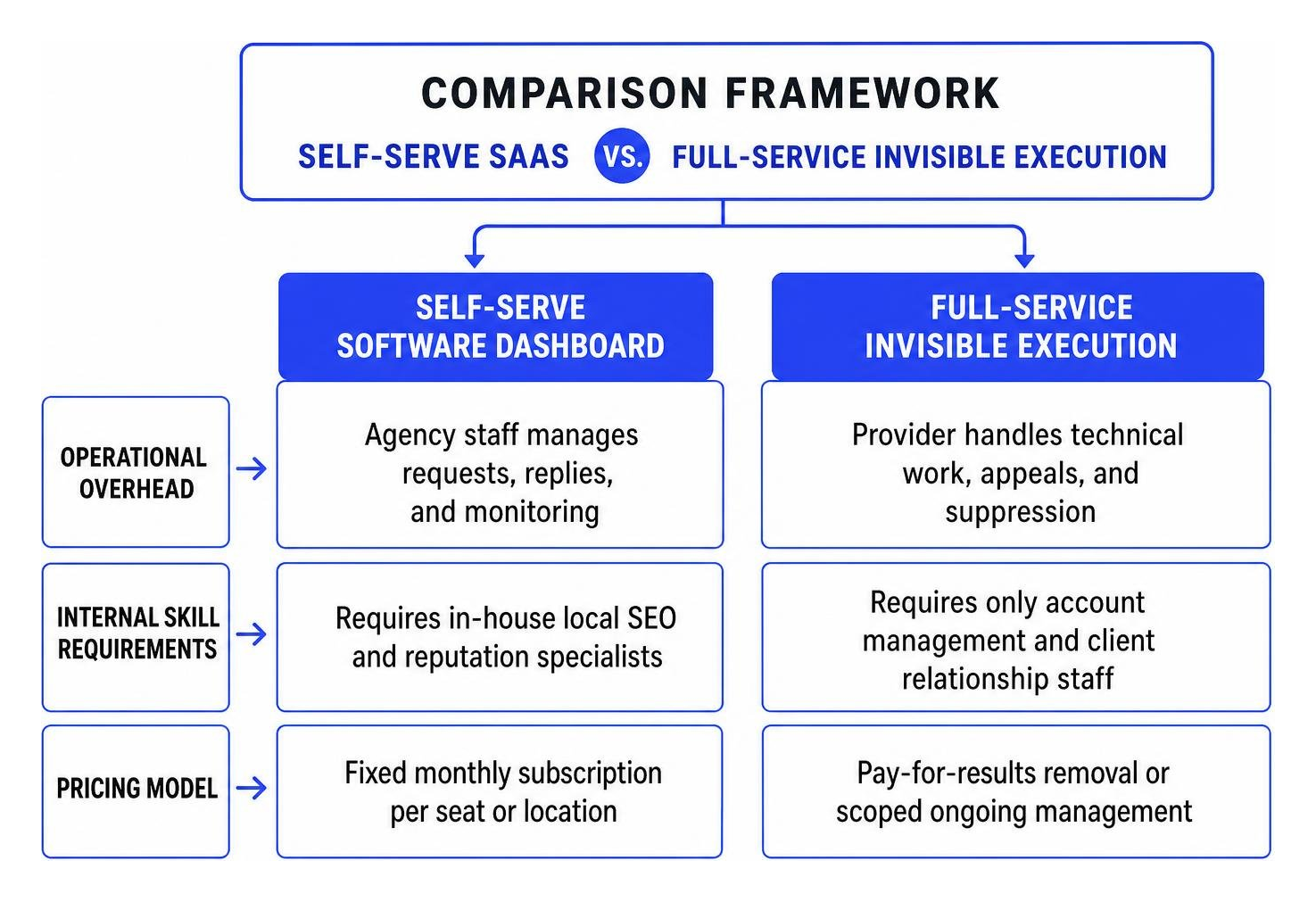
| Factor | Self-Serve Software Dashboard | Full-Service Invisible Execution |
|---|---|---|
| Operational Overhead | Agency staff manages requests, replies, and monitoring | Provider handles technical work, appeals, and suppression |
| Internal Skill Requirements | Requires in-house local SEO and reputation specialists | Requires only account management and client relationship staff |
| Pricing Model | Fixed monthly subscription per seat or location | Pay-for-results removal or scoped ongoing management |
| Delivery Risk | Agency bears the risk if review generation stalls | Pay-for-results models shift delivery risk away from the agency |
| Ideal Agency Fit | Agencies with existing fulfillment teams wanting toolsets | Agencies seeking new revenue lines without hiring specialists |
Pay-for-Results Removal and Search Suppression Services
Certain severe reputation challenges – such as non-compliant reviews violating platform policies, outdated public records, or defamatory third-party articles – require specialized legal and technical workflows. In these complex scenarios, standard SaaS dashboards are insufficient.
Collaborating with specialized back-end removal partners like White Label Reputation Management | Under Your Brand allows your agency to offer pay-for-results content de-indexing and negative article suppression. Under a performance-based model, your agency is billed only after offending content is successfully removed, eliminating upfront financial exposure while expanding your service catalog.
Seamless Integration with Local SEO and Listings Management
Reputation signals directly impact map pack rankings and local search visibility. Google’s local algorithm heavily weighs review velocity, average star ratings, keyword-rich customer feedback, and active business response rates.
Integrating reputation software directly with Google Business Profile management tools allows agencies to sync review generation with map listing optimization. When customer feedback mentions specific neighborhoods – from the East Mountains NM, Cedar Crest NM, and Tijeras NM to Edgewood NM, Sandia Park NM, and Grants NM – it reinforces geographic relevance and strengthens local search signals. For tactical implementation details, reference the ultimate google review management tool guide for local businesses.
Emerging Technology Trends Shaping Reputation Solutions in 2026
Modern reputation platforms must adapt to evolving consumer behaviors and search technologies. In September 2026, several technical capabilities separate leading platforms from legacy tools:
- Multilingual Sentiment Parsing: Modern customer bases are diverse. Platforms must accurately parse context, slang, and sentiment across multiple languages rather than relying on literal, word-by-word translation.
- Voice Search Query Optimization: Conversational queries on voice assistants prioritize businesses with pristine ratings and recent, detailed review activity.
- Cross-Channel Mention Aggregation: Real-time web listening alerts agencies to discussions across social media, forums, and local blogs before negative narratives gain traction.
Agencies must proactively monitor these multi-channel signals to safeguard client reputations; our guide on how to master brand reputation monitoring without losing your mind outlines effective workflows.
Specialized Solutions for Regulated Industries and Multi-Location Chains
Certain verticals require specialized compliance frameworks. Healthcare providers, for example, must adhere to strict HIPAA regulations. A standard reputation dashboard that allows public review responses referencing patient care details can expose a medical practice to severe legal penalties.
Leading platforms provide healthcare-specific safeguards, including role-based access, restricted response templates, and automated audit trails. For enterprise multi-location franchises, advanced platforms enable localized review routing, ensuring store managers receive alerts only for their specific branch while regional directors maintain aggregate performance oversight.
Frequently Asked Questions About Agency Reputation Software
What is the difference between white-label software and a referral partnership?
In a referral partnership, you send clients to a third-party vendor, receiving an affiliate commission while forfeiting control of the customer relationship and future upsell opportunities. With a white-label platform, your agency retains complete client ownership, manages billing margins directly, and delivers reports branded exclusively with your company assets.
How do multi-client platforms maintain review generation compliance?
Reputable reputation software strictly adheres to platform terms of service and federal guidelines, such as the FTC’s rules prohibiting review gating (the practice of filtering unhappy customers away from public review sites while directing only satisfied customers to post). Compliant platforms send neutral review invitations to all customers, provide clear opt-out mechanisms for SMS and email, and avoid incentivized review campaigns.
Can agencies integrate reputation monitoring with existing marketing stacks?
Yes. Leading platforms offer robust REST APIs and webhook support, allowing agencies to connect reputation workflows directly with HubSpot, Salesforce, Zapier, and custom client CRMs. This integration enables automated review requests immediately upon invoice payment or service ticket completion.
Choosing the Right Solution to Scale Your Agency
Selecting the ideal platform comes down to your agency’s operational goals. If your team possesses the bandwidth to manage daily campaigns, a feature-rich, white-labeled SaaS dashboard provides the control and automation needed to scale. If you prefer to deliver elite reputation and removal outcomes without adding internal headcount, an invisible, results-based back-end partner offers the cleanest path to high-margin recurring growth.
At King Digital, we specialize in optimizing local visibility, securing prominent Google Map rankings, and helping businesses systematically capture authentic customer feedback. If you are ready to implement high-impact review strategies for your organization or client portfolio, explore our dedicated review management services to get started.
