TL;DR:
- Search visibility measures the estimated organic clicks a website captures across relevant keywords, reflecting your overall share of search traffic. It combines ranking position, search volume, and click-through rates into a weighted percentage score, providing a comprehensive view of your online presence beyond simple keyword rankings. Improving visibility requires expanding your keyword portfolio, optimizing content, building credible backlinks, and tracking impressions and CTRs alongside traditional rankings.
Search visibility is defined as the estimated percentage of organic clicks a website captures across a tracked set of keywords, representing your site’s share of potential search traffic rather than a single ranking position. Most business owners track keyword rankings and assume that tells the whole story. It does not. Search visibility, also called organic search visibility, gives you a weighted view of your entire keyword portfolio, factoring in search volume and estimated click-through rates (CTR) to produce a score between 0% and 100%. Tools like Google Search Console, Semrush, and Moz all measure some version of this metric, and understanding it is the first real step toward growing your online presence with purpose.
What is search visibility and how is it calculated?
Search visibility measures the estimated percentage of organic clicks a site receives across tracked keywords, combining ranking position, keyword search volume, and estimated CTR into a single weighted score. Think of it as your share of the search market for the topics that matter to your business.
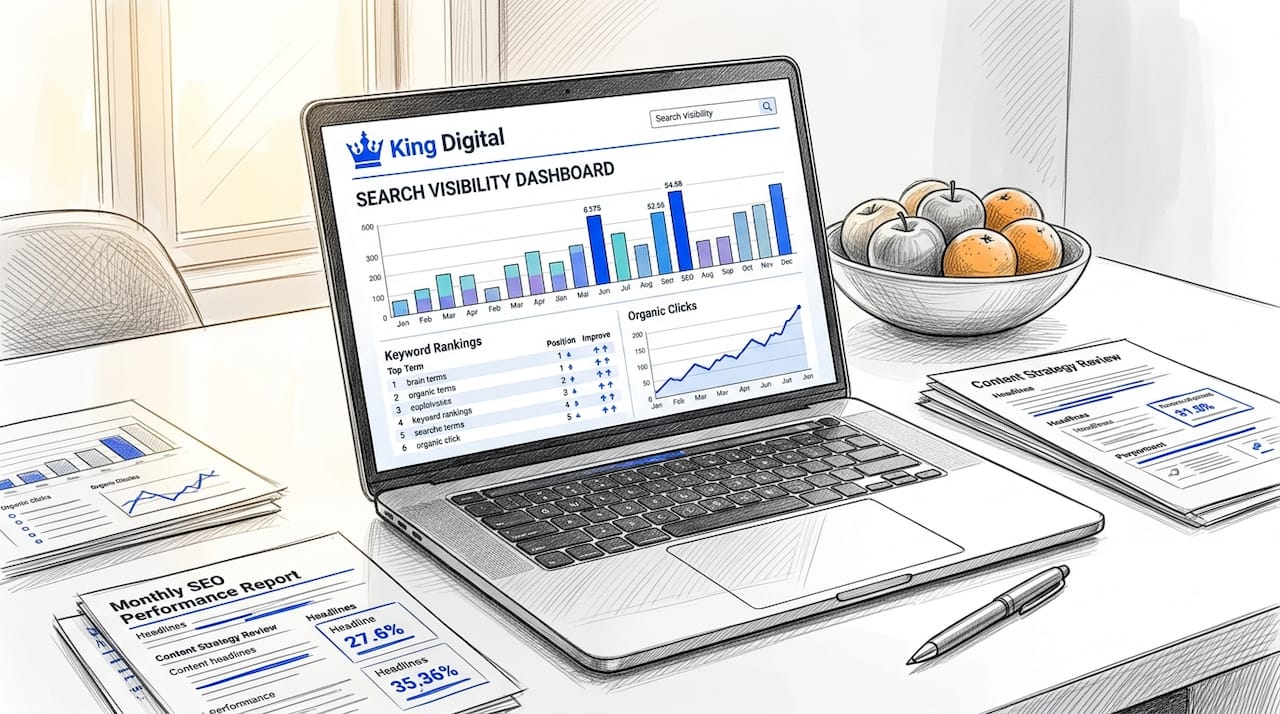
The weighted visibility formula
The calculation works like this: for each keyword you track, your ranking position maps to an estimated CTR (position 1 earns far more clicks than position 7), which is then multiplied by that keyword’s monthly search volume. Those weighted values are added up across your entire keyword set and divided by the total possible clicks if you ranked first for every keyword. The result is your visibility percentage.
Here is a simplified example to make this concrete:
- You rank position 1 for “Albuquerque plumber” (estimated CTR: 28%, search volume: 500/month) = 140 estimated clicks
- You rank position 5 for “emergency plumber near me” (estimated CTR: 7%, search volume: 1,200/month) = 84 estimated clicks
- You rank position 12 for “water heater repair” (estimated CTR: 1%, search volume: 800/month) = 8 estimated clicks
Your total estimated clicks are 232 out of a possible maximum. That ratio, expressed as a percentage, is your visibility score.
Google Search Console metrics and their role
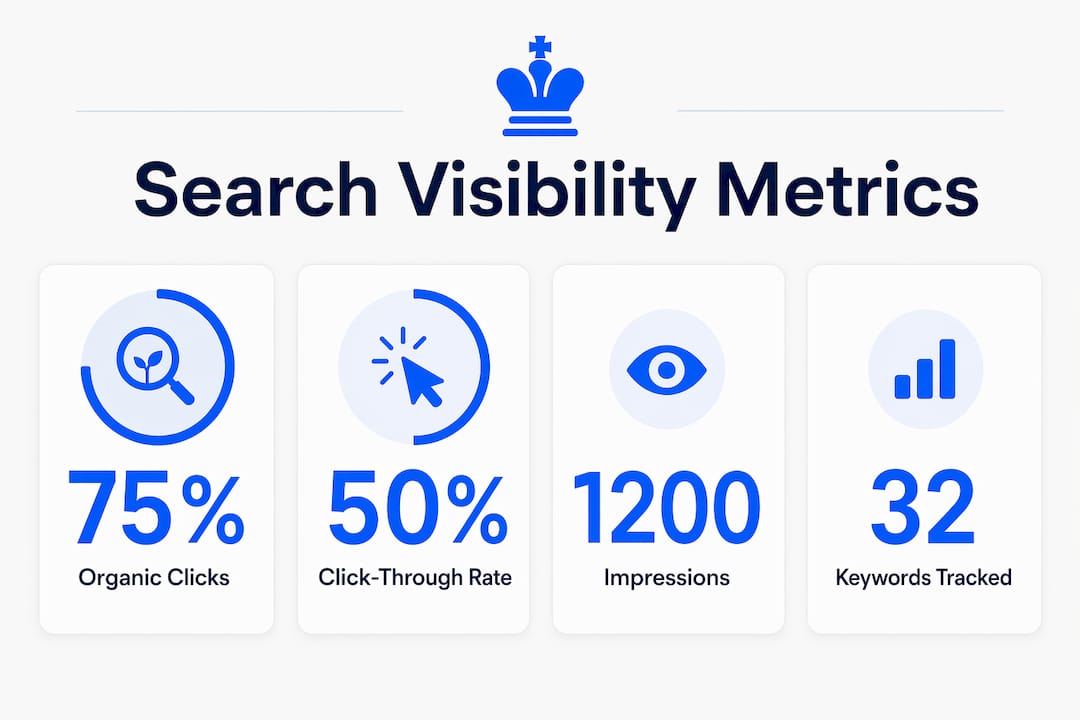
Google Search Console’s Performance report provides impressions, clicks, and CTR as the foundational data points for visibility measurement. Impressions count how many times your site appeared in search results. Clicks count how many users actually visited your site. CTR shows the percentage of impressions that converted to visits.
One critical nuance: impressions are only counted when a result appears within the user’s viewport, meaning results buried below the fold may not register at all. This makes impressions an imperfect proxy for total organic presence, especially for rankings below position 5 or 6.
| Metric | What it measures | Limitation |
|---|---|---|
| Impressions | Times your result appeared in search | Only counts viewport-visible results |
| Clicks | Times users visited your site from search | Does not reflect brand awareness |
| CTR | Percentage of impressions that became visits | Affected by SERP feature competition |
| Visibility score | Weighted share of potential organic clicks | Varies by keyword set used |
A visibility score is more meaningful than any single metric in that table because it synthesizes all of them into one number you can track over time.
Why search visibility beats keyword ranking as a strategy metric
Organic search visibility aggregates presence across all relevant SERPs, measuring your overall search real estate rather than individual keyword positions. This distinction matters enormously for small and medium-sized businesses making decisions about where to invest their SEO budget.
Here is why ranking alone misleads you:
- Rankings shift daily. Google updates its algorithm hundreds of times per year. A keyword you ranked third for last Tuesday may be fifth today, not because your content got worse but because a competitor published something new.
- One keyword does not represent your business. Your customers search using dozens of variations. A single ranking tells you nothing about how visible you are across that full range of terms.
- SERP features steal clicks. Featured snippets, People Also Ask boxes, local packs, and AI overview summaries all appear above traditional organic results. You can rank position 1 and still lose traffic to these features.
- AI answers change the equation. AI-powered search results increasingly feature summarized answers with citations rather than ranked links. Being cited in an AI answer represents a form of visibility that traditional rank tracking completely misses.
“Search visibility is your share of category demand captured. For a small business, that framing connects SEO directly to leads, calls, and sales, not just positions on a page.” — Search Engine Land
Pages may show rising impressions but stagnant clicks when AI answer boxes provide direct information to users without requiring a click. This means visibility is now a leading presence metric, while clicks are a lagging engagement metric. Tracking both together gives you the full picture of how your organic presence is actually performing.
For SMB owners in competitive local markets, this is especially relevant. Your goal is not to rank for one term. Your goal is to capture as much of the search demand in your category as possible, across every relevant query your potential customers type.
How to improve search visibility for your small business
Improving your search visibility comes down to expanding the number of keywords you rank for, improving your positions on existing keywords, and making sure your site earns clicks when it does appear. Here are the strategies that produce real results.
- Expand your keyword portfolio with long-tail terms. Short, high-volume keywords are dominated by large brands. Long-tail keywords like “best HVAC repair in Albuquerque” or “affordable bookkeeper for small business” have lower competition and higher purchase intent. Ranking for 50 long-tail terms often delivers more qualified traffic than chasing one broad term.
- Optimize content for search intent, not just keywords. Google ranks pages that best answer the searcher’s actual question. A page titled “Our Services” does not answer anything. A page titled “How Much Does Roof Repair Cost in New Mexico?” answers a specific question and earns visibility for it.
- Build an SEO-friendly site structure. Clean URL structures, fast load times, mobile responsiveness, and logical internal linking all signal to Google that your site is trustworthy and easy to crawl. Our guide on SEO-friendly website design covers the technical foundations in detail.
- Add structured data markup. Schema markup helps Google understand what your content is about and can earn rich results like star ratings, FAQs, and event listings in SERPs. These features increase your visual footprint and CTR even without a ranking change.
- Build backlinks and local citations. Off-page signals still carry significant weight. Earning links from local news sites, industry directories, and partner businesses tells Google your site is credible. For local businesses, consistent Name, Address, and Phone (NAP) citations across directories like Yelp, Google Business Profile, and the Better Business Bureau directly support local search visibility.
- Track impressions and CTR, not just rank. Use Google Search Console weekly to identify keywords where you have strong impressions but low CTR. Those are opportunities to rewrite title tags and meta descriptions to earn more clicks from existing visibility.
Pro Tip: Use the Search Console “Queries” report filtered by impressions over 100 and CTR under 3%. Every keyword on that list is a page where you already have visibility but are losing clicks. Fixing the title tag alone can increase traffic without any new content.
For a structured starting point, the SMB local visibility checklist from King Digital Marketing Agency walks through both technical and content steps in a practical sequence.
Comparing search visibility metrics across SEO tools
Visibility metrics vary across SEO tools and are only comparable when using the same keyword sets and timeframes. Changing the keywords you track can shift your visibility score without any real change in your actual search presence. This is one of the most misunderstood aspects of measuring visibility.
| Tool | Visibility approach | Best for |
|---|---|---|
| Google Search Console | Impressions, clicks, CTR from actual Google data | Baseline measurement, free, most accurate |
| Semrush | Visibility score based on tracked keyword rankings | Competitive analysis, keyword research |
| Moz | Domain authority and keyword ranking trends | Link analysis, authority benchmarking |
| Rankwise | Weighted CTR formula across keyword portfolio | Precise visibility percentage calculation |
The practical takeaway for SMB owners: start with Google Search Console because it uses real data from your actual search performance. Paid tools like Semrush and Moz add value for competitive research and tracking competitors, but they estimate visibility based on their own keyword databases, which may not perfectly match your actual traffic.
Clicks and impressions together must be analyzed to evaluate true user engagement, since impressions can rise without a corresponding increase in traffic. Beyond visibility score, the metrics SMBs should track consistently are: organic sessions, conversion rate from organic traffic, and cost per organic lead. These connect your search visibility directly to business outcomes, which is the only measurement that ultimately matters.
Pro Tip: Set a consistent keyword set in your SEO tool and do not change it month to month. Consistency in your tracked keywords is what makes visibility trend data meaningful. Swapping keywords mid-analysis is like changing the questions on a test and comparing scores.
For a broader view of which online marketing metrics deserve your attention alongside visibility, King Digital Marketing Agency has a dedicated resource for SMB decision-makers.
Key takeaways
Search visibility is the single most complete metric for understanding your organic search presence because it combines rankings, search volume, and CTR into one weighted score that reflects your true share of potential traffic.
| Point | Details |
|---|---|
| Visibility beats rank tracking | A weighted visibility score reflects your full keyword portfolio, not just one position. |
| Google Search Console is your baseline | Start with free GSC data before investing in paid tools like Semrush or Moz. |
| AI search changes the rules | AI answer citations now represent a form of visibility that traditional rank tracking misses. |
| Long-tail keywords build visibility faster | Targeting specific, lower-competition queries expands your keyword footprint more efficiently. |
| Connect visibility to business outcomes | Track organic conversions alongside visibility to measure real ROI, not just search presence. |
What I have learned from watching SMBs chase rankings instead of visibility
I have worked with dozens of small business owners who were convinced their SEO was working because they ranked number one for their business name. That is not SEO. That is brand recognition. Real search visibility means capturing demand from people who do not already know you exist.
The most common mistake I see is treating SEO as a ranking game rather than a market share game. A local contractor who ranks position 4 for 15 different service-area keywords will generate more leads than one who ranks position 1 for a single generic term. Visibility thinking forces you to ask: “What percentage of the people searching for what I offer actually find me?” That question leads to better decisions.
The AI shift in search is real and it is accelerating. I have seen clients gain AI-driven visibility through well-structured FAQ content and clear, authoritative writing, even when their traditional rankings did not move. That tells me the future of search visibility measurement will require tracking both traditional SERP presence and AI citation presence. SMBs that start building content for both now will have a significant advantage.
My honest advice: stop obsessing over where you rank for one keyword. Start measuring your visibility score across 20 to 50 relevant terms, correlate it with your actual lead volume, and optimize from there. The businesses I see grow consistently are the ones treating search as a share-of-market problem, not a position problem.
— Bernadette
Ready to grow your search visibility with King Digital Marketing Agency?
Understanding search visibility is one thing. Systematically improving it takes the right strategy, the right tools, and consistent execution. At King Digital Marketing Agency, we work with small and medium-sized businesses to build organic search presence that translates into real leads and revenue, not just better-looking reports.
Our team conducts visibility audits, identifies keyword gaps, and builds search ranking strategies tailored to your market and your goals. We also design SEO-friendly websites built from the ground up to earn and hold organic visibility. If you are ready to stop guessing and start growing, let’s talk about what your visibility score should look like six months from now.
FAQ
What is search visibility in simple terms?
Search visibility is the percentage of potential organic clicks your website captures across a set of relevant keywords. A score of 10% means your site earns roughly 10% of the clicks available for the keywords you track.
How is search visibility different from keyword ranking?
Keyword ranking tells you where you appear for one search term. Search visibility aggregates your presence across many keywords, weighted by search volume and estimated CTR, giving a far more complete picture of your organic reach.
What tools measure search visibility?
Google Search Console measures impressions, clicks, and CTR from real Google data at no cost. Paid platforms like Semrush, Moz, and Rankwise calculate visibility scores based on tracked keyword portfolios and estimated CTR by position.
Why does my visibility score change when I add new keywords?
Visibility scores depend heavily on the keyword set used for calculation. Adding or removing keywords changes the denominator of the formula, which shifts your score even if your actual rankings have not changed.
How does AI search affect my visibility?
AI-powered search features like Google’s AI Overviews can display answers directly on the SERP, reducing clicks even when your visibility is high. Being cited as a source in AI answers represents a new form of visibility that traditional metrics do not yet fully capture.
Recommended
- What is search engine ranking? Guide for Albuquerque SMBs
- Web Design for SMBs: What You Need to Know
- Unlock Your Online Visibility with Google Business Profile | King Digital Marketing Agency
- Boost Local Visibility: 2025’s Ultimate Guide
