
Start With Copy, Then Design Around It
For effective copywriting web design, start by defining who your ideal customer is, what problem they need solved, and what action you want them to take. Then write the page message and headings before finalizing the layout. This gives your designer a clear structure for sections, buttons, calls to action, and visual emphasis.
A good website is not just attractive. It should quickly answer a visitor’s main question: How can this business help me? Clear, customer-focused copy helps local prospects understand your offer, trust your expertise, and contact you instead of returning to search results.
Copy and design work as one system. The copy sets the message hierarchy and user journey; the design makes that journey easy to scan, read, and act on. When design comes first, businesses often end up forcing important details into tight text boxes, weakening both SEO and conversions.
I am Bernadette King, a digital marketing strategist and founder of King Digital Marketing Agency, with experience creating persuasive content and online growth strategies for small businesses and franchise owners. My work in copywriting web design connects brand messaging, search visibility, and conversion-focused website experiences.
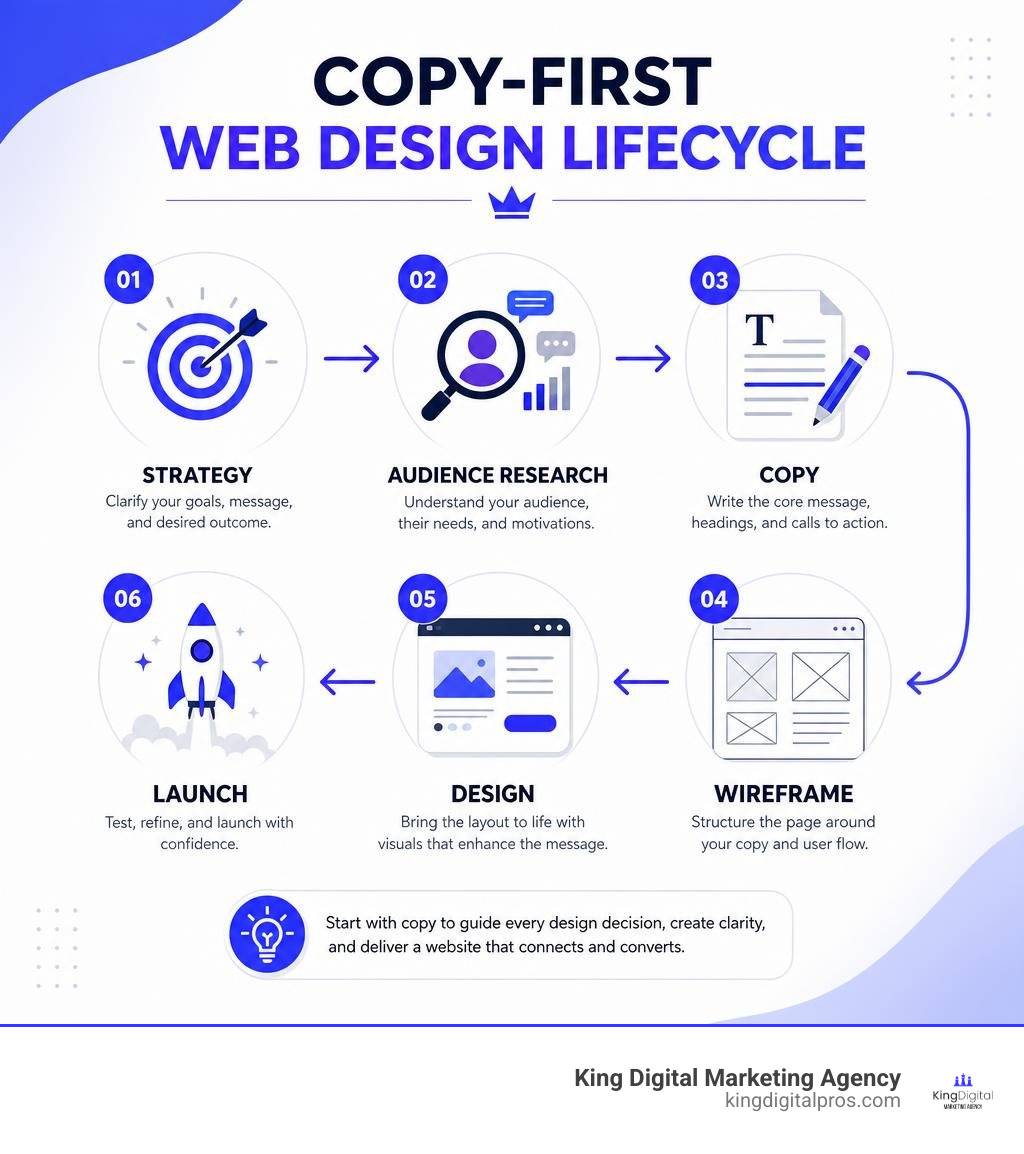
Copywriting web design terminology:
The Strategic Role of Copywriting Web Design Integration
When we build a digital presence, we must treat words and visual layouts as two halves of a single engine. Great aesthetics attract attention, but strategic language creates user momentum that carries a reader from curiosity to conversion. Out of more than one billion websites on the internet today, at least 250 million are active, which means passive text and generic templates are no longer enough to compete.
When you align written messaging with visual design from the start, your site provides immediate clarity. Visitors do not evaluate websites by separating the graphic art from the text. They perceive everything as a unified experience. If a layout is gorgeous but the words are confusing, bounce rates climb. Conversely, if the copy is brilliant but trapped in an unreadable wall of text, users abandon the page. Investing in Professional SEO Web Design: Why Your Site Needs More Than Just Good Looks ensures that your site balances visual appeal with high-converting substance.
| Strategy Dimension | Copy-First Workflow | Design-First Workflow |
|---|---|---|
| Information Hierarchy | Built around user intent, conversion goals, and search queries | Dictated by visual boxes, placeholder text, and rigid templates |
| SEO Optimization | Headers (H1-H3) naturally reflect keyword strategy and search depth | Headings are styled purely for visual symmetry, hurting rankings |
| Project Delivery | Speeds up timeline; designers build layouts to fit proven content | Causes severe project delays while clients struggle to fill empty boxes |
| Conversion Focus | CTAs align naturally with customer awareness and emotional momentum | CTAs are scattered arbitrarily based on empty template slots |
| User Experience (UX) | Scannable, modular content blocks designed for real reading habits | Awkward text wrapping, cramped matrixes, and truncated value propositions |

Brand Strategy and the Copy-First Approach
Before anyone opens a design tool or writes a single headline, there must be a defined brand strategy. Brand strategy acts as the architectural blueprint of your business. It identifies your core target audience, outlines your distinct perspective against competitors, and clarifies why you exist in the market.
Copywriting serves as the practical bridge connecting that underlying strategy to the verbal messaging on your site. When business owners skip brand strategy, web designers are forced to guess what visual tone to create, and copywriters are left without clear positioning. Creative organizations often leverage specialized initiatives, such as Creative Industries Division Grant Opportunities – NM …, to help build sustainable business foundations and clarify their market positioning. Developing strong messaging pillars first ensures your site accurately communicates your unique value proposition.
How Copywriting Web Design Drives User Journey and Awareness
Every visitor arrives at your website with a specific level of knowledge about their own pain points and the available solutions. If your copy does not match their awareness level, they leave. Eugene Schwartz outlined five distinct stages of customer awareness that dictate how page messaging should flow:

- Unaware: The visitor does not realize they have a problem. Content at this stage must highlight symptoms and relatable pain points before introducing solutions.
- Problem-Aware: The visitor knows their pain point but does not know what solutions exist. Copy should validate their struggle and explain how modern methods solve it.
- Solution-Aware: The visitor knows types of solutions exist but has not selected your specific service. Your copy must demonstrate why your approach is superior.
- Product-Aware: The visitor is familiar with your business but has not committed. Here, copy focuses on specific features, case studies, and risk reversal.
- Most Aware: The prospect is ready to buy and only needs to know the offer details, pricing, and straightforward steps to get started.
Understanding these awareness tiers allows you to implement the foundational Components of High-Converting Websites. By calibrating calls to action (CTAs) across the page, using low-friction exploratory buttons near the top and high-intent inquiry buttons near the bottom, you guide prospects smoothly along the conversion journey.
Core Architecture: Structuring Essential Pages and Messaging
Every high-performing website relies on a structured ecosystem of foundational pages. Rather than overwhelming readers with everything at once, each page should fulfill a specific operational goal within your inbound sales pipeline.
A standard website conversion architecture requires five core pages:
- Homepage: The primary front door that establishes immediate positioning, answers what you do, qualifies the audience, and directs visitors deeper.
- About Page: The trust engine that shares your story, brand stance, core values, and team expertise while keeping the focus on how your experience benefits the customer.
- Service & Product Pages: The conversion engines that detail offerings, outline deliverables, address objections, provide social proof, and present clear purchasing paths.
- Contact Page: The frictionless gateway for inquiries, featuring clear contact channels, operational hours, location details, and straightforward form fields.
- Blog / Resource Hub: The organic traffic builder that educates readers, targets strategic search queries, and establishes domain authority.
Blueprinting Key Website Pages
When designing individual pages, every section must follow a deliberate narrative flow. On the homepage, your hero section should immediately communicate who you help, how you help them, and the primary benefit you deliver. For local businesses seeking to capture regional markets, partnering with specialists in Website Design Albuquerque ensures these layout zones match user behavior.
Your service pages need clear sectioning: begin with the primary transformation you provide, back it up with process steps, present verifiable testimonials, and finish with a strong call to action. A complete strategy also incorporates The Complete Guide to Small Business Copywriting Services to ensure brand consistency across every digital asset.
Integrating Copywriting Web Design with SEO Architecture
Search engine optimization and website copywriting must operate in complete harmony. SEO copy requires roughly 300 to 500 words per page to establish topical relevance and give search engines sufficient context to index content properly.
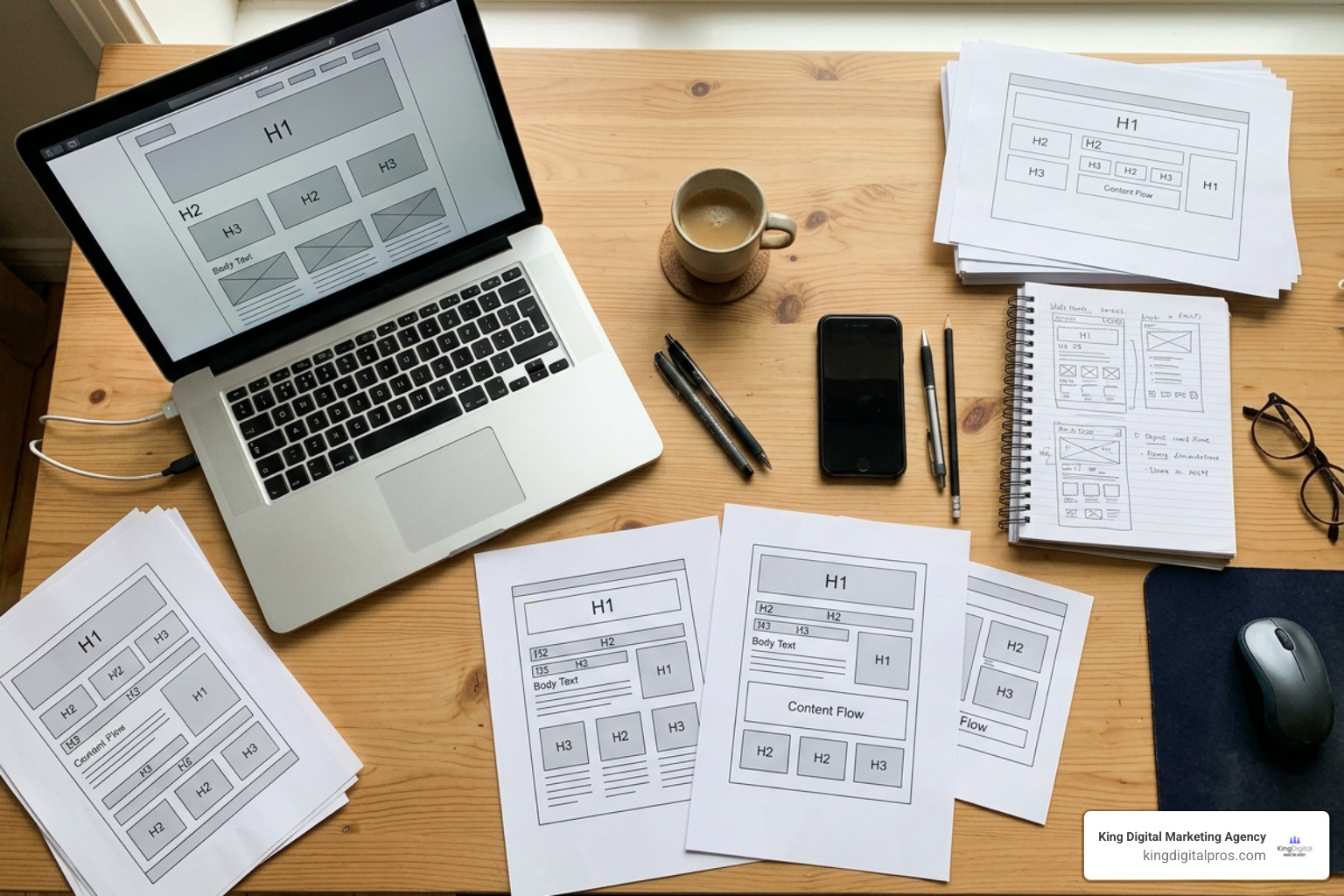
When copy is written alongside visual design, you can maintain correct semantic heading tags (H1, H2, H3) without breaking visual aesthetics. Working with a combined Website Designer and SEO specialist prevents situations where web designers alter heading hierarchies purely for font sizing. For comprehensive strategies on balancing indexation with conversion layouts, review The Complete Guide to SEO-Friendly Website Design.
When optimizing regional websites, you can also apply established Website Content Optimization Steps for Albuquerque SMBs to ensure local search intent matches on-page messaging.
Step-by-Step Process to Merge Copy and Design Flawlessly
Creating a high-converting website requires a structured, phase-based production process. When copywriters and web designers collaborate from project discovery, client bottlenecks vanish and project delivery accelerates.
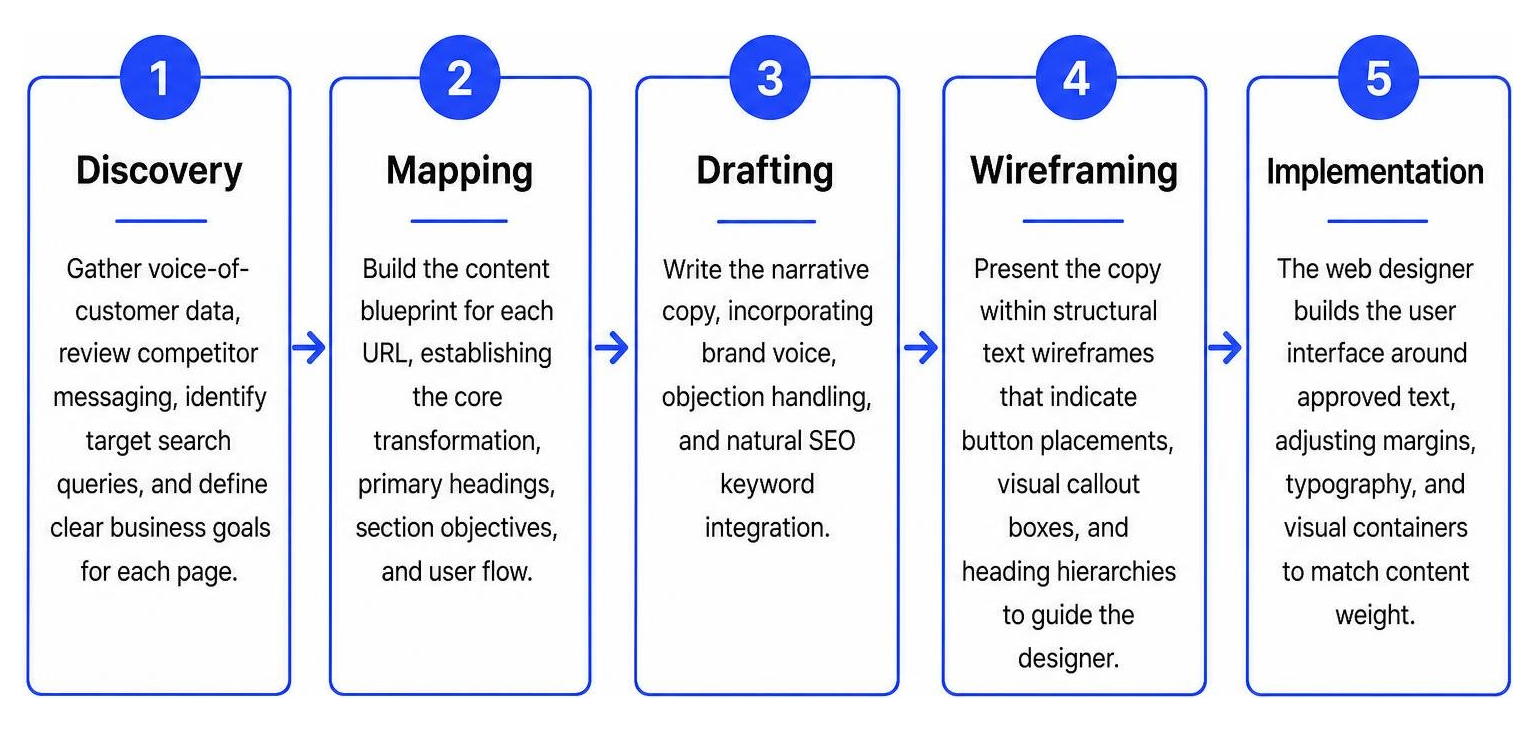
- Discovery and Research: Gather voice-of-customer data, review competitor messaging, identify target search queries, and define clear business goals for each page.
- Message Mapping and Outline: Build the content blueprint for each URL, establishing the core transformation, primary headings, section objectives, and user flow.
- Drafting and Refinement: Write the narrative copy, incorporating brand voice, objection handling, and natural SEO keyword integration.
- Wireframe Formatting: Present the copy within structural text wireframes that indicate button placements, visual callout boxes, and heading hierarchies to guide the designer.
- Design Implementation & Review: The web designer builds the user interface around approved text, adjusting margins, typography, and visual containers to match content weight.
Wireframing and Visual Hierarchy
Copywriters often structure drafts using modular wireframe documents that serve as visual blueprints. Rather than delivering a raw text document, wireframed copy specifies button text, column breaks, background color shifts, and social proof placements.
This collaborative approach ensures microcopy, such as form placeholder text, error messages, button labels, and subtext, receives equal attention. When visual weight mirrors informational importance, readers move effortlessly through the interface without encountering visual or cognitive friction.
Writing High-Converting Content for Non-Writers
If you write your own website copy, keep the process simple, empathetic, and grounded in your customers’ everyday reality:
- Write the way you speak: Avoid stiff, academic corporate jargon. Conversational copy builds trust and keeps visitors engaged.
- Focus on benefits over features: A feature explains what your service does; a benefit explains what positive transformation the client experiences.
- Use short, scannable paragraphs: Keep text blocks between one and three sentences to ensure effortless reading on mobile devices.
- Incorporate voice-of-customer phrasing: Use the exact words, questions, and frustrations your clients express during consultations.
- Edit ruthlessly: Remove fluff, filler adjectives, and redundant explanations that distract from your primary conversion goal.
Frequently Asked Questions About Copywriting and Web Design
Should copy always come before web design?
Yes. Writing copy first ensures that the visual design amplifies a strategic message rather than forcing words into rigid, arbitrary containers. When visual templates come first, copywriters are forced to adhere to restrictive character limits, omit essential trust elements, and compromise SEO heading hierarchy. Establishing copy first clarifies the layout needs and eliminates the project delays that occur when business owners struggle to write content for pre-built pages.
How much does professional website copywriting typically cost?
Professional website copywriting services generally start around $4,000 for standard small business websites and can exceed $50,000 for complex enterprise builds. Mid-sized business overhauls and conversion sprints often range between $3,500 and $15,000 depending on page count, research depth, customer interviews, and technical wireframing requirements.
Investing in expert copy pays rapid dividends. For example, direct-to-consumer brand Hairstrong experienced an immediate 266% increase in conversion rates after launching refreshed website copy, while other businesses have tripled their monthly revenue simply by replacing outdated text with conversion-focused messaging.
How do you choose between DIY, DWY, and DFY copywriting?
Choosing the right approach depends on your current budget, internal writing skill, and timeline:
- Do-It-Yourself (DIY): Best for early-stage startups with limited capital. You write the copy yourself using proven wireframe templates and copywriting frameworks.
- Done-With-You (DWY): Ideal for growing businesses that want strategic guidance. You collaborate with a copywriter through strategy intensives, message audits, and structured editing sessions.
- Done-For-You (DFY): Best for established companies wanting full-service execution. A professional copywriter conducts customer research, maps information architecture, writes full page drafts, and collaborates directly with your web designer.
Conclusion
A successful website requires seamless coordination between strategic messaging and clean visual design. Beautiful visuals capture your visitor’s attention, but persuasive, customer-focused copy converts that attention into meaningful business inquiries. By establishing brand positioning, mapping the customer journey, and developing copy before finalizing layouts, you create an intuitive digital asset that drives consistent revenue.
At King Digital Marketing Agency, we help businesses establish high-performing digital platforms that integrate persuasive copy, modern web design, and advanced map listing management to enhance search visibility. Explore our comprehensive Copywriting Services to elevate your website’s performance and turn everyday visitors into long-term clients.
