What Is Professional SEO Web Design (And Why It Matters for Your Business)
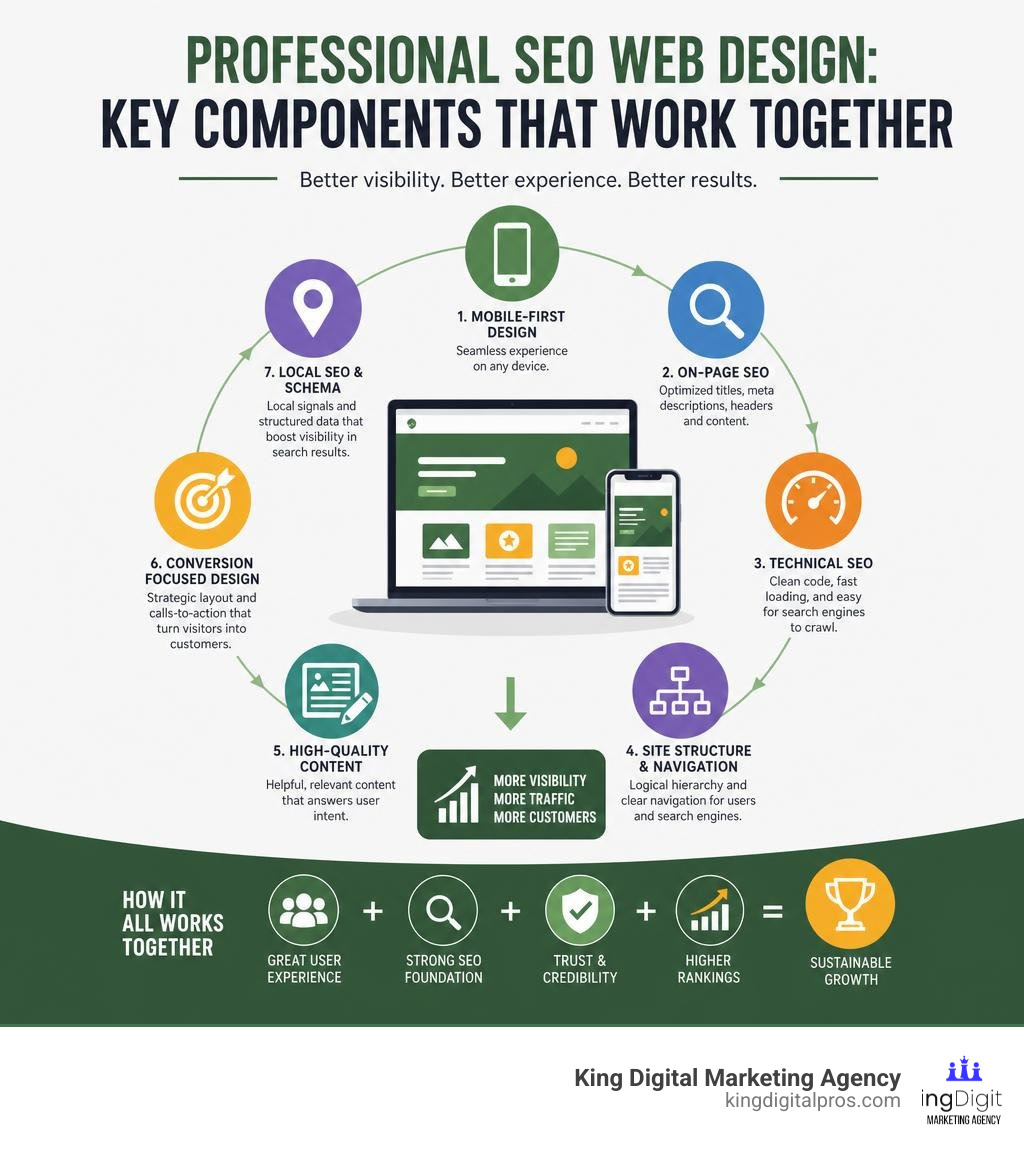
Professional SEO web design is the practice of building a website that is both visually compelling and technically optimized for search engines – from the very first line of code.
Here is what that means in plain terms:
| Element | Basic Web Design | Professional SEO Web Design |
|---|---|---|
| Visual design | Yes | Yes |
| Mobile-first layout | Sometimes | Always |
| On-page SEO (titles, meta, headers) | Rarely | Built in from day one |
| Technical SEO (clean code, speed, crawlability) | No | Yes |
| Conversion-focused layout | No | Yes |
| Local SEO integration | No | Yes |
| AI and schema readiness | No | Yes |
The core idea is simple: design and SEO are not two separate steps. They are one discipline, solved together, from the start.
Here is the truth that most web design companies will not say out loud: a beautiful website that no one can find is just an expensive digital brochure. And an SEO-optimized site with a clunky, confusing layout will send visitors straight to your competitor.
Over 60% of all web searches happen on mobile devices, and there are now more than 1 billion websites competing for attention. Getting found – and converting visitors once they arrive – requires more than good looks.
I’m Bernadette King, founder of King Digital Marketing Agency, and I’ve spent years helping local businesses and franchise owners turn underperforming websites into lead-generating assets through professional SEO web design. In the sections below, I’ll walk you through exactly what it includes, what it costs, and how to choose the right partner to do it right.
Simple guide to professional seo web design terms:
- SEO Friendly Website Design
- how to create an seo friendly website design structure
- search engine friendly website design
Why Most Business Websites Fail (And How to Fix Them)
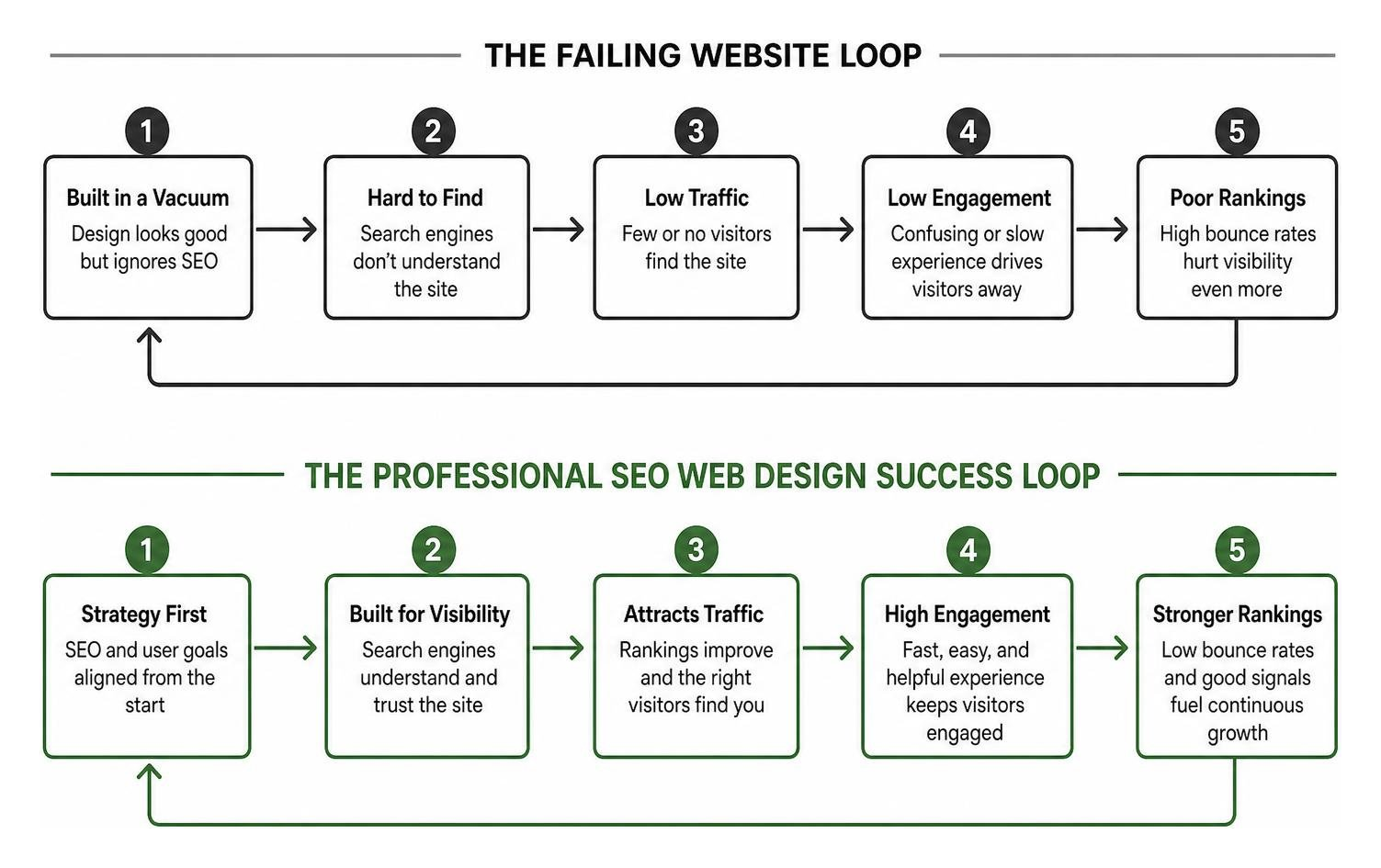
Most business websites fail because they are built in a vacuum. A business owner typically hires a graphic designer to make the site look stunning. The designer creates a visual masterpiece, launches it, and hands over the keys.
But weeks go by, and the phone doesn’t ring. The site is practically invisible because search engines have no idea what it is about or whom it is for. This is what we call the “shop in the desert” scenario – you have a beautiful storefront, but there are no roads leading to it.
Conversely, some websites have basic SEO elements slapped onto a terrible layout. Visitors might find the site through a Google search, but they immediately leave (bounce) because the page is clunky, slow, or hard to navigate. High bounce rates signal to Google that your page isn’t helpful, which quickly drags down your search rankings.
To fix these failures, we must understand that website design drives SEO success. A successful website balances search engine visibility with high user engagement.
Why Basic Templates Fail Without Professional SEO Web Design
When budgets are tight, it is tempting to purchase a cheap pre-made template and call it a day. However, generic templates are built to appeal to everyone, which means they are packed with unnecessary features, bloated code, and heavy scripts. This excessive code slows down your page loading speeds significantly.
Furthermore, basic templates lack a logical layout designed for your specific industry. They do not prioritize your unique calls-to-action (CTAs) or establish the trust signals required to turn a local visitor into a paying customer. To build a site that stands out, you need a strategy tailored to your target audience. For a deeper dive into clean, high-performing structures, check out our ultimate search engine friendly design guide.
Designing First vs. Integrating SEO From Day One
The traditional process of designing a website first and “adding SEO later” is a recipe for wasted time and money. When you build a site without search engine optimization in mind, you run into structural roadblocks. You might end up with:
- A confusing site architecture that search engines cannot crawl.
- Mismatched URL structures that require complex, messy redirects.
- Important keyword-targeted content buried where users and bots will never find it.
Retrofitting SEO onto an existing design is like trying to install plumbing after the concrete foundation of a house has already dried. By integrating SEO from day one, we align your site’s architecture with search engine guidelines from the very first wireframe. If you want to see how search engines view site structures, explore Google’s guide on search-friendly site architecture.
The Core Pillars of Professional SEO Web Design
To build a website that consistently ranks on the first page of search results, we focus on three core pillars: technical SEO, clean code, and crawlability. Search engine crawlers must be able to easily read, index, and understand every page of your site. If your code is messy or your navigation is broken, search engines will simply move on to your competitors.
To learn more about organizing your pages for maximum search engine compatibility, read our guide on how to create an SEO-friendly website design structure.
What is Included in a Professional SEO Web Design Package?
A comprehensive professional SEO web design package should never be limited to a simple face-lift. It is a complete, multi-disciplinary overhaul of your online presence. A standard high-performance package includes:
- Custom Visual Design: Tailored to your brand identity, avoiding generic templates.
- On-Page SEO Optimization: Writing clear meta tags, organizing header tags (H2s, H3s), and optimizing image alt text.
- Technical SEO Foundation: Creating XML sitemaps, optimizing robots.txt files, and ensuring clean URL structures.
- Content Strategy: Drafting high-quality, helpful copy that answers the exact questions your customers are searching for.
- Speed Optimization: Compressing images, minifying code, and leveraging modern hosting stacks to ensure rapid load times.
- Local SEO Integration: Structuring the site to rank in local map packs and regional search results.
For a comprehensive breakdown of what goes into a search-optimized build, check out the complete guide to SEO-friendly website design.
Mobile-First Performance and Core Web Vitals
Because over 60% of all web searches occur on mobile devices, Google uses mobile-first indexing. This means Google primarily evaluates the mobile version of your website to determine your search rankings.
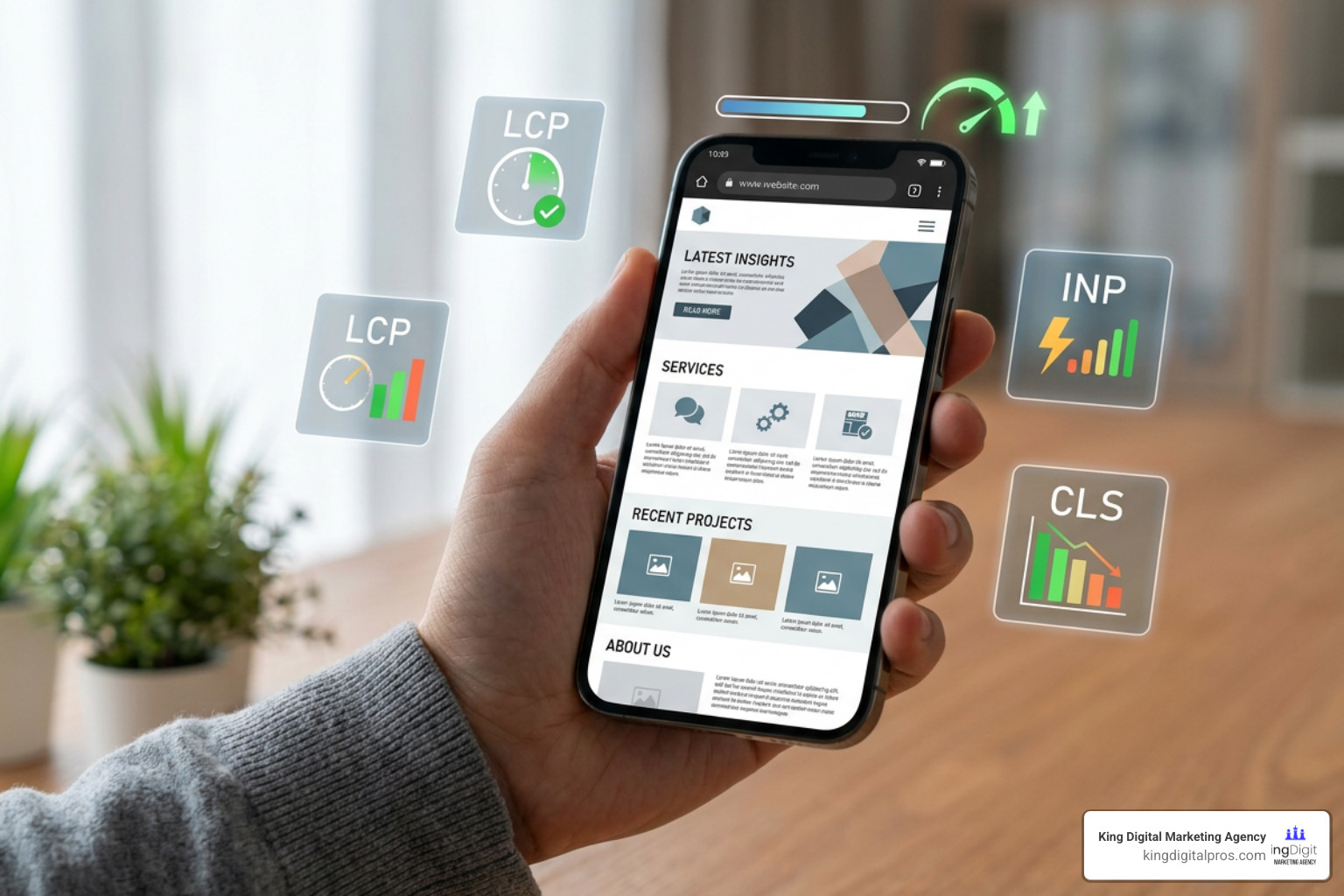
Furthermore, Google uses a set of metrics called Core Web Vitals to measure user experience:
- Largest Contentful Paint (LCP): How fast the main content of your page loads (target: under 2.5 seconds).
- Interaction to Next Paint (INP): How quickly your site responds when a user clicks a button or interacts with a page.
- Cumulative Layout Shift (CLS): How visually stable your page is as it loads (ensuring text or buttons do not jump around unexpectedly).
A professional design prioritizes these metrics by utilizing clean code, efficient image formats, and fast servers.
AI-Readiness, Schema Markup, and GEO
As we move through 2026, the search landscape is evolving rapidly. Traditional search engines are now paired with AI-driven search tools, such as Google’s AI Overviews, ChatGPT, Claude, and Perplexity.
To stay visible, your website must be optimized for Generative Engine Optimization (GEO) and Answer Engine Optimization (AEO). We achieve this by implementing structured data and schema markup. Schema is a specialized code added to your website that helps search engines and AI models understand exactly what your business offers, where you are located, and what services you provide. By structuring your data clearly, you increase the likelihood that AI tools will cite your business as a direct answer to user queries. You can explore the official Schema.org structured data guidelines to see how these search vocabularies are built.
The Real Cost of Delaying Search Engine Integration
Delaying your SEO integration is a costly mistake. If you launch a beautiful website that lacks search optimization, you will be forced to rely entirely on paid advertising (like Google Ads or Meta Ads) to generate traffic. The moment you stop paying for ads, your traffic drops to zero.
Organic traffic, on the other hand, is a self-sustaining asset. While it requires an upfront investment, it continues to deliver leads and sales month after month without an ongoing cost-per-click.
| Metric | Templated Design (No SEO) | Professional SEO Web Design |
|---|---|---|
| Upfront Cost | Low ($500 – $1,500) | Moderate to High ($2,500 – $10,000+) |
| Page Speed / Code | Bloated, slow | Clean, optimized, sub-second loads |
| Traffic Source | Paid ads only | Organic search, local maps, AI engines |
| Long-Term ROI | Low (continuous ad spend required) | High (compounding organic growth) |
| User Experience | Generic, confusing navigation | Intuitive, conversion-focused layout |
Expected Timelines and Compounding ROI
SEO is a long-term strategy, not an overnight fix. When you launch a professionally optimized website, you can expect to see initial indexing and ranking improvements within the first 30 to 90 days.
By months 6 to 12, the compounding effects of organic traffic begin to take hold. Your site gains domain authority, ranks for broader search terms, and becomes a reliable source of inbound leads. Over time, the cost per acquisition (CPA) of an organic lead drops significantly compared to paid search campaigns.
Local SEO and Conversion Rate Optimization
For service-based businesses, local search visibility is the lifeblood of customer acquisition. A professional web design must seamlessly integrate with your Google Business Profile (GBP) and local map listings.
By strategically placing clear calls-to-action (like “Call Now” or “Get a Free Quote” buttons) and trust signals (such as client reviews and security badges) throughout your local landing pages, you turn casual local searchers into active inquiries. If you are operating a small business in New Mexico, read our web design essentials to boost leads and SEO to see how local optimization works in practice.
Choosing the Right Partner: Freelancer vs. Boutique Agency vs. Enterprise Firm
When looking to build or redesign your website, you have three primary options:
- Freelancers: Often the most budget-friendly option, but they typically specialize in either design or coding, rarely both. If a freelancer lacks deep SEO knowledge, you may end up with a beautiful site that has major technical indexing issues.
- Enterprise Firms: Large agencies with massive teams. While they have extensive resources, you often get passed down to junior account managers, and the pricing can be prohibitively expensive for small-to-medium businesses.
- Boutique Digital Agencies: A middle-ground option that offers the best of both worlds. Boutique agencies provide dedicated, senior-level attention, cohesive design and SEO teams working under one roof, and transparent pricing.
At King Digital Marketing Agency, we operate as a boutique partner, ensuring your design, technical SEO, and local map listings are built to work together from day one. To help you evaluate your choices, read our guide on choosing a website designer and SEO specialist.
Frequently Asked Questions
Who needs professional SEO web design the most?
Any business that relies on local leads, e-commerce sales, or organic search visibility to survive needs professional SEO web design. This is especially critical for local service providers (like plumbers, electricians, and contractors), medical practices, law firms, and regional businesses looking to stand out in competitive markets like Albuquerque, Rio Rancho, or Santa Fe.
How long does it take to see results from an SEO-optimized website?
While search engines will crawl and index your new site within a few weeks of launch, significant ranking improvements and organic traffic growth typically take 3 to 6 months. By the 12-month mark, a properly optimized site will see compounding returns on investment as search engines establish trust in your domain.
Can you redesign an existing website without losing current rankings?
Yes, but only if you use a meticulous website migration process. To protect your existing search equity, you must perform a thorough audit of your current rankings, map out a 1:1 URL redirect strategy (using 301 redirects), and carefully monitor search performance for at least 30 days post-launch.
Conclusion
Your website is the digital front door to your business. While having a visually stunning design is important, it is only half of the equation. To build a highly successful online presence in 2026, you need a website that is engineered to rank, attract qualified traffic, and convert visitors into loyal customers.
At King Digital Marketing Agency, we specialize in helping businesses across New Mexico – including Albuquerque, Rio Rancho, Santa Fe, Taos, and Los Alamos – achieve maximum online visibility. Our expert team combines high-performance web design with advanced local SEO strategies and Google Business Profile optimization to ensure your business stands out on local map listings.
Ready to stop losing leads to your competitors? Let’s build a website that works as hard as you do. Get started with King Digital’s digital marketing services today!
