Why Conversion Funnel Optimization Techniques Are the Key to Turning Visitors Into Customers
The most effective conversion funnel optimization techniques – used by businesses of all sizes – follow this core process:
- Map your funnel – Define each stage from awareness to purchase
- Find drop-off points – Use analytics and heatmaps to spot where users leave
- Remove friction – Simplify forms, checkouts, and page load times
- Test and personalize – Run A/B tests and tailor content to each stage
- Build trust – Add social proof, clear CTAs, and transparent policies
- Iterate – Measure results and repeat
You’re getting traffic. But visitors keep leaving without buying, calling, or signing up.
That’s the classic “leaky funnel” problem – and it’s more common than you think. In fact, over 70% of online shoppers abandon their carts before completing a purchase. Meanwhile, the average global e-commerce conversion rate sits at just 3.65%.
The hard truth? More traffic won’t fix a broken funnel. Optimizing the funnel you already have is almost always more cost-effective than spending more on ads to drive new visitors in.
This guide walks you through exactly how to do that – step by step.
I’m Bernadette King, founder of King Digital Marketing Agency, where I’ve spent years helping local businesses and franchise owners apply conversion funnel optimization techniques to turn digital traffic into real, measurable revenue. As a digital strategist with roots in persuasive copywriting and audience engagement, I understand both the creative and analytical sides of what makes funnels actually convert.
Essential conversion funnel optimization techniques terms:
The Anatomy of a High-Performing Conversion Funnel
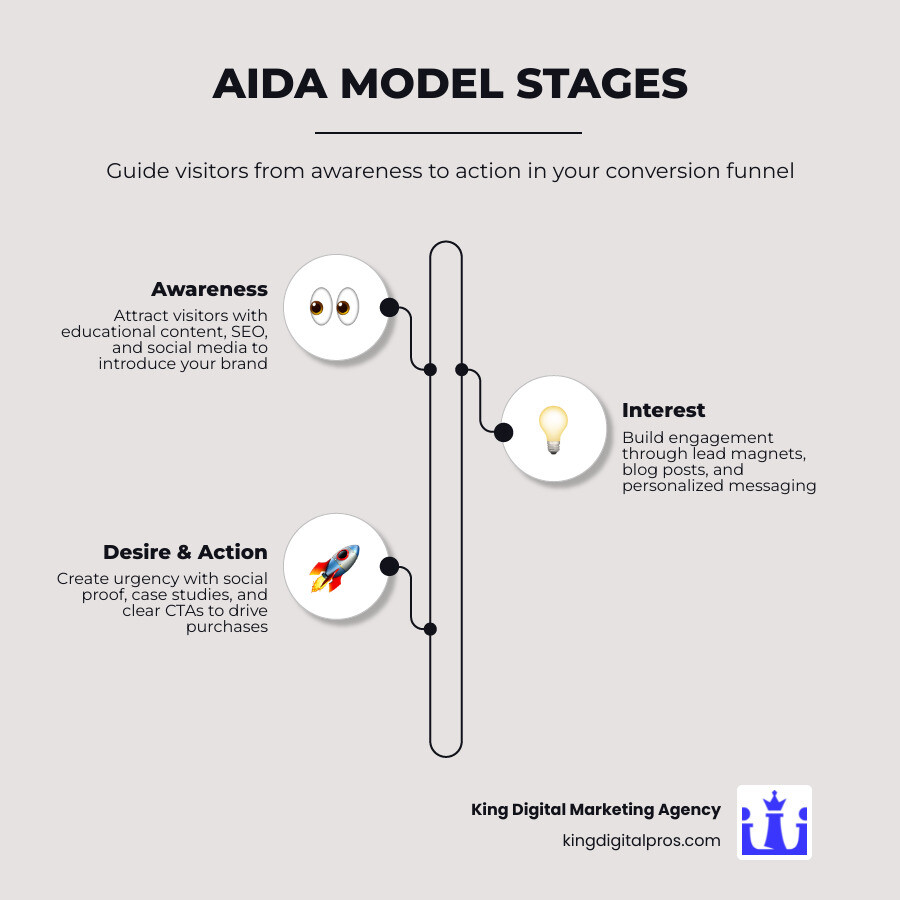
To master conversion funnel optimization techniques, we first need to understand the “skeleton” of the funnel itself. Most experts point back to the AIDA model, a psychological roadmap first introduced by Elias St. Elmo Lewis over a century ago. It breaks down the buyer’s journey into four distinct stages: Awareness, Interest, Desire, and Action.
While many people use the terms “sales funnel,” “marketing funnel,” and “conversion funnel” interchangeably, they are slightly different siblings. A marketing funnel focuses on the broad reach and lead generation. A sales funnel is often about the internal process of closing a deal. A conversion funnel, however, is the specific, data-driven path we design to lead a visitor toward a singular goal – whether that’s a purchase, a sign-up, or a phone call.
In modern digital marketing, we also look at the “Retention” stage. Why? Because the journey shouldn’t end at the “Thank You” page. Research shows that returning customers spend 67% more than new customers, making post-conversion engagement one of the most profitable conversion funnel optimization techniques available. By performing a regular conversion funnel analysis, we can ensure that we aren’t just attracting strangers, but building a community of advocates.
Furthermore, many modern strategists are moving toward the HubSpot Flywheel model, which views customers not as an output at the bottom of a funnel, but as the central energy that fuels growth. In this model, the momentum of a happy customer feeds back into the Awareness stage through word-of-mouth and referrals, creating a self-sustaining cycle of growth that traditional linear funnels often overlook.
How to Map and Analyze Your Current Funnel
Before we start fixing things, we have to know where they are broken. We often see businesses guessing where their “leaks” are, but in 2025, data tells the real story.
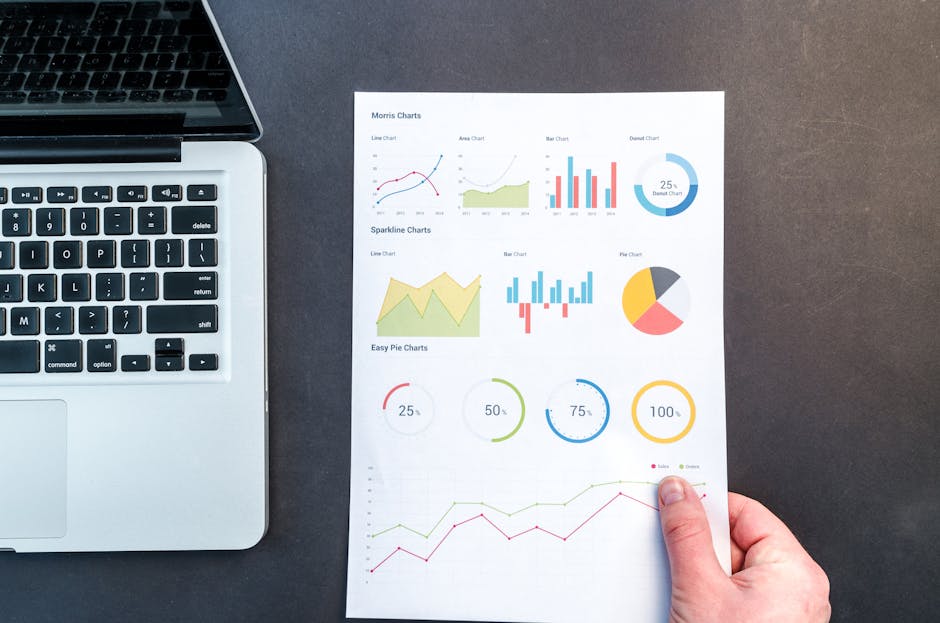
The first step is using tools like Google Analytics 4 (GA4). Within GA4, Google’s Goal Flow is an absolute goldmine. It allows us to see exactly where users are entering, where they are looping back, and where they are exiting the site. If you notice a 50% drop-off on your “Contact Us” page, you’ve found a primary bottleneck.
However, numbers only tell us what is happening. To understand why, we use qualitative tools:
- Heatmaps: Tools like Hotjar or Microsoft Clarity show us where people are clicking (or trying to click) and how far they scroll.
- Session Recordings: Watching anonymized recordings of real users can reveal if they are getting frustrated by a broken button or a confusing menu.
- User Personas: We always recommend creating at least two distinct buyer personas. A retiree in Santa Fe looking for landscaping services has different “certainty gaps” than a tech professional in Los Alamos.
By combining this data, you can move from a generic funnel analysis to a targeted optimization plan.
Proven Conversion Funnel Optimization Techniques for Every Stage
Optimization isn’t a “one-and-done” task; it’s a series of experiments. We use this how-to-optimize-a-marketing-funnel-for-conversions framework to ensure every touchpoint is intentional.
The secret is audience segmentation. You wouldn’t give the same sales pitch to a first-time visitor as you would to someone who has visited your pricing page three times. By using behavioral triggers and A/B testing platforms like VWO, we can test different headlines, colors, and value propositions to see what resonates most. For a deeper dive, check out our conversion funnel optimization-complete-guide.
Top-of-Funnel (TOFU) Conversion Funnel Optimization Techniques
The Top-of-Funnel is all about Awareness. At this stage, your audience doesn’t necessarily want to buy; they want to learn. For local businesses in Albuquerque, Rio Rancho, or Santa Fe, your TOFU often starts before a user even hits your website.
- Google Business Profile Optimization: This is a critical “pre-funnel” technique. When someone searches for “digital marketing services near me,” your map listing acts as the first touchpoint. Ensuring this is optimized with high-quality photos and reviews is essential for local visibility.
- SEO-Driven Educational Content: Creating blog posts that answer the “How-to” and “What is” questions relevant to your industry. For example, a landscaping company in Corrales might write about “The Best Drought-Resistant Plants for New Mexico Gardens.”
- Lead Magnets: Offering a free PDF guide or a checklist in exchange for an email address. This allows you to move the user from a passive visitor to an active lead.
- Social Media Engagement: Building brand value on platforms where your customers hang out. This is a great way to start a business with low investment and high reach.
Middle and Bottom-of-Funnel Conversion Funnel Optimization Techniques
Once you have their interest (MOFU) and they are considering a purchase (BOFU), the messaging needs to shift from education to validation. This is where you prove that you are the best solution for their specific problem.
One of our favorite statistics is that personalized CTAs can increase conversion rates by up to 202%. Instead of a generic “Submit,” try something like “Get My Free Landscaping Quote.” This small change reduces the mental effort required for the user to understand the next step.
At this stage, you must also address the “follow-up gap.” Did you know that 80% of sales happen after at least five follow-ups, yet many businesses stop after just one? We implement email automation and retargeting ads to keep your brand top-of-mind for those who showed interest but didn’t pull the trigger yet. Case studies and webinars are also highly effective here, as they provide the social proof and deep-dive information needed to overcome final objections.
Reducing Friction and Building Trust Across the Journey
Friction is the enemy of conversion. If a user has to think too hard or wait too long, they leave. This is especially true on mobile, which now accounts for 60.66% of internet traffic. If your site takes more than 3 seconds to load, you’re losing money. This performance threshold is backed by Google’s Core Web Vitals, which emphasize that page speed and visual stability are direct ranking and conversion factors.
| High-Friction Process | Low-Friction Optimization |
|---|---|
| 10+ mandatory form fields | 3-5 essential fields with autofill |
| Mandatory account creation | Guest checkout option |
| Hidden shipping costs | Transparent pricing shown early |
| Non-responsive mobile design | “Thumb-friendly” buttons and fast load times |
Trust is the other side of the coin. Since 90% of prospects trust suggestions from family and friends, displaying social proof like reviews and testimonials is non-negotiable.
Beyond testimonials, reducing “cognitive load” is essential for high conversion rates. According to the Nielsen Norman Group, users have a limited amount of mental processing power. If your layout is cluttered or your navigation is non-standard, you’re forcing the user to “work” to buy from you. We also recommend adding trust badges (like BBB or security seals) near your payment buttons to reassure users that their data is safe, especially for customers in smaller communities like Taos or Edgewood who value local reputation.
Frequently Asked Questions about Funnel Optimization
What is the difference between a sales funnel and a conversion funnel?
While they are related, a sales funnel is often a broader look at the entire sales process, including offline interactions and CRM management. A conversion funnel is a specific digital path designed to lead a user to a predefined action on your website, such as a lead form submission or a product purchase.
How do I identify where users are dropping off in my funnel?
The best way is to use a combination of GA4 “Funnel Exploration” reports and qualitative tools like Hotjar. Look for pages with high bounce rates or “rage clicks” where users are clearly getting stuck. Analyzing the “Path Exploration” in GA4 can also show you if users are getting distracted by irrelevant links.
Which tools are best for conversion funnel optimization techniques?
For analytics, GA4 is the standard. For behavioral insights, we love Hotjar and Microsoft Clarity. For A/B testing, VWO and Optimizely are industry leaders. If you are a local business in New Mexico, managing your Google Business Profile is also a critical “entry point” to your funnel.
Does mobile optimization really affect my conversion funnel?
Absolutely. With over 60% of traffic coming from mobile devices, a non-responsive site creates massive friction. Mobile users typically have higher intent but lower patience, meaning any delay in load time or difficulty in clicking a button will lead to immediate abandonment.
Conclusion
At King Digital Marketing Agency, we believe that conversion funnel optimization techniques are the secret sauce to sustainable growth. Whether you are in Albuquerque, Santa Fe, or Los Alamos, your digital presence should be a high-performing engine, not a “leaky bucket.”
By mapping your journey, analyzing the data, and relentlessly removing friction, you can turn more visitors into loyal customers. If you’re ready to stop guessing and start growing, explore our specialized services at digital-marketing-services-near-me-services/conversion-optimization. Let’s build a funnel that actually works for you.
