The Ultimate Guide to Conversion Funnel Optimization
Why Conversion Funnel Optimization Is Critical for Your Business
Conversion Funnel Optimization is the systematic process of improving each stage of your customer’s journey – from first awareness to final purchase – to increase the percentage of visitors who complete your desired action. Here’s what you need to know:
- What it is: Analyzing and improving the path customers take from finding your business to becoming paying customers
- Why it matters: Even small improvements can dramatically increase revenue without spending more on advertising
- Key benefit: Turn more of our existing website visitors into customers (typical improvements range from 10% to 223% ROI)
- Core stages: Awareness (TOFU), Consideration (MOFU), and Conversion (BOFU)
- Essential metrics: Conversion rate, click-through rate, cost per acquisition, and customer lifetime value
Think of our marketing like a physical storefront. We’ve invested in getting people through the door, but if only a handful actually make a purchase, something’s broken. That’s exactly what happens to most businesses online. Research shows that each step in a typical funnel reduces visitors by 30-80%, and nearly 70% of online shoppers abandon their carts due to friction in the checkout process.
The good news? We don’t need more traffic to grow our business – we need to convert more of the traffic we already have. That’s where Conversion Rate Optimisation comes in. By understanding why people drop off at each stage and systematically removing barriers, we can turn window shoppers into loyal customers.
I’m Bernadette King, founder of King Digital Marketing Agency, and I’ve spent years helping local businesses transform their online presence through strategic Conversion Funnel Optimization. My approach focuses on data-driven improvements that deliver measurable results – not guesswork or complicated tactics that waste your time.
In this guide, we’ll walk through everything you need to optimize your funnel: from attracting the right visitors, to nurturing their interest, to making it easy for them to say “yes.” You’ll learn practical strategies you can implement today, the metrics that actually matter, and how to avoid common pitfalls that drain your marketing budget.
The Core of Conversion Funnel Optimization: A Stage-by-Stage Guide
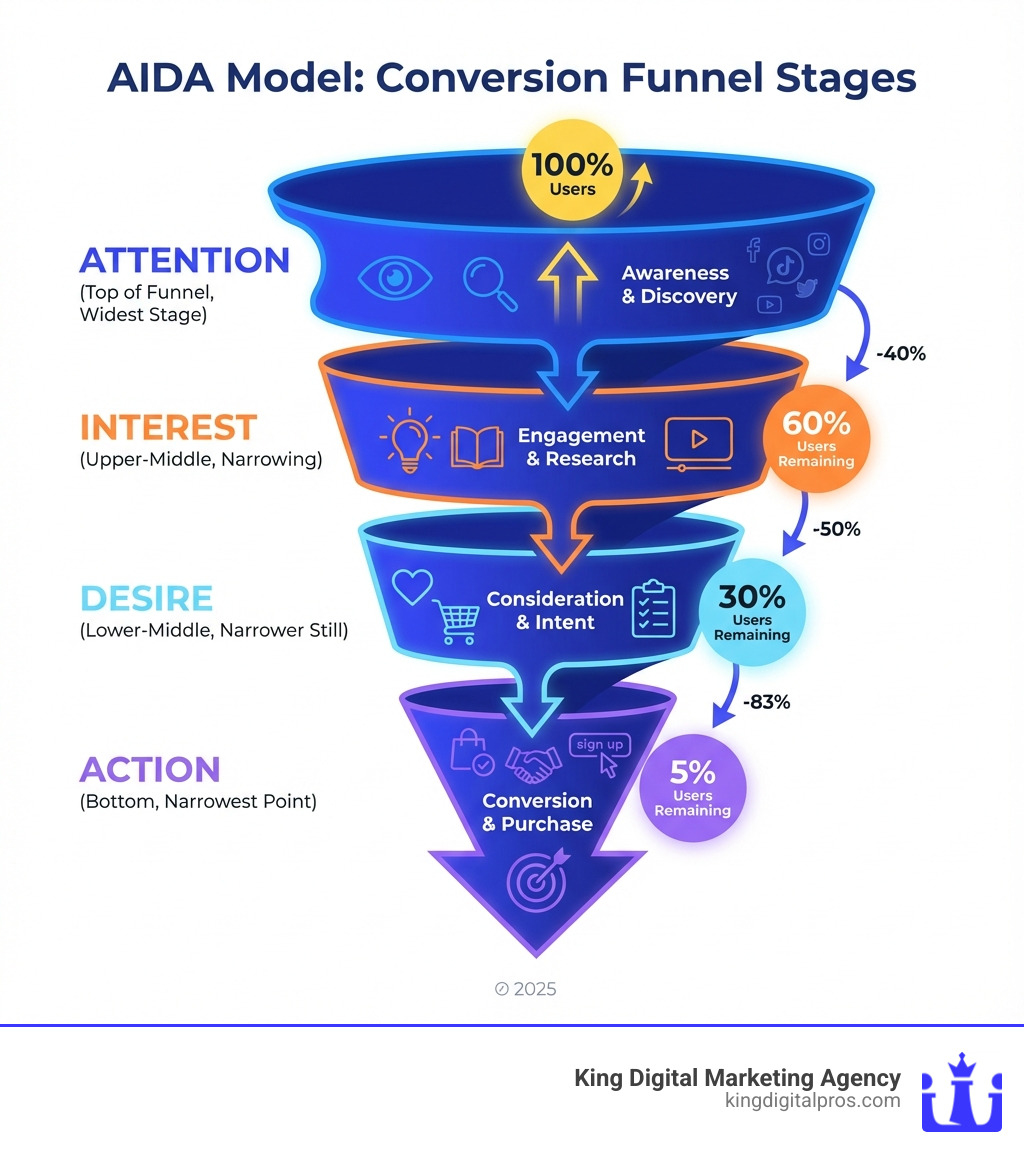
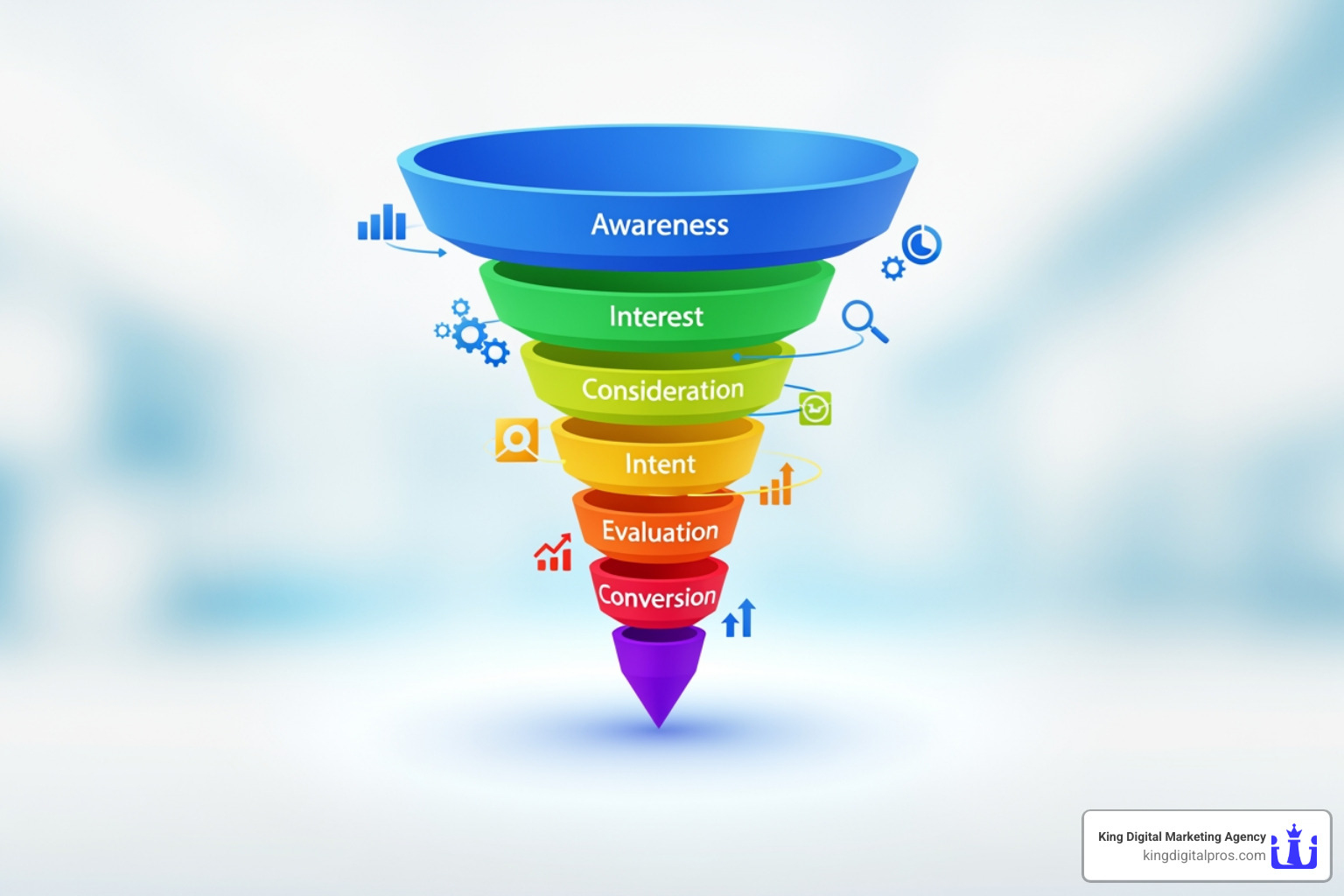
At its heart, Conversion Funnel Optimization is about understanding the customer journey and aligning our marketing efforts with their needs at every step. Think of it as a carefully crafted story, where each chapter guides the reader closer to the exciting climax – becoming a customer! This journey is often visualized using a three-stage model: Top-of-Funnel (TOFU), Middle-of-Funnel (MOFU), and Bottom-of-Funnel (BOFU).
While the customer journey is the entire, sprawling epic of a customer’s interaction with our brand, the conversion funnel is a tightly plotted short story within that epic, focused on guiding them toward a specific action. This distinction is crucial; it means we’re not just broadly engaging but strategically moving them from one point to the next. For more insights on how marketing efforts align with customer intent, a study on Bidding on the Buying Funnel for Sponsored Search Campaigns offers valuable context.
Mapping out this journey helps us identify touchpoints, potential pain points, and opportunities for engagement. By strategically creating content and experiences for each stage, we ensure a smoother, more effective path to conversion. This intentional approach is a cornerstone of Conversion Funnel Optimisation Best Practices.
Top-of-Funnel (TOFU): Building Awareness
The Top-of-Funnel (TOFU) is where potential customers first become aware of our brand, products, or services. At this stage, they might be identifying a problem they have or simply browsing for information. Our goal here is to cast a wide net, grab their attention, and offer value without a hard sell. We want to educate, entertain, and inspire, positioning ourselves as an authority in our field.

Strategies for effective TOFU optimization include:
- Search Engine Optimization (SEO): This is foundational. By optimizing our website and content for relevant keywords, we can attract organic traffic from people actively searching for solutions. Think about what your potential customers in Albuquerque or Santa Fe might be typing into Google. Improving our Search Ranking is key here. For local businesses, focusing on Local SEO Best Practices ensures we reach customers in our specific service areas.
- Content Marketing: Blog posts, informative videos, infographics, and guides are excellent for piquing curiosity. The Matomo video in our research, for instance, is a prime example of awareness-stage content, educating viewers about their alternative to Google Analytics. Our content should answer common questions and address potential pain points, even if it’s just general information about a topic related to our business.
- Social Media Marketing: Platforms like Facebook, Instagram, and LinkedIn are great for reaching broad audiences. We can share engaging content, run awareness campaigns, and build a community around our brand.
- Paid Advertising: Google Ads and social media ads can quickly drive targeted traffic to our awareness-stage content. We can use these to introduce our brand to people who might not yet know they need our solution.
The average prospect checks out multiple content pieces across various websites before moving to the next stage. So, our TOFU content needs to be compelling and insightful to keep them engaged and coming back for more.
Middle-of-Funnel (MOFU): Cultivating Interest and Desire
Once we’ve captured their attention, the Middle-of-Funnel (MOFU) is where we nurture those leads, deepen their interest, and cultivate a desire for our specific solution. At this stage, prospects are actively researching options and comparing different providers. Our goal is to reinforce trust, demonstrate our expertise, and show them why we are the best choice.
Key MOFU optimization strategies include:
- Lead Nurturing: This involves building a relationship with prospects over time. It’s about providing more detailed information that addresses their specific needs and concerns.
- Email Marketing: Once we’ve captured their email (perhaps with a valuable lead magnet like an ebook or webinar), we can send targeted email sequences. These emails can share case studies, product comparisons, or educational content that highlights our unique value proposition. Effective Copywriting Services are crucial for crafting engaging emails that convert.
- Landing Page Optimization: As prospects move deeper into the funnel, our landing pages need to be highly optimized. They should clearly articulate our offer, provide compelling content, and have a clear call to action. We can test headlines, copy, and even button colors to see what resonates most.
- Social Proof and Trust Elements: People are more likely to trust a product if they see others have used it successfully. A whopping 90% of prospects trust suggestions from family and friends, and online reviews function similarly. Incorporate customer testimonials, case studies, and reviews prominently on our MOFU pages. This is where Leveraging Your Reputation truly shines.
- Personalization and Segmentation: Not all leads are the same. By segmenting our audience based on their interests, demographics, or behavior, we can deliver personalized content and offers. For example, a local business offering HVAC services in Rio Rancho could send different content to residential vs. commercial leads.
Bottom-of-Funnel (BOFU): Driving Action and Conversion
The Bottom-of-Funnel (BOFU) is the decision-making stage. Prospects are now ready to make a purchase or commit to our service. Our objective here is to remove any remaining doubts, make the conversion process as seamless as possible, and provide that final nudge they need to take action.
Effective BOFU optimization strategies include:
- Reducing Checkout Friction: This is paramount. Research indicates that Nearly 70% of shoppers abandon carts due to long forms and tedious checkout processes. We must streamline our checkout or sign-up forms, asking only for essential information. Offering guest checkout, clear progress indicators, and flexible payment options can significantly reduce abandonment rates. For local service businesses, making it easy to book a consultation or request a quote is equally important.
- Compelling Calls-to-Action (CTAs): Our CTAs at this stage need to be crystal clear, action-oriented, and persuasive. “Buy Now,” “Schedule Your Consultation,” or “Get Your Free Quote” are examples. We can test different wording and placements to see what drives the most conversions and Boost Conversion Rates.
- Trust Elements and Guarantees: Reiterate why they should trust us. Display security badges (like VeriSign), BBB logos (if applicable to our local chapter), and clear guarantees. For a business in Grants or Cedar Crest, showcasing local community involvement can also build trust.
- Scarcity and Urgency Tactics: Used ethically and credibly, these can provide a final push. Messages like “Limited-time offer,” “Only X spots left,” or “Sale ends soon” can incentivize immediate action. However, authenticity is key; fake scarcity can erode trust.
- Retargeting: For those who almost converted but didn’t, retargeting ads are incredibly effective. We can show them personalized ads for the specific products or services they viewed, reminding them of the value and offering a special incentive to complete their action.
Analyzing and Measuring Your Funnel’s Performance
Optimizing our conversion funnel is not a one-and-done task; it’s a continuous, data-driven process. We need to be constantly analyzing, testing, and refining. This means understanding exactly what’s happening at each stage, identifying bottlenecks, and making informed decisions based on user behavior.
Think of it like being a detective: we’re looking for clues in the data to figure out why people are dropping off and how we can make their journey smoother. This systematic approach forms the basis of effective Funnel Analysis. Our first step, before any analysis, is to properly Set up a goal in Google Analytics to track the desired actions and user flow.
Key Metrics for Conversion Funnel Optimization Analysis
To truly understand our funnel’s health, we need to track specific metrics that provide insights into user behavior and our marketing effectiveness:
- Conversion Rate: This is the percentage of visitors who complete a desired action. It’s the ultimate indicator of our funnel’s efficiency.
- Click-Through Rate (CTR): The percentage of people who click on a link or ad after seeing it. A higher CTR indicates our messaging is compelling at the TOFU and MOFU stages.
- Cost Per Acquisition (CPA): How much it costs us to acquire one customer. We want our CPA to be significantly lower than our Customer Lifetime Value (LTV) for sustainable growth.
- Customer Lifetime Value (LTV): The total revenue we expect to generate from a customer over their relationship with our business. Optimizing our funnel to attract high-LTV customers is critical. Understanding How to Calculate Lead Value helps us prioritize our efforts.
- Bounce Rate: The percentage of visitors who leave our site after viewing only one page. A high bounce rate, especially on landing pages, indicates a problem with relevance or user experience.
- Average Order Value (AOV): The average amount spent per customer transaction. Optimizing for AOV (through upsells and cross-sells) can significantly boost overall revenue.
Essential Tools for Analysis and Testing
Just like a carpenter needs the right tools, we need the right technology to effectively analyze and optimize our conversion funnels.
Here are some essential categories and examples:
- Analytics Software: Tools like Google Analytics (GA4) are foundational. They provide insights into website traffic, user behavior, traffic sources, and conversion metrics. We can see where users enter our site, how they steer, and where they exit.
- Heatmap Tools: Heatmapping software (e.g., Hotjar, CrazyEgg, Microsoft Clarity) visually shows us where users click, scroll, and hover on a webpage. This helps us identify areas of interest, confusion, or ignored content.
- Session Recording Tools: Platforms like Fullstory, Userpilot, Mixpanel, Amplitude, Pendo, and Heap record actual user sessions. Watching these recordings can reveal “why” users drop off, highlighting specific UX issues or points of friction that static data alone might miss.
- A/B Testing Tools: Tools such as Optimizely, VWO, SiteSpect, and AB Tasty allow us to create and test different versions of our webpages, headlines, CTAs, or other elements to see which performs better. This is crucial for making data-driven improvements.
- Usability Testing Platforms: While A/B testing gives us quantitative data, usability testing provides qualitative insights. We can use tools like UserTesting.com or conduct a “Mom Test” (having a non-tech-savvy person steer our site) to understand user challenges. Jakob Nielsen’s Usability 101: Introduction to Usability is a classic resource for understanding these principles.
- Surveys and Feedback Tools: Tools like SurveyMonkey or Qualaroo help us gather direct feedback from our audience. Asking users why they abandoned a cart or what prevented them from converting can provide invaluable insights.
Overcoming Common Challenges and Advanced Strategies
Even with the best intentions and tools, Conversion Funnel Optimization can present challenges. It’s not always a smooth ride, but by understanding common pitfalls and leveraging advanced strategies, we can keep our funnel flowing. Regularly asking “Is our Website Converting?” helps us stay on top of these challenges.
Common Funnel Optimization Pitfalls and How to Avoid Them
- Ignoring Mobile Users: With the vast majority of people accessing the internet via mobile devices, failing to optimize our funnel for mobile is a critical mistake. Ensure our website is responsive, forms are easy to fill out on small screens, and checkout processes are streamlined for mobile.
- Over-Complicating the Process: Sometimes we add too many steps or too much information, overwhelming our potential customers. Each step reduces the number of visitors. Simplify wherever possible, reducing the number of clicks or form fields.
- Lack of Consistent Testing: Relying on assumptions or making changes without testing is a recipe for disaster. Every optimization should be a hypothesis that we test, measure, and refine. Without A/B testing, we’re just guessing.
- Poor User Experience (UX): A clunky website, slow loading times, confusing navigation, or broken links will quickly drive users away. Invest in a smooth, intuitive user experience across all funnel stages.
- Making Assumptions Without Data: Never assume we know what our customers want or why they behave a certain way. Always back up our optimization efforts with concrete data from analytics, heatmaps, session recordings, and user feedback.
Advanced Conversion Funnel Optimization Techniques
Once we’ve mastered the basics, we can explore more sophisticated methods to boost our funnels:
- Marketing Automation: Automating tasks like email sequences for lead nurturing, personalized offers, and follow-ups can significantly improve efficiency and consistency. This ensures leads are engaged at the right time with the right message. Our Online Sales Lead Management Ultimate Guide digs deeper into these processes.
- Omnichannel Optimization: This involves creating a seamless and consistent customer experience across all touchpoints – website, social media, email, mobile apps, and even in-person interactions. The goal is to provide a cohesive brand narrative regardless of how the customer interacts with us.
- AI and Machine Learning: These technologies can be leveraged for advanced personalization, predictive analytics, and real-time optimization. AI can analyze vast amounts of data to predict customer behavior, recommend products, or even dynamically adjust website content for individual users.
- Advanced Segmentation: Beyond basic demographics, we can segment our audience based on behavioral data, purchase history, engagement levels, and more. This allows for hyper-targeted messaging and offers that resonate deeply with specific customer groups.
- Predictive Analytics: Using historical data to forecast future customer behavior. This can help us identify which leads are most likely to convert, which products are likely to be purchased together, or which customers are at risk of churning, allowing us to intervene proactively.
Frequently Asked Questions about Conversion Funnel Optimization
We often hear similar questions from businesses looking to optimize their funnels. Let’s tackle some of the most common ones.
How does a conversion funnel differ from a customer journey?
Think of the customer journey as the grand, sprawling epic of a customer’s entire experience with our brand, from initial curiosity to loyalty and advocacy. It’s a holistic view, encompassing all interactions, feelings, and touchpoints.
A conversion funnel, on the other hand, is a gripping short story within that epic. It’s a tightly plotted narrative, focused on guiding a potential customer toward a singular, specific goal: conversion. While the customer journey covers the “why, how, and where” of all interactions, the conversion funnel distills this into a focused path designed to maximize efficiency and effectiveness for a particular action. So, the funnel is a focused part of the broader customer journey.
How long does it take to see results from funnel optimization?
This is a fantastic question, and the honest answer is: it varies! Conversion Funnel Optimization is an ongoing process, not a one-time fix. Some changes, like fixing a broken link or simplifying a glaringly complex form, can yield immediate positive impacts. However, more significant optimizations, especially those involving A/B testing, require time to gather enough data for statistical significance.
A/B tests might need to run for weeks to ensure reliable results, depending on our traffic volume. The key is to commit to continuous improvement. We should always have a testing calendar and a feedback loop, constantly learning and iterating. It’s a marathon, not a sprint, but the cumulative effect of consistent optimization can be transformative for our business in places like Taos or Los Alamos.
What is a good conversion rate for a funnel?
“Good” is a relative term when it comes to conversion rates! What’s considered excellent for one business or industry might be average for another. For example, e-commerce conversion rates typically range from 1% to 4%, while lead generation for a high-value service might aim for 10% or more.
It also varies significantly by traffic source (e.g., paid ads versus organic search) and the specific offer. Instead of fixating on an industry benchmark, our advice is to focus on improving our own conversion rates. If our current rate is 2%, and we can optimize it to 3%, that’s a 50% improvement in conversions without spending more on traffic! For a deeper dive into what to expect, explore our guide on Digital Marketing Conversion Rate.
Conclusion: Turn Your Funnel into a Conversion Powerhouse
We’ve journeyed through the intricate world of Conversion Funnel Optimization, from understanding its foundational importance to mastering the nuances of each stage. We’ve seen how a well-crafted funnel can transform casual browsers into loyal customers, significantly boosting our ROI without necessarily increasing our ad spend.
The power lies in:
- Understanding the Stages: From building awareness (TOFU) to cultivating interest and desire (MOFU) and finally driving action (BOFU), each step requires a custom approach.
- Leveraging Data and Tools: Analytics, heatmaps, session recordings, and A/B testing are our indispensable allies in identifying bottlenecks and making informed decisions.
- Continuous Optimization: The digital landscape is changing. A commitment to ongoing analysis, testing, and refinement is what separates good funnels from great ones.
At King Digital Marketing Agency, we specialize in helping local businesses in New Mexico, from Albuquerque to Taos, turn their digital presence into a conversion-generating powerhouse. Our expertise in managing Google Business Profiles and optimizing local visibility ensures that our funnels start strong and finish even stronger.
Don’t let valuable leads slip through the cracks. It’s time to stop guessing and start growing. Ready to transform your funnel into a conversion machine?
Contact us for Conversion Optimization services today, and let’s make your digital marketing efforts truly reign supreme.
