TL;DR:
- SERP ranking determines your webpage’s visibility and influences how much traffic your site receives.
- Building high-quality backlinks, matching content format to search intent, and structuring pages for AI summaries are crucial strategies.
SERP ranking is defined as the position a webpage holds on a search engine results page, determining how visible your business is when customers search online. The term “SERP” stands for Search Engine Results Page, and your rank on that page directly controls how much organic traffic reaches your site. The #1 organic position on Google captures an average of 39.8% of click-through rates, which means the gap between position one and position five is not just a number. It is the difference between being found and being invisible. For business owners and marketers, understanding what affects SERP rank is the foundation of every effective digital strategy.
What is SERP ranking and how does it work?
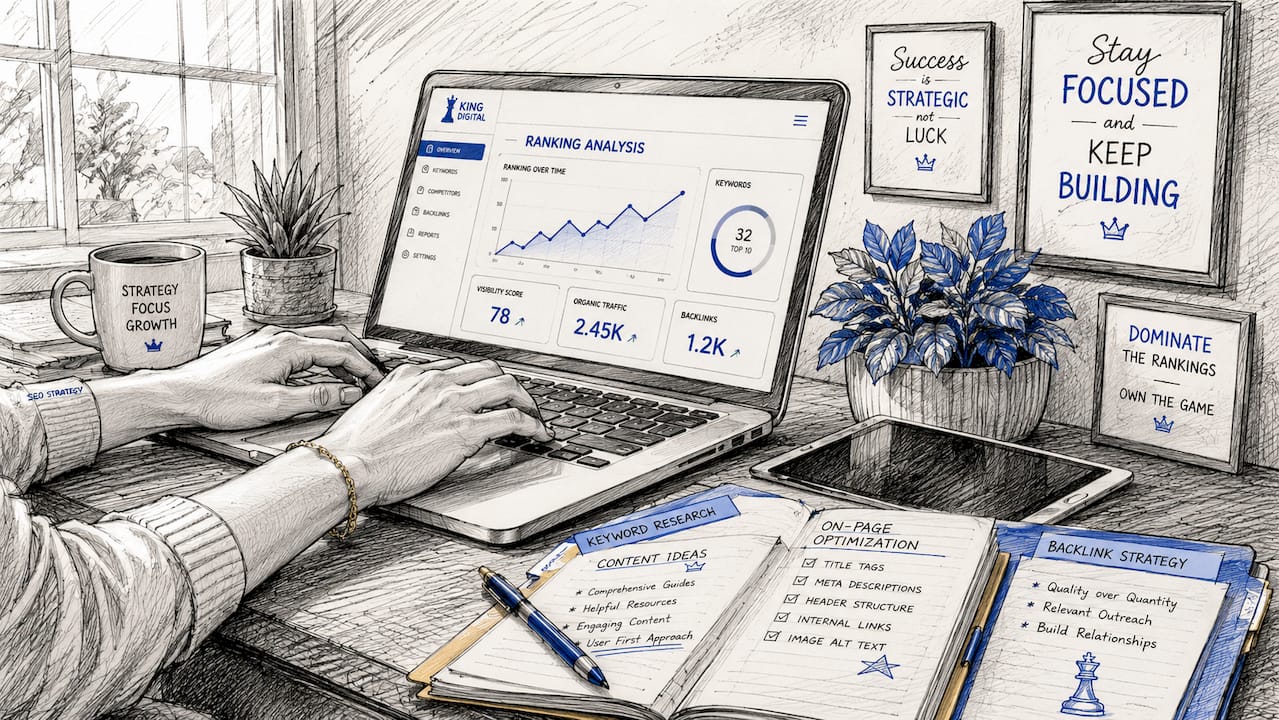
SERP ranking is the order in which Google and other search engines display web pages after a user types a query. Each position on that page is earned, not purchased, through organic signals that Google’s algorithm evaluates in real time. A search engine results page typically includes organic results, paid ads, featured snippets, local packs, and image carousels, all competing for the same user attention.
Google does not use a single fixed formula. Ranking signals are weighted dynamically based on the type of query, the competitive landscape, and the user’s likely intent. A search for “best running shoes” triggers different signals than a search for “how to tie running shoes.” Your page needs to match both the topic and the format that Google expects for that specific query type.
The practical implication is significant. You cannot rank a product page for an informational query, no matter how many backlinks it has. SEO success depends on matching content format to search intent. That alignment is the starting point for every ranking decision you make.
What are the key SERP ranking factors in 2026?
The major ranking signals fall into three categories: authority, content quality, and technical structure. Each one plays a distinct role, and none of them works in isolation.
Authority signals center on backlinks. Backlink quality carries a 0.74 correlation with top rankings, making it the strongest single measurable factor. A backlink from a respected industry publication carries far more weight than dozens of links from low-quality directories. Think of quality backlinks as votes of confidence from the web. The more credible the voter, the more Google trusts your page.
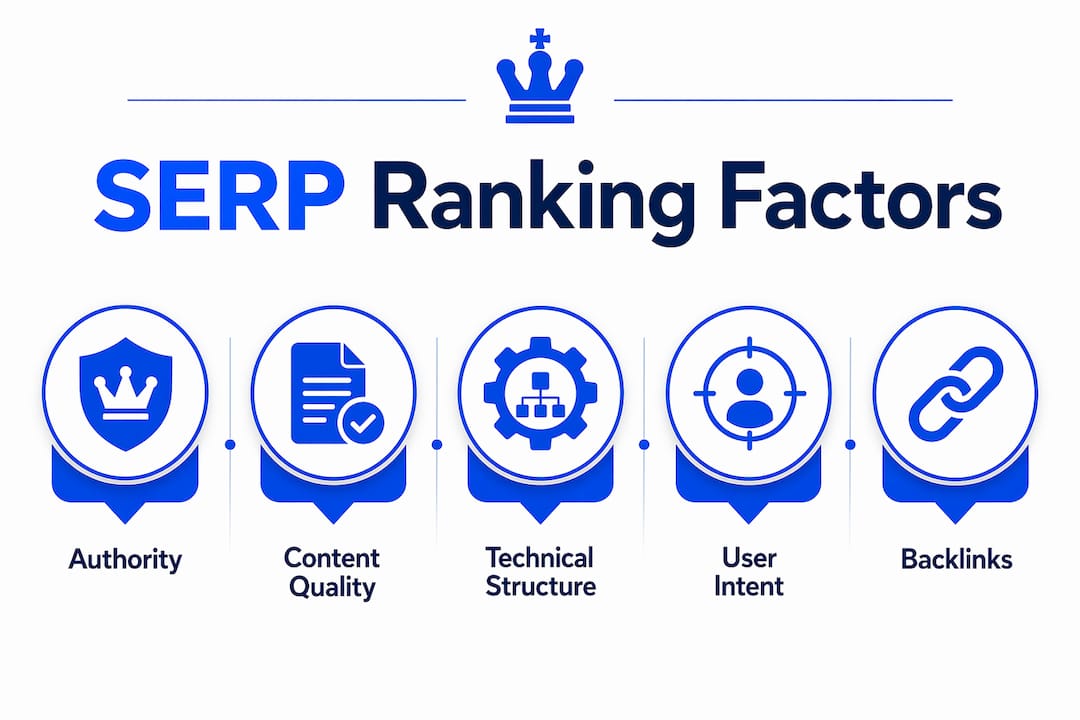
Content quality signals are evaluated through Google’s E-E-A-T framework, which stands for Experience, Expertise, Authoritativeness, and Trustworthiness. Google prioritizes pages that demonstrate expertise and authority aligned to user query intent. This means thin, generic content will not compete against pages written by recognized specialists with clear credentials and cited sources.
Structural signals include page speed, mobile usability, FAQ schema markup, and clear heading hierarchies. These factors tell Google how easy your content is to parse and serve. FAQ schema, in particular, has grown in importance because it feeds directly into featured snippets and AI-generated summaries.
- Backlink quality: Prioritize links from authoritative, relevant domains over volume.
- Content depth: Cover topics thoroughly with clear subheadings and supporting evidence.
- Search intent match: Align your page format (article, product page, FAQ) to the query type.
- E-E-A-T signals: Show author credentials, cite sources, and build topical authority over time.
- Technical structure: Use FAQ schema, clean URL structures, and fast load times.
Pro Tip: Run a quick intent check before writing any page. Search your target keyword yourself and look at the top three results. If they are all listicles, write a listicle. If they are all how-to guides, write a how-to guide. Google is already showing you the winning format.
How do AI overviews and new SERP features change visibility?
The SERP has changed more in the past 18 months than in the previous decade. Google’s AI-generated summaries now appear above traditional organic results for a growing share of queries. These summaries pull directly from web pages, but they do not always pull from the top-ranked page.
47% of AI citations come from pages ranked below position five in traditional results. That single fact rewrites the old assumption that ranking #1 guarantees maximum visibility. A well-structured page at position seven can appear in an AI overview while the #1 result gets skipped entirely.
To be selected as a source in AI summaries, your content needs what researchers call “synthesis fitness.” Google’s AI overviews require clear, direct explanations and structured formats like numbered lists, question-and-answer pairs, and concise definitions. Vague, meandering content will not be cited, regardless of its traditional authority.
Here is how to structure content for AI citation:
- Open with a direct definition or claim. State the answer in the first sentence of every section, not the third.
- Use numbered lists and bullet points. AI systems extract structured information more reliably than dense paragraphs.
- Write question-and-answer pairs. Format subheadings as questions and answer them immediately in the following sentence.
- Keep paragraphs short. Three to five sentences per paragraph signals clear, digestible information.
- Cite your claims. Pages that reference credible sources signal trustworthiness to both users and AI systems.
Pro Tip: Add a dedicated FAQ section to every major page on your site. It is one of the fastest ways to appear in both featured snippets and AI overviews, because the format directly mirrors how AI systems extract and present answers.
Why is SERP ranking crucial for your business growth?
SERP position is not a vanity metric. It is a direct driver of revenue. The click-through rate data makes this concrete: the #1 position captures 39.8% of clicks, while position five captures a fraction of that. Every position you drop costs you real traffic and real leads.
“Your SERP position is your storefront location on the internet. A business buried on page two is like a shop tucked in an alley with no signage. Customers rarely find it, and when they do, they wonder why it is so hard to reach.”
Brand credibility is also tied to search position. Customers associate top rankings with trustworthiness. A business that consistently appears at the top of relevant searches builds authority in the minds of potential customers before they ever visit the website. That perception directly influences conversion rates.
For local businesses, the stakes are even higher. Local search visibility determines whether nearby customers find you or your competitor when they search for services in your area. A strong SERP position for local queries translates directly into phone calls, store visits, and booked appointments. Aligning your SEO strategy with dynamic ranking factors is not optional if you want a measurable return on your marketing investment.
Practical strategies to improve your SERP ranking
Improving your SERP position requires a coordinated approach across content, authority building, and technical structure. No single tactic moves the needle alone.
Align content with search intent
Every page on your site should target one primary query type: informational, navigational, commercial, or transactional. Write the content format that matches that intent. A blog post explaining a concept will not rank for a transactional query like “buy SEO services Albuquerque,” and a product page will not rank for “what is local SEO.” Get the format right before optimizing anything else.
Build authority through quality backlinks
Backlink quality remains the strongest measurable ranking signal. Focus on earning links from industry publications, local business directories, and partner websites. Guest posting on relevant blogs, getting listed in local chambers of commerce, and earning press coverage all build the kind of link profile that moves rankings.
Optimize for featured snippets and AI citations
Structure your content with clear H2 and H3 headings, short answer paragraphs, and FAQ schema markup. Google rewrites about 62.78% of meta descriptions to better match user queries, which tells you that on-page optimization must go deeper than meta tags. Focus on the actual content structure, not just the metadata.
Monitor and adapt to algorithm changes
Google updates its ranking systems continuously. Use Google Search Console to track your click probability and impressions by query. When you see a drop in a specific keyword cluster, investigate whether the intent has shifted or a new SERP feature has pushed organic results down the page.
| Strategy | What it targets | Expected impact |
|---|---|---|
| Intent-matched content | Relevance signals | Higher rankings for target queries |
| Quality backlink building | Authority signals | Stronger domain trust over time |
| FAQ schema markup | Featured snippets and AI overviews | Visibility beyond traditional rank |
| Search Console monitoring | Click probability and impressions | Faster response to ranking drops |
| E-E-A-T content signals | Trustworthiness and expertise | Sustained rankings in competitive niches |
- Audit your top 10 pages quarterly for intent alignment.
- Add FAQ sections to every service and blog page.
- Build one new quality backlink per week through outreach or partnerships.
- Check Google Search Console monthly for impression and click trends.
Key Takeaways
SERP ranking determines your website’s visibility, traffic, and business growth, and improving it requires matching content format to search intent, building authoritative backlinks, and structuring pages for both traditional rankings and AI-driven results.
| Point | Details |
|---|---|
| Position drives traffic | The #1 Google result captures 39.8% of clicks, making top rankings a direct revenue lever. |
| Intent alignment is non-negotiable | A product page will not rank for informational queries regardless of backlink strength. |
| AI overviews change the game | 47% of AI citations come from pages below position five, so structure matters more than rank alone. |
| Backlinks remain the top signal | Backlink quality holds a 0.74 correlation with top rankings, the strongest measurable factor. |
| Monitoring enables adaptation | Google weights signals dynamically, so regular Search Console reviews are required to stay competitive. |
What I have learned after years of watching rankings shift
I have watched businesses pour money into SEO tactics that were outdated before the campaign even launched. The most common mistake I see is treating SERP ranking as a one-time project rather than an ongoing practice. You publish a page, it ranks, and then you move on. Six months later, a competitor publishes something better structured, and your position quietly drops.
The shift to AI-generated summaries has made this even more urgent. High Domain Authority no longer guarantees top visibility. I have seen well-structured pages from smaller, newer sites appear in AI overviews above established brands with far more backlinks. That is not a bug in the system. It is Google rewarding clarity and directness over accumulated authority.
My honest advice: stop chasing algorithm updates and start building content that genuinely answers questions better than anyone else in your space. The local SEO ranking factors that matter most have not changed at their core. Relevance, authority, and trust still win. What has changed is how Google measures them, and that requires you to stay curious and keep testing.
The businesses I see winning in search right now are not the ones with the biggest budgets. They are the ones that publish clear, well-structured content consistently, earn credible links deliberately, and treat their Google Search Console data as a weekly business report.
— Bernadette
How King Digital Marketing Agency can help you rank higher and grow faster
Knowing what SERP ranking is and actually moving your rankings are two very different challenges. King Digital Marketing Agency works with small and medium-sized businesses across Albuquerque to build the kind of search presence that generates real leads, not just impressions.
The team at King Digital Marketing Agency combines technical SEO, content strategy, and local search expertise to build rankings that hold. Whether you need a full digital marketing strategy built from the ground up or want to sharpen an existing approach, the agency’s in-house specialists work directly with your business goals. If you are ready to turn your search visibility into measurable growth, improve your search ranking with a team that knows the Albuquerque market and the 2026 SEO landscape.
FAQ
What is SERP ranking in simple terms?
SERP ranking is the position your webpage holds on a search engine results page when someone searches a relevant keyword. The higher your position, the more clicks and traffic your page receives.
What affects SERP rank the most?
Backlink quality holds the strongest measurable correlation with top rankings at 0.74, followed by content depth and search intent alignment. Technical factors like page speed and structured markup also contribute.
How do I track my SERP ranking?
Google Search Console shows your average position, impressions, and click-through rates by query at no cost. Review it monthly to spot ranking drops and identify high-impression keywords that need better content.
Why does my page rank lower than pages with fewer backlinks?
Search intent alignment outweighs backlink volume. If your page format does not match what Google expects for that query type, a less authoritative page with the right format will outrank you.
How do AI overviews affect my SERP visibility?
AI overviews can feature pages ranked below position five in traditional results. Structuring your content with clear definitions, numbered lists, and FAQ sections increases your chance of being cited in AI-generated answers.
Recommended
- Understanding Local Search Ranking for Business Growth
- What Is Search Visibility and Why It Matters for SMBs
- SEO ranking factors: Local Albuquerque guide for SMBs
- What is search engine ranking? Guide for Albuquerque SMBs
