Customer Review Management: A Simple System for Building Trust
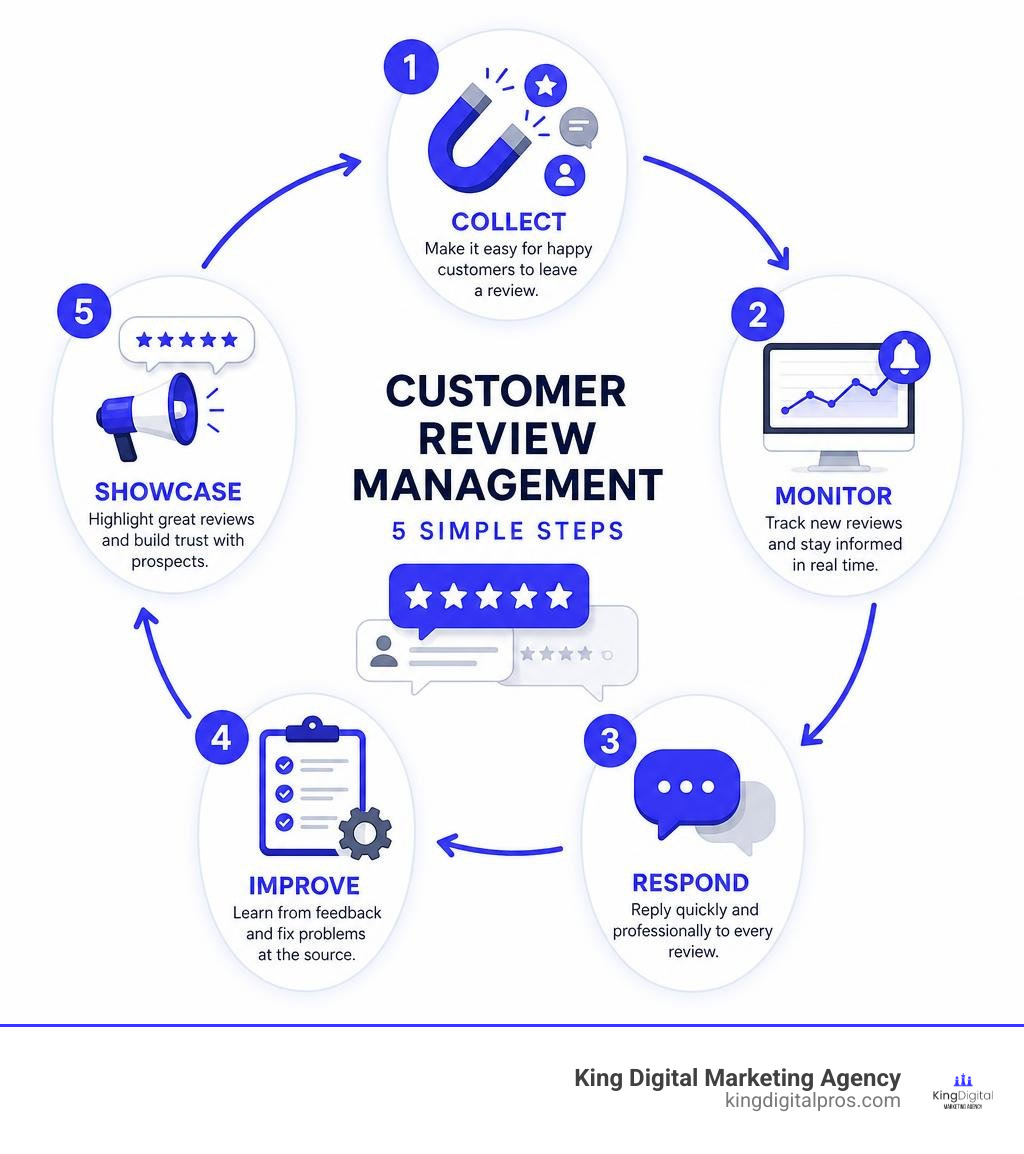
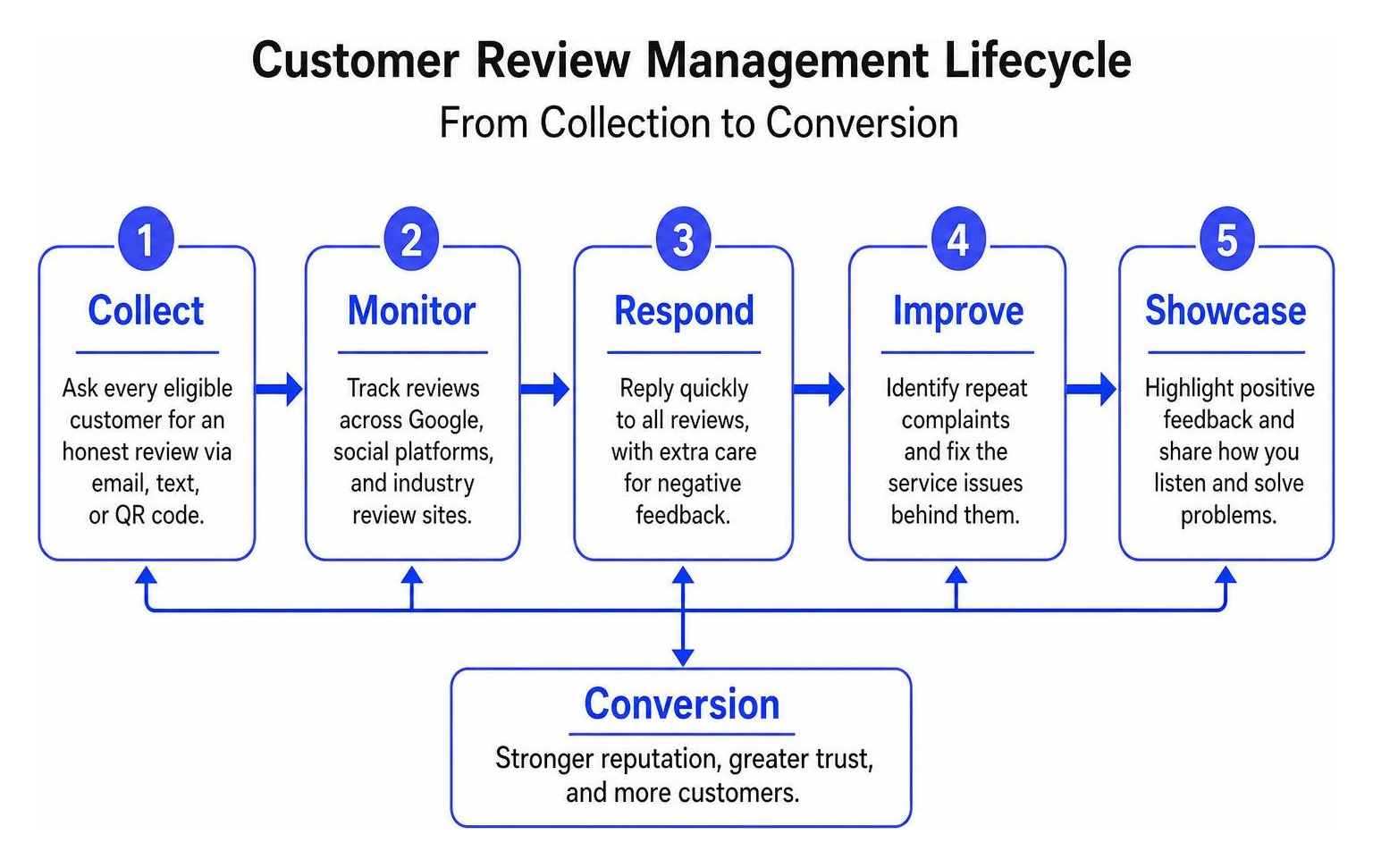
Customer review management is the ongoing work of collecting, monitoring, responding to, and learning from customer feedback across Google, social platforms, and industry review sites. For a busy local business, start with four actions:
- Claim and verify your key business profiles, especially Google Business Profile.
- Ask every eligible customer for an honest review with a simple email, text, or QR code.
- Set alerts and reply quickly, with extra care for negative feedback.
- Track repeat complaints and fix the service issues behind them.
This process helps protect your reputation, improve customer trust, and uncover problems before they cost you more business. It also supports local visibility: 81% of consumers check Google reviews when evaluating local businesses, while 90% say they are more likely to choose a business that responds to reviews.
The goal is not a perfect five-star rating. Realistic feedback, including a few well-handled critical reviews, often looks more credible to shoppers than a page of generic praise. What matters is showing prospective customers that you listen, solve problems, and value their experience.
I am Bernadette King, a digital marketing strategist and founder of King Digital Marketing Agency, with experience helping local businesses and franchise owners turn stronger online visibility into measurable growth. In this guide, I will show you how to make customer review management a practical, repeatable part of your marketing instead of another task competing for your time.
Learn more about customer review management:
Understanding Customer Feedback in the Digital Era
Online feedback has evolved from static testimonials into a dynamic ecosystem that dictates brand credibility. Today, roughly 52% of a company’s market value is directly tied to its corporate reputation. Prospective buyers no longer rely solely on brand messaging; 99% of consumers read reviews at least occasionally when researching products and services online.

Every review forms a critical data point within your broader customer feedback lifecycle. Modern buyers enter search queries with high commercial intent, filtering out service providers who lack recent, high-quality public feedback. When organizations actively listen to their audience, they bridge the gap between initial discovery and lasting consumer trust.
Why Customer Review Management Drives Revenue and Search Visibility
A proactive approach to customer feedback directly impacts both top-line revenue and online discoverability. Nearly 95% of businesses utilizing dedicated reputation solutions report generating a positive return on investment by recapturing lost leads and elevating baseline conversions.
Maintaining active review channels allows businesses to boost local SEO through effective review management, ensuring search engines view your business as authoritative and engaged.
The Direct Impact of Online Reviews on Consumer Behavior
Consumer psychology revolves around verification and risk mitigation. Displaying customer reviews across landing pages, promotional emails, and advertisements can increase overall conversion rates by up to 380%.
Interestingly, shoppers are skeptical of flawless profiles: 82% of consumers actively seek out negative reviews to evaluate how a company handles real-world difficulties. When buyers interact with critical feedback and observe a transparent, professional resolution, they spend four times longer exploring the business website, leading to a 67% increase in conversions.
Search Rankings and Local SEO Influence
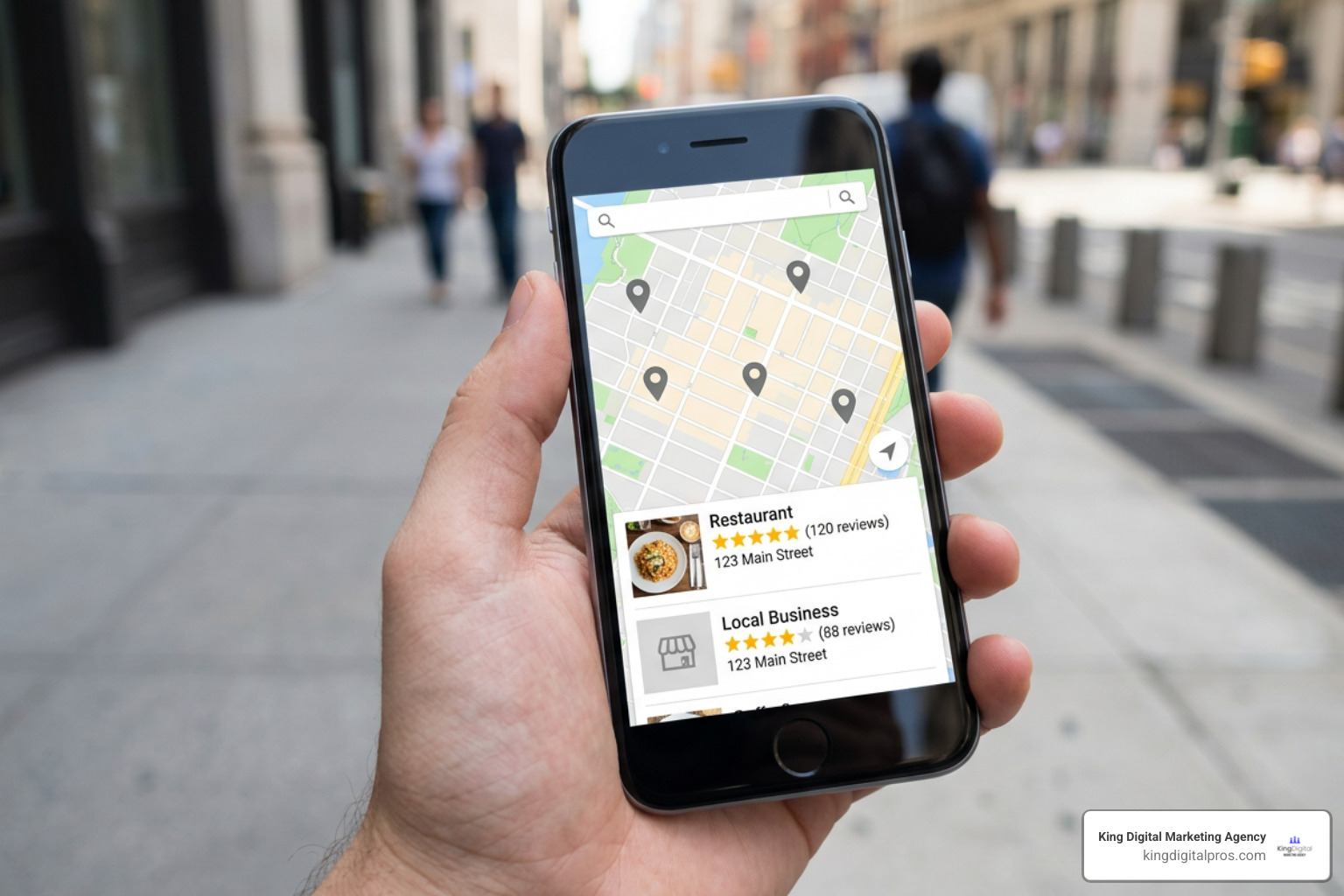
Search engines like Google prioritize businesses that demonstrate relevance, distance, and prominence. Prominence is heavily weighted by your review velocity, aggregate star rating, and the consistency of your responses. For local companies, mastering Google Maps review management ensures your business consistently secures top spots in the competitive Google 3-Pack.
Search algorithms crawl user-generated content within reviews for relevant keywords, service descriptions, and location tags. This algorithmic indexing reinforces your local prominence, making your profile more visible to nearby high-intent searchers.
A 7-Step Framework for Managing and Monitoring Customer Feedback
Building a dependable review engine does not require complicated manual routines. Following a structured seven-step framework helps streamline review operations across every location.
Step 1: Claim and Optimize Multi-Channel Business Profiles
Before collecting public feedback, ensure your primary profiles are claimed, verified, and complete. Maintain strict consistency in your Name, Address, and Phone number (NAP) across all directories. For regional businesses operating across Albuquerque, Rio Rancho, Santa Fe, and surrounding communities like Corrales, Grants, and Los Alamos, localized directory accuracy is essential for maintaining ranking equity.
Step 2: Implement Automated Review Request Sequences
Timing is everything when asking for customer feedback. Research demonstrates that 65% of customers are willing to leave a review when asked, and approximately 80% of all online reviews are generated via automated follow-up emails and SMS notifications.
Adopting automated systems allows you to turn happy customers into positive review generators right after a transaction. Utilizing direct links and on-site QR codes removes technical hurdles, allowing clients to publish reviews effortlessly.
Step 3: Establish Professional Review Response Protocols
Replying to public feedback requires balance, empathy, and consistency. About 68% of consumers expect brands to demonstrate genuine understanding in their interactions, while 90% are more likely to patronize businesses that reply to every review.
| Review Type | Objective | Recommended Strategy | Target Response Window |
|---|---|---|---|
| Positive (4-5 Stars) | Reinforce loyalty & show gratitude | Thank the customer by name, mention specific services rendered, and invite them back. | Within 24-48 Hours |
| Neutral (3 Stars) | Clarify expectations & improve CX | Acknowledge their balanced feedback, ask for constructive insights, and offer proactive help. | Within 24-48 Hours |
| Negative (1-2 Stars) | De-escalate & protect reputation | Apologize sincerely for the shortfall, address the core issue, and provide direct offline contact details. | Under 24 Hours |
Step 4: Turn Negative Feedback into Brand Advocacy
A critical review is an opportunity to publicly demonstrate exceptional customer care. When dealing with an unhappy customer:
- Acknowledge their specific frustration without defensive or dismissive language.
- Validate their experience and apologize for failing to meet expectations.
- Offer an immediate path to take the dispute offline by providing a direct phone number or dedicated email.
Over half of all consumers expect a response to negative reviews within a week, and one in three expects resolution in three days or less. Resolving complaints promptly often encourages customers to update their original rating.
Step 5: Showcase Customer Proof Across Marketing Channels
Do not leave your positive reviews hidden on external platforms. Featuring customer testimonials directly on landing pages can increase conversion rates by up to 270%.
Leading eCommerce and service platforms leverage optimized solutions like Emplifi Ratings & Reviews to display dynamic customer widgets without sacrificing performance. Because 57% of web shoppers abandon slow pages, deploying lightweight review widgets keeps site speed fast and bounce rates low.
Step 6: Monitor Brand Sentiment and Feedback Trends
Tracking customer sentiment manually across multiple directories is inefficient. Utilizing dedicated customer feedback management software centralizes incoming reviews from Google, social channels, and industry directories into a single operational inbox.
Modern platforms feature automated sentiment tracking and real-time anomaly alerts, notifying you instantly if negative reviews spike so your team can resolve emerging issues immediately.
Step 7: Audit and Refine Operations from Review Insights
Customer feedback provides honest, unvarnished insight into your daily operations. Schedule regular monthly reviews of your feedback trends to conduct root-cause analysis on recurring complaints. Whether addressing technician punctuality, billing confusion, or scheduling bottlenecks, operational refinements based on user feedback directly enhance customer retention and brand equity.
Evaluating Technology and AI for Feedback Operations
Modern feedback tools eliminate repetitive administrative tasks while ensuring no customer comment slips through the cracks.
Essential Capabilities of Customer Review Management Platforms
When selecting a software platform, look for the following core capabilities:
- Centralized Inbox Aggregation: Consolidates reviews from multiple directories into a single interface.
- Automated Outreach Workflows: Sends scheduled SMS and email review requests following point-of-sale or CRM updates.
- Directory Synchronization: Keeps business hours, addresses, and contact info consistent across all platforms.
- Reporting and Analytics: Evaluates review velocity, sentiment shifts, and team response times over time.
Leveraging AI and Sentiment Analytics
Modern reputation platforms utilize natural language processing to evaluate customer sentiment beyond simple star ratings. Aspect-based sentiment analysis categorizes comments into specific operational areas, such as pricing, communication, or staff friendliness.
Additionally, AI-assisted writing tools help draft context-aware, personalized replies in seconds. For businesses seeking a balance between automation and human oversight, exploring a guide to managed review response can help you maintain an authentic brand voice while saving valuable internal hours.
Critical Pitfalls to Avoid in Feedback Moderation
Managing your reputation requires strict adherence to industry regulations and search engine policies. Missteps can lead to severe ranking penalties or regulatory scrutiny.
Overcoming Common Customer Review Management Mistakes
Avoid these frequent operational errors:
- Ignoring Critical Reviews: Leaving negative feedback unanswered signals to prospective buyers that you do not care about customer satisfaction.
- Relying on Canned Responses: Pasting identical, generic replies makes your business look detached and robotic.
- Purchasing Fake Reviews: Fabricating positive reviews violates search engine policies and damages consumer trust.
- Arguing Publicly: Getting defensive in public forums escalates tension and alienates prospective clients reading the exchange.
Navigating Platform Policies and Fake Review Removal
Review platforms enforce strict guidelines regarding content moderation. For example, businesses must adhere to Federal Trade Commission standards prohibiting review gating – the unlawful practice of filtering unhappy customers into private forms while sending only satisfied clients to public review sites.
If your profile receives a review that violates platform rules (such as spam, hate speech, or a conflict of interest), report it through official platform channels:
- Log in to your business dashboard and locate the offending review.
- Select the flag or report option and identify the specific content violation.
- Allow the platform moderation team time to evaluate the submission.
- If the review remains visible and violates terms, escalate the case with supporting documentation through official merchant support.
For operational and specialized business needs, tools like Reviewr Grant Management Software demonstrate how structured review and submission workflows help maintain total data transparency across organizations.
Frequently Asked Questions About Customer Review Management
How quickly should a business respond to negative online reviews?
Aim to acknowledge negative reviews within 24 to 48 hours. Quick responses demonstrate accountability and prevent dissatisfied customers from escalating issues across other channels.
Can customer review management software remove fake or negative reviews?
No software can unilaterally delete legitimate negative reviews from public platforms like Google. However, review platforms provide tools to flag and dispute reviews that violate official content policies.
What is review gating, and why is it prohibited?
Review gating involves pre-screening customers with a survey and directing only positive reviewers to public directories while keeping negative reviewers private. This practice violates FTC guidelines and platform policies, which mandate transparent, unbiased access to review channels for all consumers.
Elevate Your Business Reputation Today
Managing customer feedback is an essential growth driver that boosts local visibility, strengthens brand credibility, and directly impacts revenue. By deploying structured collection workflows, responding empathetically, and addressing service gaps, your business can turn everyday customer interactions into long-term market leadership.
To build an automated, scalable review strategy tailored to your local market, explore our comprehensive review management services at King Digital Marketing Agency. Let us help you protect your brand, outrank local competitors, and convert more prospects into loyal clients.
