Compare Amazon Review Management Software Before You Automate
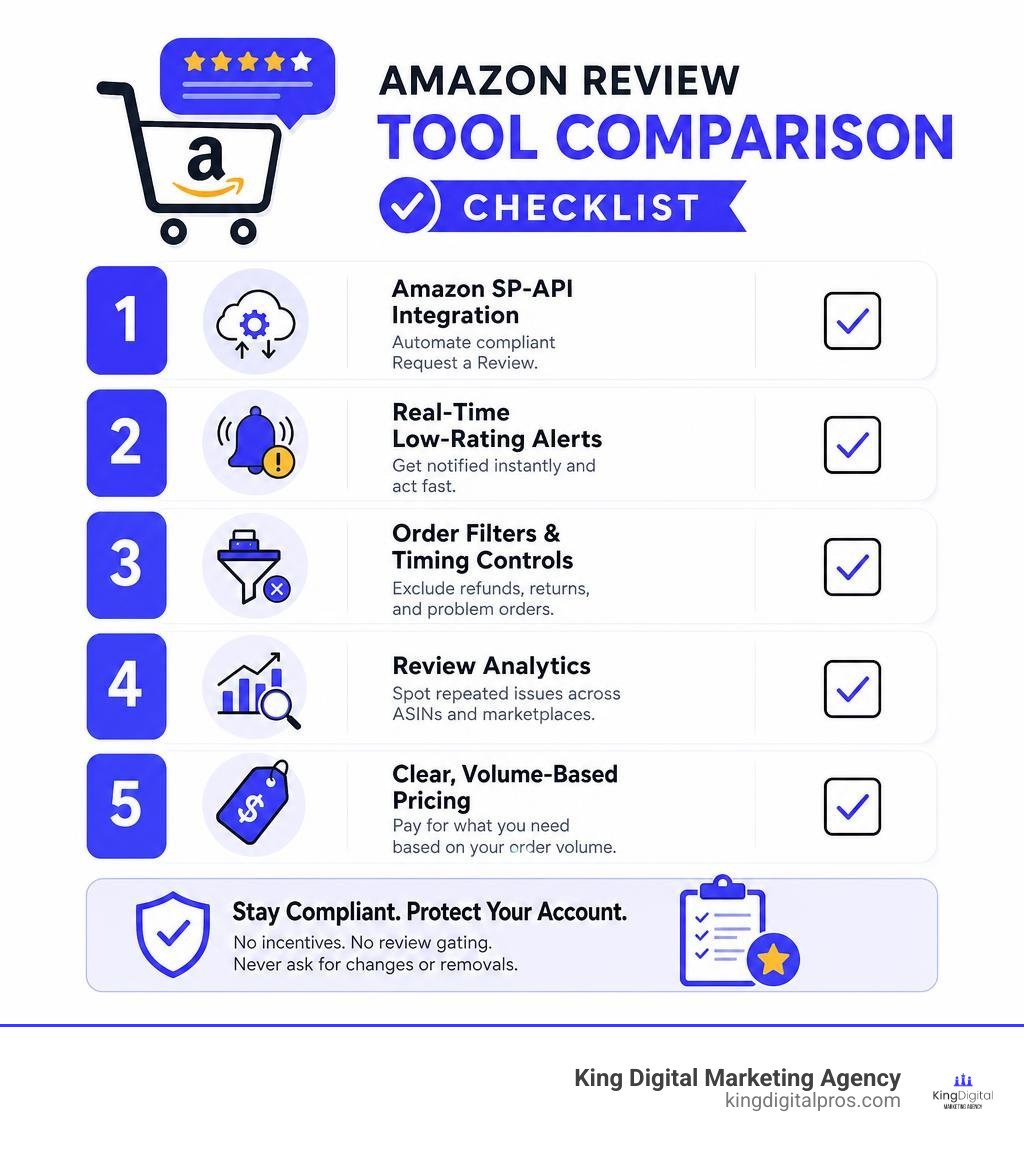
The best Amazon review management software automates Amazon’s approved Request a Review workflow, alerts you to new product reviews and seller feedback, and turns review text into clear product and listing fixes. When comparing tools, prioritize:
- Amazon SP-API integration for compliant request automation.
- Real-time low-rating alerts so your team can act fast.
- Order filters and timing controls to exclude refunds, returns, and problem orders.
- Review analytics that spot repeated issues across ASINs and marketplaces.
- Clear pricing that fits your order volume, not just a long feature list.
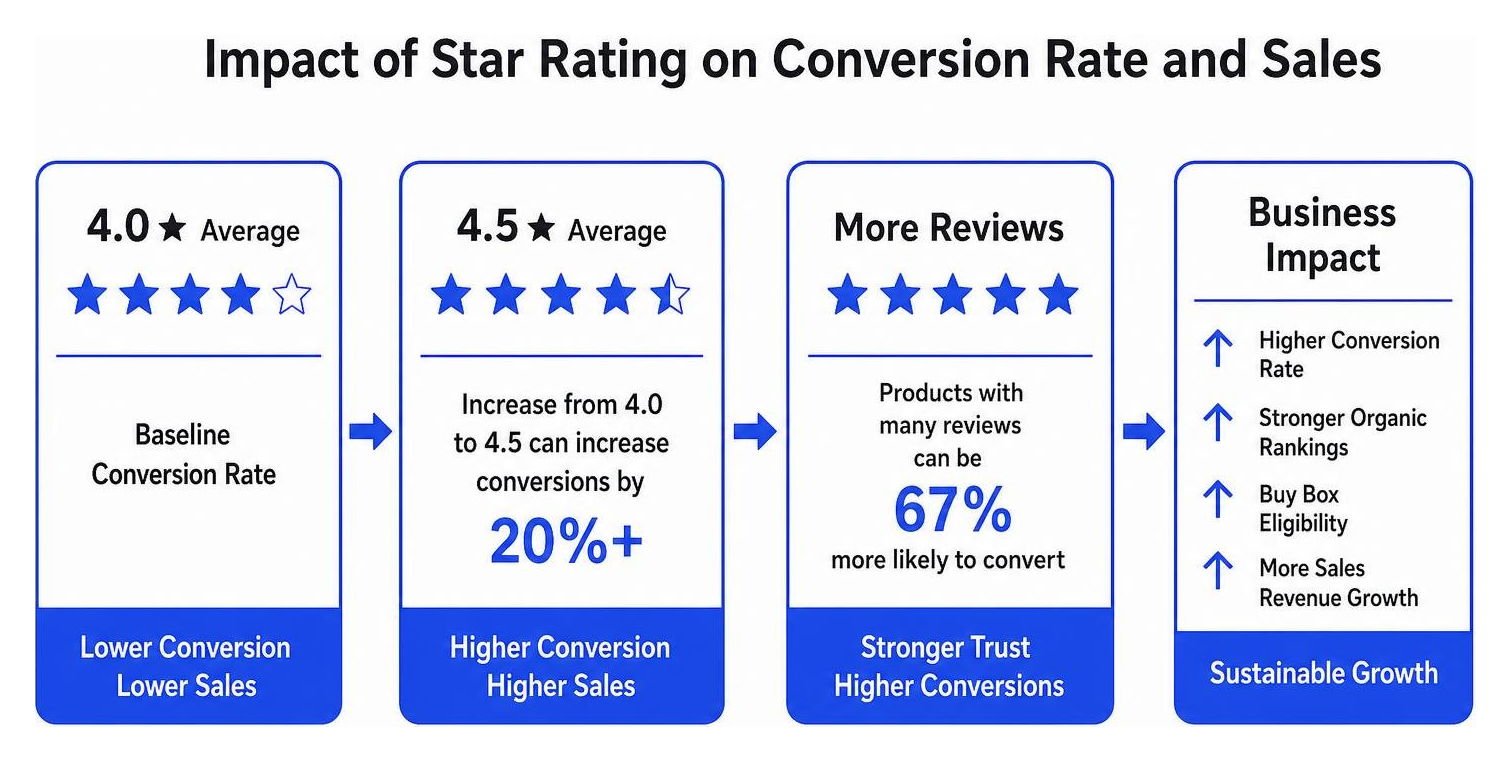
Reviews are not a vanity metric. They shape trust, conversion, and visibility in a marketplace with more than 600 million listings worldwide. Research cited in this guide indicates that 94% of Amazon shoppers read reviews before buying, while products with many reviews can be 67% more likely to convert.
The right tool saves time, but its bigger job is to help you catch problems early: confusing instructions, damaged packaging, sizing complaints, or a sudden post-event rating dip. It should also keep you on the safe side of Amazon policy. No incentives, no review gating, and no asking unhappy customers to change or remove a review.
I’m Bernadette King, a digital marketing strategist and founder of King Digital Marketing Agency. My work in SEO, paid advertising, and conversion-focused content helps businesses evaluate Amazon review management software as part of a practical, measurable growth strategy.
Key terms for amazon review management software:
Why Marketplace Reputation Dictates Sales and Buy Box Retention
Selling on Amazon without a review strategy is like stepping into an arena empty-handed. With global e-commerce sales surpassing trillions of dollars and over 600 million listings competing for the digital shelf, customer sentiment directly governs your revenue. A 2025 BrightLocal Consumer Review Survey found that 87% of consumers read online reviews before deciding on a purchase. On Amazon specifically, bumping your rating from a 4.0 to a 4.5 can increase conversions by 20% or more.
When your conversion rate climbs, Amazon’s algorithm rewards you with stronger organic search rankings. However, the financial risk of neglected reviews goes deeper than search placement. Sudden spikes in negative reviews trigger listing suppression and cause sellers to lose Buy Box eligibility. Losing the Buy Box instantly diverts revenue to third-party competitors or halts sales entirely on private-label listings.
Amazon places significant weight on your trailing 90-day rating average. An unaddressed defect pattern that drops your rating from 4.4 to 4.1 stars drastically damages listing performance, even if you have thousands of historical positive ratings. To understand how review systems work across the broader digital ecosystem, explore our review management software complete guide.
How Amazon Review Management Software Drives Algorithmic Visibility
The Amazon search algorithm evaluates review velocity, review recency, and verified purchase ratios alongside direct sales metrics. Consistent review velocity signals to the search engine that an ASIN is in active demand and delivering customer satisfaction.
Using automated software to prompt authentic customer feedback bridges the gap between organic purchases and review submissions. Sellers who rely on manual review requests or organic volume often capture reviews on less than 1% of transactions. By contrast, automated systems consistently secure compliant review volume that feeds the algorithm with positive quality signals.
Product Reviews vs. Seller Feedback
Many merchants confuse product reviews with seller feedback, yet Amazon treats them as distinct metrics:
- Product Reviews (ASIN Level): These evaluate the physical product: its functionality, build quality, design, and value. Product reviews appear publicly on the listing page and dictate conversion rates and search rankings.
- Seller Feedback (Merchant Level): This measures your performance as a merchant, including shipping speed, packaging condition, order accuracy, and customer service responsiveness.
Seller feedback directly influences your account health and Order Defect Rate (ODR). If your ODR exceeds 1%, Amazon can revoke your Buy Box privileges or suspend your selling privileges. Automated software monitors both channels simultaneously, allowing you to quickly dispute improper product reviews left under seller feedback (which Amazon will strike through for FBA orders) while resolving customer service friction.
Key Features of Top Amazon Review Management Software

Choosing the best platform requires understanding what happens behind the scenes. Dedicated tools connect directly to the Amazon Selling Partner API (SP-API) to execute review requests compliantly without risking policy violations. If you want a hands-off approach to managing feedback, check out the lazy persons guide to automated review management.
Core Capabilities in Modern Amazon Review Management Software
Modern review intelligence tools offer far more than simple automated messaging. Leading software options incorporate:
- Automated “Request a Review” Triggers: Leveraging official Amazon SP-API endpoints to send standardized review and feedback requests in a single message.
- Natural Language Processing (NLP) Sentiment Tagging: Modern tools like FeedbackFive by eComEngine analyze customer review text to uncover product defects, missing parts, or misleading listing images before they impact overall ratings.
- Real-Time Review Alerts: Instant notifications for 1-star, 2-star, and 3-star reviews let your customer service team take action quickly.
- Multi-Storefront and Omnichannel Tracking: Platforms such as Amazon Review Management Software by gominga aggregate feedback, ratings, and customer Q&A across international marketplaces (US, UK, DE, JP) into a single dashboard.
- Competitor ASIN Benchmarking: Tracking competitor listings allows you to analyze category sentiment shifts, common product flaws, and customer complaints to refine your own product development.
Automated Scheduling, Filtering, and International Syndication
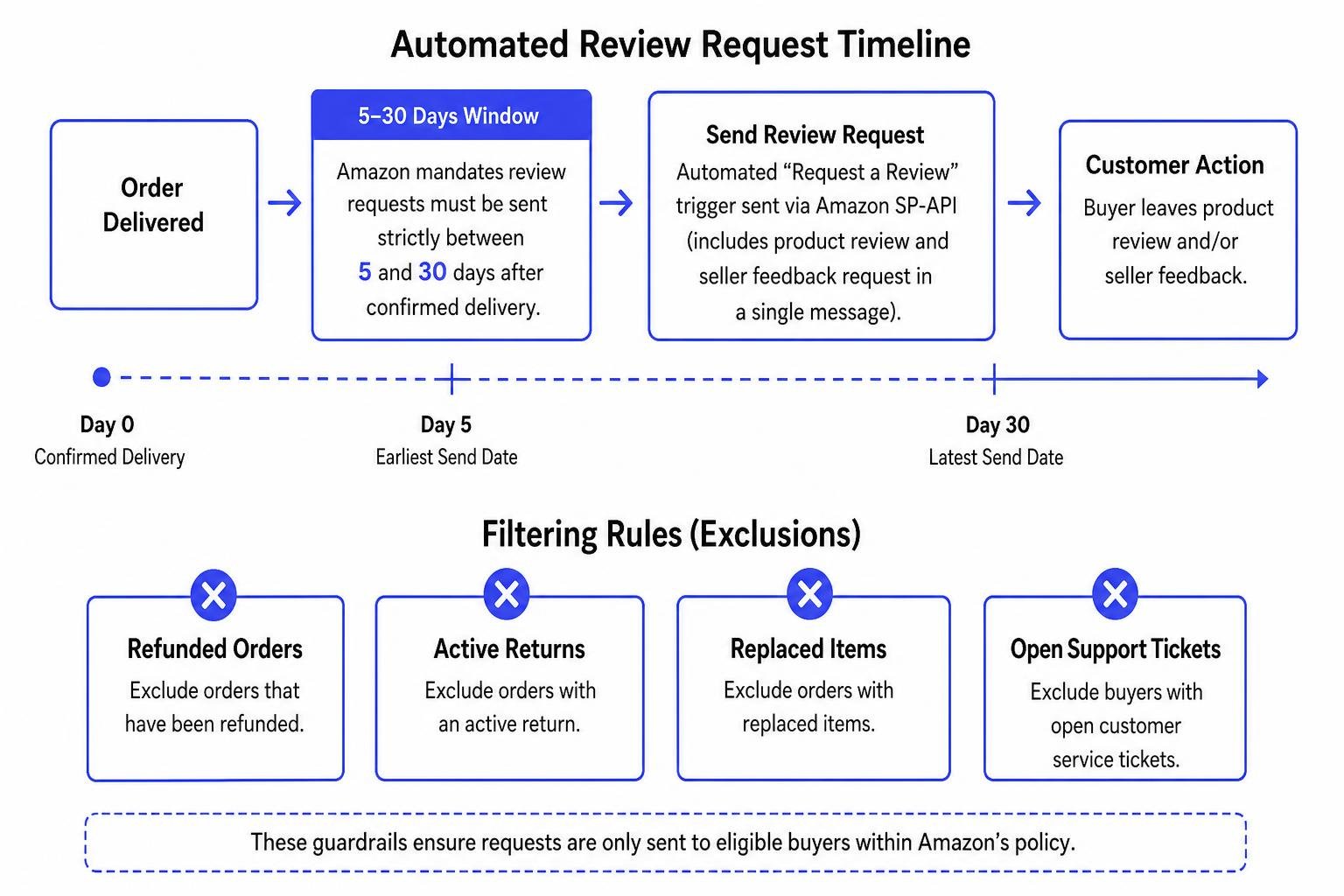
Timing is critical when asking for customer reviews. If you request feedback too early, the customer may not have opened the package; if you wait too long, the excitement of the purchase has faded. Amazon mandates that review requests must be sent strictly between 5 and 30 days after confirmed delivery.
Advanced review automation platforms allow you to fine-tune outreach schedules based on product characteristics:
- Fast-Turn Consumables: Trigger requests 7 to 10 days post-delivery when the buyer has experienced the item.
- Complex Electronics or Supplements: Delay requests to 14 to 21 days to allow adequate time for assembly, testing, or noticeable results.
- Exclusion Guardrails: Automatically exclude refunded orders, active returns, replaced items, and buyers with open customer service tickets.
- Shipping Latency Adjustments: Factor in carrier transit times for Merchant-Fulfilled (FBM) orders so requests never arrive before the package.
Comparing Leading Amazon Review Tool Categories and Frameworks
Amazon review tools generally fall into three distinct categories depending on seller needs and catalog complexity:
| Category | Typical Cost | Best For | Core Strengths | Key Considerations |
|---|---|---|---|---|
| API Review Automators | $15 – $60 / mo | Small to mid-size sellers, private label | Native SP-API compliance, 100% risk-free, simple setup | Limited custom messaging templates |
| Multi-Channel Reputation Suites | $70 – $250 / mo | Growing brands, international sellers | Sentiment analytics, ticket centralization, multi-storefront aggregation | Requires regular management and setup |
| Enterprise Data & Shelf Intelligence | $250 – $600+ / mo | High-SKU brands, vendors, enterprise aggregators | Competitor scraping, cross-retailer tracking, deep NLP root-cause tagging | Higher investment; requires dedicated analyst oversight |
For sellers looking to maximize their budget across different platforms, read the ultimate guide to affordable review management tools. Tools like Amzigo Request Reviews and SELLERLOGIC Review Manager focus on automated SP-API workflows, while platforms like Bright Data Amazon Reviews Tracker deliver large-scale data extraction for competitive analysis.
Launch Strategies, High-Traffic Events, and Amazon Vine
Review management software is vital during new ASIN rollouts and high-traffic events like Prime Day or Q4 holiday shopping. When launching a new product, aim for an initial baseline of 20 to 30 authentic reviews to establish early conversion momentum. Enrolling eligible ASINs in Amazon Vine provides an initial wave of trusted feedback from vetted reviewers.
Once commercial sales begin, pairing automated follow-ups with compliant product inserts accelerates review acquisition. According to packaging guidelines, inserts must feature neutral language, such as direct support contact details or a QR code directing buyers to a non-gated survey, without offering discounts, free gifts, or incentives in exchange for positive reviews. Compliant post-purchase solutions like GetReviews Amazon Software combine packaging inserts with automated review requests while avoiding policy violations.
Choosing Software Based on Catalog Size and Ad Spend
To choose the right review software, align your selection with your catalog scale and advertising investment:
- Early-Stage Sellers (<50 orders/week): A lightweight tool automating the SP-API “Request a Review” button provides full compliance without unnecessary overhead.
- Scaling Private Label Brands ($10K-$50K/month revenue): Prioritize tools that provide automated order exclusions, real-time negative review alerts, and multi-marketplace tracking.
- High-Volume & Multi-ASIN Brands (Spending >$10K/month on Amazon Ads): Choose platforms with AI-powered NLP sentiment analysis. Connecting review sentiment to your advertising strategy helps you spot listing issues early, preventing wasted ad spend on products suffering from temporary rating dips.
Amazon Policy Compliance and Mitigating Account Suspension Risk
Amazon actively enforces review policies through machine learning systems that analyze seller patterns, buyer relationships, and message phrasing. Violating Amazon’s Customer Review Creation Policies can lead to ASIN review wipes, search suppression, loss of Brand Registry privileges, and permanent account suspension.
To keep your account protected, adhere to the following compliance standards:
- No Review Gating: You cannot filter customers by asking if they had a good or bad experience and only directing happy customers to Amazon. Every customer must receive the same neutral opportunity to leave a review.
- No Incentivized Feedback: Offering gift cards, future discounts, free products, or cash in exchange for reviews violates Amazon policy and federal law under the FTC Consumer Review Fairness Act.
- No Demands for Review Removal: You are strictly prohibited from asking a customer to delete, edit, or improve a negative review, even if you provide a full replacement or refund.
- Use Authorized Channels: Rely on Amazon’s native “Request a Review” protocol via the official SP-API to ensure your outreach remains fully compliant.
Best Practices for Responding to Negative Reviews
When critical feedback occurs, brand owners enrolled in Amazon Brand Registry can use the native Customer Reviews tool to address sub-three-star ratings.
- Use Official Contact Channels: Within Seller Central, use the standardized “Contact Customer” button to offer a courtesy refund or provide customer support.
- Maintain Professionalism: Never argue, justify defects defensively, or pressure the buyer. Keep public comments concise (under 100 words), polite, and focused on resolution.
- Report Policy Violations: If a negative review violates Amazon Community Guidelines, such as containing profanity, referencing competitor pricing, or discussing FBA shipping delays rather than the product itself, report it directly through Brand Registry for removal.
Frequently Asked Questions About Amazon Review Software
Does Amazon review software increase review conversion rates?
Yes. Automated review follow-up systems typically generate 3x to 5x more reviews per 100 orders compared to passive selling. By timing requests to arrive shortly after delivery, review request response rates typically range between 5% and 15%.
Is using review automation software compliant with Amazon’s Terms of Service?
Yes, provided the software integrates via the official Amazon Selling Partner API (SP-API) and utilizes approved, neutral templates. Software that automates Amazon’s built-in “Request a Review” protocol is fully compliant because it sends Amazon’s standardized messaging without altering copy or gating buyers.
What is the optimal timing to trigger an Amazon review request?
Amazon requires all requests to be sent between 5 and 30 days post-delivery. For standard consumer goods, triggering requests between 7 and 14 days yields the highest response rates. For items requiring assembly or long-term evaluation (such as fitness gear or supplements), schedule requests between 14 and 21 days after delivery.
Conclusion
Amazon review management software is an essential operational tool for protecting your listings, improving conversion rates, and scaling your e-commerce business safely. By automating compliant review requests, catching product defects early through sentiment analysis, and maintaining high Buy Box retention, your brand can build lasting momentum on the platform.
At King Digital Marketing Agency, we help businesses build resilient digital reputations and maximize visibility across competitive search environments. To learn more about how a structured review strategy can elevate your market presence, discover our specialized review management services today.
