What Is Customer Conversion (And Why It’s Costing You Money Right Now)
Customer conversion is the process of turning a potential customer into someone who takes a specific action — like making a purchase, filling out a form, or signing up for a service.
Here’s the quick version:
| Term | Definition |
|---|---|
| Customer Conversion | When a visitor completes a desired action (buy, sign up, call, etc.) |
| Conversion Rate | (Number of conversions ÷ Total visitors) × 100 |
| Example | 50 purchases from 1,000 visitors = 5% conversion rate |
| Why It Matters | A 2-point increase in conversion rate can drive a 30% increase in sales |
| CRO | Conversion Rate Optimization — improving your site or funnel to get more of those actions |
Think about that for a second. You could be spending hundreds — or thousands — of dollars driving traffic to your website. But if visitors aren’t converting, that spend is largely wasted.
And the numbers in 2026 are not moving in the right direction. Contentsquare’s Digital Experience Benchmarks found that cost per visit rose 9% year over year while overall conversions dropped 6.1%. Meanwhile, Google Ads CPCs climbed 12.88% to an average of $5.26 — with 87% of industries seeing higher costs.
More money out. Fewer customers in. That’s the problem this guide is built to solve.
Getting more traffic is one strategy. Getting more out of the traffic you already have? That’s where the real leverage is.
I’m Bernadette King, founder of King Digital Marketing Agency, where I’ve spent years helping local businesses and franchise owners turn clicks into customers through strategic, conversion-driven marketing. Customer conversion sits at the heart of everything I do — because visibility without conversion is just noise.
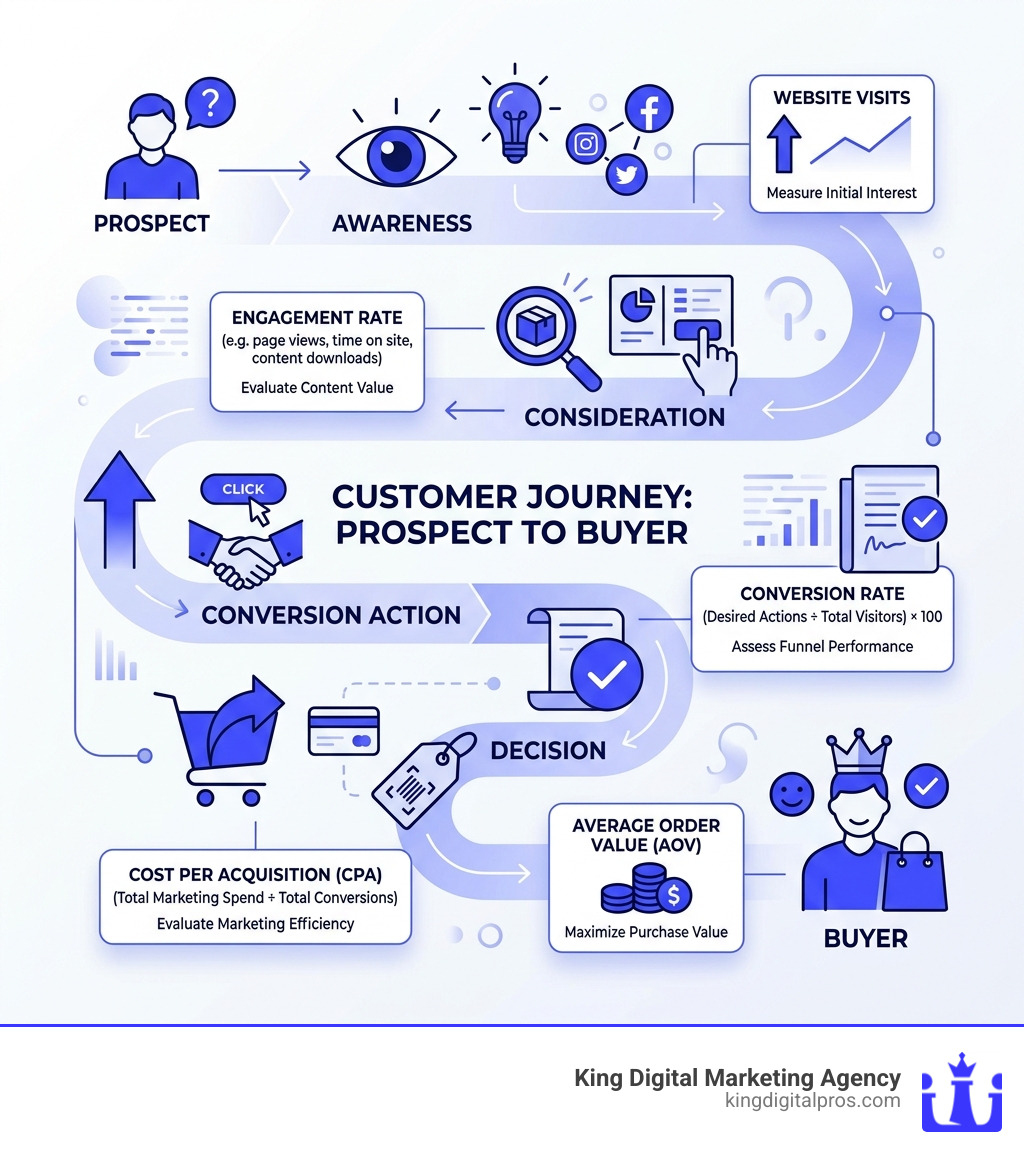
Simple guide to customer conversion terms:
The Science of Customer Conversion: Beyond the Click
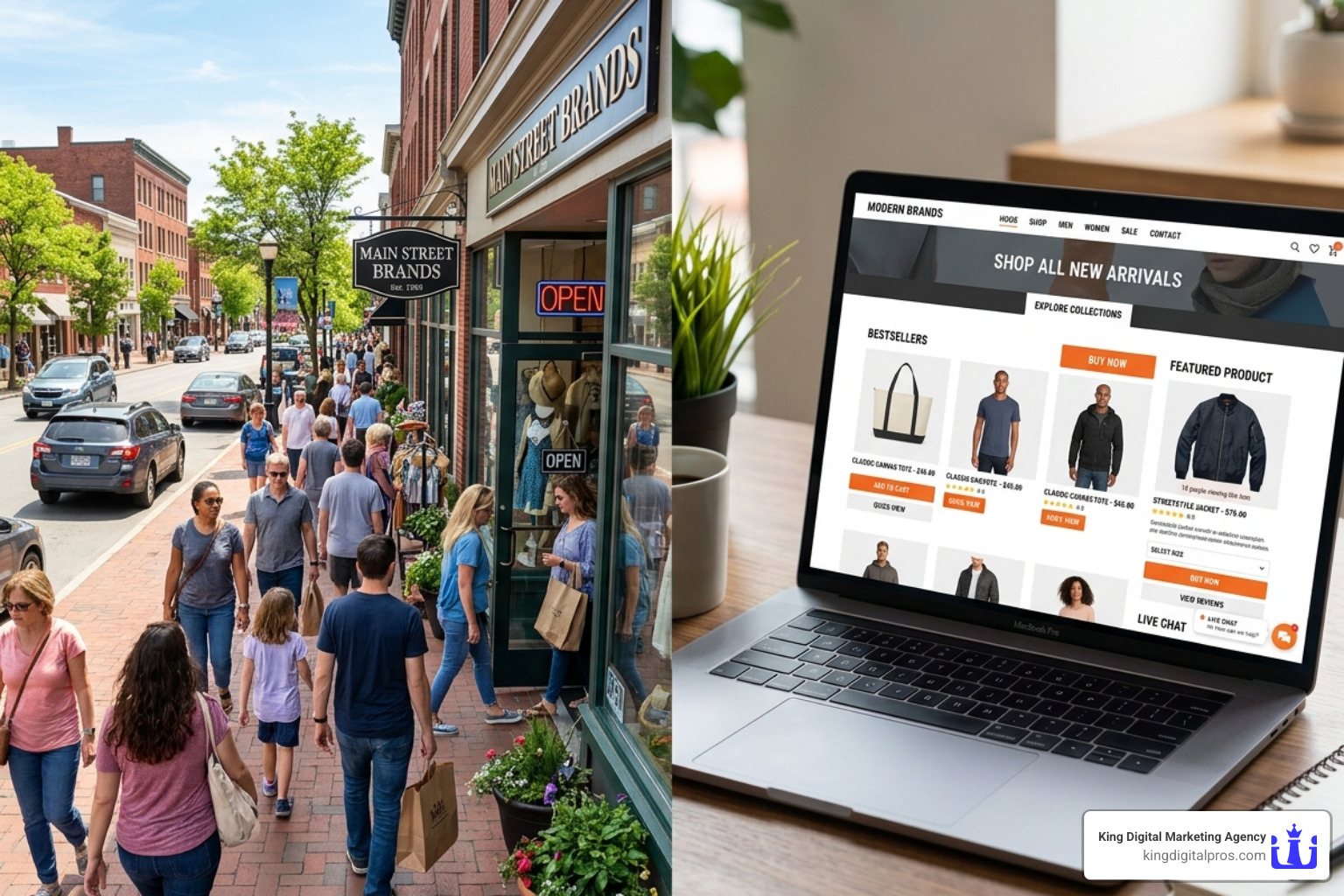
Imagine you own a beautiful storefront in downtown Albuquerque or a cozy shop in Santa Fe. If 100 people walk through your door, but only five of them actually walk to the register and buy something, your customer conversion rate is 5%. Now, imagine if you could tweak your store layout or your sales pitch just enough to get seven people to buy instead of five. That tiny shift—just two more people—can actually result in a 30% increase in total sales.
In the digital world, your website is that storefront. Unfortunately, many businesses treat their website like a billboard rather than a salesperson. Research shows that only 39.2% of brand marketers actually measure whether their work delivers real business outcomes. If you aren’t tracking how many people move from “just looking” to “buying,” you’re essentially flying blind.
Understanding Customer Conversion Rate is the first step toward reclaiming your marketing budget. It’s not just about the volume of traffic; it’s about the value of that traffic. Whether you are a local service provider in Rio Rancho or a creative business in Taos, the goal is to turn existing interest into measurable revenue.
Calculating Your Customer Conversion Rate
Calculating this metric isn’t rocket science, but it does require clean data. The standard formula is:
(Number of Goal Achievements ÷ Total Number of Visitors) × 100 = Conversion Rate
For example, if your Los Alamos-based consulting site had 2,000 visitors last month and 40 of them filled out a contact form, your rate is 2%.
However, we often need to look deeper. Many of our clients focus on the Lead-to-Customer Conversion Rate, which measures how many of those initial leads actually signed a contract or made a purchase. If you generated 100 leads and closed 6 of them, you’re sitting at the B2B industry average of 6%.
Customer Acquisition vs. Conversion: Finding the Balance
One of the biggest “confessions” in marketing is that we often spend too much time on acquisition (getting people to the site) and not enough on conversion (getting them to act).
| Feature | Customer Acquisition | Customer Conversion |
|---|---|---|
| Primary Goal | Awareness and Traffic | Action and Revenue |
| Typical Channels | SEO, Social Media, Paid Ads | UX Design, CTAs, Trust Signals |
| Cost Metric | CAC (Cost Per Acquisition) | CR (Conversion Rate) |
| Effort Type | A “Marathon” of building trust | A “Science” of testing and friction removal |
Acquisition widens the top of your funnel, but conversion ensures the funnel isn’t leaky. If your Customer Acquisition Cost (CAC) is $100 but your customer only spends $80, you have a math problem. By focusing on boosting customer acquisition alongside conversion, you create a sustainable growth engine. In places like the East Mountains or Edgewood, where the local customer base is finite, you can’t afford to waste a single lead.
High-Impact Strategies and CRO Best Practices
Conversion Rate Optimization (CRO) is the systematic process of making your website work harder for you. It’s about removing “friction”—those annoying little hurdles that make people give up and leave.
Statistics tell a sobering story: 42% of consumers abandon a purchase because they are overwhelmed by too many options, and 54% leave a site simply because they can’t find what they’re looking for. Even worse, about 70.22% of shopping carts are abandoned before the “Thank You” page.
To combat this, we follow Conversion Rate Optimization Best Practices. This starts with a minimalistic design. If your website looks like a cluttered junk drawer, your visitors will treat it like one. Clear categories, intuitive navigation, and fast load times are non-negotiable in 2026.
Psychological Triggers: Social Proof and Urgency
We are social creatures. We want to know that other people have used your service and didn’t regret it. Adding social proof—like video testimonials, client logos, or case studies—can boost customer conversion by 15% or more.
Key psychological triggers include:
- Trust Seals: Displaying security badges or professional certifications (like a “Top Rated in Albuquerque” badge) builds instant credibility.
- Scarcity and Urgency: “Only 2 spots left for our June workshop!” or “Offer expires in 48 hours!” nudges the procrastinators.
- Guarantees: A strong money-back guarantee removes the risk from the buyer’s shoulders.
- Compelling Headlines: Since 60-70% of users only read headings, yours need to be “sticky.” A headline that promises a specific benefit (e.g., “Double Your Leads in 30 Days”) outperforms a generic one every time.
A/B Testing and Experimentation
If you aren’t testing, you’re just guessing. A/B testing (or split testing) involves showing two different versions of a page to different visitors to see which one performs better. Maybe a green “Book Now” button works better than a red one in Grants, or perhaps a shorter form leads to more sign-ups in Cedar Crest.
We use Landing Page Conversion Rate Optimization to test everything from headlines to background images. The key is to change only one element at a time so you know exactly what caused the lift. By building modular landing pages, we can quickly swap out blocks of content to match different visitor intents, ensuring the message always hits home.
Navigating the 2026 Landscape: AI and Privacy
The marketing world of 2026 is vastly different from just a few years ago. We are seeing a massive shift toward “Agentic AI” and privacy-first data. With the deprecation of third-party cookies, marketers can no longer rely on stalking users across the web. Instead, we must rely on consented, first-party data—information the customer chooses to give us.
Brands using advanced personalization are seeing a 16-point increase in conversions compared to those sticking to basic efforts. This is where Agentic AI Marketing Services come into play. AI can now score leads in real-time, segmenting them based on their likelihood to buy and serving them a personalized experience the moment they land on your site.
How AI Personalization Drives Customer Conversion
AI doesn’t just guess; it predicts. By identifying high-value visitors early in their journey, AI can trigger dynamic CTAs or specific product recommendations.
For example, if a visitor from Sandia Park has visited your “Luxury Landscaping” page three times, AI can automatically offer them a “Free On-Site Consultation” popup instead of a generic newsletter signup. This Conversion Funnel Optimization ensures that the most relevant offer is presented at the exact moment of highest intent.
Privacy-First Marketing and Cookie Deprecation
Privacy changes have made tracking more difficult, but not impossible. The “confession” here is that many marketers were lazy with cookies. Now, we use contextual targeting and “clean rooms” to understand audiences without infringing on privacy.
The strategy for 2026 involves “micro-conversions.” Since many visitors aren’t ready for a big “Yes” (like a $5,000 purchase), we ask for a small “Yes” first. This could be a quiz, a calculator, or a downloadable guide. These small actions allow for voluntary identification, giving us the permission to nurture the lead through email or retargeting without needing third-party cookies.
Measuring Success: Benchmarks and Metrics
How do you know if your customer conversion efforts are actually working? You have to look at the benchmarks. While the “good” conversion rate is often cited as 2% to 5%, this varies wildly by industry.
Industry Benchmarks for 2026
- B2B Services: 2% – 6% (Lead-to-customer)
- E-commerce: 1% – 3%
- Local Professional Services (Legal/Medical): 3% – 10%
- Retail Storefronts: 20% – 35% (People who enter vs. buy)
In New Mexico, we see unique trends. A local business in Tijeras might have a lower volume of traffic but a much higher conversion rate because the intent is more localized and specific. Tracking your Lead Conversion against your own historical baseline is often more valuable than comparing yourself to a national average.
Tracking Beyond the Customer Conversion Rate
While the conversion rate is the “North Star,” it doesn’t tell the whole story. To get a 360-degree view of your success, you must track:
- CPA (Cost Per Acquisition): How much did it cost to get that one customer?
- CAC (Customer Acquisition Cost): The total sales and marketing cost divided by new customers.
- ROAS (Return on Ad Spend): For every dollar spent on ads, how many dollars came back?
- LTV (Lifetime Value): How much is that customer worth over the next three years?
- Engagement Scores: Using Conversion Funnel Analysis to see how deeply a user interacts with your brand before converting.
Building Your 2026 Conversion Strategy
At King Digital Marketing Agency, we believe that great customer conversion work is a system, not a stunt. Whether we are optimizing a Google Business Profile for a local plumber or managing a complex funnel for a regional franchise, the steps remain the same:
- Define Your North Star: What is the one action that matters most? (Purchase, Lead, Call?)
- Map the Journey: Use a Conversion Funnel Optimization Guide to identify where people are dropping off.
- Fix the Leaks: Optimize your site speed, simplify your navigation, and add social proof.
- Implement Personalization: Use AI to tailor the experience for high-value visitors.
- Test and Repeat: Turn every win into a playbook for the next campaign.
We specialize in helping local businesses in Albuquerque, Rio Rancho, Santa Fe, and beyond dominate their local markets by ensuring they aren’t just seen, but that they are chosen. By managing your map listings and optimizing your local visibility, we drive the high-intent traffic that is most likely to convert.
Frequently Asked Questions about Customer Conversion
What is a good conversion rate in 2026?
A “good” rate is anything that is better than your rate last month! However, most digital businesses aim for a baseline of 2% to 5%. If you are a local service provider, you should aim higher, often between 5% and 15%, because your traffic is usually more targeted.
How do privacy changes impact my conversion tracking?
With the end of third-party cookies, you can’t always see the exact path a customer took across different websites. You must rely more on first-party data (your own analytics) and server-side tracking to get an accurate picture of your customer conversion success.
Why is my cart abandonment rate so high?
High abandonment is usually caused by three things: unexpected costs (like shipping), a complicated checkout process, or a lack of trust. Try adding a “Guest Checkout” option and displaying trust seals right next to the “Buy” button to see an immediate improvement.
Ready to stop wasting your marketing budget? Learn more about our conversion optimization services and let’s turn your traffic into a treasure trove of loyal customers.
