TL;DR:
- Small businesses can boost local visibility and measure results without spending money by using free tools like Google Business Profile, Search Console, Canva, Buffer, and HubSpot templates. These resources help create a comprehensive, data-driven marketing system that improves reputation, organic traffic, and engagement. Building this foundation first ensures effective marketing before investing in paid advertising.
The best free marketing resources are the tools and templates small businesses use to build visibility, reach the right audience, and measure results without spending a dollar. Platforms like Google Business Profile, Google Search Console, HubSpot’s free templates, Canva, and Buffer form the core of what digital marketers call a foundational organic marketing stack. These tools cover local search, SEO diagnostics, content creation, social scheduling, and campaign planning. Used together, they give small to medium-sized businesses a real competitive edge before a single paid ad runs.
1. What are the best free marketing resources for local visibility?
Google Business Profile is the single most impactful free marketing channel for local businesses. A complete profile makes your business 2.7x more likely to be perceived as reputable by potential customers. That credibility gap is real, and it costs nothing to close.
Your Google Business Profile appears in Google Search and Google Maps when nearby customers look for what you sell. The profile displays your hours, phone number, photos, reviews, and website link. Businesses that fill out every field and add photos consistently generate more calls, direction requests, and website visits than those with bare profiles.
The most common failure here is inconsistent NAP data. NAP stands for Name, Address, and Phone number. When your profile shows a different address than your website, Google treats that as a trust signal problem. That mismatch hurts local rankings and reduces the chance your business appears in the local map pack.
- Claim and verify your profile at business.google.com
- Add your business category, hours, and service area
- Upload at least 10 photos of your location, team, and products
- Respond to every review, positive or negative
- Post updates weekly to signal an active, credible business
Pro Tip: Set a recurring calendar reminder every two weeks to check your profile for outdated hours, unanswered reviews, or missing photos. Fresh profiles rank better and convert more visitors.
2. How Google Search Console gives you free SEO diagnostics
Google Search Console is a free tool from Google that shows you exactly how your website performs in organic search. Search Engine Land describes it as “X-ray vision” into how Google indexes and serves your pages. That framing is accurate. Without it, you are guessing why your site ranks where it does.
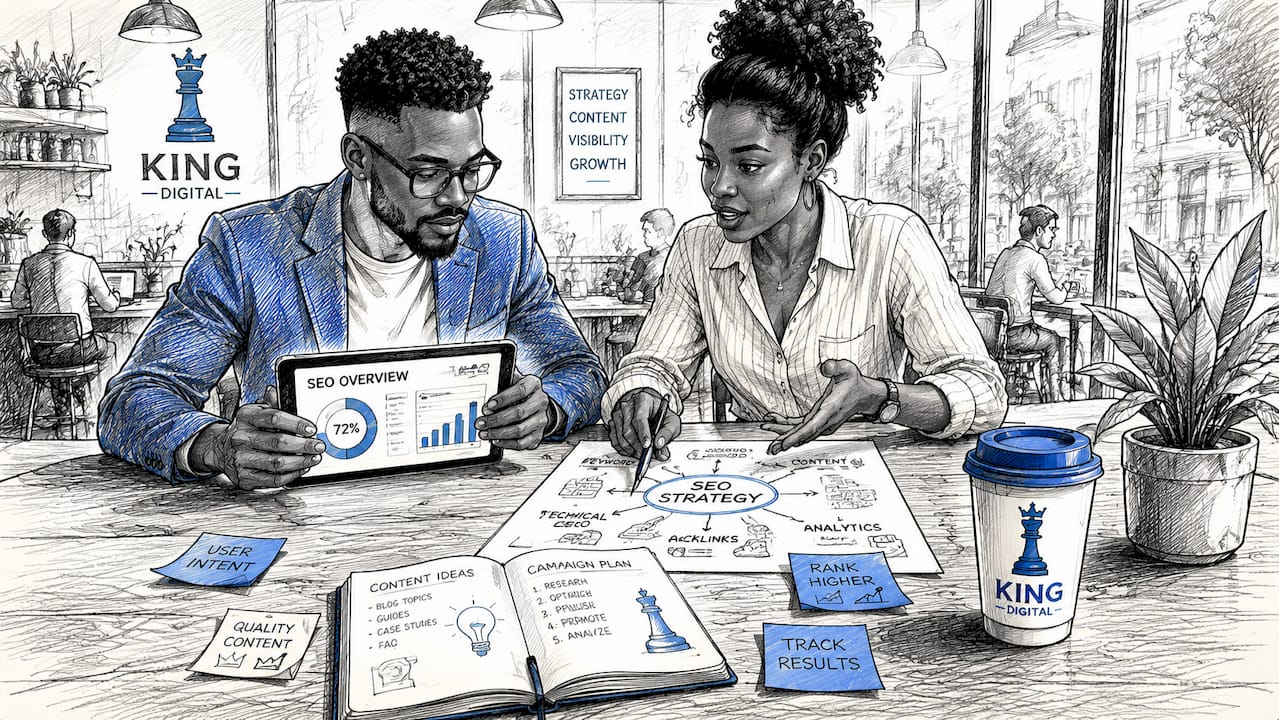
Setup takes about five minutes. You choose between Domain verification, which covers all subdomains and protocols, or URL prefix verification, which covers a specific URL. For most small businesses, URL prefix is the simpler starting point.
The reports that matter most are:
- Search results: Shows which queries bring impressions and clicks to your site
- Coverage: Flags pages Google cannot index and explains why
- Core Web Vitals: Reports page speed and user experience scores
- Sitemaps: Confirms Google has received and processed your sitemap
Once you see which search queries drive traffic, you can write more content around those topics. That is how free organic traffic compounds over time. Pairing Search Console with Google Analytics creates a feedback loop that connects search visibility data to on-site behavior and lead capture.
Pro Tip: Filter your Search Console queries by position 8–15. Those are pages close to page one. A small content update or internal link can push them into the top five, often doubling your clicks with minimal effort.
3. Canva, Buffer, and Google Analytics as a free creative stack
The most practical free tool stack for small business marketing combines Canva for design, Buffer for scheduling, and Google Analytics for measurement. Buffer’s 2026 guide identifies these three as foundational and complementary across the marketing funnel. Each one solves a different bottleneck.
Canva gives non-designers the ability to produce professional graphics for social media, email headers, presentations, and ads. The free plan includes thousands of templates, a brand kit for colors and fonts, and drag-and-drop editing. You do not need a graphic designer to maintain visual consistency across your channels.
Buffer’s free plan lets you connect up to three social media accounts and schedule posts in advance. That matters because consistency drives social media reach. Businesses that post on a regular schedule outperform those that post sporadically, regardless of budget.
| Tool | Primary function | Free plan limit | Best for |
|---|---|---|---|
| Canva | Graphic design | Unlimited templates, limited assets | Social graphics, ads, presentations |
| Buffer | Social scheduling | 3 channels, 10 posts per channel | Consistent posting without daily effort |
| Google Analytics | Website measurement | Unlimited (free) | Traffic sources, conversions, behavior |
Pro Tip: Batch your Canva graphics and Buffer posts on one day each week. Two hours of focused work covers your entire week of social content. That frees the rest of your time for customer conversations and follow-up.
4. HubSpot’s free templates for planning and audience targeting
HubSpot offers a free digital marketing plan template and a set of buyer persona templates that help small businesses define their audience and structure their campaigns. These are not generic worksheets. They include sections for budget allocation, channel selection, goal setting, and performance metrics.
The buyer persona template is particularly valuable for small teams. Defining your ideal customer before you create content means every blog post, social update, and email speaks to a real person’s actual concerns. HubSpot’s research shows that audience definition directly improves content relevance and lead quality. Vague targeting produces vague results.
Key sections in HubSpot’s free marketing plan template include:
- Business summary: Your goals, market position, and competitive context
- Target audience: Buyer personas with demographics, pain points, and buying triggers
- Channel plan: Which platforms you will use and why
- Budget breakdown: Allocation across paid, owned, and earned media
- KPIs and metrics: What you will measure and how often
- Content calendar: Planned topics and publishing schedule
Treat this document as a living record, not a one-time exercise. Revisiting your plan monthly with fresh data from Search Console and Google Business Profile keeps your marketing aligned with what is actually working.
5. How to combine free tools into a measurable marketing system
Free tools only produce results when they work together as a system. Google Business Profile drives local discovery. Search Console shows which organic queries bring visitors to your site. Canva and Buffer keep your social presence active. Google Analytics tracks what those visitors do after they arrive. HubSpot’s templates tie the strategy together.
A simple workflow for a small business looks like this. On monday, review your Search Console queries and note any new keywords gaining traction. On wednesday, use Canva to create graphics based on those topics. On thursday, schedule the week’s social posts in Buffer. At the end of the month, update your HubSpot marketing plan with what the data showed.
Common mistakes that break this system:
- Ignoring Search Console for weeks at a time, missing indexing errors that kill traffic
- Leaving Google Business Profile incomplete, which reduces customer trust and local rankings
- Creating content without buyer personas, producing posts that attract the wrong audience
- Tracking vanity metrics like follower counts instead of leads and conversions
The right starting point depends on your current situation. If you have no local presence, claim your Google Business Profile first. If you have a website but no traffic, set up Search Console immediately. If you have traffic but no conversions, connect Google Analytics and review your lead capture pages.
Pro Tip: Set a monthly 30-minute review meeting with yourself. Pull three numbers: Search Console clicks, Google Business Profile actions, and website leads. Those three metrics tell you whether your free marketing system is working or needs adjustment.
6. Free online marketing courses and guides worth your time
Free education is one of the most underused marketing resources for startups and growing businesses. Google offers the Google Digital Garage, a free certification program covering search, analytics, and digital advertising fundamentals. HubSpot Academy provides free courses on content marketing, email marketing, and inbound strategy, each with a shareable certificate.
Meta Blueprint covers Facebook and Instagram advertising at no cost. Semrush Academy offers free SEO and content marketing courses taught by practitioners. These are not watered-down previews. They are full courses used by marketing professionals.
The practical value of these courses is not just knowledge. It is vocabulary. When you understand what a conversion rate means, what a search impression is, and how a content funnel works, you make better decisions with every free tool you use. You also communicate more clearly with any agency or contractor you hire later.
Xero’s digital marketing guide for small businesses frames this well. Building organic presence through foundational channels before investing in paid ads prevents wasted spend. Free education accelerates that foundation.
7. Free social media strategies that drive real engagement
Free social media strategies work when they focus on consistency and relevance rather than reach and volume. Posting every day with no clear message produces less engagement than posting three times a week with content your audience actually needs.
The most effective free approach combines educational content, social proof, and direct calls to action in roughly equal measure. Educational posts build authority. Reviews and customer stories build trust. Direct calls to action convert attention into leads. Rotating these three content types keeps your feed useful without requiring a content team.
For local businesses, geo-tagged posts and location-specific hashtags extend organic reach to nearby customers at no cost. Responding to comments within the first hour of posting signals to platform algorithms that your content is worth distributing. That behavior costs nothing and consistently outperforms paid promotion for community-building.
Tools like Buffer’s free plan make it practical to maintain this schedule without logging into every platform daily. Canva’s social media templates keep your visuals consistent, which builds brand recognition over time. Pair these with social media strategy guidance tailored to SMBs and you have a complete, zero-cost approach to social growth.
Key takeaways
The most effective free marketing system for small businesses combines Google Business Profile, Google Search Console, Canva, Buffer, and HubSpot’s free templates into a connected, data-driven workflow that builds visibility and generates leads without paid advertising.
| Point | Details |
|---|---|
| Google Business Profile is non-negotiable | A complete profile makes your business 2.7x more likely to be seen as reputable by local customers. |
| Search Console reveals what Google sees | Use it to fix indexing errors and identify high-potential queries before investing in paid search. |
| Canva and Buffer remove execution barriers | Free plans cover design and scheduling, so consistency no longer requires a marketing team. |
| HubSpot templates sharpen your targeting | Defining buyer personas before creating content improves lead quality and reduces wasted effort. |
| Treat your marketing plan as a live document | Monthly updates with fresh data from free tools keep your strategy aligned with real results. |
What I’ve learned from watching SMBs skip the free stuff
I have worked with enough small business owners to know the pattern. They skip the free tools because they assume free means weak. Then they spend money on ads before their Google Business Profile is complete, before Search Console is set up, and before they have defined who they are actually trying to reach. The results are predictably disappointing.
The truth is that Google Business Profile and Search Console together give you more actionable data than most paid tools. A fully optimized profile with consistent reviews and fresh posts outperforms a paid ad campaign for local intent searches. I have seen it happen repeatedly. The business that shows up in the map pack with 80 reviews and updated hours wins the click over the paid ad below it.
What surprises most business owners is how much these free tools reveal about their own weaknesses. Search Console will show you that your most important service page has zero impressions. That is not a paid traffic problem. That is a content and SEO problem, and no ad budget fixes it.
My honest recommendation is to spend 90 days building your free marketing foundation before you write a single check for advertising. Set up your Google Business Profile through King Digital Marketing Agency’ Google Business Profile optimization guide. Connect Search Console. Build your HubSpot persona. Schedule your social content in Buffer. Then look at your data. You will know exactly where to spend money when you are ready, because the free tools will have told you.
— Bernadette
How King Digital Marketing Agency helps SMBs go further than free tools alone
Free tools build your foundation. At some point, growth requires more than a DIY approach.
King Digital Marketing Agency is a boutique digital marketing agency focused on helping small to medium-sized businesses in Albuquerque and beyond turn that foundation into consistent lead generation. The team specializes in SEO, local search, web design, and paid advertising, all built on the same data your free tools are already collecting. If you are ready to move from managing free tools to running a real marketing system, mastering digital marketing with professional support is the logical next step. King Digital Marketing Agency works alongside your existing efforts, not instead of them, to produce measurable results faster than going it alone.
FAQ
What is the best free marketing tool for a local business?
Google Business Profile is the most impactful free tool for local businesses. A complete profile increases the likelihood of being perceived as reputable by 2.7x and drives calls, direction requests, and website visits directly from Google Search and Maps.
How do I use Google Search Console to get more website traffic?
Set up a property in Search Console, then check the Search Results report weekly for queries with high impressions but low clicks. Improving the page title and meta description for those pages typically increases click-through rates without any additional content work.
Are free marketing plan templates actually useful for small businesses?
HubSpot’s free marketing plan template is genuinely useful because it structures budget allocation, channel selection, and KPIs in one document. The value multiplies when you treat it as a live document and update it monthly with data from Search Console and Google Business Profile.
What free tools cover social media design and scheduling?
Canva handles graphic design with thousands of free templates, and Buffer’s free plan schedules posts across up to three social channels. Used together, they give small businesses a consistent social presence without a dedicated design or social media team.
Do I need paid ads if I use these free marketing resources?
Free tools build organic visibility and audience understanding, which are the prerequisites for effective paid advertising. Xero’s digital marketing guidance recommends building your organic foundation first to avoid wasted ad spend on campaigns targeting the wrong audience or sending traffic to underperforming pages.
Recommended
- Top Online Marketing Metrics for SMBs in 2026
- Why Optimize Marketing Budgets for Better ROI
- Why Update Website Content: SMB Guide for 2026
- How to Boost Organic Leads for Your SMB in 2026
