TL;DR:
- Neglecting to maintain your Google Business Profile and ensure consistent NAP data significantly harms local rankings and customer trust. Businesses with duplicate location pages, weak content, and ignoring AI-driven search features risk losing visibility in zero-click and AI summarized results. Regular review management, unique local content, and optimizing for AI search are essential to dominating local search in 2026.
The top mistakes in local SEO are neglecting your Google Business Profile, publishing inconsistent business information, copying location pages, and ignoring AI-powered search features. These local SEO errors do not just cost you rankings. They cost you customers who are actively searching for exactly what you offer, right in your neighborhood.
1. Neglecting your Google Business Profile
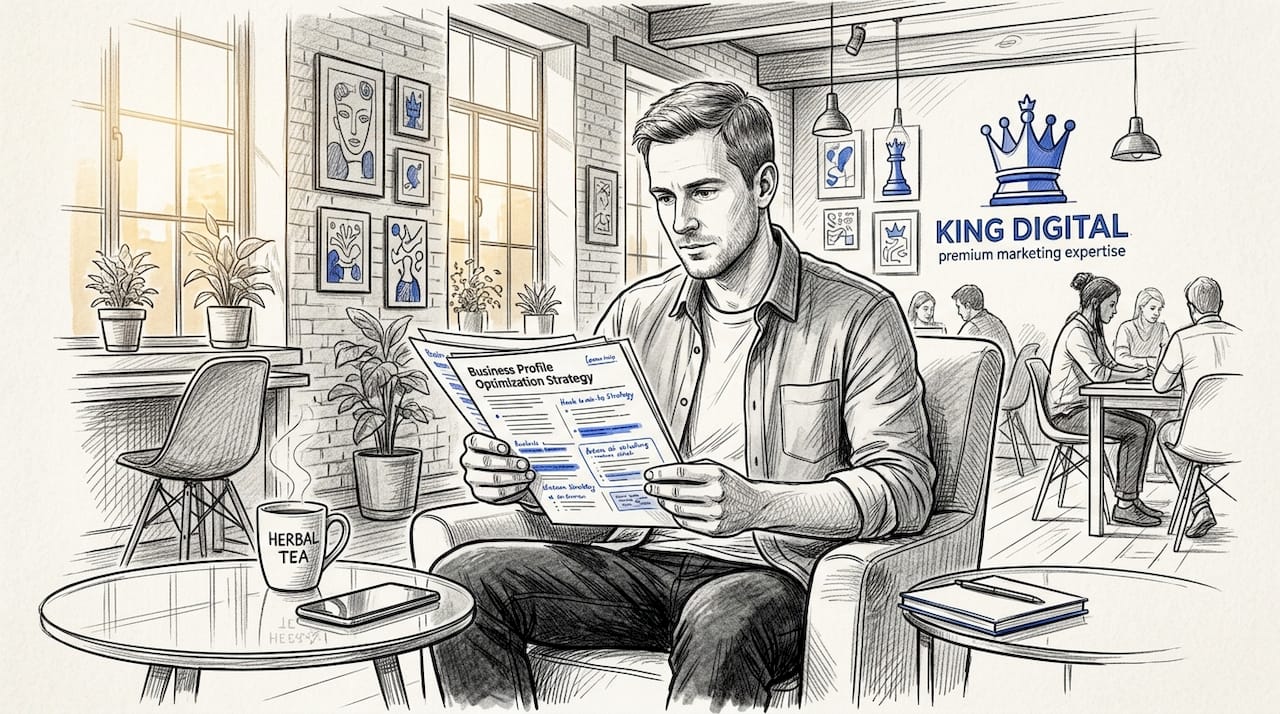
Your Google Business Profile (GBP) is not a one-time setup. Over 60% of businesses fail to actively maintain their profiles, which directly translates to lower engagement and weaker local rankings. Think of an unmaintained GBP like a storefront with locked doors and the lights off. Technically it exists, but no one is walking in.
Active GBP management means posting updates weekly, adding fresh photos, responding to every review, and keeping your hours accurate. Each of these signals tells Google that your business is alive, relevant, and trustworthy. Businesses that treat GBP as a living asset consistently outperform those that set it and forget it.
Common GBP errors include:
- Underdeveloped service descriptions that fail to mention specific offerings or local context
- Wrong or too-few categories selected, which reduces relevant search appearance and cuts you off from competitive local queries
- No Q&A section management, leaving unanswered questions that erode customer confidence
- Missing or outdated photos, which reduce click-through rates on map results
Treating your GBP and your website as separate assets is another costly error. Integrating both into a unified local presence improves lead conversion because customers move seamlessly from discovery to contact. Use your GBP posts to link back to specific service pages, and make sure your website mirrors the same business name, address, and phone number your profile displays.
Pro Tip: Use the King Digital Marketing Agency GBP optimization checklist to audit every field in your profile. Missing even one section can suppress your ranking in the local map pack.
2. Inconsistent NAP data across directories
NAP stands for Name, Address, and Phone number. Inconsistent NAP information across web platforms confuses search engines and reduces trust, which directly lowers your local search rankings. Google cross-references your business details across dozens of directories, data aggregators, and citation sources. When those details conflict, Google loses confidence in your listing.
Here is how to fix NAP inconsistencies the right way:
- Choose a canonical NAP format. Decide on one exact version of your business name, address format, and phone number. Include or exclude “Suite” consistently. Write “Street” or “St.” but never both.
- Audit your existing citations. Use tools like BrightLocal or Whitespark to pull a full citation report and identify every discrepancy across Yelp, Apple Maps, Bing Places, and data aggregators like Foursquare.
- Correct high-authority directories first. Fix Google, Yelp, Facebook, and the major data aggregators before smaller directories, since these carry the most ranking weight.
- Document your canonical NAP. Keep a master reference document your team uses whenever submitting your business to a new directory or updating a listing.
NAP consistency is not glamorous work, but it is foundational. Businesses with clean, consistent citations rank higher in the local map pack and earn more trust from both Google and potential customers.
3. Duplicate location pages with weak content
Copy-pasting location pages with only the city name changed triggers duplicate content penalties from Google. This is one of the most frequent local SEO strategy flaws for multi-location businesses, and it actively suppresses rankings across all affected pages.
| Weak location page | Strong location page |
|---|---|
| Same body copy, city name swapped | Unique intro tied to that specific neighborhood or city |
| Generic title tag: “Plumber in [City]” | Specific title: “Emergency Plumber in Albuquerque’s North Valley” |
| No local references | Local landmarks, project examples, or community mentions |
| One generic service paragraph | Separate sections per service with local context |
Unique, locally relevant location pages with distinct titles, H1s, and content tied to each GBP location are what Google actually rewards. Each page should include local customer testimonials, a specific FAQ section addressing that area’s concerns, and service descriptions written for that community.
Pro Tip: Segment your services into individual focused pages rather than one generic “Services” page. A roofing company in Albuquerque should have separate pages for roof repair, roof replacement, and storm damage, each with local context. This approach captures more specific search queries and signals topical depth to Google.
4. Ignoring AI-powered search and zero-click results
AI Overviews appear in 44.4% of search results and influence 58% of queries in 2026. Ignoring Answer Engine Optimization (AEO) is now a critical local SEO error, not a future concern. If your content does not directly answer the questions your customers are typing and speaking, AI-generated summaries will pull from competitors who do.
Zero-click searches compound this challenge. A growing share of local queries resolve on the search results page itself, meaning users get the answer without visiting your website. Your goal is to be the source Google’s AI cites, not the site that gets skipped.
Practical steps to adapt your local content for AI and voice search:
- Write in a question-and-answer format. Structure service pages and blog posts around the exact questions customers ask, such as “How much does HVAC repair cost in Albuquerque?” or “What is the best plumber near me?”
- Optimize for voice search queries. Voice search optimization is overlooked by most small businesses, yet voice queries are longer, more conversational, and often hyper-local. Target phrases like “open now near me” and “best [service] in [neighborhood].”
- Build E-E-A-T signals. Local SEO now rewards Experience, Expertise, Authoritativeness, and Trustworthiness. Author bios, case studies, certifications, and local press mentions all contribute.
- Use structured data markup. Schema for LocalBusiness, FAQPage, and Service helps AI systems extract and cite your content accurately.
Understanding how AI-driven search reshapes local visibility is no longer optional for businesses competing in 2026.
5. Poor review management and no performance tracking
Reviews are a direct local ranking signal, and failing to manage them consistently is one of the most frequent local SEO oversights. Businesses that actively acquire reviews and respond promptly to all of them, positive and negative, outrank those that treat reviews as a passive byproduct of doing business.
Here is a repeatable review management process:
- Ask every satisfied customer for a review. Send a follow-up text or email with a direct link to your Google review page within 24 hours of service completion.
- Respond to every review within 48 hours. Thank positive reviewers by name and address negative reviews with empathy and a resolution path. Google rewards engagement, and prospective customers read your responses.
- Monitor review velocity. A sudden drop in new reviews signals a broken process. Set a monthly target and track it.
- Automate where possible. Platforms like Podium or Birdeye send review request sequences automatically, removing the manual burden from your team.
Beyond reviews, most local businesses do not track map-specific engagement like calls, direction requests, or website visits from their GBP. This means they have no visibility into whether their local SEO is generating actual leads. Tracking map actions such as clicks on “get directions,” calls, and website visits is critical to quantifying ROI and refining your marketing spend. Google Business Profile Insights provides this data for free. Use it every month.
Key takeaways
Avoiding the top mistakes in local SEO requires consistent GBP management, clean NAP data, unique location content, AI-ready answers, and active review tracking.
| Point | Details |
|---|---|
| GBP is not set-and-forget | Update your profile weekly with posts, photos, and accurate hours to maintain ranking signals. |
| NAP consistency is foundational | Audit all citations with tools like BrightLocal and standardize one canonical format across every directory. |
| Location pages need unique content | Write distinct titles, H1s, and body copy for each location to avoid duplicate content penalties. |
| AI search demands direct answers | Structure content as Q&A and use schema markup so AI Overviews cite your business. |
| Track map actions monthly | Monitor calls, direction clicks, and website visits from GBP Insights to measure real lead generation. |
What I have learned after years of watching local businesses leave rankings on the table
I am Bernadette King, and after working with local businesses across Albuquerque and beyond, the pattern I see most often is not a lack of effort. It is effort aimed at the wrong things. Business owners spend money on paid ads while their Google Business Profile sits incomplete. They publish blog posts while their NAP data is inconsistent across 40 directories. They wonder why they are not ranking while their location pages are carbon copies of each other.
The uncomfortable truth is that local SEO rewards consistency and specificity above almost everything else. The businesses that dominate their local map pack are not necessarily the ones with the biggest budgets. They are the ones who treat their GBP like a living storefront, answer customer questions before those customers even ask, and actually look at their performance data each month.
My advice: start with an honest audit before adding anything new. Fix what is broken before building on top of it. And do not underestimate how much the AI search shift is changing the game right now. Businesses that adapt their content to answer real questions in a conversational format are already pulling ahead. The ones waiting to see how it plays out are losing ground every week.
— Bernadette
Ready to fix your local SEO and start winning more customers?
At King Digital Marketing Agency, we work with local businesses every day to correct exactly the errors covered in this article. Whether your Google Business Profile needs a full overhaul, your NAP data is scattered across the web, or your location pages need a complete rewrite, we have the expertise to get it done right.
Our local marketing SEO services are built specifically for small and medium-sized businesses that want to compete and win in their local market. We also specialize in location page optimization for multi-location businesses tired of duplicate content suppressing their rankings. If you are ready to stop guessing and start growing, contact King Digital Marketing Agency for a local SEO audit today.
FAQ
What are the top mistakes in local SEO?
The top mistakes include neglecting Google Business Profile management, inconsistent NAP data across directories, duplicate location pages, ignoring AI-powered search features, and failing to track map engagement metrics like calls and direction requests.
How does inconsistent NAP data hurt local rankings?
Inconsistent Name, Address, and Phone information confuses search engines and reduces trust in your listing, which directly lowers your position in local search results. Standardizing your NAP across all directories is one of the highest-impact fixes available.
Why do duplicate location pages hurt SEO?
Google identifies near-identical pages as duplicate content and suppresses them in rankings. Each location page must have a unique title, H1, and body copy tied to that specific city or neighborhood to rank independently.
How important are reviews for local SEO?
Reviews are a direct local ranking signal. Businesses that consistently acquire new reviews and respond to all of them rank higher in the local map pack and convert more visitors into customers.
What is Answer Engine Optimization and why does it matter?
Answer Engine Optimization (AEO) is the practice of structuring content to be cited by AI-generated search summaries. With AI Overviews influencing 58% of queries in 2026, businesses that format their content as direct answers to customer questions gain significant visibility over those that do not.
Recommended
- Optimize local search: Ultimate Guide 2025
- Mobile SEO Tips 2026: Boost Your Rankings Now
- Boost your local SEO with expert best practices in 2026
- Local SEO tips: Top Secrets to Dominate 2025
