What Is Brand Reputation Monitoring (And Why It Matters Right Now)
Brand reputation monitoring is the practice of tracking, analyzing, and responding to what people say about your business across the internet — including social media, review sites, news outlets, forums, and increasingly, AI-generated search answers.
Here’s a quick breakdown of what it involves:
- Track mentions of your brand name, products, and key people across digital channels
- Analyze sentiment to understand whether conversations are positive, negative, or neutral
- Monitor reviews on platforms like Google, Yelp, and industry-specific sites
- Set up alerts so you catch problems before they spiral
- Respond strategically to feedback — both good and bad
- Benchmark against competitors to understand your share of voice
Think about your own behavior for a second. Before trying a new restaurant or hiring a contractor, you probably check reviews first. Your potential customers do the same thing — and 93% of buyers say online reviews influence their purchasing decisions.
That number isn’t a nudge. It’s a warning.
A single viral complaint, a cluster of negative reviews, or even a mishandled customer interaction can quietly erode years of trust — often before you even know it’s happening. United Airlines learned this the hard way when the Flight 3411 incident spread across social media, costing the brand significantly in customer trust and stock value almost overnight.
The problem for most local business owners isn’t that they don’t care about their reputation. It’s that they have no system for watching it.
That’s exactly what this guide is here to fix.
I’m Bernadette King, founder of King Digital Marketing Agency, and with years of experience helping franchise owners and local businesses build and protect their digital presence, brand reputation monitoring is something I work on every single day. Let’s walk through everything you need to know — without the overwhelm.
Quick brand reputation monitoring definitions:
Why Brand Reputation Monitoring is Essential for Modern Growth
Your reputation isn’t just a “nice-to-have” asset; it is the engine of your growth. For businesses in Albuquerque, Santa Fe, or any of our beautiful New Mexico communities, your local business reputation is often the first thing a neighbor sees before they ever step through your door.
When we talk about the impact of reputation on sales, the statistics are staggering. Beyond the fact that 93% of buyers say online reviews impact their buying decisions, research shows that 4 out of 5 customers will actually reverse a purchase decision after reading a negative review online. This means that if you aren’t actively engaged in brand reputation monitoring, you are likely losing revenue to competitors who are.
A positive reputation acts as a form of “free advertising.” When your sentiment is high, your customers become your advocates, sharing their experiences on social media and review platforms. This builds a level of credibility that paid ads simply cannot buy. Conversely, a lack of monitoring can lead to “reputation decay,” where old, unaddressed complaints linger at the top of search results, quietly turning away prospects for years. By staying on top of your digital footprint, you ensure that your brand’s character aligns with the value proposition you promise to your customers.
The Strategic Framework for Brand Reputation Monitoring
To master brand reputation monitoring without losing your mind, you need a repeatable framework. You can’t just “Google yourself” once a month and hope for the best. A professional-grade strategy involves three main pillars: social listening, review tracking, and media monitoring.
- Social Listening: This goes beyond just checking your notifications. It involves tracking untagged mentions of your brand name, common misspellings, and even industry keywords. It’s about understanding the context of the conversation.
- Review Tracking: This is the bread and butter for local businesses. You need a centralized way to see every new rating on Google, Facebook, and industry-specific sites.
- News and Web Monitoring: This involves keeping an eye on blogs, news outlets, and forums like Reddit to catch long-form mentions of your business.
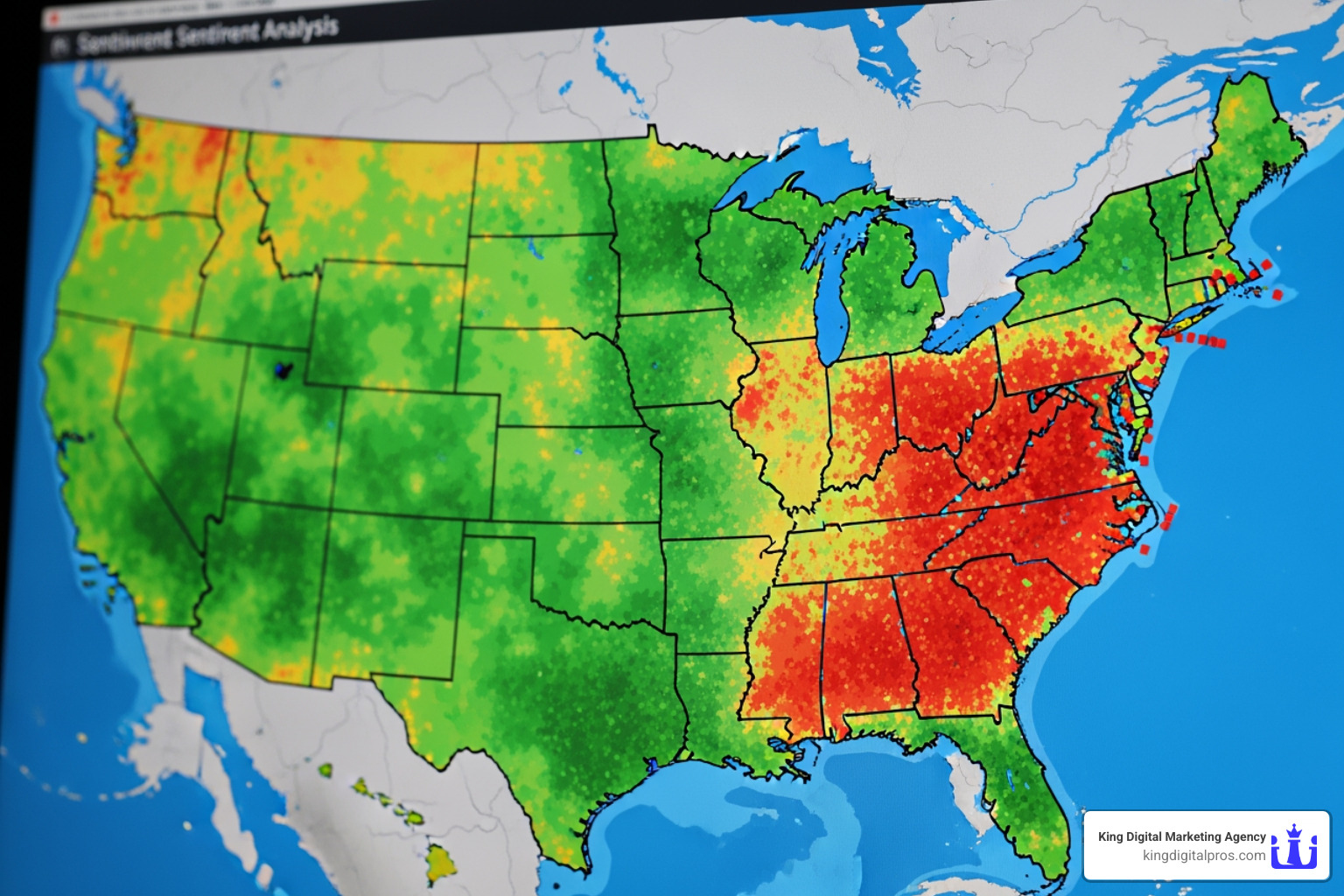
Implementing a reputation management system allows you to unify these signals. Instead of jumping between ten different tabs, you can view your “Rep Score”—a single metric that reflects the health of your brand across all channels.
Tracking Mentions Across Diverse Channels
The conversation about your brand doesn’t always happen where you’re looking. While we all focus on Facebook and Google, “dark social” (private messaging) and niche forums can be hotbeds for brand discussion.
Forums like Reddit have over 430 million monthly active users and are often where customers go for unfiltered advice. If you aren’t monitoring these spaces, you’re missing out on vital customer feedback. Additionally, video comments on YouTube or TikTok are increasingly becoming the “new review section” for younger demographics. A comprehensive strategy tracks:
- Blogs and News Sites: To see how PR efforts are landing.
- Online Forums: Where community sentiment is built.
- Video and Podcasts: Using AI to “listen” to audio mentions.
Choosing the Right Brand Reputation Monitoring Tools
Manual monitoring is, quite frankly, impossible for any business that wants to scale. You need tools that offer real-time alerts so you can respond to a crisis in minutes, not days. When evaluating software, look for:
- Multi-channel support: Does it track news, social, and reviews in one place?
- Sentiment Analysis: Can it tell the difference between “This product is sick!” (good) and “This product makes me sick!” (bad)?
- Scalability: Will it grow with you as you open more locations in Rio Rancho or Los Alamos?
- Reporting ROI: Can it generate reports that show how your reputation is improving over time?
Platforms like Brandwatch offer deep consumer intelligence that helps you understand the “why” behind the mentions, mapping out trends and competitive share of voice.
Navigating the Era of AI Search and Generative Answers
The game changed recently. We are no longer just monitoring what people say; we have to monitor what AI says. As search engines shift toward “Generative Answers” (like ChatGPT or Google’s SGE), your brand reputation is being summarized by algorithms.
If a user asks ChatGPT, “What’s the best digital marketing agency in New Mexico?” the AI isn’t just looking at your website. It is scanning reviews, social sentiment, and news articles to form an opinion. This is why brand reputation monitoring in the AI era is about visibility and sentiment within Large Language Models (LLMs).
The Role of AI in Modern Brand Reputation Monitoring
Ironically, the best way to fight AI is with AI. Modern tools now use SentiOne AI-powered listening to categorize thousands of mentions instantly. These tools can perform “Anomaly Detection”—automatically alerting you if there is a sudden spike in negative sentiment that doesn’t fit your usual patterns. This predictive capability allows you to spot a brewing crisis before it even hits the mainstream.
Monitoring Brand Health in Generative Search
To stay ahead, businesses must track their “LLM Visibility.” This means understanding how often and in what context your brand is cited in AI-generated answers. Tools like Otterly.AI are emerging to help brands track their presence in these conversational search experiences, ensuring that the AI isn’t hallucinating negative facts about your business.
Turning Insights into Action: Crisis and Feedback Management
Monitoring is useless if you don’t act. When you monitor comments, you are looking for opportunities to engage.
When negative feedback hits, speed is your best friend. Remember the Flight 3411 incident? The damage wasn’t just the event itself; it was the slow, tone-deaf response that followed.
Our Proactive Response Protocol:
- Acknowledge quickly: Even if you don’t have a solution yet, let them know you’re listening.
- Take it offline: Provide a phone number or email to resolve the issue privately.
- Be human: Avoid canned, corporate responses. Use the person’s name and show genuine empathy.
- Fix the root cause: If people are complaining about your checkout process in Albuquerque, don’t just apologize—fix the website!
Key Metrics for Measuring Brand Health
How do you know if you’re actually winning? You need to track specific KPIs. We recommend a mix of quantitative (numbers) and qualitative (feelings) data.
| Metric | Type | What it Tells You |
|---|---|---|
| Net Promoter Score (NPS) | Quantitative | How likely customers are to recommend you. |
| Sentiment Ratio | Quantitative | The percentage of positive vs. negative mentions. |
| Share of Voice | Quantitative | How much of the “conversation” in your industry is about you. |
| Brand Recall | Qualitative | How easily people remember your brand without prompting. |
| Social Engagement Quality | Qualitative | Are people actually talking to you, or just at you? |
Frequently Asked Questions about Brand Reputation
Are free tools like Google Alerts sufficient for businesses?
In our experience, Google Alerts is a great starting point for very small businesses or individuals, but it has major blind spots. It often misses social media conversations and lacks any form of sentiment analysis. If you are serious about growth, you eventually need a dedicated platform that can aggregate reviews and provide actionable data.
How does social listening differ from basic monitoring?
Basic monitoring is reactive—it’s waiting for someone to tag you and then replying. Social listening is proactive. It’s about scanning the entire digital landscape for mentions of your brand, your competitors, and industry trends to find opportunities you would otherwise miss. It’s the difference between hearing a bell ring and understanding why the bell is ringing.
What are the most common challenges in reputation tracking?
The biggest challenge is “data noise.” When you start monitoring everything, you can get overwhelmed by irrelevant mentions. Another challenge is “siloed data,” where the marketing team sees the reviews but the customer service team doesn’t. Using a unified review management service helps break down these walls.
Conclusion
At King Digital Marketing Agency, we know that your reputation is your most valuable currency. Whether you’re a medical practice in Santa Fe or a restaurant in Albuquerque, how you appear online dictates your reality. We specialize in helping local businesses master their digital footprint through expert Google Business Profile optimization and comprehensive review management services.
Don’t let your brand’s story be told by a few disgruntled voices. Take control, start brand reputation monitoring today, and turn your online presence into your greatest competitive advantage. We’re here to help you navigate the maps, the reviews, and the AI-driven future of search. Reach out to us to see how we can put your business on the map—literally.
