Lead conversion tracking: Boost Your ROI 2025!
Why Lead Conversion Tracking is the Missing Link in Your Marketing
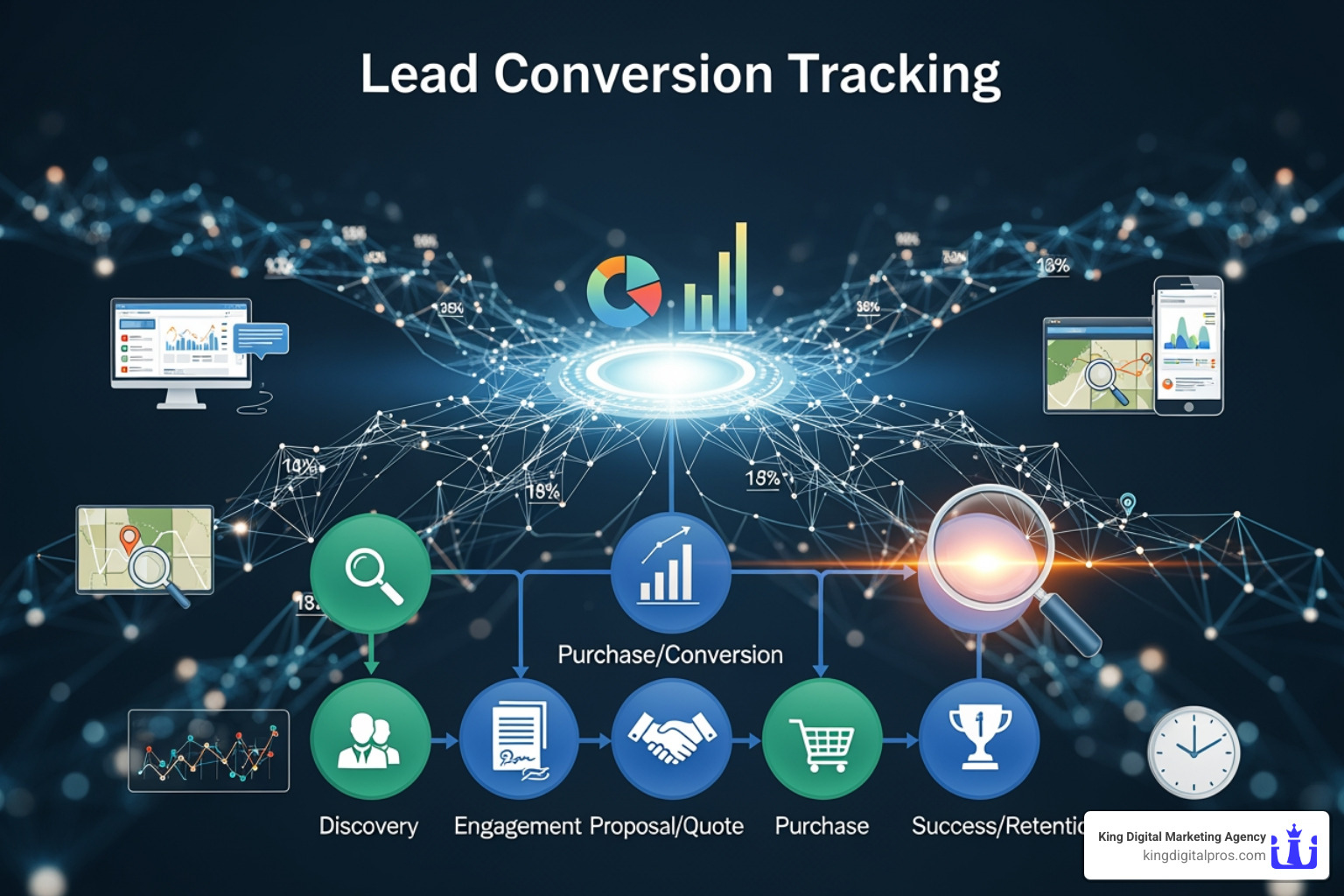
Lead conversion tracking is the process of monitoring and measuring how your marketing efforts turn potential customers into actual buyers. Here’s what you need to track:
- Lead sources – Which marketing channels bring in leads (Google, social media, referrals)
- Conversion actions – Specific steps leads take (form fills, phone calls, demo requests)
- Conversion rates – The percentage of leads that become customers
- Cost per conversion – How much you spend to acquire each customer
- Revenue attribution – Which marketing dollars generate actual sales
Many businesses are generating leads through form submissions, phone calls, or email inquiries. However, without proper tracking, it is nearly impossible to tell which of those leads actually turn into paying customers or how they found you in the first place.
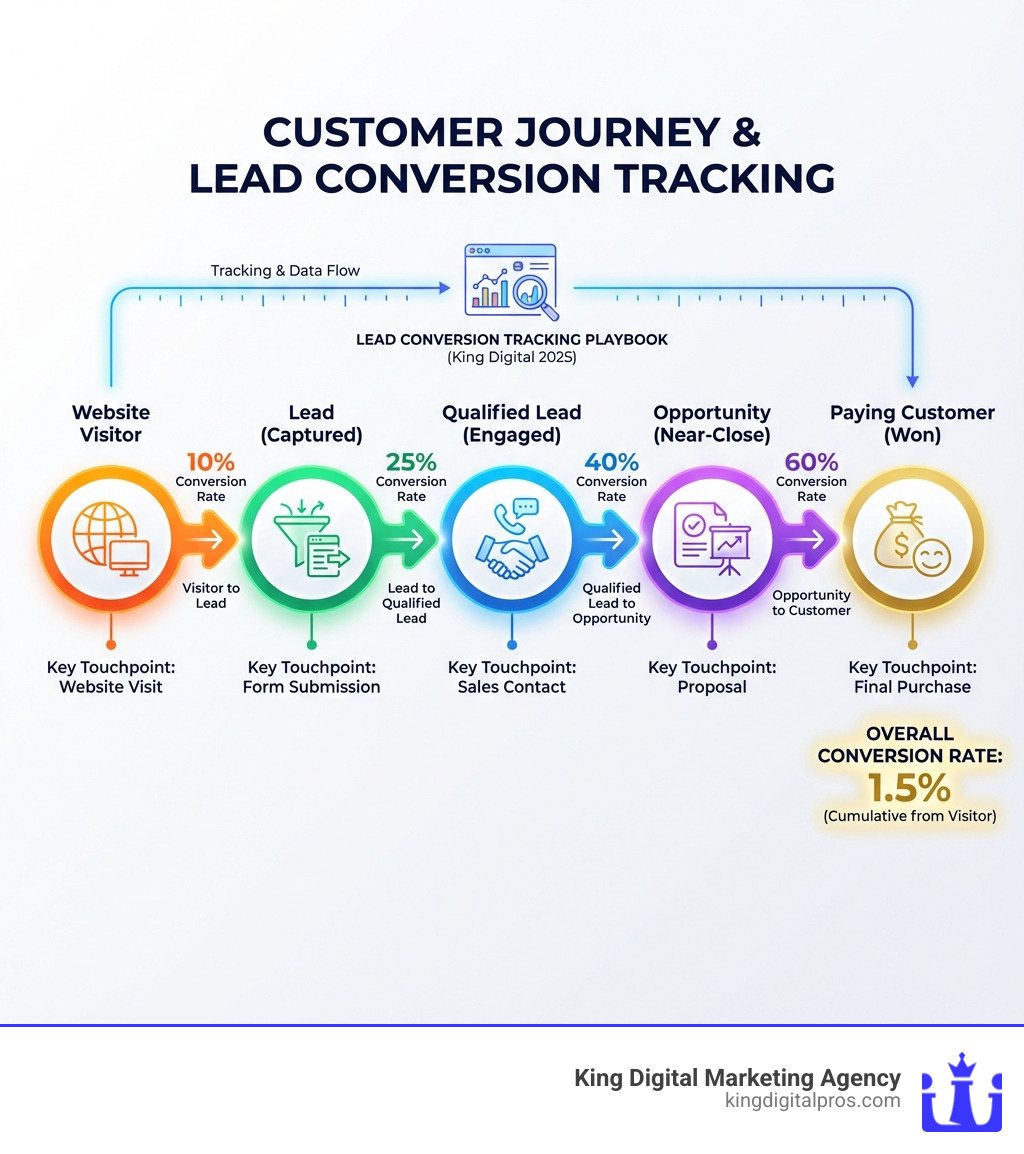
This gap creates what marketers call a “leaky sales funnel.” Leads come in through the top, but somewhere along the way, they disappear. Without tracking, you can’t see where the leaks are, which touchpoints are working, or how prospects move from first click to final sale. You can’t fix what you can’t measure.
Another risk is misaligned spending. You may be investing heavily in channels that drive clicks but not customers, while underinvesting in channels that quietly deliver your best leads. According to HubSpot research, around 70% of B2B marketers struggle to align their sales and marketing efforts, which often leads to inefficient campaigns and unclear ROI. Industry studies from sources like McKinsey & Company echo this, showing that organizations with strong data-driven alignment between marketing and sales consistently outperform their peers.
Data-driven decisions separate growing businesses from struggling ones. When you know exactly which marketing activities generate revenue, you can double down on what works and cut what doesn’t. Resources like Google Analytics help center and the LinkedIn Ads documentation provide practical frameworks for building this kind of visibility into your campaigns.
I’m Bernadette King, and I’ve spent my career helping businesses transform their marketing from a cost center into a profit engine through strategic lead conversion tracking and ROI measurement. At King Digital, we’ve helped countless local businesses plug their leaky funnels and prove which marketing investments actually pay off.
Lead conversion tracking terms to learn:
The Foundation: Understanding Lead Conversion
Understanding what a lead conversion truly means for your business in places like Albuquerque, Santa Fe, or Rio Rancho is the first step in building an effective lead conversion tracking system. It’s about recognizing that not all leads are created equal, and some are far more valuable than others.
What is a Lead Conversion?
A lead conversion happens when a potential customer takes a desired action, moving them closer to becoming a paying client – from a “maybe” to a “yes, I’m ready to buy!”
A sales lead isn’t just a website visitor; it’s someone who has shown specific interest in your product or service, indicating potential intent. These desired actions can be broken down into two categories:
- Micro-conversions: These are small, incremental steps a lead takes that indicate engagement. They might not immediately lead to a sale, but they show progress. Examples include:
- Downloading a brochure or whitepaper
- Signing up for your email newsletter
- Watching a product demo video
- Engaging with your chatbot
- Macro-conversions: These are the big kahunas, the actions that directly signify a strong intent to purchase or hire your services. For local businesses, macro-conversions often include:
- Submitting a contact form on your website
- Requesting a quote or consultation
- Calling your business directly from your website or Google Business Profile
- Scheduling an appointment online
- Making an online purchase
For local businesses in Grants or Los Alamos, a phone call from a Google Business Profile listing is often the most valuable macro-conversion, helping us set up precise lead conversion tracking.
The Lead Conversion Funnel Explained
Imagine a funnel, wide at the top and narrow at the bottom – this is your customer’s journey from first awareness to final purchase. Understanding this funnel is critical for effective lead conversion tracking because it shows us where leads are dropping off and where we need to optimize.
- Awareness Stage: Potential customers are just becoming aware of a problem and potential solutions. Your marketing goal here is visibility.
- Interest Stage: Leads research potential solutions, finding your website or reviews, and are interested in learning more about your offering.
- Consideration Stage: Leads actively evaluate options, comparing services, pricing, and pros/cons. They might download a case study or request a demo.
- Conversion Stage: The lead is ready to make a decision and takes that final macro-conversion action – a purchase, a booking, a phone call.
Each stage offers different opportunities for lead conversion tracking. By understanding this journey, we can implement targeted strategies to move customers smoothly from one stage to the next. For a deeper dive into this process, check out our guide on Conversion Funnel Analysis.
Why is Converting Leads Crucial for Your Business?
Generating thousands of leads means nothing if they don’t turn into revenue. For businesses in Corrales, Tijeras, or any of our service areas, converting leads isn’t just “nice to have” – it’s essential for survival and growth.
- Revenue Generation: Conversions directly translate into sales, fueling your business. Without conversions, your marketing budget risks being a wasted investment.
- Marketing Efficiency: When you convert more leads, you get a better return on your marketing investment, spending less to acquire each customer.
- Scalability: A high conversion rate means your business can grow more effectively. You can confidently invest more in lead generation, knowing a significant portion will become paying customers. It’s like having a well-oiled machine that can handle more input without breaking down.
- Competitive Advantage: Businesses that can efficiently convert leads will always outpace those that can’t. Effective lead conversion tracking allows you to Attract More Customers and keep them coming back.
Measuring What Matters: Key Lead Conversion Metrics
With a clear understanding of lead conversion tracking, the next step is measuring what truly matters. This is where data analysis becomes your best friend. By setting clear goals and tracking the right performance benchmarks, we can turn raw data into actionable insights that drive business growth.
Core Conversion Metrics
These are the fundamental numbers you need to keep an eye on to understand your lead conversion performance. Think of them as the vital signs of your marketing health.
- Lead Conversion Rate (LCR): This is a critical metric, representing the percentage of leads who complete a desired action (a macro-conversion). If 100 people fill out your contact form and 10 become paying customers, your lead-to-customer conversion rate is 10%.
- Lead-to-Sale Rate: This measures how many qualified leads actually turn into paying customers, indicating your sales team’s effectiveness and lead quality.
- Cost Per Conversion (CPC): How much does it cost you to get one lead to convert? Calculated by dividing total marketing spend by the number of conversions, knowing your CPC helps you optimize ad spend and ensure profitability.
- Time to Conversion: How long does it typically take for a lead to move from initial interaction to customer? This can highlight bottlenecks or show which channels generate quicker conversions.
Understanding these metrics is the first step towards optimizing your entire digital presence. For more on this, explore our insights on Digital Marketing Conversion Rate.
Financial & ROI Metrics
Beyond counting conversions, understanding their financial impact is crucial for your bottom line.
- Lead Value: Not all leads are equal; some are small services, others long-term, high-value clients. Lead value estimates the average revenue or profit generated by a single converted lead. Want to learn how to calculate this? Our guide on How to Calculate Lead Value is a great resource.
- Customer Lifetime Value (CLV): This metric predicts the total revenue a customer generates throughout their relationship with your business.
- Conversion ROI: This is the ultimate measure of success, comparing profit from conversions against acquisition cost. A positive Conversion ROI means your marketing efforts are profitable! To really get a handle on your returns, check out our Marketing ROI Calculator: Complete Guide.
MQLs vs. SQLs: Understanding Your Leads
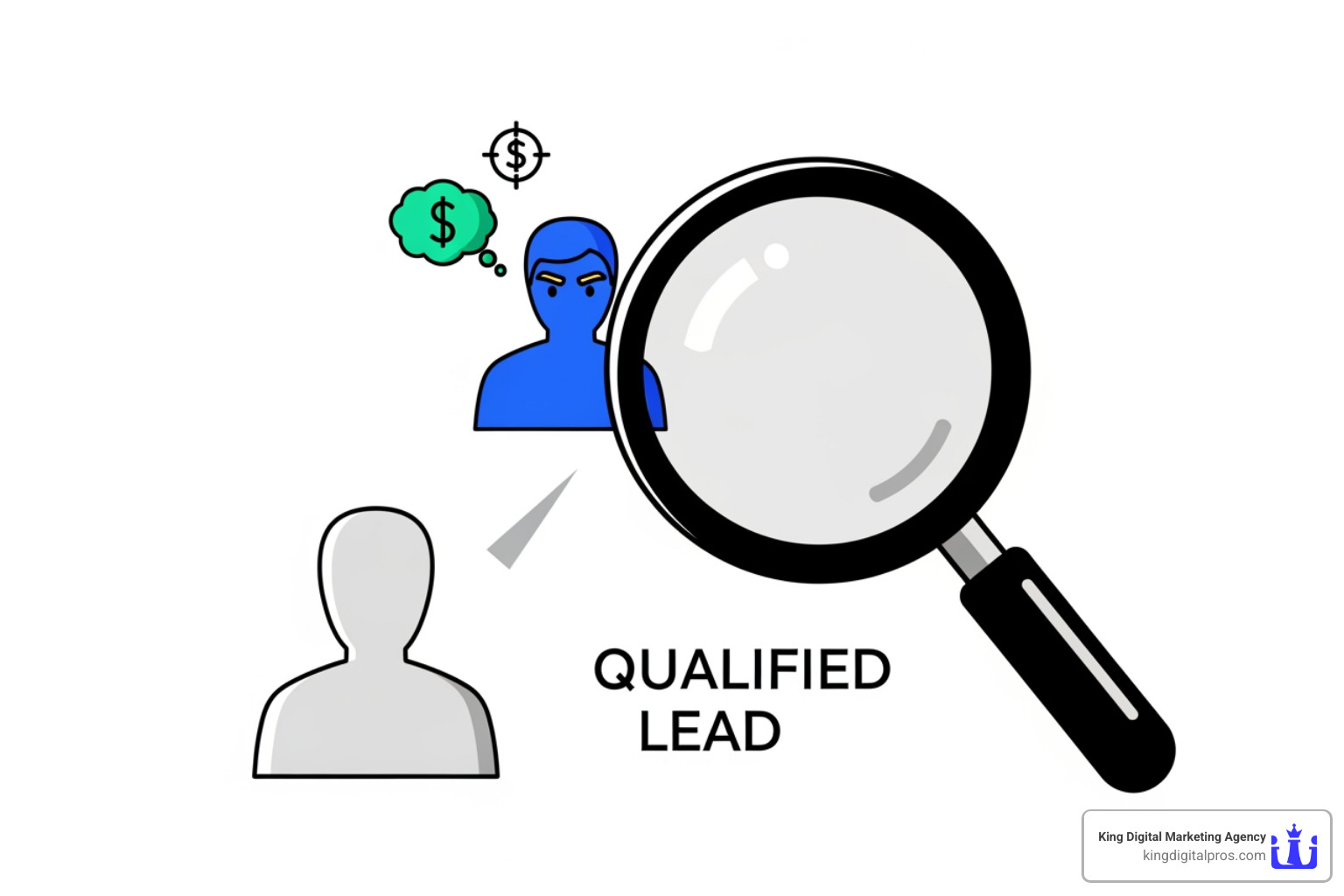
Not every lead is immediately ready for a sales pitch. Differentiating between Marketing Qualified Leads (MQLs) and Sales Qualified Leads (SQLs) is a cornerstone of efficient lead conversion tracking and a smooth sales process. This distinction ensures your sales team focuses on genuinely sales-ready prospects.
| Feature | Marketing Qualified Lead (MQL) | Sales Qualified Lead (SQL) |
|---|---|---|
| Definition | Engaged with marketing, shows interest, but not yet sales-ready. | Vetted by sales, fits ideal customer profile, ready for sales. |
| Actions Taken | Downloaded eBook, attended webinar, signed up for newsletter. | Requested demo, asked for quote, specific product inquiry. |
| Intent Level | Researching, exploring solutions. | Actively evaluating, decision-making stage. |
| Information Gathered | Contact info, general interests. | Budget, timeline, specific needs, decision-maker status. |
| Next Step | Nurturing through email, content, further education. | Direct sales outreach, personalized pitch, proposal. |
| Team Responsibility | Marketing Team | Sales Team |
An MQL might be someone who downloaded an infographic about optimizing Google Business Profiles in Taos. An SQL, however, is someone who filled out a form specifically requesting a “Free Google Business Profile audit for my business in Cedar Crest.”
The handoff process between marketing and sales needs to be seamless. Marketing nurtures MQLs until they meet specific criteria, then they become SQLs and are passed to sales. This clear delineation helps both teams focus on what they do best, reducing friction and improving overall conversion rates. For more on scoring leads, dig into our Inbound Lead Scoring guide.
The Marketer’s Toolkit: Essential Lead Conversion Tracking Tools
Knowing what and why to track, let’s explore the essential tools for robust lead conversion tracking. Think of this as building your digital marketing workshop – you need the right wrenches, screwdrivers, and measuring tapes to get the job done right.
Types of Tracking Technologies
The digital landscape offers a wealth of tools to monitor every step of the customer journey. Integrating these into a cohesive technology stack is key to comprehensive lead conversion tracking.
- Website Analytics Platforms: Tools like Google Analytics tell you who visits your site, where they come from, what they do, and which actions lead to conversions.
- Customer Relationship Management (CRM) systems: A CRM is the central hub for all customer interactions, storing lead information, tracking their journey, and managing communications. For local businesses, a well-implemented CRM can be a game-changer for managing inquiries from places like East Mountains or Sandia Park.
- Call Tracking Software: For many local businesses, phone calls are a primary conversion. Call tracking assigns unique phone numbers to different campaigns, attributing calls to their source.
- Form Tracking Tools: These tools integrate with website forms to capture submission data and track lead sources, often integrating directly with your CRM.
Leveraging these tools effectively can transform how you manage your prospects. To further streamline this, consider exploring Lead Manager Software.
Implementing Your Lead Conversion Tracking System
Setting up your tracking system is about connecting the dots between your marketing efforts and tangible results.
- Setting up tracking pixels and tags: These small code snippets are placed on your website. They communicate with advertising platforms (like Google Ads, Facebook Ads) and analytics tools to report when a specific action occurs. This allows platforms to optimize campaigns and us to see which ads are driving conversions. For instance, LinkedIn provides excellent guidance on how to Track website conversions and leads from your ads.
- UTM parameters: These text codes added to URLs track where website visitors come from (e.g., email newsletter, social media post, Google Ad). They’re like digital breadcrumbs leading back to the source.
- Goal configuration in analytics: Within platforms like Google Analytics, you define what a “conversion” means for your business – a “thank you” page view, a minimum session duration, or a specific event.
- Offline conversion tracking: Don’t forget about the real world! For local businesses in Taos or Grants, connecting offline actions (phone calls, in-person visits) back to digital efforts is vital. This might involve asking “How did you hear about us?” or using unique discount codes.
Budgeting for Lead Tracking Technology
Investing in lead conversion tracking technology is an investment in your business’s future. Costs vary depending on size, complexity, and features.
- Subscription models: Most tools operate on a monthly or annual subscription, with pricing based on users, features, or volume.
- Free vs. paid tools: Google Analytics offers powerful free analytics. However, for advanced CRM, call tracking, or marketing automation, paid solutions are often necessary.
- Calculating ROI on software investment: The real question isn’t “How much does it cost?” but “How much will it make me?” By accurately tracking conversions, you can attribute revenue directly to your marketing efforts, quickly demonstrating the return on your software investment.
Connecting the Dots: Lead Tracking and Marketing ROI
This is where lead conversion tracking truly shines. It’s about using data to make smarter business decisions, optimize marketing spend, and ultimately, prove the return on investment (ROI) for every dollar you spend. We want to ensure that every marketing effort for businesses in Cedar Crest or Edgewood is a strategic investment, not a hopeful gamble.
Why Lead Conversion Tracking is Crucial for ROI
Without precise lead conversion tracking, your marketing budget risks becoming a black hole, and hope is not a strategy.
- Justifying marketing spend: When you can show exactly how many leads convert into customers and the revenue they generate, you can easily justify your marketing budget, turning marketing from an expense into a measurable profit driver.
- Proving value: This demonstrates the tangible value your marketing efforts bring to the business.
- Identifying inefficiencies: By tracking conversions, you quickly spot underperforming campaigns or channels. Is your social media attracting clicks but no conversions? Is your PPC campaign generating expensive leads that never close?
- Optimizing budget: Knowing what’s working and what’s not allows you to reallocate your budget to the most effective channels for higher overall ROI. For a comprehensive look at maximizing your returns, check out our guide on How to Measure Marketing ROI.
Identifying Your Most Valuable Marketing Channels
Robust lead conversion tracking helps pinpoint which marketing channels deliver the best results.
- Multi-touch attribution: Since a lead rarely converts after just one interaction, multi-touch attribution models try to give credit to all touchpoints along the journey, helping you understand the full picture.
- First-touch vs. Last-touch: Simpler models, first-touch gives credit to the initial interaction, while last-touch credits the final interaction before conversion. While simpler, they can sometimes oversimplify the journey.
- Channel-specific ROI: Tracking conversions from each channel (organic search, paid ads, social media) allows you to calculate individual ROI. For local businesses, understanding the power of Attracting Customers Via Google Maps is paramount, as map listings often drive highly qualified leads.
Measuring the ROI of Your Content Marketing
Content marketing is a long game, but its ROI can be tracked. Lead conversion tracking helps us understand the true value of your blog posts, guides, and videos.
- Tracking content downloads: If you offer downloadable resources, track who downloads them – a micro-conversion indicating high interest.
- Lead magnet performance: A lead magnet (like a free consultation) captures contact information. Tracking its performance – leads generated and their conversion rate – is crucial.
- Blog post conversions: By setting up goals in analytics, you can see which content pieces lead to more form submissions or phone calls.
- Assisted conversions: Analytics can show “assisted conversions,” where content was viewed before a final conversion occurred through another channel, highlighting its supportive role. For businesses looking to improve their content strategy, our Copywriting Services can help create content that truly converts.
From Data to Dollars: Optimizing Your Conversion Rate
With data collected, the exciting part is using these insights to improve your conversion rates. This is where lead conversion tracking truly transforms into a strategic advantage, turning data into dollars for your business in places like Taos, Grants, or Los Alamos. It’s an ongoing process of continuous improvement.
Effective Optimization Strategies
Optimizing your conversion rate involves making strategic changes based on your tracking data, tweaking, testing, and refining.
- Landing page optimization: Your landing pages are critical conversion points. We analyze heatmaps and user behavior data to identify areas for improvement, ensuring your message is crystal clear.
- A/B testing calls-to-action: Even small changes can make a big difference. Test different button colors, text, or placement for your calls-to-action (CTAs). Does “Get Your Free Quote” perform better than “Request a Consultation”? Only A/B testing will tell you.
- Improving website speed and mobile experience: In today’s mobile-first world, a slow or clunky website is a conversion killer.
- Simplifying forms: Every extra field on a form can reduce your conversion rate. Ask only for essential information.
- For a deeper dive into this crucial area, explore our insights on What is Conversion Rate Optimisation?.
The Role of Marketing Automation
Marketing automation is like having a tireless assistant working 24/7 to nurture your leads and move them through the funnel. It leverages your lead conversion tracking data to deliver personalized experiences at scale.
- Lead nurturing email sequences: Automation can trigger targeted email series to provide value and guide leads toward conversion.
- Automated lead scoring: Based on a lead’s behavior, automation systems assign a “score.” When a lead reaches a certain score, they’re flagged as an SQL and passed to sales.
- Personalized content delivery: Automation allows you to deliver highly relevant content based on interests and buying journey stage.
- Email marketing, in particular, can have a fantastic ROI when automated effectively. Learn more about How to Calculate ROI for Email Marketing.
Best Practices for Local Businesses
For businesses serving specific communities like Albuquerque, Rio Rancho, or Corrales, lead conversion tracking has unique best practices that leverage your local presence.
- Optimizing Google Business Profile for conversions: Your Google Business Profile (GBP) is often your first impression. Ensure it’s optimized with accurate info, photos, and clear CTAs. We specialize in managing map listings to improve local visibility and attract more customers, directly impacting conversions.
- Encouraging online reviews: Positive reviews on Google and other platforms are powerful social proof, building trust and influencing conversion rates.
- Using local service ads: Google Local Services Ads connect you directly with customers searching for your services in your area. Tracking conversions from these ads is crucial.
- Geofencing marketing: This advanced tactic targets potential customers within a specific geographical area with targeted ads. Tracking who sees these ads and then converts is a powerful way to measure local impact.
- To truly dominate your local market, our guide on Optimize Local Search: The Ultimate Guide provides invaluable strategies.
Conclusion
We’ve explored the essentials of lead conversion tracking, from foundational understanding to implementing tools and optimizing for ROI. The core takeaway is clear: merely generating leads is no longer enough. The real competitive edge, especially for local businesses across New Mexico, lies in your ability to effectively convert those leads into loyal, paying customers.
Lead conversion tracking is not just a marketing buzzword; it’s the strategic backbone of a profitable business. It empowers you to:
- See clearly: Understand where your marketing dollars are going and what they’re achieving.
- Act smartly: Make data-driven decisions to optimize campaigns and reallocate your budget.
- Grow confidently: Scale your business knowing that your customer acquisition process is efficient and measurable.
The “leaky sales funnel” doesn’t have to be your reality. With a well-implemented lead conversion tracking system, you can plug those leaks, turn more prospects into profits, and ensure your marketing efforts are always working as hard as you are.
For expert help in setting up and managing your lead conversion tracking to prove ROI and grow your business, explore King Digital’s Lead Tracking Services. We’re here to help your local business thrive by turning your leads into your next success story.
