Powerful Place Based Advertising 2025
Why Place-Based Advertising Matters for Local Businesses
Place-based advertising is a marketing strategy that places ads in physical venues where your target audience gathers, like gyms, airports, or doctor’s offices. It delivers your message when people have time to absorb it and are in a relevant mindset.
Key characteristics include:
- Location-specific: Ads appear in defined physical spaces.
- Contextually relevant: Messages align with the viewer’s current activity and environment.
- Captive audiences: Viewers have longer dwell times and fewer distractions.
- Measurable impact: Studies show a high percentage of viewers take action after seeing a digital place-based ad.
Unlike traditional billboards that cast a wide net, place-based media pinpoints your audience with precision. This targeted approach transforms how local businesses connect with customers, meeting them in their daily routines instead of competing for attention on crowded highways or social feeds.
I’m Bernadette King, founder of King Digital. For over a decade, I’ve helped businesses leverage targeted local marketing strategies. Place-based advertising is most powerful when integrated with a strong digital presence, reaching customers both where they spend time physically and where they search online.
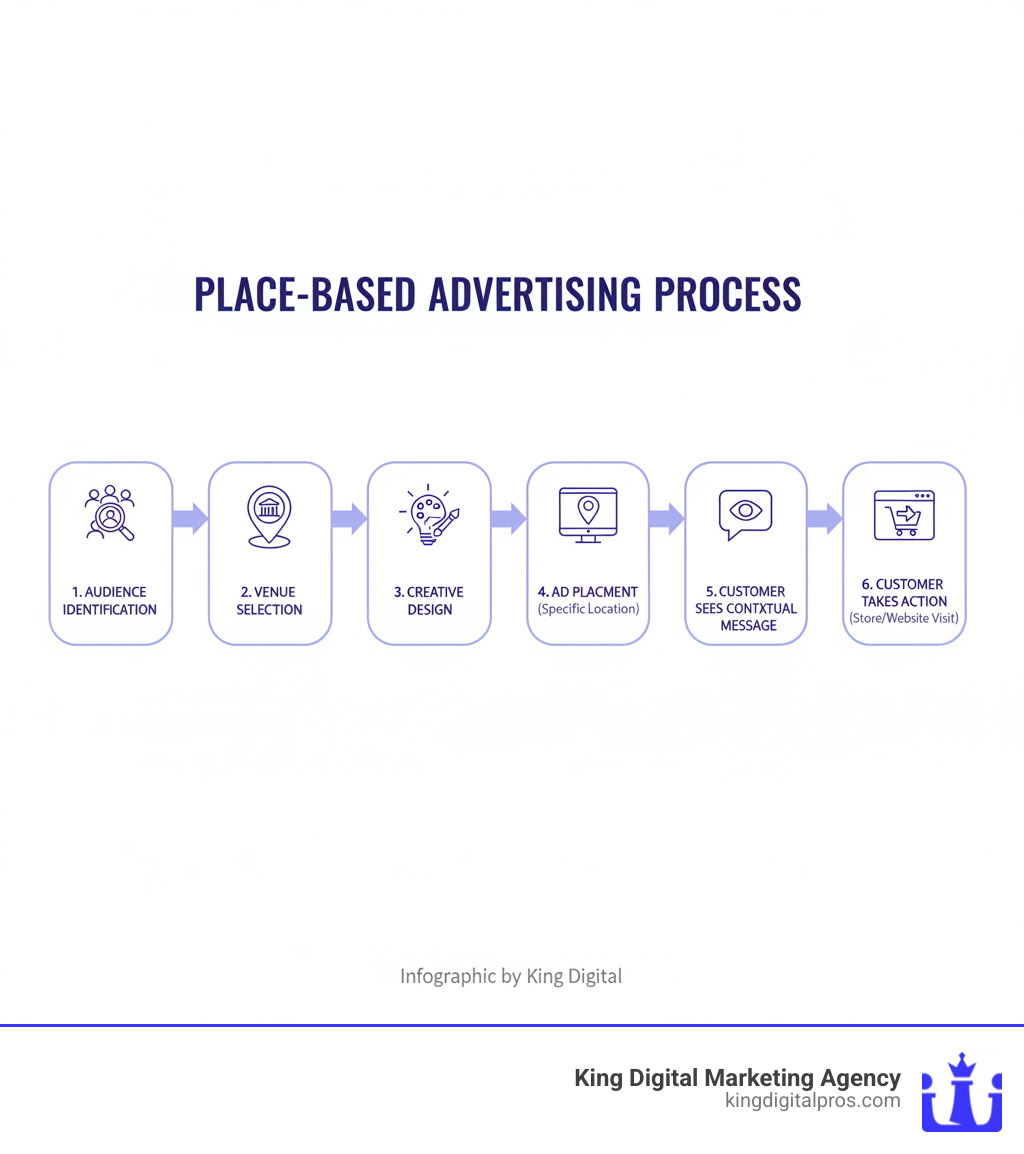
What is Place-Based Advertising?
Place-based advertising is a specialized form of out-of-home (OOH) media that places messages in specific physical environments where your target audience spends time. Instead of broadcasting to everyone on a highway, it connects with people where they are already engaged, waiting for a flight, working out, or shopping.
The power is in the context. A fitness product ad in a health club or a restaurant promotion in a mall is relevant and timely. This approach turns advertising from background noise into a meaningful interaction. For local businesses, combining this with a strong digital presence is key. By understanding how to build a complete local marketing strategy, you can engage customers both in physical venues and online.
How It Differs from Traditional Out-of-Home (OOH)
While part of the OOH family, place-based advertising is fundamentally different from traditional billboards.
- Targeting Precision: Traditional OOH aims for broad visibility. Place-based ads zero in on specific demographics in defined locations, ensuring your message reaches the right audience.
- Audience Mindset: A driver has seconds to see a billboard. Someone in an airport lounge or doctor’s office has a higher dwell time with fewer distractions, making them more receptive to information.
- Contextual Relevance: The message aligns with the viewer’s immediate environment and activity. An ad for running shoes inside a gym is inherently more powerful than the same ad on a random highway.
- Measurement Capabilities: Digital place-based ads allow for precise tracking of QR code scans, app downloads, and foot traffic, offering clear data on campaign performance. Traditional OOH often relies on estimated impressions.
This targeted approach delivers better engagement by reaching people during “receptive moments,” as noted by Forbes on the power of place-based advertising. It’s about having a conversation with the right people when they are most likely to care.
Key Benefits and Common Locations for Your Campaign
Place-based advertising delivers tangible results by focusing marketing dollars where they count. It cuts through digital ad fatigue by presenting messages in the physical world, where there’s less clutter.
Key benefits include:
- Increased Engagement and Recall: Contextually relevant ads feel less like interruptions and more like part of the experience, making your brand more memorable.
- Cost-Effectiveness: Targeting niche audiences in specific locations eliminates wasted impressions, ensuring your budget reaches people likely to become customers.
- Point-of-Purchase Influence: Many place-based ads reach people when they are already in a buying mindset, influencing decisions at the critical moment.
- Action-Oriented Results: This strategy is proven to drive action. A study by Nielsen and The OAAA found that 64% of viewers took action, like visiting a website or store, after seeing a digital place-based ad.
For local businesses trying to attract local customers, this physical presence builds trust. As Adweek explains, this authentic integration is why the strategy is gaining momentum.
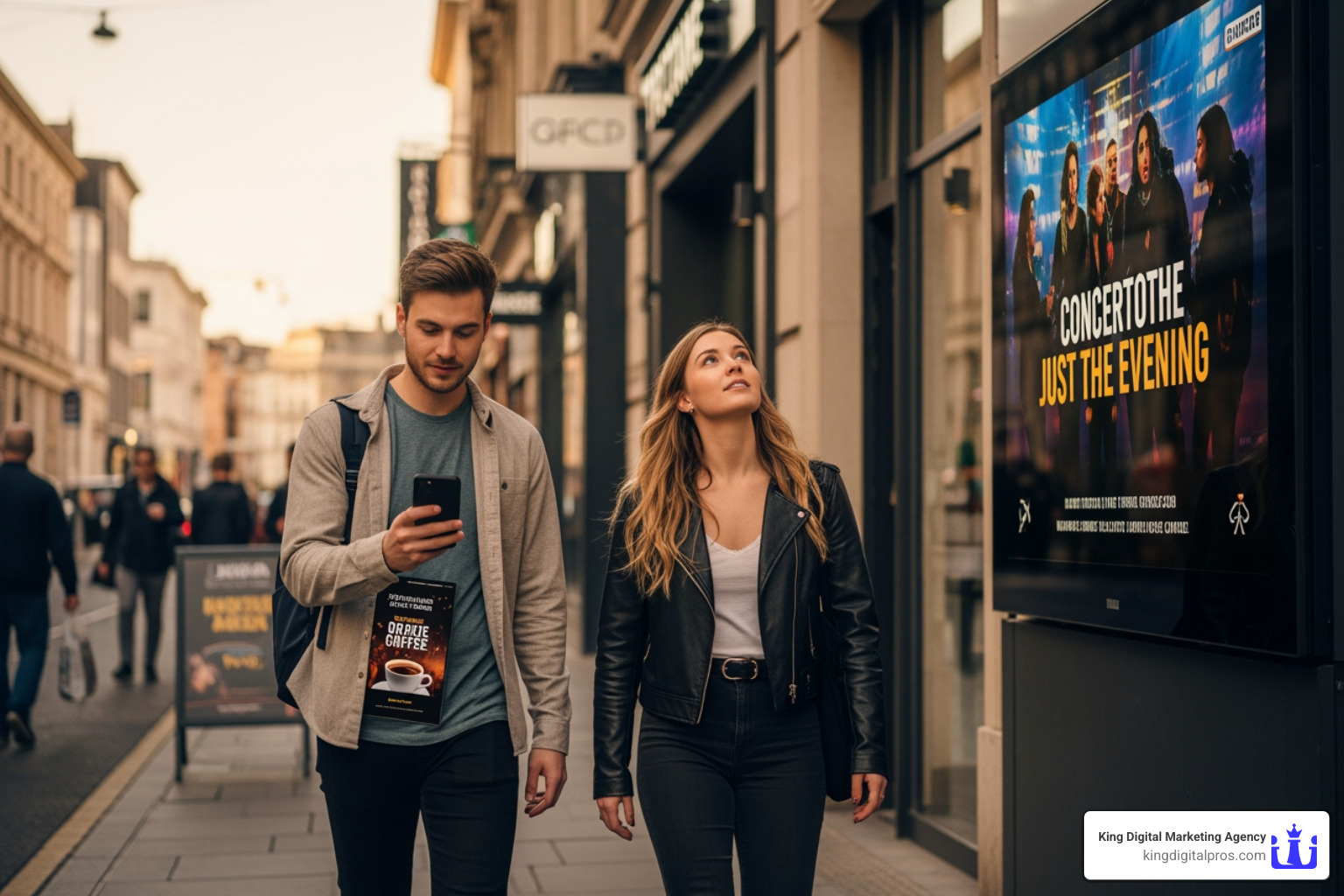
Popular Venues for Place-Based Campaigns
The effectiveness of your campaign depends on choosing the right venue to reach your target audience.
- Airports: Ideal for reaching travelers with high dwell times. Great for hotels, car rentals, and tourism.
- Shopping Malls: Reach active shoppers with ads for retail, dining, and lifestyle brands.
- Gyms and Health Clubs: Connect directly with a health-conscious audience for fitness products, supplements, and wellness services.
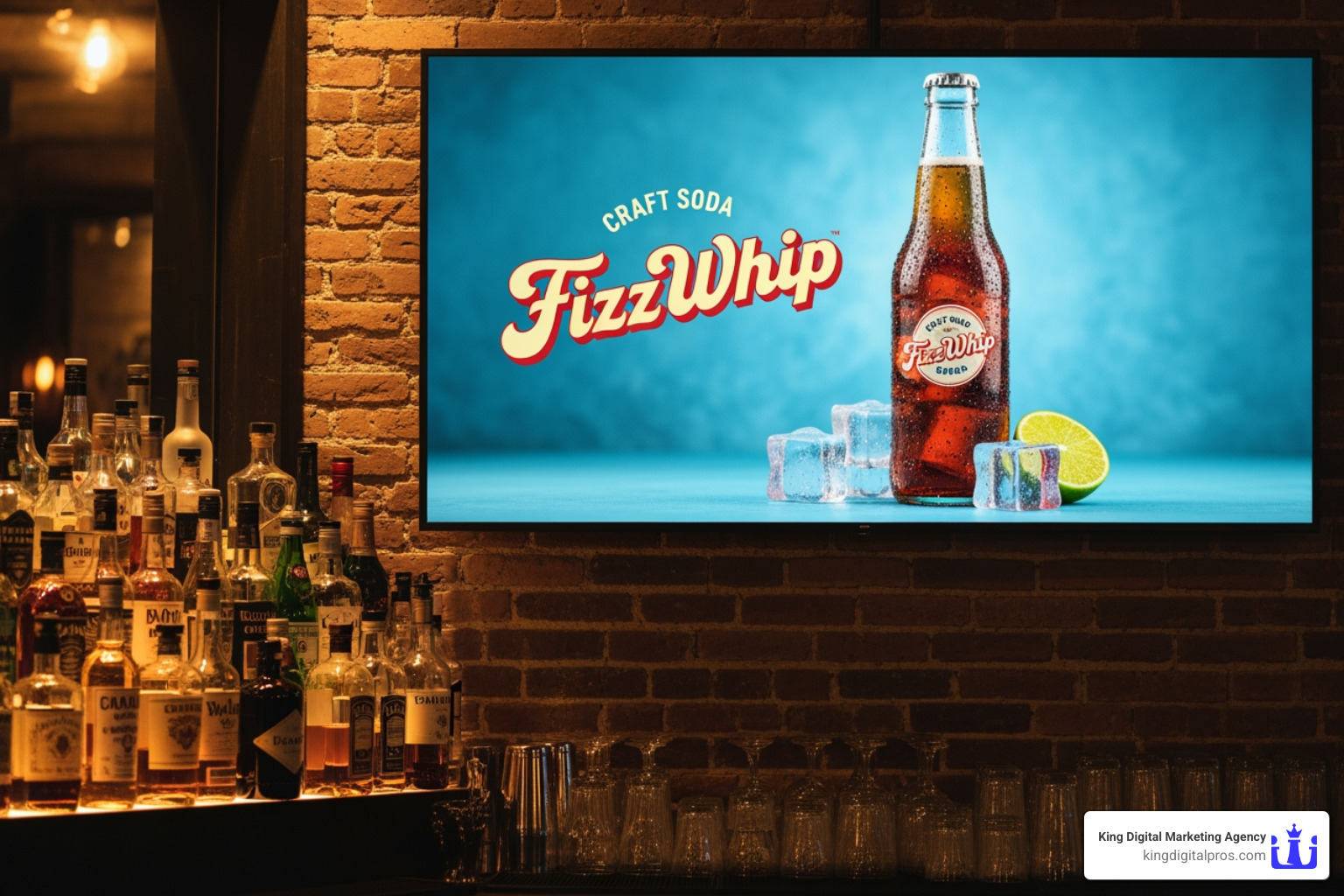
- Bars and Restaurants: A relaxed, social environment perfect for advertising drink brands, entertainment, and local events.
- Doctor’s Offices and Hospitals: A captive audience for healthcare providers, insurance companies, and wellness brands.
- College Campuses: Target tech-savvy young adults with ads for tech, food, and entertainment.
- Stadiums and Arenas: Connect with thousands of engaged fans during live events.
- Grocery Stores: Influence purchasing decisions in real-time for food, household goods, and financial services.
Public health initiatives, like the CDC’s “Tips From Former Smokers” campaign, have also used these venues to great effect, proving the power of meeting people where they are.
The Role of Data and Technology in Modern Place-Based Advertising
Data and technology have transformed place-based advertising from static posters into a dynamic, responsive marketing channel. This evolution is led by Digital Out-of-Home (DOOH) advertising, digital screens that can update content in real-time.
The foundation is location intelligence, which analyzes geospatial data to understand consumer movement and behavior. This allows for personalization at scale, like triggering a relevant ad on a smartphone when someone passes a specific location in Albuquerque. Key technologies include:
- Geofencing: This creates virtual boundaries around geographic areas. When a device enters a geofence, like the Santa Fe downtown plaza, it can trigger a targeted ad or offer. Our Geofencing Marketing Meaning Guide explains this in detail.
- Programmatic DOOH: This automates the buying of ad space on digital screens and enables dynamic content based on real-time factors like weather, traffic, or local events.
These advances ensure advertising dollars work harder by delivering highly relevant messages. As Harvard Business Review notes, leveraging location data is a strategic imperative for modern marketing.
Using Location Intelligence to Target Specific Demographics
Location intelligence goes beyond knowing where people are; it helps understand who they are. By analyzing foot traffic data and layering it with demographic and psychographic datasets, we can build precise audience profiles.
For example, we can identify that a shopping center in Rio Rancho is frequented by young families with specific interests, or that a gym in Los Alamos attracts tech-savvy professionals. This allows a gallery in Taos to target tourists and local artists, or a restaurant in Grants to reach highway travelers. These insights, which reveal consumer preferences and spending habits, are transformative for crafting resonant messages. This precision is a core component of a holistic strategy that includes strong local SEO for small businesses.
How to Measure Campaign Effectiveness and ROI
Measuring the ROI of place-based advertising is more sophisticated than counting clicks, but modern tools provide clear metrics.
- Brand Lift: Track changes in brand awareness and recall through surveys and monitoring direct brand searches online.
- Sales Lift: Compare sales data in campaign areas versus control areas to attribute revenue increases directly to your ads.
- Footfall Analysis: Use location data to see how many people exposed to an ad later visited your physical store, whether in Edgewood or Corrales.
- Digital Attribution: Use unique QR codes, landing pages, and promo codes to track direct engagement from a physical ad to a digital action.
- Social Media Engagement: Monitor campaign-specific hashtags and brand mentions to gauge social amplification.
Combining these methods provides a comprehensive view of campaign performance, proving how your investment drives real results and helps you grow local business.
Challenges, Future Trends, and Your Next Steps
While powerful, place-based advertising requires a strategic approach. For creative to be effective, it must be simple, clear, and feature a single, compelling call-to-action. Bold, original creative helps your ad stand out, whether in a doctor’s office in Albuquerque or a mall in Santa Fe. This thoughtful design is a key part of your overall business profile optimization.
Overcoming Potential Limitations
Understanding and planning for challenges is key to a successful campaign.
- Privacy Concerns: Using location data requires transparency. Always gain explicit consent, provide easy opt-outs, and adhere to regulations like CCPA and GDPR to build trust.
- Data Accuracy: A campaign is only as good as its data. Partner with reliable data providers and continuously verify insights to avoid wasted ad spend.
- Ad Blindness: People can tune out ads if they are irrelevant or over-exposed. Combat this with fresh creative, precise targeting, and ensuring your message is contextually relevant.
- Measurement Complexity: Connecting a physical ad to a sale requires a blended measurement model, combining footfall analysis, QR code tracking, and digital attribution.
The Future Outlook for Place-Based Media
The future of place-based media is interactive and highly personalized.
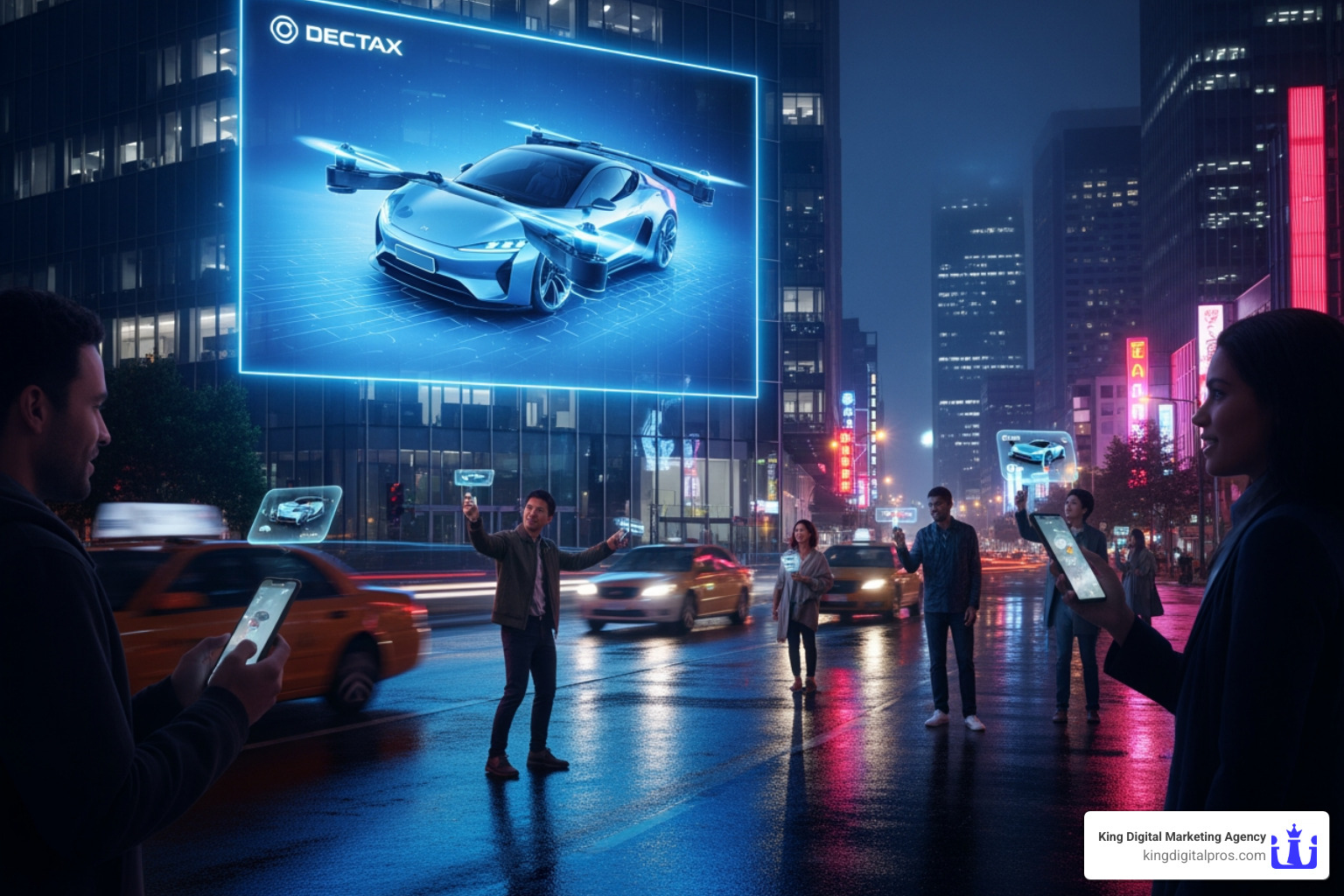
- Augmented Reality (AR): AR will create immersive experiences, allowing consumers to virtually interact with products shown on digital screens.
- Internet of Things (IoT): Connected devices, from smart kiosks to vehicles, will enable seamless, context-aware messaging. A smart display in a Cedar Crest grocery store could trigger a promotion for a local brand based on a shopper’s proximity.
- Advanced AI and Data Analytics: Machine learning will sharpen targeting, predict consumer behavior, and optimize ad placements in real-time for businesses in places like Corrales or Grants.
As noted by eMarketer’s insights on the future of out-of-home advertising, these technologies are becoming more accessible. The trend is toward hyper-personalization, where dynamic content adapts to the individual viewer, creating authentic connections.
Conclusion
Place-based advertising is a powerful strategy to connect with customers in their daily environments, from gyms to grocery stores. Its precision and contextual relevance allow you to reach your ideal audience when they are most receptive. By leveraging technology like location intelligence and geofencing, you can move beyond hoping the right people see your ad to knowing they will.
While challenges like privacy and measurement exist, they are manageable with a strategic, transparent approach. The future promises even more exciting opportunities with AR, IoT, and AI-driven hyper-personalization, creating deeper connections between brands and consumers.
However, place-based advertising is most effective as part of an integrated strategy. A great physical ad is lost if customers can’t find you online. At King Digital, we bridge this gap. While your place-based ads capture attention, our expert Google Profile Management ensures your business stands out in local search results.
This one-two punch, a compelling physical presence combined with a dominant online profile, drives real growth. Your place-based campaign plants the seed, and your optimized digital presence turns that interest into a loyal customer.
Ready to build a comprehensive location-based marketing strategy? Learn more about our geofencing marketing services and find how we can help you reach customers with pinpoint accuracy, both in the physical world and online.
