

Targeted mobile advertising: Pinpoint Power 2025
Why Targeted Mobile Advertising Is Your Key to Reaching Customers Where They Are
Targeted mobile advertising is the practice of delivering personalized ads to users on their smartphones and tablets based on specific criteria like their location, behavior, interests, or demographics. Here’s how to implement it effectively:
Quick Implementation Guide:
- Choose Your Targeting Method – Use geo-targeting (location-based), behavioral targeting (based on user actions), or retargeting (re-engaging past visitors)
- Select Your Platform – Decide between in-app advertising (85% of mobile time) or mobile web ads (broader reach)
- Set Up Tracking – Integrate mobile measurement tools and tracking pixels to monitor performance
- Create Relevant Ads – Design ads that feel helpful, not intrusive, aligned with user context
- Measure and Optimize – Track metrics like click-through rate, conversion rate, and return on ad spend
Imagine if your ads missed 50% of your potential audience. That’s the reality for businesses ignoring mobile. Today, mobile devices drive over 65% of global digital ad spend, and users spend an average of 2 hours and 54 minutes on their phones daily. These aren’t just numbers – they represent real opportunities to connect with customers at the exact moment they’re ready to act.
The shift is undeniable. Mobile has officially surpassed TV in time spent, and 70% of web browsing now happens on smartphones. For local businesses, this creates a powerful opportunity: your customers carry your storefront in their pockets, checking local news, browsing social media, and searching for services near them – all day, every day.
Unlike traditional billboards or TV spots that cast a wide net and hope for the best, targeted mobile advertising lets you reach the right person, at the right time, in the right place. A coffee shop can send a morning special to commuters walking past. A plumber can appear when someone searches “emergency plumber near me.” A retailer can remind a shopper about items they left in their cart.
This precision doesn’t just improve results – it transforms them. Research shows 94% of marketers report that personalized experiences directly impact their company’s sales. The best part? Mobile advertising is significantly more cost-effective than traditional channels while delivering measurable, trackable results.
I’m Bernadette King, founder of King Digital Marketing Agency, and I’ve spent years helping local businesses leverage targeted mobile advertising to attract more customers and outpace competitors. Through strategic campaigns combining geo-targeting, behavioral insights, and retargeting, I’ve seen how precision mobile marketing delivers sustainable growth for businesses of all sizes.

What Is Targeted Mobile Advertising and Why Is It Crucial?
In today’s digital landscape, our smartphones are practically extensions of ourselves. We use them to steer, communicate, shop, and entertain, often for nearly three hours a day, with a whopping 70% of all web browsing now happening on mobile devices. This “mobile-first” consumption isn’t just a trend; it’s the new standard.
Targeted mobile advertising means showing the right ad to the right person on their phone, based on who they are, where they are, or what they’ve recently done. It’s about turning broad campaigns into precise, measurable moments that drive real action. For a business, this translates into unprecedented growth potential. We can reach our audiences anywhere, at any time, with messages that genuinely resonate. This isn’t just marketing; it’s a conversation custom to individual needs and contexts.
The importance of this approach cannot be overstated. Mobile advertising now accounts for over 65% of global digital ad spend, highlighting its central role in modern marketing strategies. It’s more cost-effective than traditional advertising, delivers measurable results, and significantly impacts sales through personalization. When consumers expect relevant experiences, targeted mobile advertising isn’t just crucial – it’s indispensable.
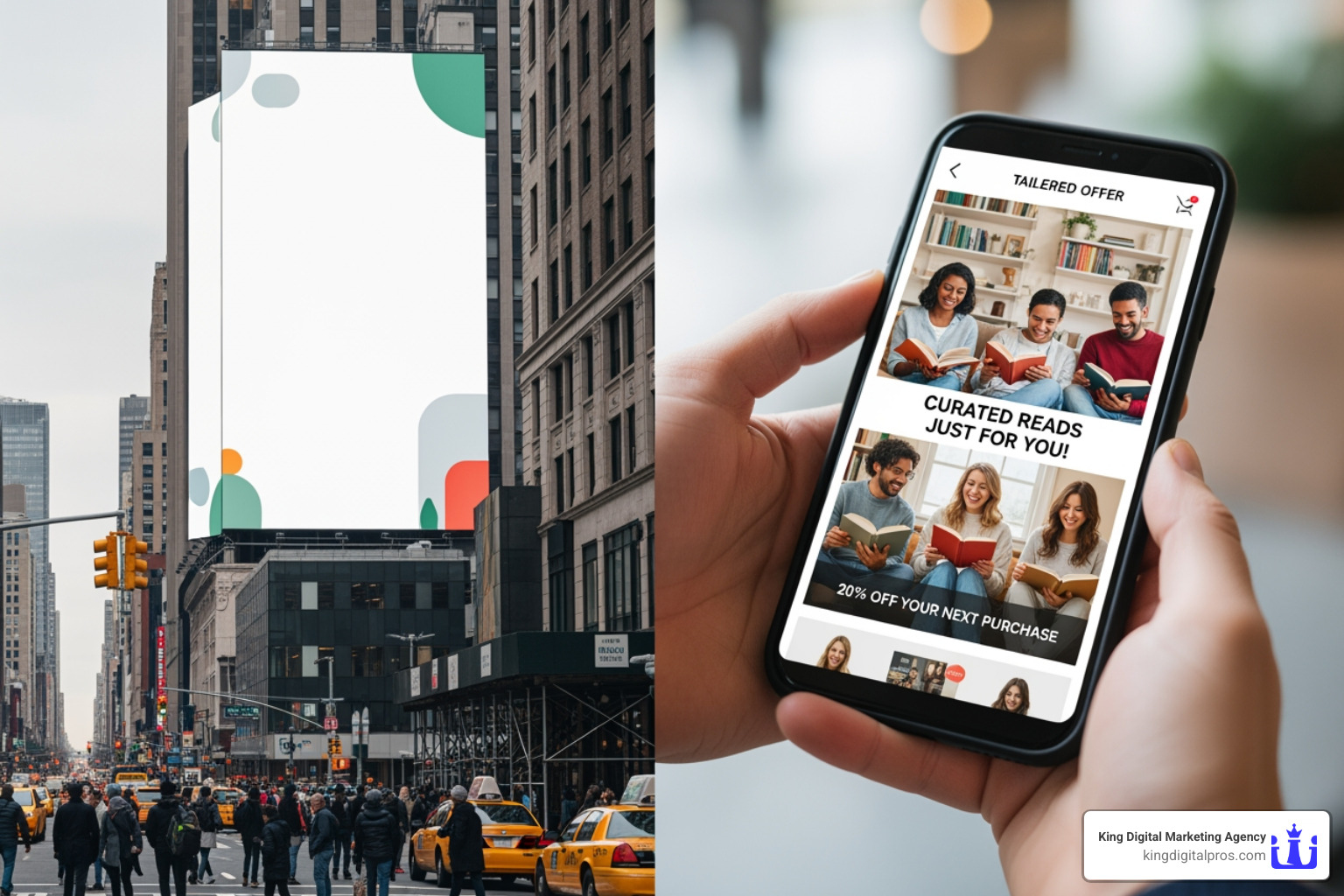
How Mobile Targeting Differs from Traditional Advertising
Let’s face it, traditional advertising methods like billboards, radio spots, or TV commercials cast a wide net, hoping to catch a few relevant fish. While they can build brand awareness, they lack the surgical precision we need for optimal ROI. Mobile targeting, on the other hand, is like using a fishing spear.
Here’s how it stands apart:
- Precision vs. Broad Reach: Traditional ads aim for mass exposure. Mobile ads can pinpoint individuals based on highly specific criteria, ensuring our message reaches those most likely to be interested.
- Immediacy and Real-Time Engagement: Mobile ads can be delivered in real-time, leveraging a user’s current location or immediate online behavior. Imagine promoting a flash sale to someone walking past your store in Santa Fe right now!
- Lower Cost of Entry: Compared to the hefty price tags of TV or print, a typical mobile advertising campaign is much less expensive, making it accessible even for small businesses in places like Grants or Edgewood.
- Detailed Performance Tracking: We can track virtually every interaction with a mobile ad – clicks, conversions, app installs, even foot traffic to a physical store. This level of detail is a dream for optimizing campaigns.
- Personal Device Connection: Smartphones are highly personal. Ads delivered here feel more intimate and can be designed for immediate interaction, unlike a static billboard.
- Two-Way Interaction Capability: Mobile ads can facilitate direct engagement, whether it’s a click-to-call button, a form submission, or a quick poll, fostering a more dynamic relationship with potential customers.
The Undeniable Importance in Today’s Market
The numbers don’t lie: mobile ad spend is not just growing; it’s exploding. With mobile devices now accounting for more than half of all global web traffic, ignoring this channel means ignoring a significant portion of your potential customer base.
Users today expect personalization. In fact, 94% of marketers agree that offering a personalized experience directly impacts sales. When we deliver ads that feel like helpful suggestions rather than intrusive interruptions, we build trust and foster higher engagement rates. This isn’t just good marketing; it’s smart business. For local businesses, this means we can compete effectively, driving foot traffic to our stores in Albuquerque, Corrales, or Los Alamos by reaching customers who are actively looking for what we offer, right when they need it.
To explore more ways to attract customers, check out our guide on attracting more customers.
Core Strategies for Pinpoint Accuracy
The magic of targeted mobile advertising lies in its ability to deliver the right message to the right person, at the perfect moment. This isn’t guesswork; it’s a strategic process built on understanding user-oriented criteria and combining various targeting methods to deliver value, not just interruption.

Geo-Targeting and Geofencing
Imagine a user in Rio Rancho searching for “pizza near me.” With geo-targeting, we can ensure our client’s pizzeria ad pops up, highlighting a special offer for immediate pickup. This is location-based advertising in action, leveraging GPS and Bluetooth technology to deliver ads based on a user’s real-world position.
Geo-targeting is the most commonly used method because it’s incredibly effective for driving local business. It allows us to reach people who are physically close to our business locations, or within specific areas of interest.
A more advanced form of geo-targeting is geofencing. Geofencing creates a virtual boundary around a specific geographic area. When a user with a mobile device enters or exits this predefined area, they can receive a targeted ad or notification. For example, a car dealership in Santa Fe could set up a geofence around a competing dealership. When potential customers visit the competitor, they could receive an ad for our client’s better financing options or a special discount. This isn’t just about showing an ad; it’s proximity marketing that drives immediate action.
To dive deeper into how this powerful strategy works, read our Geofencing Marketing Meaning Guide.
Behavioral and Contextual Targeting
Beyond location, we can tap into a user’s digital footprint to understand their interests and intent. Behavioral targeting analyzes user actions, such as browsing history, app usage patterns, and past purchases, to identify “in-market” audiences. If someone has been consistently searching for “hiking trails near Taos” or “camping gear in Sandia Park,” we can infer an interest in outdoor activities and serve them ads for hiking equipment or local adventure tours.
Contextual targeting takes this a step further by placing ads on relevant content. For instance, an ad for running shoes would appear within an article about marathon training or a fitness app. This ensures our ads are seen when users are most receptive and engaged with related topics, making the advertisement feel like a natural part of their experience rather than an interruption.
Mobile Retargeting and Lookalike Audiences
Have you ever browsed a product online, only to see ads for that exact item follow you across different websites and social media? That’s mobile retargeting, and it’s incredibly powerful. It re-engages past visitors who showed interest but didn’t convert, significantly increasing their purchase likelihood. Studies show mobile retargeting can increase sales in the double-digit percentage range!
The benefits are clear:
- Keeps your business top-of-mind for potential customers.
- Increases conversion rates by reminding users of their interest.
- Maximizes ROI on previous marketing efforts.
- Cost-effective, as it targets warm leads.
We also use lookalike audiences to expand our reach. Once we identify our ideal customer profile – perhaps those who have purchased from us before or engaged with our content – we can create lookalike audiences. These are new users who share similar characteristics, behaviors, and demographics with our existing high-value customers, helping us find new potential clients in places like Cedar Crest or Edgewood.
In-App vs. Mobile Web: Choosing Your Battlefield
When it comes to targeted mobile advertising, understanding where your audience spends their time on their devices is critical. Is it within dedicated apps or through mobile web browsers? The answer impacts everything from targeting capabilities to ad formats and overall effectiveness. Canadians, for instance, spend an average of 2 hours and 54 minutes on their mobile phones daily, with a staggering 85% of that time spent in apps, not on the web. This highlights a significant difference in audience engagement and technical capabilities.
A Head-to-Head Comparison
Let’s break down the key differences between in-app and mobile web advertising:
| Feature | In-App Advertising | Mobile Web Advertising |
|---|---|---|
| Audience Reach | High engagement within specific apps (e.g., social media, games). Total reach limited to app users. | Broader reach across 85% of all mobile device users. Accessible without app download. |
| Targeting Methods | Primarily uses device IDs (IDFA for iOS, AAID for Android). High fidelity for in-app behavior. | Primarily uses cookies (though facing deprecation). Supports traditional browser-based targeting. |
| User Behavior | Often for entertainment, games, social media. Users are deeply engaged within the app’s context. | Spans search, shopping, news, lifestyle, business. Users may be in research or browsing mode. |
| Ad Formats | Native ads, interstitial ads, rewarded video ads, rich media ads, push notifications. | Banner ads, display ads, native ads, pop-ups. Often more flexible in placement. |
| Cost | Can be higher due to specialized targeting and premium ad formats. Less competition for slots. | Generally less expensive, offering greater scale and flexibility in ad placement. |
Understanding Mobile Identification for a Targeted Mobile Advertising Campaign
The ability to deliver highly relevant ads hinges on effective user identification. In the mobile world, this gets a bit technical (but we promise to keep it simple!).
For in-app advertising, we primarily rely on device IDs like IDFA (Identifier for Advertisers on iOS) and AAID (Android Advertising ID). These are unique, anonymous identifiers assigned to each mobile device, allowing us to track user behavior within apps without directly identifying the person. Importantly, users can reset or limit the use of these IDs, giving them control over their privacy.
On the other hand, mobile web advertising traditionally uses cookies, similar to desktop browsing. However, cookies have limitations in the mobile app environment; they can only be set on mobile websites, not within apps. This creates challenges for cross-device tracking and consistent frequency capping (limiting how many times a user sees an ad) between apps and mobile web. The evolving privacy landscape, particularly Apple’s App Tracking Transparency (ATT) framework, further complicates tracking across different apps and platforms, pushing the industry towards more privacy-centric solutions.
For a deeper dive into the technical aspects of mobile advertising, you might find this resource helpful: Technical details on mobile advertising.
Measuring Success and Navigating Challenges
The real beauty of targeted mobile advertising is its precision. This precision doesn’t just feel good; it translates into tangible business benefits. However, like any powerful tool, it comes with its own set of challenges, particularly in balancing performance with user privacy.
The Benefits of Using Mobile Targeting
When we harness the power of mobile targeting, we open up a cascade of advantages for our clients:
- Increased Relevance for Users: Instead of generic ads, users see products or services that genuinely align with their interests, needs, or current location. This makes the ad experience feel helpful rather than intrusive.
- Higher Performance for Advertisers: Relevant ads lead to better engagement. We see higher click-through rates, more conversions, and ultimately, a stronger return on investment. Mobile retargeting alone can boost sales in the double-digit percentage range.
- Better Return On Ad Spend (ROAS): By targeting effectively, we ensure our ad dollars are spent on reaching the most qualified leads. This means every dollar works harder, delivering more value.
- Less Wasted Ad Spend: No more shouting into the void. We avoid showing ads to uninterested audiences, drastically reducing inefficient spending.
Are you looking to see more of your mobile ad efforts convert into real business? We can help you boost your conversion rates.
Key Metrics to Track for Mobile Advertising Success
Measuring success in targeted mobile advertising goes beyond just “likes.” We focus on actionable metrics that tell us how our campaigns are performing and where we can optimize:
- Click-Through Rate (CTR): The percentage of people who see our ad and click on it. A higher CTR indicates better ad relevance and appeal.
- Conversion Rate: The percentage of users who complete a desired action (e.g., making a purchase, filling out a form, signing up for a newsletter) after clicking an ad. This is often the ultimate measure of success.
- Cost Per Install (CPI): Specific to app promotion, this measures the cost incurred for each new app installation.
- Return On Ad Spend (ROAS): The revenue generated for every dollar spent on advertising. This is crucial for understanding profitability.
- Engagement Rate: How users interact with the ad beyond a click, such as watching a video to completion, interacting with rich media, or spending time on a landing page.
- Footfall Lift (for brick-and-mortar): For our local clients in Albuquerque or Taos, this measures the increase in physical store visits directly attributable to mobile ad exposure, particularly relevant for geo-targeted campaigns.
Common Challenges and Their Solutions
While immensely powerful, targeted mobile advertising isn’t without its problems. We steer these challenges with expertise and strategic planning:
- Privacy Regulations (GDPR, ATT): With regulations like Europe’s GDPR and Apple’s App Tracking Transparency (ATT), user consent and data privacy are paramount. We adapt by prioritizing first-party data, focusing on contextual targeting, and ensuring transparency with users.
- Ad Blocker Prevalence: Many users employ ad blockers, especially on mobile, which can limit reach. Our solution involves creating highly engaging, native-feeling ads that blend seamlessly with content, making them less likely to be blocked and more likely to be welcomed.
- Tracking Fragmentation: The ecosystem of mobile devices, operating systems (iOS vs. Android), and app environments can make consistent tracking challenging. We use Mobile Measurement Partners (MMPs) and advanced attribution models to unify data and gain a holistic view of campaign performance.
- Ensuring a Positive User Experience: Nobody likes intrusive ads. We focus on delivering ads that are relevant, timely, and non-disruptive, adhering to best practices like appropriate frequency capping to avoid ad fatigue.
- The Need for High-Quality Creative: With limited screen space, mobile ads must be visually appealing, concise, and convey a clear message instantly. Our team ensures creatives are optimized for mobile, engaging users with impactful visuals and calls-to-action.
The Future of Mobile Ads: Privacy, AI, and What’s Next
The landscape of targeted mobile advertising is constantly evolving, driven by technological advancements and shifting user expectations around privacy. Staying ahead of these trends is not just an advantage; it’s a necessity. We’re seeing a clear shift towards a privacy-first mindset, coupled with the incredible potential of artificial intelligence.
How User Privacy is Reshaping Mobile Targeting
The “cookieless future” is here, and it’s profoundly impacting how we approach mobile targeting. As third-party cookies become obsolete and platforms like Apple enforce stricter privacy controls (e.g., App Tracking Transparency, or ATT), the industry is adapting.
- Rise of First-Party Data: Businesses are increasingly relying on their own customer data (first-party data) collected directly from user interactions. This data, when handled responsibly and with consent, becomes invaluable for creating personalized experiences.
- App Tracking Transparency (ATT): Apple’s ATT framework requires apps to explicitly ask users for permission to track their activity across other apps and websites. This has reduced the availability of device-level data, pushing advertisers to innovate with privacy-preserving measurement solutions like SKAdNetwork.
- Importance of User Consent: Transparency and user consent are no longer optional; they are foundational. We ensure our strategies respect user choices, building trust and fostering long-term relationships.
- Contextual Targeting Resurgence: In a privacy-constrained world, contextual targeting is making a strong comeback. By placing ads on content that is inherently relevant to a product or service, we can reach interested audiences without relying on personal identifiers.
For a comprehensive understanding of the programmatic landscape in mobile, including privacy considerations, we recommend consulting the IAB Mobile Programmatic Playbook.
The Future Outlook for Targeted Mobile Advertising
The future of targeted mobile advertising is bright, dynamic, and full of exciting possibilities. We anticipate several key trends shaping its trajectory:
- AI-Powered Optimization: Artificial intelligence is already revolutionizing campaign management, from generating optimized ad creatives and writing compelling copy to automating campaign launches and scaling. AI will continue to refine targeting, predict user behavior, and maximize ROAS with unprecedented efficiency.
- Growth of Mobile Video Ads: Mobile video ad sales are projected to see a massive increase – a 73% rise within the next five years, significantly outpacing desktop online ad growth (just 15% in the same period). Engaging video content optimized for mobile screens will be crucial.
- Interactive and AR Ad Formats: Expect more immersive experiences. Augmented Reality (AR) ads, interactive polls, and playable ads will become more common, offering users engaging ways to interact with brands directly from their phones.
- Hyper-Personalization at Scale: Leveraging first-party data and advanced AI, we will be able to deliver hyper-personalized ad experiences that feel less like marketing and more like helpful, timely advice. Imagine an ad suggesting a specific hiking trail near Los Alamos based on your past search history and current weather conditions.
To stay ahead in the social media advertising game, especially in areas like Taos, check out our Social Media Advertising Taos Guide.
Frequently Asked Questions about Targeted Mobile Advertising
What is the most common type of mobile targeting?
Geo-targeting is the most widely used method. It allows businesses to connect with users based on their real-world location, which is a powerful signal of intent, especially for local businesses in areas like Albuquerque, Rio Rancho, or Santa Fe. This method enables advertisers to deliver highly relevant messages, such as a special offer from a nearby coffee shop, precisely when and where it makes the most impact.
How effective is location-targeted mobile advertising?
Research shows it is highly effective. By delivering relevant messages to consumers based on their proximity to a business, it can drive immediate action, such as store visits or local purchases. For instance, a study on movie ticket sales found that location-targeted ads delivered via text messages to users near cinemas were effective in driving ticket purchases. Its effectiveness is amplified when combined with time-sensitive offers, creating a sense of urgency and direct relevance.
Can mobile advertising work for small, local businesses?
Absolutely! Mobile advertising, particularly geo-targeting and geofencing, is one of the most cost-effective ways for small businesses to reach a relevant local audience. Unlike traditional advertising, it doesn’t require a massive budget to compete. A small shop in Corrales or a restaurant in Edgewood can target customers within a few miles, driving foot traffic and competing effectively with larger brands by delivering personalized, timely offers directly to local smartphones.
Conclusion
We’ve journeyed through the dynamic world of targeted mobile advertising, uncovering its immense power for precision marketing. From understanding its core definition and how it dramatically differs from traditional advertising, to exploring the pinpoint accuracy of geo-targeting, behavioral insights, and retargeting, it’s clear that mobile is not just a platform – it’s the primary battlefield for customer engagement.
The shift is undeniable: mobile is where our customers live, work, and play. The ability to deliver relevant, timely, and personalized messages is changing advertising from an interruption into assistance, creating valuable connections and driving measurable results. While challenges like privacy regulations and tracking fragmentation exist, they are opportunities for innovation, pushing us towards more ethical and effective strategies.
At King Digital Marketing Agency, we understand that leveraging the right strategies means connecting with customers in more meaningful and effective ways than ever before. We specialize in helping businesses, from the busy streets of Albuquerque to the tranquil landscapes of Taos, harness this power.
Ready to put your business on the map and into your customers’ pockets? Harness the power of location with geofencing software and let us help you pinpoint your audience with precision.