Why Reliable Hosting Services Make or Break Your Online Business
Reliable hosting services are the foundation of every successful website — and choosing the wrong one can quietly cost you customers, rankings, and revenue.
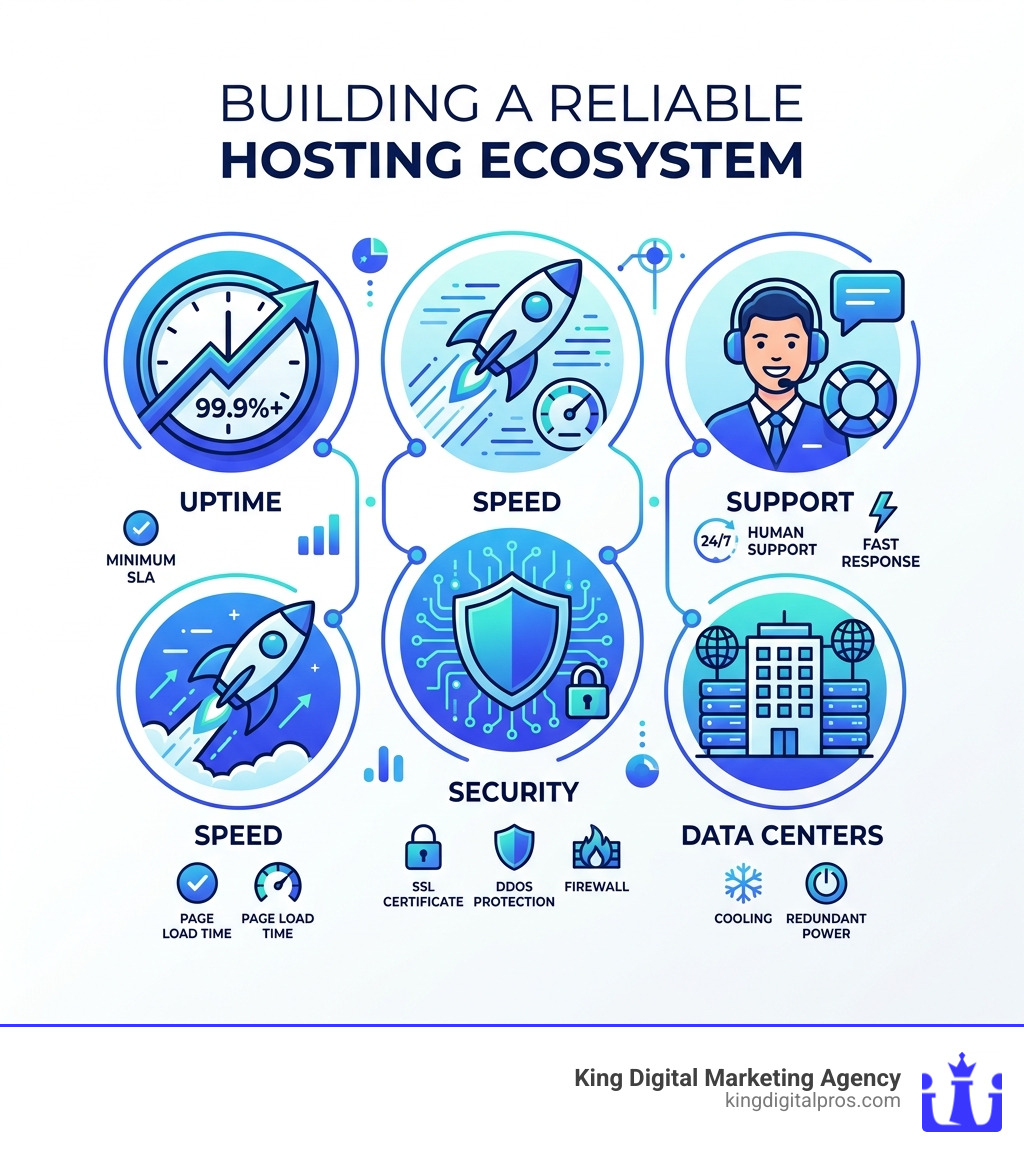
Here’s a quick look at what makes a hosting provider truly reliable:
| Feature | What to Look For |
|---|---|
| Uptime guarantee | 99.9% minimum; 99.99% or 100% SLA is best |
| Performance | NVMe storage, LiteSpeed servers, fast load times |
| Security | SSL, DDoS protection, malware scanning, daily backups |
| Support | 24/7 human support, fast response times |
| Data centers | Multiple locations, redundant power and cooling |
| SLA terms | Clear compensation terms for any downtime |
Most hosts promise reliability. Far fewer actually deliver it.
For a busy local business owner, downtime isn’t just a tech problem — it’s a missed customer, a lost sale, and a damaged reputation. The difference between a site that loads in under a second and one that crawls can determine whether someone calls you or clicks your competitor.
I’m Bernadette King, a digital marketing strategist with years of experience helping local businesses build a strong, stable online presence — including navigating the confusing world of reliable hosting services to find options that actually support business growth. In the sections ahead, I’ll break down exactly what separates a truly reliable host from one that just looks good on paper.
Reliable hosting services vocab to learn:
Defining the Core Pillars of Reliable Hosting Services
When we talk about reliable hosting services in 2026, we aren’t just talking about a site that stays “up.” We are talking about an entire ecosystem designed to prevent failure before it happens. True reliability is built on several non-negotiable pillars: uptime SLAs, hardware redundancy, and environmental controls.
The gold standard for availability is the 100% uptime Service Level Agreement (SLA). While many providers offer a 99.9% guarantee—which sounds great but actually allows for nearly nine hours of downtime per year—enterprise-grade providers often guarantee 100% uptime on power, cooling, and network operation. This means if the power goes out or a router fails, they have a redundant system ready to take over instantly.
Hardware redundancy is equally critical. A reliable host doesn’t just have one of everything; they have “N+1” or “2N” redundancy. This means if a drive fails or a power supply pops, there is a backup already running. For businesses in places like Albuquerque or Santa Fe, where local network stability can vary, choosing a host with a robust national backbone ensures your local customers never see a “404 Not Found” error.
To dive deeper into how these technical specs impact your daily operations, check out A Comprehensive Guide to Comparing Website Hosting Maintenance. Understanding these Service Level Agreements (SLAs) in Hosting is the first step in holding your provider accountable.
Performance Metrics for Reliable Hosting Services
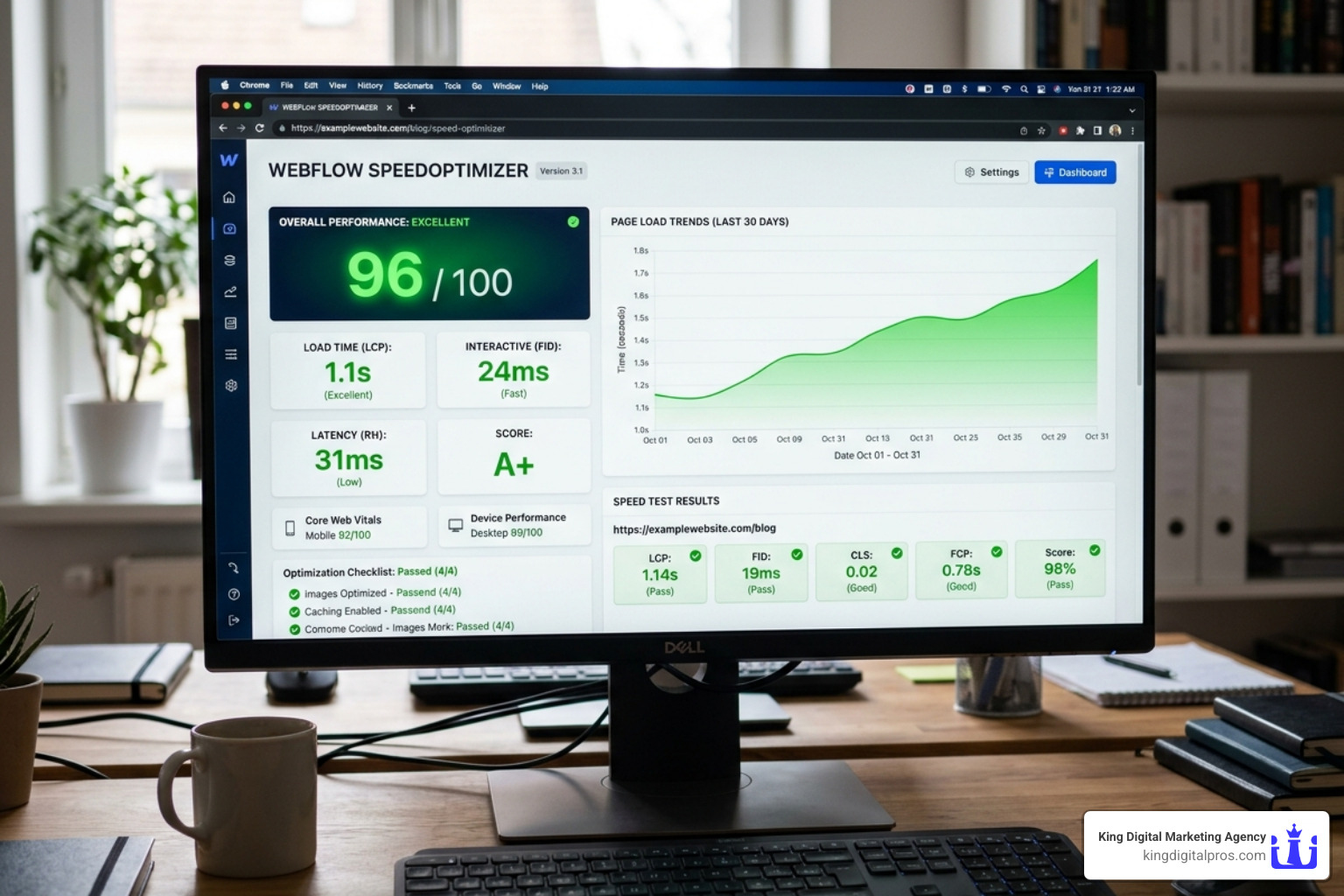
Reliability and speed are two sides of the same coin. A site that takes 10 seconds to load is, for all intents and purposes, “down” in the eyes of a modern consumer. Research shows that industry experts recommend a site load time of less than three seconds to maintain high conversion rates and SEO rankings.
To achieve this in 2026, reliable hosting services utilize advanced hardware like NVMe (Non-Volatile Memory Express) SSDs. These drives are significantly faster than traditional SATA SSDs, allowing for near-instant data retrieval. Combined with LiteSpeed technology or NGINX web servers—which outperform older Apache setups—your site can handle traffic spikes without breaking a sweat.
Global Content Delivery Networks (CDNs) also play a massive role. By caching your website’s content on servers across the world, a CDN ensures that whether a customer is browsing from Los Alamos or London, the data has a very short distance to travel.
Security Protocols in Reliable Hosting Services
You cannot have a reliable website if it is vulnerable to attacks. In 2026, the digital landscape is more complex than ever, with roughly 30,000 websites hacked daily. Reliable hosting services must include a multi-layered security stack as a standard feature, not an expensive add-on.
Key security features to look for include:
- DDoS Protection: Mitigating “Distributed Denial of Service” attacks that attempt to crash your server with fake traffic.
- Malware Scanning: Real-time monitoring that identifies and quarantines malicious code before it can spread.
- Web Application Firewalls (WAF): A digital shield that filters out bad traffic before it even reaches your site.
- Automated Backups: Daily, off-site backups ensure that even in a worst-case scenario, your business can be restored in minutes.
- Two-Factor Authentication (2FA): Protecting your hosting control panel from unauthorized access.
Effective Web Hosting and Maintenance is about being proactive rather than reactive. If your host isn’t talking about their security protocols, they might be leaving your business’s front door unlocked.
Comparing Infrastructure: VPS vs. Dedicated vs. Bare Metal
Choosing the right “house” for your website data is a major factor in long-term reliability. Not all hosting environments are created equal, and the choice often comes down to how many “neighbors” you want to share resources with.
| Hosting Type | Analogy | Reliability Level | Best For |
|---|---|---|---|
| Shared Hosting | A dormitory | Moderate (Resource sharing risks) | New blogs, small hobby sites |
| VPS Hosting | A serviced office | High (Isolated resources) | Growing SMBs, e-commerce |
| Dedicated Server | Owning the whole building | Very High (Total control) | Large enterprises, high-traffic apps |
| Bare Metal | A custom-built factory | Elite (Max performance/scaling) | SaaS, AI workloads, massive scale |
Shared Hosting is the most affordable but carries the “noisy neighbor” risk. If another site on your server gets a massive traffic spike or a virus, your site could slow down or crash.
VPS (Virtual Private Server) Hosting uses virtualization technology to give you a private slice of a larger server. You get dedicated RAM and CPU power, meaning your performance is predictable and isolated from others. It’s often the best balance of cost and reliability for Small Business Hosting.
Dedicated and Bare Metal Servers provide the ultimate in reliability. These are single-tenant environments where 100% of the hardware belongs to you. Bare metal servers, in particular, are favored in 2026 for their ability to scale like the cloud while offering the raw power of physical hardware—often at a 90% cost savings over serverless compute models.
The Role of Managed Services and 24/7 Support
Technical specs are important, but when things go wrong at 3:00 AM on a holiday weekend, you don’t need a spec sheet—you need a human. Reliable hosting services are defined by the quality of their support.
Managed hosting is a “white-glove” service where the provider handles the heavy lifting. This includes OS updates, security patches, and performance tuning. For business owners in Rio Rancho or Taos, this means you can focus on running your business while experts handle the “plumbing” of your website.
Look for providers that offer:
- 24/7/365 Human Support: Real operators, not just AI chatbots or scripts.
- Proactive Monitoring: They should know your site is down before you do.
- Migration Services: “Launch Assist” or white-glove migration tools that move your site from an old host with zero downtime.
- Expert Guidance: Technicians who can help you scale your resources as your traffic grows.
Reliable support is the backbone of Website Hosting and Maintenance. If a host makes it hard to find their phone number or chat button, that is a major red flag.
Strategic Data Center Locations and Network Redundancy
Geography matters in the digital world. The physical location of the data center housing your server determines the latency (delay) your users experience. Reliable hosting services strategically place their facilities at Internet Exchange Points (IXPs) to ensure the fastest possible routing.
For our clients across New Mexico—from the tech hubs in Albuquerque to the research centers in Los Alamos—proximity to major US data centers in places like Ashburn, VA, or Los Angeles, CA, is vital. A global footprint with Anycast DNS ensures that your site’s “address” is broadcast from multiple locations simultaneously, providing an extra layer of disaster recovery.
The Uptime Institute’s Data Center Tier Classification System is a great way to verify a facility’s reliability. A Tier III or Tier IV data center offers multiple paths for power and cooling, ensuring that even during maintenance or local utility failures, your website stays online.
Frequently Asked Questions about Hosting Reliability
What is the difference between 99.9% and 100% uptime?
While 99.9% sounds nearly perfect, it actually allows for about 43 minutes of downtime per month. In a competitive market, 43 minutes of a “broken” website can lead to a significant loss in customer trust. A 100% uptime SLA means the provider has invested in enough redundancy to ensure that even if a component fails, the service remains uninterrupted.
How does pricing impact the long-term reliability of a host?
In hosting, you often get what you pay for. Extremely cheap hosting (under $3/month) often relies on overselling server space, leading to “503 Service Unavailable” errors during peak times. Reliable hosting services priced slightly higher typically invest that revenue back into better hardware, faster support staff, and more robust security protocols.
Why is managed hosting better for high-traffic e-commerce sites?
E-commerce sites are resource-heavy and require constant security updates to remain PCI compliant. Managed hosting provides a dedicated team to monitor these resources, ensuring that a sudden surge in shoppers doesn’t crash the checkout page. It provides the “peace of mind” that allows you to scale your sales without worrying about the tech.
Conclusion
Finding reliable hosting services is about more than just checking a box; it’s about choosing a partner for your business’s future. Whether you are a small shop in Grants or a growing agency in Santa Fe, your hosting choice dictates how the world perceives your brand.
At King Digital Marketing Agency, we understand that a fast, reliable website is the first step toward local dominance. We specialize in optimizing your digital footprint—from Small Business Website Maintenance to expert Google Business Profile management. By ensuring your map listings are accurate and your website is powered by top-tier infrastructure, we help you attract more customers and build lasting local visibility.
Don’t let a “budget” host hold your business back. Secure your online future with professional website hosting and maintenance today and give your New Mexico business the foundation it deserves.
