

CRM Leads: Boost Sales in 2025!
Why CRM Leads Are the Foundation of Your Sales Success
CRM leads are potential customers who have shown interest in your business but haven’t yet made a purchase. They represent the starting point of your sales process–the individuals or companies you need to track, nurture, and convert into paying customers.
What You Need to Know About CRM Leads:
- A lead is an unqualified contact who might become your customer
- Lead management involves capturing, organizing, qualifying, nurturing, and converting these prospects
- CRM systems centralize lead data and automate follow-ups to prevent lost opportunities
- Nearly 80% of leads never turn into sales due to poor follow-up, slow response times, or lack of a clear management process
- Effective lead management saves time, increases conversion rates, and drives revenue growth
For a broader industry view, research from sources such as HubSpot’s State of Marketing report and McKinsey’s B2B sales insights consistently shows that organizations with structured CRM-led processes outperform those relying on ad-hoc tools and disconnected spreadsheets.
Here’s a reality check: businesses pour time and money into generating leads, only to watch most of them go cold. One minute you’re excited about a new inquiry, the next it’s buried in a spreadsheet or lost in someone’s email inbox. Without a clear system, following up becomes a guessing game–and your competitors are probably reaching those prospects first.
The difference between struggling businesses and thriving ones often comes down to how they manage their leads. A proper CRM system transforms scattered information into an organized sales pipeline, ensuring no opportunity slips through the cracks.
I’m Bernadette King, founder of King Digital Marketing Agency, and I’ve spent years helping businesses implement scalable systems for managing CRM leads and turning visibility into sustainable growth. Through targeted strategies and conversion-driven approaches, I’ve seen how proper lead management can transform a business’s bottom line.
Relevant articles related to crm leads:
What Exactly Are CRM Leads and Why Do They Matter?
At its core, a CRM lead is a potential customer or prospect. As the first step in our sales process, a lead is an individual or entity that has expressed some level of interest in our products or services, but hasn’t yet been fully qualified or converted into a paying customer. Think of it as an “unqualified contact” – someone whose potential needs and budget still need to be assessed.
Why is managing these leads so crucial for businesses? Because ignoring them is like leaving money on the table. Lead management is essential for efficiently turning prospects into customers. It helps us prevent lost opportunities, improves the timing of our follow-ups, and ensures our team focuses on the leads with the highest potential. Without a clear process, we risk slow follow-ups, poor qualification, and ultimately, nearly 80% of our leads never converting into sales.
The Manual Chaos vs. Organized CRM Leads
Before sophisticated CRM systems, many businesses relied on rudimentary methods to track potential customers. We might have used spreadsheets, scribbled notes, or kept fragmented records across various email inboxes. This manual chaos inevitably led to:
- Disorganized data: Customer information scattered everywhere
- Missed follow-ups: Important inquiries falling through the cracks
- Lack of visibility: No clear understanding of where each prospect stood
- Inefficiency: Sales teams wasting time sifting through unorganized data
- Lost revenue potential: Inability to effectively manage crm leads translates directly into missed sales
As we’ve seen, businesses pouring time and money into generating leads often watch most of them go cold due to these manual, chaotic approaches.
The Core Benefits of a Structured Lead Management System
Implementing a structured lead management system, powered by a robust CRM, transforms this chaos into clarity. The benefits directly impact our bottom line:
- Improved customer experience: When we have all interactions centralized, we can provide personalized, timely responses, making prospects feel valued and understood.
- Data-driven insights: A CRM provides valuable data on lead sources, conversion rates, and sales cycle lengths, allowing us to optimize our strategies.
- Sales and marketing alignment: CRM acts as a shared hub, ensuring our teams are on the same page regarding lead qualification and nurturing efforts.
- Scalable business growth: As our business grows in places like Rio Rancho or Los Alamos, a CRM scales with us, allowing us to manage increasing crm leads without sacrificing efficiency.
- Improved team productivity: Our sales team can focus on selling, not on administrative tasks. Automated processes and clear pipelines empower them to prioritize high-potential leads.
A CRM makes managing leads easier, faster, and more personalized. It helps us take someone from initial interest to final sale without missing a beat.
The Lead Management Lifecycle: From Stranger to Customer
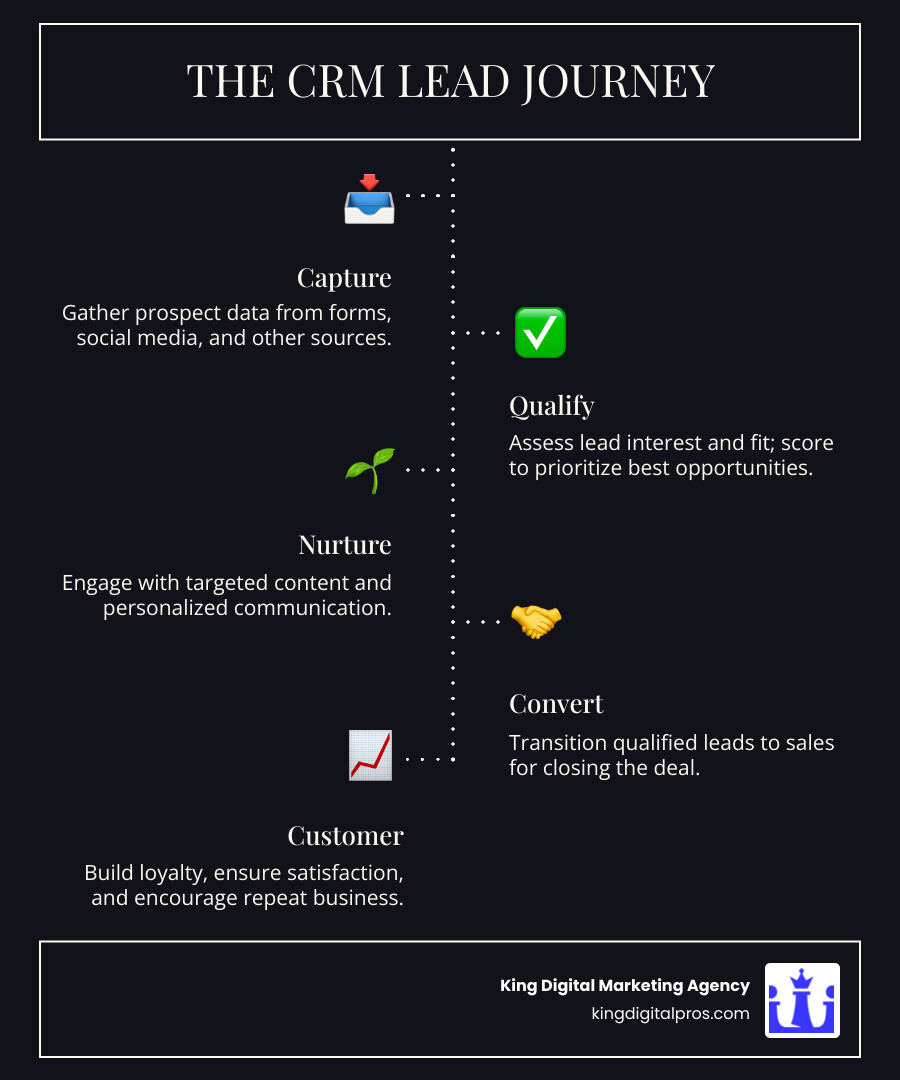
The journey of a lead from stranger to customer is a carefully orchestrated process. It’s about guiding individuals through stages, building trust and demonstrating value. The lead management lifecycle involves capturing, organizing, qualifying, nurturing, and converting prospects.
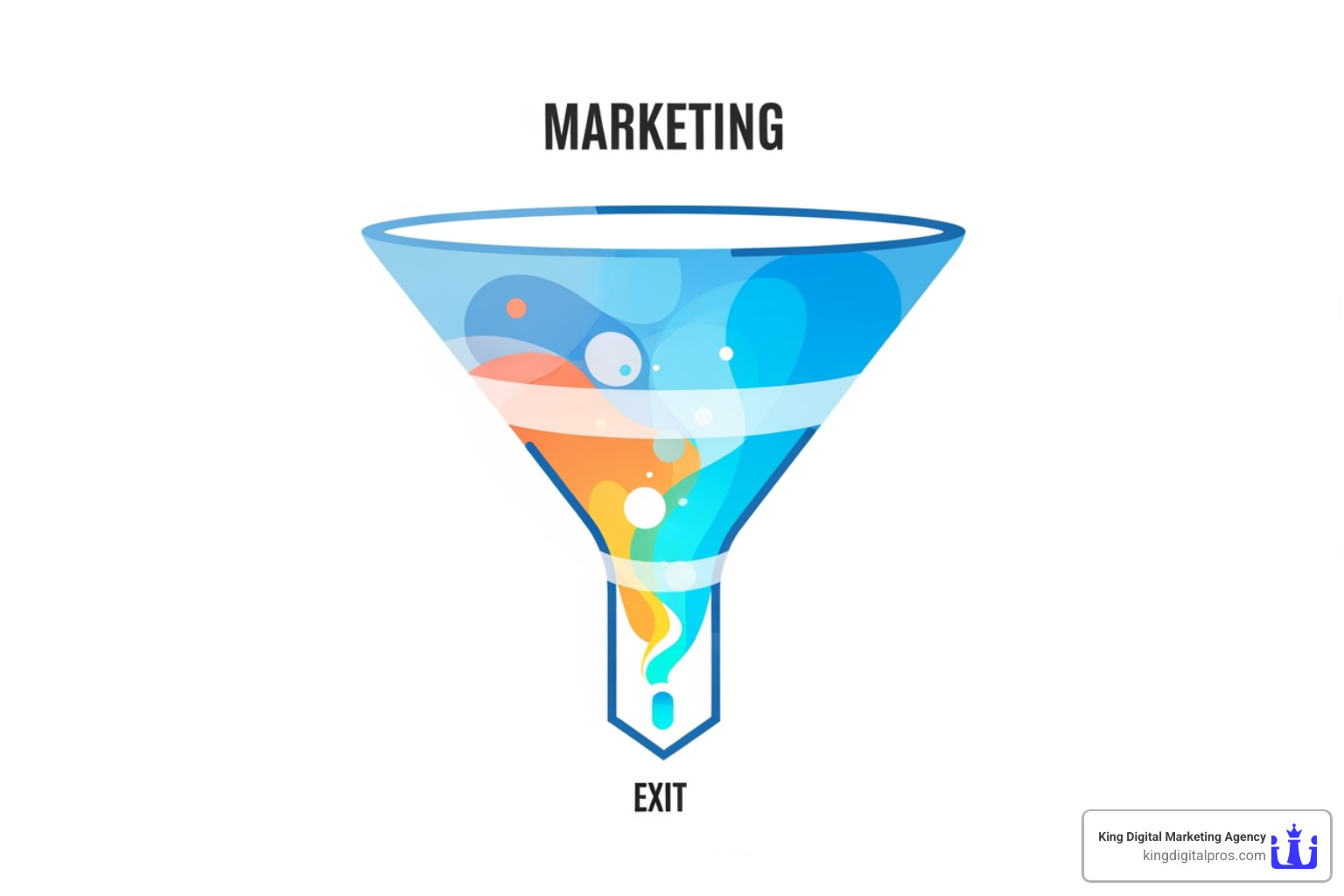
Step 1: Lead Capture and Generation
The first step is generating and capturing crm leads. This means attracting potential customers and collecting their information through various strategies.
Common lead generation techniques include:
- Content Marketing: Creating valuable content that addresses our target audience’s pain points. The Content Marketing Institute offers extensive research showing how educational content fuels steady lead flow.
- Search Engine Optimization (SEO): Optimizing our online presence to rank higher in local search results. When someone searches for “best IT services in Albuquerque,” we want to be found.
- Website Forms: Implementing clear CTAs on our website that direct visitors to landing pages where they can request quotes or download resources.
- Social Media Marketing: Engaging with our local community and running targeted ads or contests.
- Paid Advertising: Utilizing platforms like Google Ads to target specific demographics. Studies in the Google Ads Help Center highlight how precise targeting improves lead quality.
Once a lead is generated, the goal is to centralize its capture within our CRM, ensuring no lead is missed.
Step 2: Lead Qualification and Scoring
Not all crm leads are created equal. Lead qualification and scoring help us prioritize efforts on prospects most likely to convert.
We categorize leads using different “temperatures”:
- Suspect: Someone who vaguely fits our target audience with minimal interest
- Cold Lead: Has shown initial, passive interest
- Warm Lead: Has demonstrated active interest, perhaps by attending a webinar
- Hot Lead: Shows clear intent and urgency, ready to make a decision
We also differentiate between:
- Marketing Qualified Leads (MQLs): Engaged with marketing efforts but not ready for sales
- Sales Qualified Leads (SQLs): Vetted MQLs showing high purchase likelihood
A common framework is the BANT system, assessing:
- Budget: Financial resources for our solution
- Authority: Decision-making power
- Needs: Problem we can solve
- Timeline: Implementation timeframe
Implementing Lead Scoring Services within our CRM assigns points based on actions and demographics, allowing us to prioritize high-scoring leads.
Step 3: Lead Nurturing and Conversion
Once qualified, we nurture crm leads by building relationships and guiding them toward purchase decisions.
Effective nurturing strategies include:
- Targeted Content: Sending relevant content addressing specific pain points
- Email Drip Campaigns: Automated sequences of personalized emails. Research from Mailchimp’s benchmarks shows segmented campaigns outperform generic blasts.
- Personalized Follow-ups: Timely calls or emails referencing previous interactions
- Retargeting: Re-engaging website visitors who didn’t convert initially
The ultimate goal is conversion – moving the lead from prospect to paying customer. Our CRM tracks these interactions and ensures smooth transitions.
How a CRM Boosts Your Lead Management Process
A CRM system is the central nervous system of our sales and marketing efforts. It acts as a GPS for the sales journey, guiding our team through every interaction.
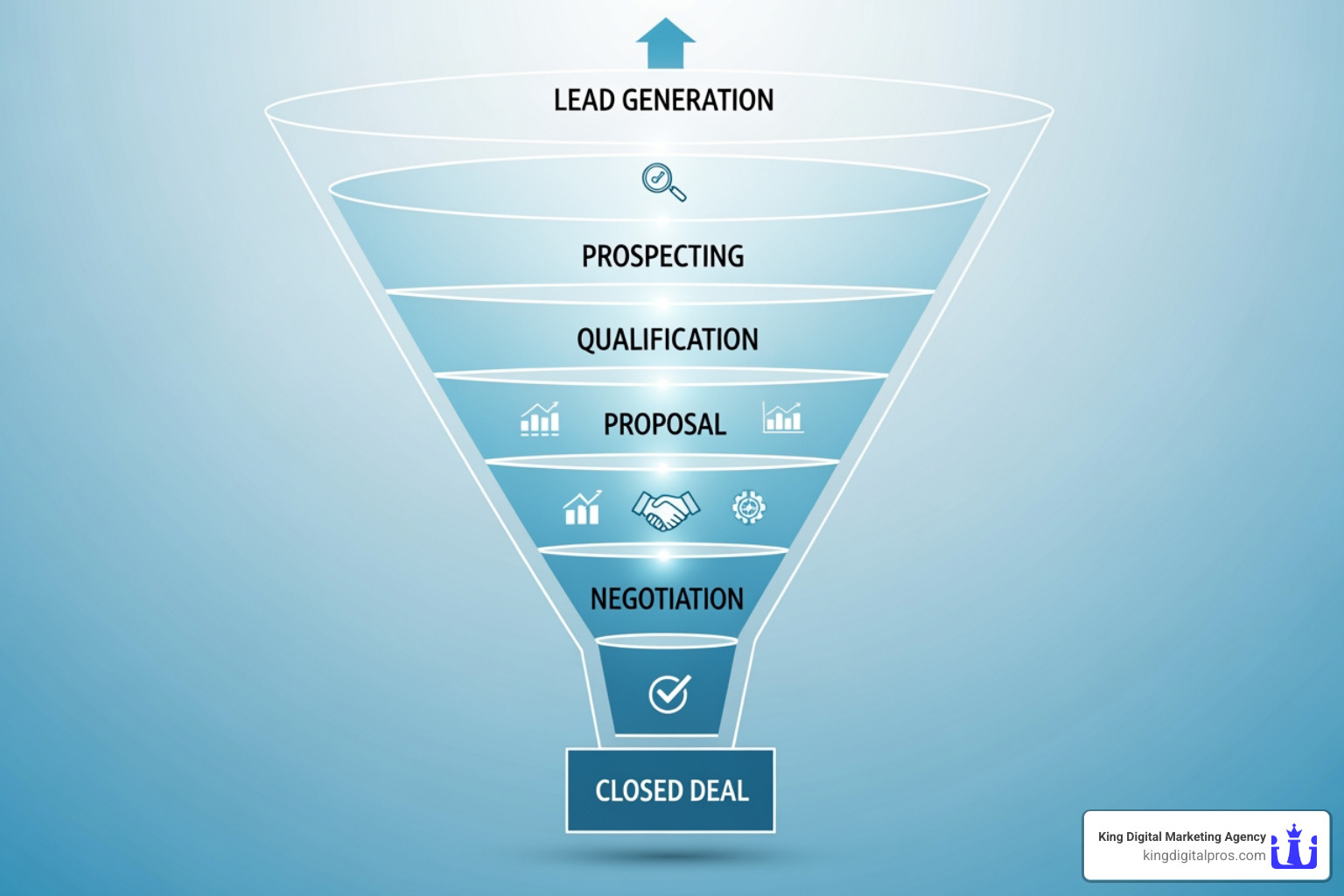
By centralizing information and automating tasks, a CRM transforms how we manage crm leads, unifying efforts and streamlining workflows.
Centralized Data and 360-Degree Customer View
A CRM stores all lead information–contact details, correspondence, calls, website visits, and social interactions–in one place. It provides a 360-degree customer view, eliminating data silos.
This comprehensive view allows us to:
- Track Interaction History: See every touchpoint from first visit to latest exchange
- Personalize Communication: Tailor messages to specific needs and interests
- Improve Collaboration: Teams access and update lead records for unified approach
All interactions are connected in the CRM, and we can seamlessly engage with leads from one place.
Automation for Efficiency: Nurturing and Scoring CRM Leads
CRM automation capabilities save countless hours and ensure timely engagement:
- Automated Lead Assignment: Automatically assigns leads based on rules like location or lead score
- Workflow Rules: Automate emails based on lead actions
- Predictive Lead Scoring: Uses past data to identify leads most likely to convert
- AI-Powered Insights: Modern CRMs embed AI throughout workflows. Gartner’s CRM market guide shows AI-driven features are now core expectations.
Essential Features and Integrations
Key CRM features for lead management include:
- Visual Sales Pipelines: Drag-and-drop interface showing lead positions
- Analytics and Reporting: Track lead sources, conversion rates, and performance
- Mobile Access: Update lead statuses and schedule follow-ups from anywhere
- Email Marketing Integration: Sync data and trigger automated sequences
- Lead Capture Forms: Capture information directly from websites
- Task Automation: Automate repetitive tasks like scheduling activities
- Customization: Tailor fields and pipelines to match unique processes
The ‘Leads’ area lets us create new leads and associate them with contacts, emails, campaigns, and services with custom views for relevant information.
Best Practices for Winning with CRM Lead Management
To master CRM leads and turn them into loyal customers, we follow these best practices:
- Define Your Ideal Customer Profile (ICP): Have a clear vision of your ideal customer including demographics and psychographics. This helps target marketing effectively and attract higher-quality leads.
- Align Sales & Marketing Teams: Establish clear definitions for MQLs and SQLs with smooth handoff processes.
- Set a Consistent Follow-Up Schedule: Use CRM automated reminders to ensure no lead falls through the cracks.
- Use Analytics to Optimize: Track conversion rates, identify bottlenecks, and refine strategies based on performance data. Forrester’s sales operations reports show data-driven optimization significantly increases pipeline velocity.
- Train Your Team: Provide comprehensive training and collect feedback to ensure the CRM supports daily work.
- Choose the Right CRM: Select a solution that’s easy-to-use, scalable, and offers essential features without unnecessary complexity.
- Go Where Your Audience Is: Identify channels where your target audience spends time and ensure lead generation efforts are present there.
- Perform A/B Testing: Test different elements of campaigns to see what drives higher engagement and conversion.
By implementing these practices, we ensure our CRM is a powerful growth engine. For more insights on optimizing lead tracking, explore our Best Lead Tracking Services page.
Frequently Asked Questions about CRM Leads
We often get questions about the nuances of lead management within a CRM. Here are some of the most common ones:
What is the difference between a lead, a contact, and an opportunity?
These terms are often used interchangeably, but in a CRM, they represent distinct stages in the customer journey:
- Lead: This is a potential customer who has shown initial interest but hasn’t been fully qualified. A lead is essentially a raw inquiry. We have some basic information, but we still need to determine if they’re a good fit for our products or services.
- Contact: Once a lead has been qualified and we’ve determined they have a genuine need and potential, they often become a “contact.” A contact is a person within an organization with whom we have an established relationship. They are typically associated with an “account” (the company they work for).
- Opportunity: An opportunity represents a potential sale to a qualified contact or account. It’s a specific deal or project that our sales team is actively working to close. Opportunities usually have a value, a probability of closing, and a defined sales stage in the pipeline.
So, a lead is the starting point, a contact is a qualified individual, and an opportunity is a potential deal with that individual.
What is the difference between a Marketing Qualified Lead (MQL) and a Sales Qualified Lead (SQL)?
This distinction is crucial for aligning our marketing and sales efforts:
- Marketing Qualified Lead (MQL): An MQL is a lead who has engaged with our marketing content or activities (e.g., downloaded an ebook, attended a webinar, visited specific pages on our website) to a degree that indicates potential interest. They are more engaged than a raw lead but might not be ready for a direct sales conversation. Marketing’s role is to nurture MQLs until they show stronger buying signals.
- Sales Qualified Lead (SQL): An SQL is an MQL who has been further vetted and meets specific criteria that indicate a high probability of purchasing. They have expressed clear buying intent, fit our ideal customer profile, and are open to direct sales engagement. Once a lead becomes an SQL, it’s typically handed over to the sales team for active pursuit.
The journey often progresses from a raw lead, to an MQL, and then to an SQL before becoming an opportunity and eventually a customer. For more detailed definitions and industry benchmarks, resources like Marketo’s lead lifecycle guides provide additional context.
How do you choose the right CRM for lead management?
Choosing the right CRM is a critical decision that impacts our entire sales and marketing operation. Here’s how we approach it:
- Assess Our Specific Business Needs: We identify our unique sales process, the volume of leads we handle, and the key features our team needs. For local businesses, mobile accessibility and ease of use are often high priorities.
- Consider Scalability: We choose a CRM that can grow with us. As King Digital expands its reach in New Mexico, we need a system that can handle increasing data and users without performance issues.
- Evaluate Features: We look for essential lead management features such as lead capture, qualification, scoring, nurturing automation, visual pipelines, analytics, and mobile access. Integration capabilities with other tools we use (like our email marketing platform or calendar) are also vital.
- Ease of Use: A CRM should be intuitive and easy for our team to adopt. A complex system, no matter how powerful, will lead to low user adoption.
- Cost-Effectiveness: We consider the pricing models, including any hidden costs, and ensure it aligns with our budget and expected return on investment. Many CRMs offer free trials or free plans, which are great for hands-on experience.
- Support and Training: We look for providers that offer good customer support and training resources to help our team get up to speed quickly. Comparison resources such as G2’s CRM category or similar review platforms can also help shortlist options based on real user feedback.
We involve our sales and marketing teams in the selection process to ensure the tool meets everyone’s requirements–after all, they’ll be the ones using it daily.
Conclusion
The journey from a raw prospect to a loyal customer is complex, but with a strategic approach to CRM leads, it can be incredibly rewarding. We’ve seen how defining a lead, understanding its lifecycle, and leveraging the power of a CRM can transform scattered efforts into a streamlined, efficient, and highly effective sales machine.
By turning manual chaos into clarity, we can prevent those nearly 80% of leads from going cold. A robust CRM centralizes data, automates repetitive tasks, and provides the insights needed to make informed decisions. It empowers our sales and marketing teams to work in harmony, focusing their energy on the most promising prospects and delivering personalized experiences that build lasting relationships.
At King Digital Marketing Agency, we understand the nuances of local businesses in places like Albuquerque, Rio Rancho, and Santa Fe. We know that effective lead management is the backbone of sustainable growth. By taking control of your sales pipeline with the right tools and strategies, you’re not just managing leads; you’re building your future.
Ready to transform your lead management process and turn more prospects into customers? Get started with expert lead tracking services today.