Crafting Local Content That Connects: Tips for Small Businesses
Why Local Business Content Matters More Than Ever
Local business content is the strategic creation and distribution of material custom to your community’s specific needs, interests, and search behaviors. It helps you appear in “near me” searches, build trust with nearby customers, and differentiate your business from competitors who ignore geographic targeting.
Quick Guide to Generating Local Content Ideas:
- Educational Content – How-to guides addressing local climate/regulations (e.g., “Preparing Your Denver Home for Winter”)
- Community Stories – Local event coverage, sponsorships, and partnerships
- Customer Spotlights – Case studies and testimonials from area projects
- Local Resources – Guides to neighborhood attractions, seasonal checklists, FAQs about local services
- Behind-the-Scenes – Staff introductions, business origin stories, community involvement
When you’re running a small business, standing out in your community feels impossible. You offer quality service, but potential customers don’t know you exist. The problem isn’t your work—it’s that your expertise stays locked inside your business instead of reaching the people who need it.
Local content marketing changes that equation. Instead of competing against every business nationwide, you target the specific questions, concerns, and needs of customers in your service area. A plumber in Phoenix creates content about hard water solutions unique to Arizona. A landscaper in Seattle writes seasonal guides for Pacific Northwest rainfall patterns. This approach reduces competition, improves local SEO rankings, and positions you as the go-to expert in your community.
The data backs this up: websites with blogs have 434% more indexed pages and 97% more links, while content marketing generates three times as many leads as traditional marketing at 62% less cost. For local businesses, these advantages multiply because you’re not fighting global competitors—you’re connecting with neighbors.
I’m Bernadette King, and I’ve spent years helping franchise owners and small businesses transform their digital presence through targeted local business content strategies. Through King Digital, I’ve seen how the right content turns invisible businesses into community leaders.
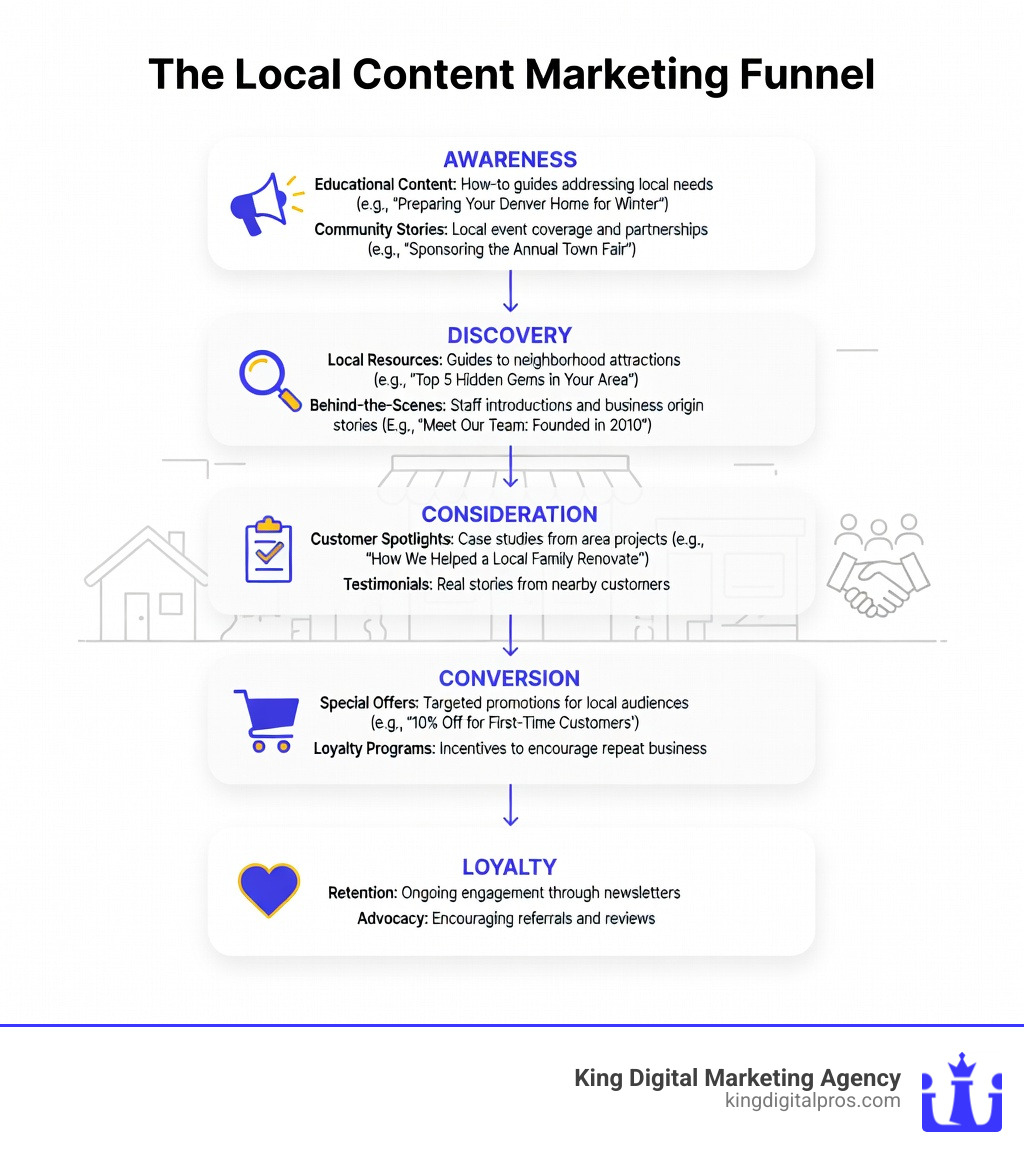
Quick look at Local business content:
- Business blog writing
- content writing business
Why Local Content Marketing is Essential for Trades
For tradespeople in New Mexico—whether you are a plumber in Albuquerque, an electrician in Santa Fe, or a contractor in Taos—standing out is your biggest hurdle. In a saturated market, offering high-quality service is just the baseline. To grow, you must actively inform your community that you are the expert they can trust.

One of the primary benefits of Local business content is reduced competition. When you target broad keywords like “best plumbing services,” you are fighting the entire internet. However, when you create content specifically for “hard water issues in Rio Rancho” or “winterizing pipes in Los Alamos,” your competition drops significantly. This provides a first-mover advantage; many of your local competitors are likely overlooking content marketing because they find it resource-intensive or are reluctant to change old habits.
According to blogging statistics from OptinMonster, 72% of online marketers describe content creation as their most effective SEO tactic. For trades, this translates directly into lead generation. B2B and B2C service providers who blog get 67% more leads than those who don’t.
Furthermore, local content is incredibly cost-effective. It costs 62% less than traditional advertising (like billboards or print mailers) but generates three times as many leads. By addressing region-specific needs—such as how the high-desert climate of Grants or Edgewood affects roofing materials—you build deep community trust. This trust fuels referral traffic, as being known as a reliable source of information makes other businesses and residents more likely to recommend you. If you need help articulating your expertise, our copywriting services can help turn your technical knowledge into customer-friendly articles.
5 Steps to Build a Customer-Centric Content Strategy
We often see businesses rush into posting on social media without a plan. This “scattergun” approach rarely works. Instead, you need a documented strategy. Research shows that 80% of highly successful companies have a documented content strategy, while only 52% of unsuccessful ones do.
1. Set SMART Goals
Don’t just say you want “more business.” Set specific, measurable, achievable, relevant, and time-bound goals. For example: “Increase organic traffic from Corrales residents by 20% over the next six months.”
2. Define Audience Personas
Who are you writing for? A homeowner in the East Mountains has different concerns (well water, snow removal) than a business owner in downtown Albuquerque. Create “personas” to represent your ideal customers. Check out this guide on finding your target audience to get started.
3. Conduct a Content Audit and Keyword Research
Look at what you already have. Is your NAP (Name, Address, Phone number) consistent? Use tools like Google Keyword Planner or Ubersuggest to find what local residents are actually searching for. Focus on “geo-targeted” keywords that include your city names like “Sandia Park” or “Tijeras.”
4. Develop Foundational Assets
Before you write a single blog post, ensure your website foundations are solid. This includes your “About Us” page, service pages, and location-specific landing pages. Documenting your strategy ensures that everyone on your team is aligned with these foundational goals.
5. Create a Content Calendar
Consistency is key. Plan your topics, formats, and distribution channels (like Facebook groups or email newsletters) in advance. A simple Google Sheet can serve as your calendar, helping you track deadlines and responsibilities.
High-Impact Local Business Content Ideas to Drive Traffic
The best Local business content isn’t about selling; it’s about solving. If you help people for free through your content, they will pay you when they have a problem they can’t solve themselves.
| Content Type | Purpose | Example for NM Businesses |
|---|---|---|
| Educational | Build Authority | “Why Albuquerque’s Soil Requires Specific Foundation Care” |
| Promotional | Drive Conversions | “15% Off HVAC Inspections for Rio Rancho Residents” |
| Community | Build Trust | “Proud Sponsor of the Taos Little League” |
| Informational | Capture Search | “FAQ: Do I Need a Permit for a Shed in Santa Fe?” |
FAQ Pages
Answering frequently asked questions is one of the easiest ways to rank for “long-tail” keywords. Use AnswerThePublic to see what questions people are asking about your industry. For instance, “How often should I pump my septic tank in the East Mountains?” is a perfect topic for a local liquid waste company.
How-To Guides and Seasonal Checklists
Create guides that are specific to our local environment. A “Spring Landscaping Guide for High-Desert Climates” is much more valuable to a resident of Edgewood than a generic gardening article.
User-Generated Content and Case Studies
Nothing builds trust like seeing your work in a neighbor’s home. Use user generated content such as customer photos or videos of a completed project. Detailed case studies—showing a “before and after” of a renovation in Corrales—demonstrate your expertise and local impact.
Resource Roundups
Become a community hub by sharing links to other great local resources. A “Guide to the Best Hardware Stores in Los Alamos” or “Top 5 Parks in Grants” shows that you care about the community, not just your bottom line.
Optimizing for Local SEO and Search Visibility
Creating great content is only half the battle; people need to be able to find it. This is where Local SEO comes into play.
NAP Consistency and Schema Markup
Your Name, Address, and Phone number (NAP) must be identical across every platform—your website, Yelp, and your Google Business Profile. We recommend that you mark up your NAP with Schema to help search engines easily crawl and understand your location data.
Google’s Helpful Content Update
Google’s algorithm now heavily weights “people-first” content. This means you should write for humans, not robots. According to Google’s quality ranking factors, reducing your bounce rate and increasing “time on site” are critical. Helpful, locally-relevant content keeps people reading longer. Familiarize yourself with Google’s Helpful Content Update to ensure your site remains visible.
Mobile Optimization and Site Speed
Over 60% of local searches happen on mobile devices. If your site is slow or hard to steer on a phone, you’re losing customers. Use tools like Google PageSpeed Insights to check your performance.
AI Overviews (AIO)
Google is increasingly using AI to summarize answers at the top of search results. To show up here, your Local business content should provide concise, accurate answers to common questions. For example, “What is the frost line in Sandia Park?” should be answered clearly in your content.
Measuring ROI and Overcoming Content Challenges
We know that small business owners are busy. Finding time to write can be a challenge, but the return on investment (ROI) makes it worth the effort.
Key Metrics to Track
Don’t get distracted by “vanity metrics” like social media likes. Focus on:
- Organic Traffic: Are more local people visiting your site?
- Conversion Rates: How many visitors are calling or filling out forms?
- Google Business Profile Insights: How many people are clicking for directions or calling from your listing?
Leveraging AI Tools
You don’t have to be a professional writer to create content. AI statistics show that tools like ChatGPT can help with ideation and drafting. However, you must edit these drafts to include your unique voice and local knowledge. AI doesn’t know the specific charm of the Taos Plaza or the traffic patterns on I-25; you do.
Content Repurposing
Maximize your effort by turning one piece of content into many. A long blog post about “Solar Energy in Santa Fe” can be broken down into:
- An email newsletter for your subscribers.
- A series of short tips for Facebook and Instagram.
- A short video tutorial for YouTube.
- A “Quick Tip” post on your Google Business Profile.
As studiesshow, email marketing can return an average of $36 to $42 for every $1 spent. Repurposing your blog content into emails is a high-ROI move for any local business.
Frequently Asked Questions about Local Business Content
How can I use storytelling in local business content?
Storytelling is about building an emotional connection. Share your business’s “origin story”—why did you start your plumbing company in Albuquerque? Highlight your community involvement, such as sponsoring a local high school team in Rio Rancho. When you share authentic narratives about the challenges you’ve solved for local families, you move from being a “vendor” to a “neighbor.”
What role do reviews play in local business content?
Reviews are the ultimate social proof. 92% of consumers read online reviews before making a purchase. They act as trust signals for both customers and search engines. We recommend creating a dedicated testimonials page on your website and always responding to reviews—both positive and negative. A professional response to a complaint can often do more to build trust than a five-star rating with no comment.
How do I optimize my Google Business Profile for local search?
At King Digital, this is our specialty. To win at local search, you must:
- Complete every section: Include your services, hours, and a detailed description.
- Select the right categories: Be specific (e.g., “HVAC Contractor” instead of just “Contractor”).
- Post high-quality photos: Profiles with photos get 42% more requests for directions.
- Seed your Q&A: Don’t wait for customers to ask questions; post common questions and answer them yourself.
- Update regularly: Use the “Updates” feature to share news, offers, and links to your latest Local business content.
Conclusion
At King Digital Marketing Agency, we believe that every small business in New Mexico has a story worth telling and expertise worth sharing. By committing to a Local business content strategy, you aren’t just chasing search engine rankings; you are building a sustainable asset that grows in value over time.
Whether you are in the busy streets of Albuquerque or the quiet beauty of the East Mountains, your neighbors are looking for you. Don’t let your expertise stay hidden. Start small—perhaps with a single FAQ page or a project spotlight—and watch as your community engagement and ROI flourish.
Ready to dominate local search and establish geo-topical authority? Schedule a consultation for professional copywriting and let us help you craft content that truly connects.
