Most PPC management pricing in the United States falls into four models: a percentage of ad spend (commonly 10 to 20%), a flat monthly retainer, a hybrid of the two, or hourly and performance-based billing. For small and mid-sized businesses, expect management fees generally spanning a moderate range per month, separate from what you actually spend on ads. There are US-based agencies built specifically for SMB budgets and local visibility goals.
TL;DR:
- Management fees for accounts under $5,000 monthly typically range from $500 to $1,500, often with flat fees due to minimum charges.
- Agencies using percentage models usually charge 10 to 20% of ad spend, with lower percentages at higher budgets, incentivizing efficiency.
- Fixed retainers work better for accounts exceeding $10,000 per month, where percentage fees become less economical.
- Hourly billing, mainly for audits or projects, generally costs around $100 to $149 per hour, with setup fees adding to initial costs.
- Comparing quotes requires verifying if fees include ad spend, understanding minimum charges, and ensuring clear deliverables and account ownership terms.
Table of Contents
- PPC Pricing Models: Percentage, Retainer, Hybrid, and Hourly
- What Does PPC Management Cost by Monthly Ad Spend?
- What Does a PPC Management Fee Actually Cover?
- How Do You Compare PPC Quotes Fairly?
- King Digital’s Approach to PPC Pricing for SMBs
- Get a PPC Quote Built Around Your Actual Budget
- A Few Rules I Use to Judge Any PPC Proposal
- Sources
- FAQ
PPC Pricing Models: Percentage, Retainer, Hybrid, and Hourly
Every PPC quote you get boils down to one of four billing structures, and the one an agency picks shapes how hard they work to grow your spend.
Percentage of ad spend is the most common model among established agencies. It typically runs 10 to 20% of monthly spend, often with a minimum fee of $500 to $1,000 so the agency doesn’t lose money on tiny accounts. The catch: an agency earning a flat cut of your budget has less reason to shrink wasteful spend, since a smaller budget means a smaller check for them.
Flat retainers charge a fixed monthly fee regardless of spend, which works in your favor once your budget grows past a certain point. Hybrid models blend a lower base fee with a smaller percentage on top, splitting the incentive problem more fairly. Hourly and performance-based billing is rarer and usually reserved for audits, one-off projects, or freelancers rather than ongoing management.
- Percentage of spend: best for smaller, growing budgets where the agency’s cut stays modest in dollar terms.
- Flat retainer: best once your spend is large enough that a percentage fee would be excessive.
- Hybrid: best for businesses that want cost predictability without fully decoupling incentives.
- Hourly/performance: best for narrow, defined projects rather than full account management.
Industry pricing guides recommend tiered percentages that decrease as spend increases, which rewards efficiency instead of penalizing growth.
Pro Tip: Ask any agency quoting a straight percentage what happens to their fee if you double your ad spend next quarter. If the answer isn’t “it drops,” you’re paying for their convenience, not your results.
What Does PPC Management Cost by Monthly Ad Spend?
Dollar figures matter more than percentages once you’re trying to build an actual budget. Here’s roughly what US businesses pay in PPC management fees by spend level:
- Under $5,000/month ad spend: Management fees often range from $500 to $1,500/month, frequently billed as a flat rate since a percentage fee would barely cover the agency’s time.
- $5,000 to $20,000/month: Expect $1,000 to $3,000/month, often a hybrid or percentage model in the 10 to 15% range.
- $20,000 to $50,000/month: Fees typically fall between $2,500 and $6,000/month, with percentages trending toward the lower end of the 10 to 20% band as spend scales.
- $50,000+/month: Flat retainers or tiered percentages dominate here, often landing between $5,000 and $7,500+ depending on complexity.
For project work, hourly rates for PPC specialists commonly run $100 to $149 per hour, with audits and campaign builds priced at the higher end of that range.
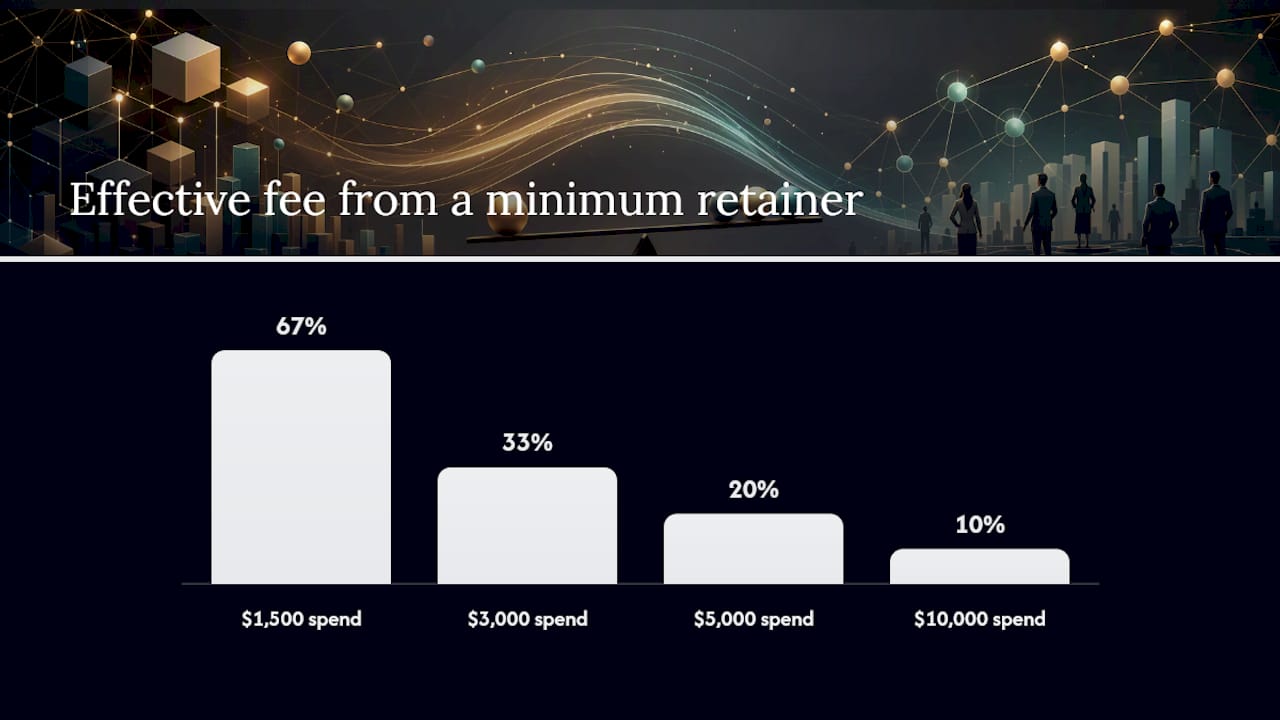
Minimum fees distort the math for small advertisers. Say an agency charges a $1,000 minimum against a 15% rate. At $5,000 in monthly spend, that minimum equals 20% effectively, not 15%. At $10,000 in spend, the same minimum drops to 10% effectively. That’s why analysts note that accounts under roughly $3,000 to $5,000 a month rarely get efficient service from full-service agencies. Many US-focused guides suggest starting with at least $1,500 to $5,000 in monthly ad spend before hiring outside management makes financial sense.
What Does a PPC Management Fee Actually Cover?
A management fee should buy you a defined set of ongoing work. Anything outside that list gets billed separately, and knowing the difference protects your budget from surprise invoices.
- Campaign structure and strategy — building or restructuring ad groups, targeting, and bid strategy.
- Bid management and optimization — adjusting bids, budgets, and pacing to hit performance goals.
- Negative keyword maintenance — an ongoing task that prevents wasted spend on irrelevant searches.
- Conversion tracking setup — connecting ad platforms to your analytics so results are measurable.
- Reporting and reviews — regular performance summaries, usually monthly or biweekly.
Common extras billed on top include landing-page builds, ad creative production, additional platforms beyond your core channel, and reporting-software licensing fees. One-time setup fees for new accounts often range from a few hundred to several thousand dollars, depending on how much account architecture and tracking work is required.
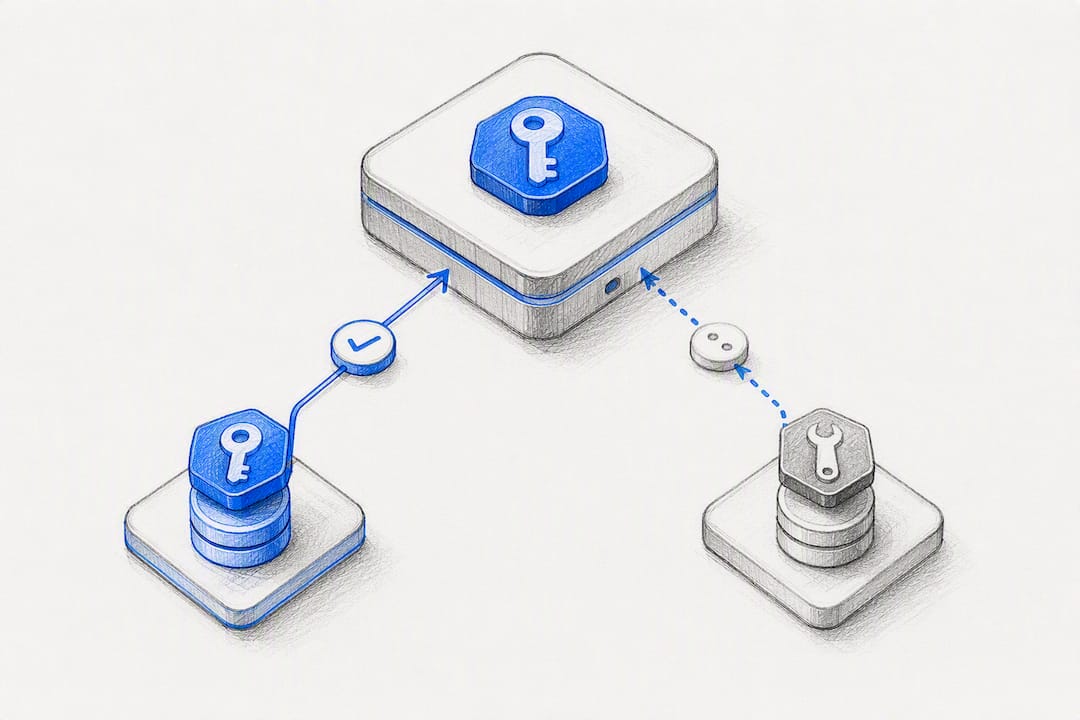
Pro Tip: If a proposal doesn’t specify who owns your ad account and login credentials, ask before signing. Losing access to your own campaign history when you switch agencies is one of the most common and most avoidable headaches in this industry.
Watch for vague deliverables like “ongoing optimization” with no defined frequency, reporting that promises “regular updates” without a set cadence, and contract language that keeps account ownership with the agency instead of you.
How Do You Compare PPC Quotes Fairly?
Total monthly cost at your real spend, including any amortized setup fee, is the only number worth comparing.
- Confirm whether the quoted number includes ad spend or is management fee only.
- Ask for the monthly minimum fee and how it applies below a certain spend threshold.
- Divide any one-time setup fee across the first 6 to 12 months to see its real monthly impact.
- Get a written list of included channels, deliverables, and reporting frequency.
- Ask about termination terms, account ownership, and how often performance gets formally reviewed.
The crossover point is where a flat fee starts beating a percentage, and it usually arrives faster than business owners expect. For more on setting a realistic starting budget before you request quotes, see this step-by-step advertising guide.
King Digital’s Approach to PPC Pricing for SMBs
Some boutique agencies focus on small to medium-sized businesses, local visibility, lead generation, and measurable return on ad spend. They may scope engagements around actual budgets, industries, and goals, with consistent teams handling strategy, setup, and ongoing optimization.
A typical starter engagement includes an account audit or build, conversion tracking setup, campaign structure, and a defined reporting cadence, all discussed upfront before any commitment. For businesses researching regional PPC options, King Digital’s Albuquerque PPC management guide covers the local-market approach in more detail.
Get a PPC Quote Built Around Your Actual Budget
Some agencies offer an alternative to percentage-based quotes by providing a locally based, in-house team that scopes pricing to actual ad spend and business goals rather than a generic retainer copied from larger clients.

A starter engagement typically covers the first 30 to 90 days: an account audit or build, conversion tracking setup, initial campaign optimization, and a set reporting rhythm so you know exactly what’s working. To get an accurate quote, come prepared with your target monthly ad spend, the platforms you want to run on (Google Ads, Facebook Ads, or others), and your current conversion goals. Most SMB quotes turn around within a few business days once that information is in hand.
If your PPC campaigns are pointing to a website that isn’t converting the traffic you’re already paying for, it’s worth pairing ad spend with a search-friendly website structure so your budget doesn’t leak at the landing page. Start by requesting a quote on King Digital’s PPC management services page and get a fee structure built around your real numbers, not a generic percentage.
A Few Rules I Use to Judge Any PPC Proposal
Here’s my honest filter: if you can’t commit at least $1,500 to $3,000 a month in actual ad spend, skip the agency and run campaigns in-house first. Below that level, most management fees eat too much of your budget’s upside to justify themselves.
The two red flags I see most often in proposals are vague “ongoing optimization” language with no defined frequency, and account ownership clauses that quietly keep login credentials with the agency. Both cost business owners real money down the line.
My one negotiation rule: never sign a percentage-based contract without a tiered rate that drops as your spend grows. If an agency won’t put that in writing, they’re betting you won’t notice.
— Bernadette
Sources
Cost ranges here draw on Clutch’s PPC Pricing Guide for verified agency rates, Statista’s search advertising outlook for US market sizing, and industry crossover-math guides for comparing percentage versus flat fees.
FAQ
How Much Does PPC Usually Cost?
Ad spend and management fees are separate costs. Management typically adds $500 to $7,500+ monthly on top of whatever you budget for the ads themselves, based on Clutch’s pricing data.
Why Is PPC So Expensive?
Costs rise with competitive bidding, industry-specific click prices, and rising overall US search advertising spend, which pushes cost-per-click higher in crowded markets year over year.
How Much Does PPC Marketing Cost Overall?
Total cost combines ad spend plus management fees. A small business running $5,000 in monthly ad spend might pay an additional $750 to $1,500 in management fees, depending on the pricing model chosen.
Is a Percentage Model or Flat Retainer Better for Small Businesses?
Percentage models tend to fit smaller, growing budgets, while flat retainers become more economical once monthly spend passes roughly $10,000, based on standard crossover math.
Recommended
- PPC advertising: boost local leads & visibility fast
- Paid Advertising Step by Step for Small Businesses
- PPC Management Albuquerque: 7 Powerful Success Tips 2025
- Local PPC advertising: Drive Growth 2025
