What Is a Geofencing Advertising Platform (And Why It Matters for Local Businesses)
A geofencing advertising platform is a digital marketing tool that lets you draw virtual boundaries around real-world locations – and automatically serve ads to people who enter those areas on their mobile devices.
Here’s a quick breakdown of what these platforms do:
| Feature | What It Means for You |
|---|---|
| Virtual boundary creation | Target a specific store, event, or competitor location |
| Real-time triggers | Ads fire when someone enters or exits your defined zone |
| Cross-device delivery | Reach users on mobile, desktop, and connected TV |
| Audience look-back | Re-target visitors from up to 12 months ago |
| Attribution reporting | See foot traffic lifts, conversions, and ROAS |
The numbers back up why this matters. Research from location-based marketing studies shows that 9 out of 10 marketers say location-based marketing drives more sales – because it reaches people exactly when their intent is highest.
Think about it this way: someone walking into a competitor’s store is already in buying mode. A geofencing platform lets you put your ad in front of that person at that precise moment.
That’s not broad awareness advertising. That’s surgical precision.
I’m Bernadette King, a digital marketing strategist with hands-on experience running location-based ad campaigns for franchise owners and small businesses – including building ROI-focused geofencing advertising platform strategies that turn foot traffic signals into real revenue. In this guide, I’ll walk you through everything you need to know to choose and use the right platform for your business.
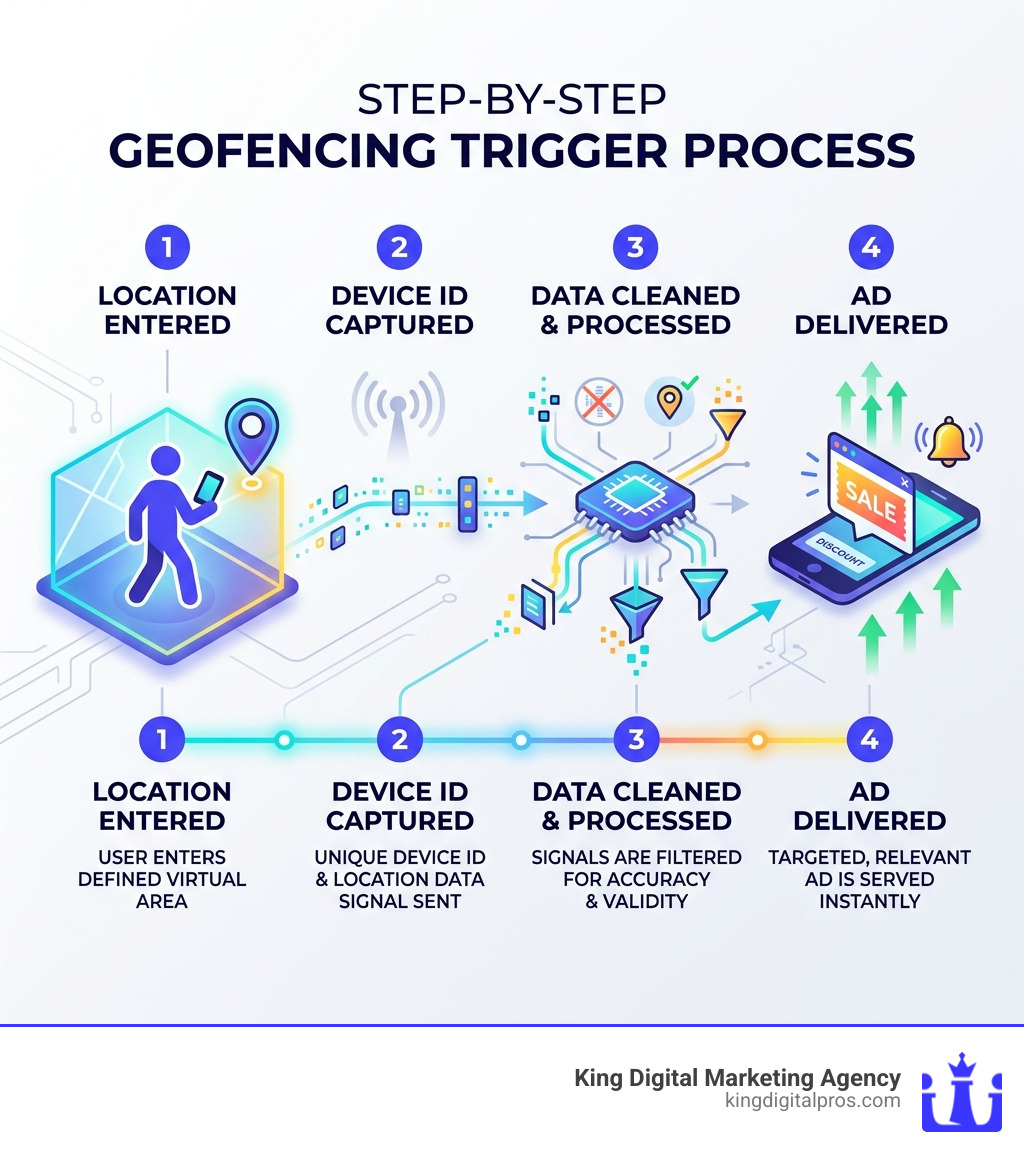
Simple guide to geofencing advertising platform:
How a Geofencing Advertising Platform Works
At its heart, a geofencing advertising platform acts as a bridge between the physical world and the digital one. It uses a combination of GPS technology, Wi-Fi signals, and cellular data to pinpoint where a mobile device is located in real-time. When we set up a campaign, we aren’t just picking a city or a zip code; we are drawing a specific, virtual perimeter around a building, a parking lot, or even a specific section of a stadium.
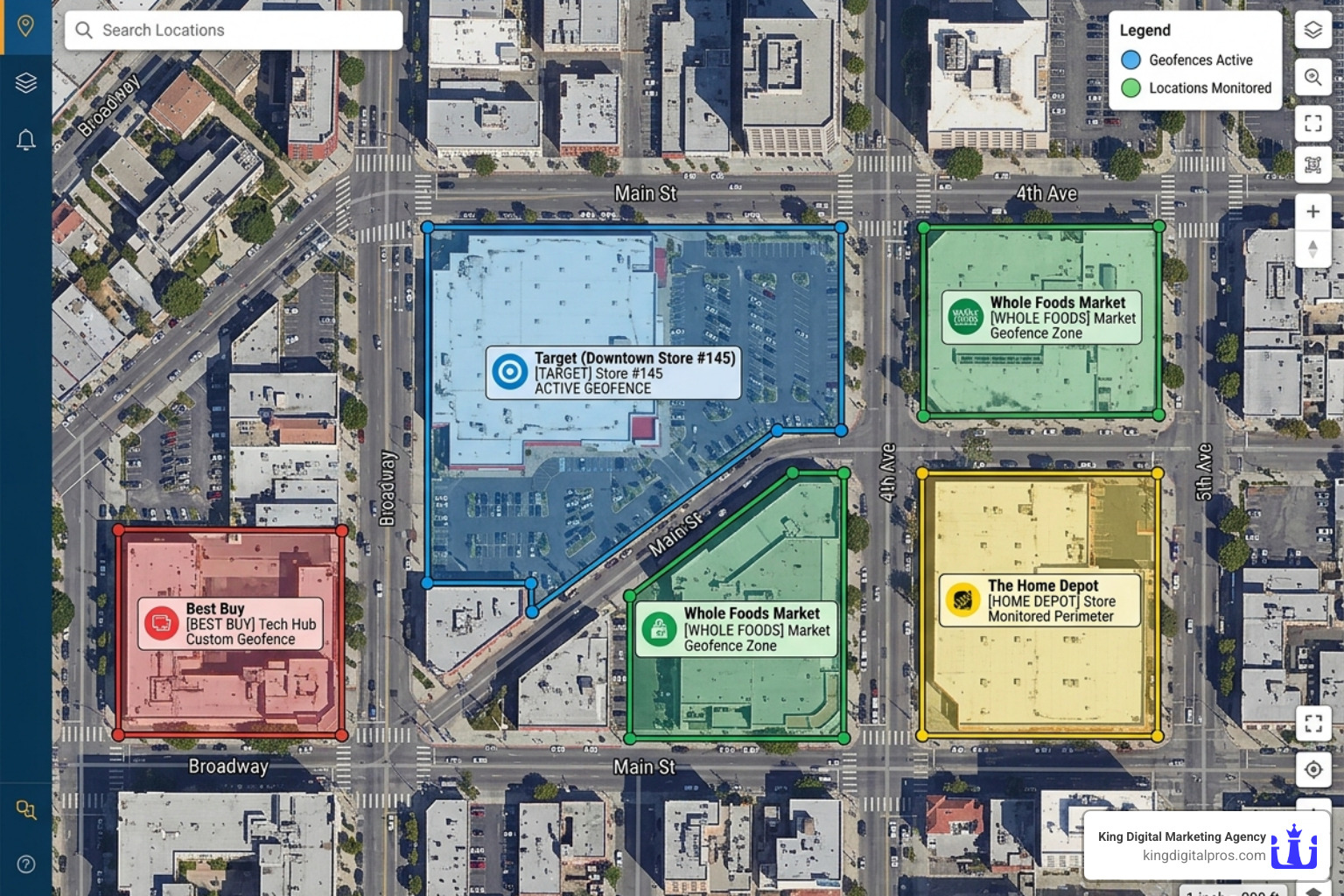
The process begins with “signal triangulation.” The platform looks for pings from a user’s phone. Once a device crosses the virtual line we’ve drawn, a “trigger” occurs. This can be an “entry event” (they just arrived), an “exit event” (they just left), or based on “dwell time” (they’ve been there for at least 10 minutes, suggesting they are a serious shopper and not just driving by).
To understand the deeper strategy behind this, you can check out our guide on Geofencing Demystified: How Location Based Marketing Can Transform Your Digital Strategy. Modern platforms like Geofence Advertising : GetGeofencing use advanced “Blueprints” to ensure these boundaries are accurate. Instead of a messy circle that catches people on the highway next to your store, we use precise polygon shapes that trace the exact walls of the building.
Essential Features of a Geofencing Advertising Platform
When you are evaluating a geofencing advertising platform, you shouldn’t settle for basic tools. The difference between a successful campaign and a wasted budget often comes down to technical precision.
One of the most critical features is one-meter precision. Traditional GPS can sometimes “drift,” making it look like a customer is in your store when they are actually across the street. Top-tier platforms use “GPS drift mitigation” to verify the device’s actual location. Furthermore, data integrity is paramount. Leading platforms implement a 36-hour data cleaning window to scrub out bots and irrelevant “fast-moving” devices (like someone on a bus) to ensure you are only paying to reach real humans.
Another game-changer is the 12-month look-back window. This allows us to capture device IDs from people who visited a location months ago. Imagine being able to show ads today to everyone who attended a home show in Albuquerque last spring. That is the power of a robust Geofencing Marketing Software Ultimate Guide.
| Feature | Radius Targeting | Polygon Geofencing |
|---|---|---|
| Shape | Simple Circle | Custom-drawn Geometric Shape |
| Accuracy | Low (includes streets/sidewalks) | High (follows building footprints) |
| Waste | High (irrelevant traffic) | Minimal (highly targeted) |
| Best Use | Broad local awareness | Competitor conquesting/Specific POIs |
Supported Ad Formats and Multi-Channel Reach
A common misconception is that geofencing only works for “push notifications.” While push alerts are great, a modern geofencing advertising platform supports a massive variety of Targeted Mobile Advertising formats:
- Display Banners: The classic ads you see inside apps and on websites.
- Video Pre-roll: Short commercials that play before a video starts.
- OTT/CTV: High-impact ads on streaming services like Hulu or Roku, targeted to households where a member recently visited a geofenced zone.
- Digital Audio: Ads on Spotify or Pandora triggered by location.
- Native Ads: Ads that match the look and feel of the content, which often see a response rate six times higher than traditional banners.
By using household IP mapping, we can even “follow” a user from their phone to their living room TV, creating a seamless brand experience.
Strategic Targeting and Industry Applications
Geofencing isn’t just about where someone is; it’s about what their location says about their intent. We use these platforms to build “behavioral overlays.” For example, if someone visits a luxury car dealership in Santa Fe, we can layer that location data with demographic info to ensure we are reaching high-income buyers.
One of our favorite strategies is competitor conquesting. This involves drawing geofences around your competitors’ locations. When a potential customer visits them, we capture their device ID and serve them your ads later, perhaps with a better offer or a “Why Choose Us” message.
As noted by The #1 Geofencing Advertising Platform – Agility, this strategy is incredibly effective for staying top-of-mind. You can find more details on how to execute this in our Geofencing Marketing Complete Guide.
Choosing the Right Geofencing Advertising Platform for Your Industry
Different industries require different geofencing “flavors.” Here is how we tailor the tech for our neighbors in New Mexico:
- Retail: Driving foot traffic is the name of the game. We use geofences to trigger “flash sale” ads when shoppers are near the mall.
- QSR (Quick Service Restaurants): We target office buildings in Rio Rancho or Albuquerque during the 11:00 AM lunch rush with specials to drive immediate visits.
- Real Estate: We can geofence open houses or specific neighborhoods, reaching active buyers and sellers. Our Small Business Geofencing Guide covers many of these local use cases.
- Healthcare: Reaching patients near clinics or pharmacies to promote specialized services.
- Automotive: Capturing high-intent buyers on competitor lots to promote better financing deals or test drives.
- Legal Services: Staying visible to folks visiting courthouses or government buildings.
Measuring ROI and Attribution Models
The biggest question we get is, “How do I know it’s working?” Unlike old-school billboards, a geofencing advertising platform provides concrete data.
We use “Conversion Zones” to track ROI. A Conversion Zone is a geofence drawn around your place of business. When someone who saw your ad walks through your door, the platform logs a “foot traffic lift.” This creates a clear “online-to-offline” attribution model.
According to 7 Game Changing Benefits Of Geofence Marketing For Your Business, this allows us to calculate your exact “Cost Per Visit.” We also track digital conversions like phone calls, form fills, and website visits. If you’re worried about the investment, checking out our breakdown of Geofencing Advertising Cost can help you budget effectively for your New Mexico business.
Data Privacy and Compliance Standards
In an era of digital privacy, we take data security very seriously. A reputable geofencing advertising platform must operate within strict legal boundaries. This includes adhering to GDPR and CCPA regulations, even for businesses operating locally in places like Los Alamos or Taos.
The technology relies on “anonymized device IDs.” We aren’t collecting names, phone numbers, or social security numbers. Instead, we are looking at a string of numbers that represents a device. Users must also “opt-in” to location services on their apps for this to work.
By using ethically sourced big data and secure audience building, we ensure your brand stays on the right side of privacy laws. For agencies looking to offer these services, our Whitelabel Geofencing Marketing Software Guide provides more insight into maintaining these high standards.
Frequently Asked Questions about Geofencing Advertising Platforms
How accurate is geofencing targeting?
With a high-quality geofencing advertising platform, accuracy can be as tight as one meter. This is achieved by using polygon shapes rather than circles and by filtering out low-quality signals. In dense areas like downtown Albuquerque, this precision is what prevents your ads from being served to people just passing by on the street.
Is geofencing advertising legal and privacy-compliant?
Yes. Geofencing is legal as long as it follows data privacy regulations. Platforms use anonymized data and rely on user permissions (the “Allow App to Use Your Location” prompt). We never target sensitive locations like places of worship or specific medical facilities to maintain ethical standards.
What is the difference between geofencing and geotargeting?
While they sound similar, they are different tools. Geotargeting is broad (e.g., “show my ad to everyone in Santa Fe”). Geofencing is specific (e.g., “show my ad to everyone currently inside this specific hardware store”). Geofencing is much more granular and intent-based.
Conclusion
At King Digital Marketing Agency, we know that for businesses in New Mexico – from the tech hubs of Los Alamos to the retail centers of Rio Rancho – local visibility is everything. A geofencing advertising platform is one of the most powerful weapons in our arsenal to help you outsmart, not just outspend, the competition.
Whether it’s optimizing your Google Business Profile to dominate map listings or drawing surgical geofences to capture competitor traffic, our goal is to make sure your business is the first one customers see when they are ready to buy.
Ready to turn location data into loyal customers? Start your campaign with King Digital Marketing Agency today and let’s put your business on the map – literally.
