Why Content Writing for Real Estate Is Your Most Powerful Lead Generation Tool
Content writing for real estate is the practice of creating blogs, property descriptions, neighborhood guides, market reports, and social media posts that attract buyers and sellers to your business online – without paid ads.
Here’s a quick snapshot of what it involves and why it works:
| Content Type | Primary Goal | Where It Appears |
|---|---|---|
| Property descriptions | Convert browsers into inquiries | MLS, Zillow, your website |
| Blog posts & guides | Capture organic search traffic | Google, Bing |
| Neighborhood guides | Build local authority | Google, your website |
| Market reports | Establish expertise and trust | Email, website, social |
| Email newsletters | Nurture leads over time | Inbox |
| Social media posts | Expand reach and engagement | Instagram, Facebook, LinkedIn |
The core idea: buyers and sellers are searching for answers online before they ever call an agent. Real estate content puts your name in front of them at exactly that moment.
The numbers back this up. Research shows that 99% of homebuyers aged 24 to 57 turn to the internet when searching for a home. And companies with an active blog generate 67% more leads each month than those without one. One Cape Cod real estate team saw a 48% jump in monthly website traffic and ranked for over 6,000 non-branded keywords in Google’s top 10 – all within six months of launching a consistent content strategy.
This is not a vanity metric game. It’s a lead generation system.
When your content answers the questions buyers are already asking, Google rewards you with visibility. That visibility turns into traffic. That traffic turns into signed agreements.
I’m Bernadette King, founder of King Digital Marketing Agency and a conversion-driven content strategist with years of experience helping businesses use content writing for real estate and beyond to build lasting online visibility. My background in persuasive copywriting and scalable digital strategy means I’ve seen what separates content that ranks from content that just sits there – and I’ll walk you through exactly what works.
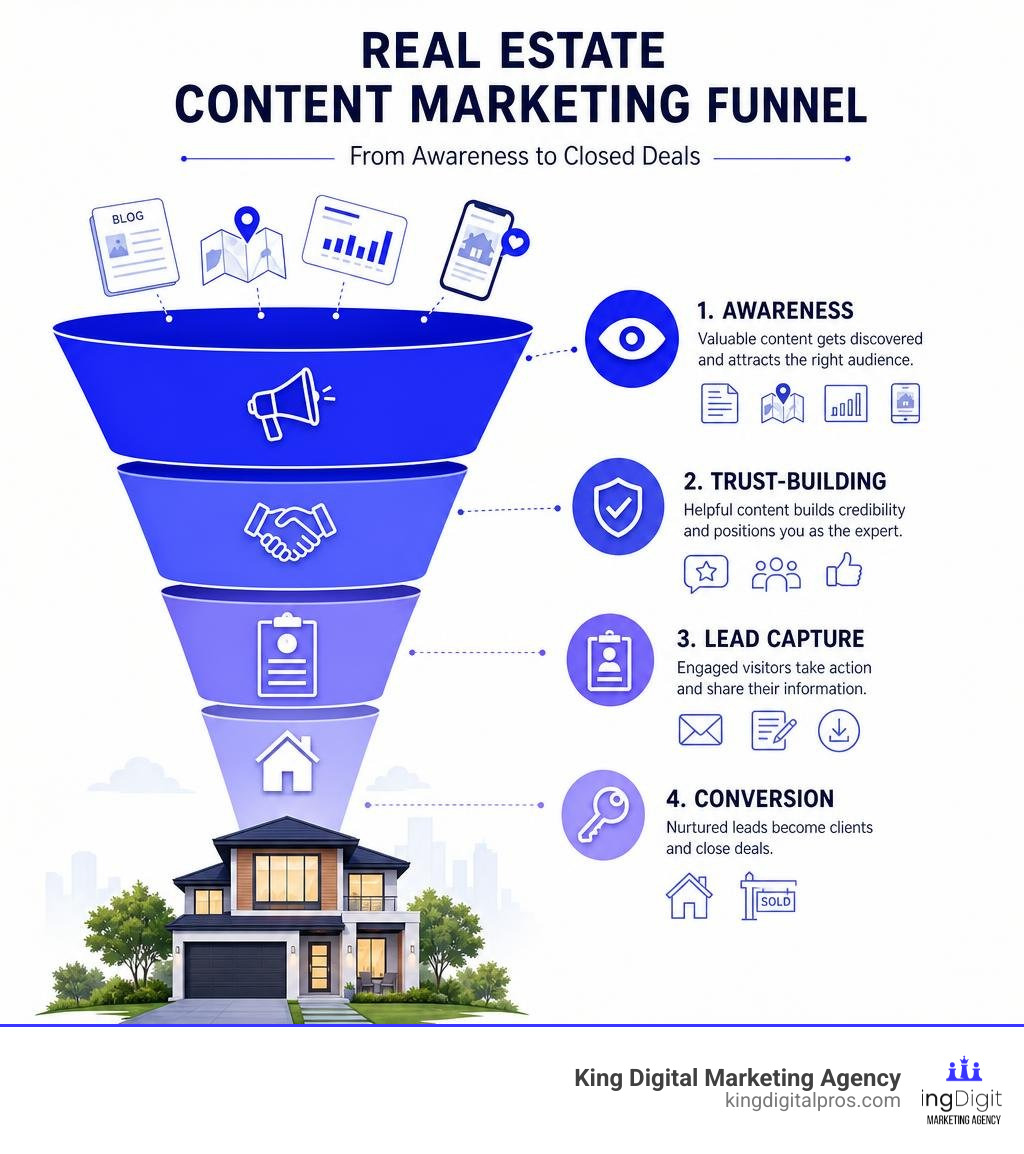
Glossary for content writing for real estate:
What is Content Writing for Real Estate and Why It Matters in 2026
In 2026, the real estate landscape is more competitive and digitally driven than ever before. Buyers and sellers are no longer just looking at static listings; they are searching for comprehensive, local insights that help them make some of the biggest financial decisions of their lives.
Content writing for real estate is the engine that powers this research phase. It bridges the gap between a cold search query and a warm, trusting relationship with an agent. When done correctly, high-quality content functions as a digital storefront that never closes, answering questions, easing anxieties, and establishing your brand authority while you sleep.
Furthermore, how people search has fundamentally shifted. Over 40% of homebuyers now begin their search in AI-driven platforms like ChatGPT, Perplexity, and Google’s Gemini rather than traditional search engines alone. These systems do not just pull random blue links; they synthesize answers based on who demonstrates the deepest, most authentic local authority. If your website is filled with generic, thin text, these AI search engines will bypass you entirely.
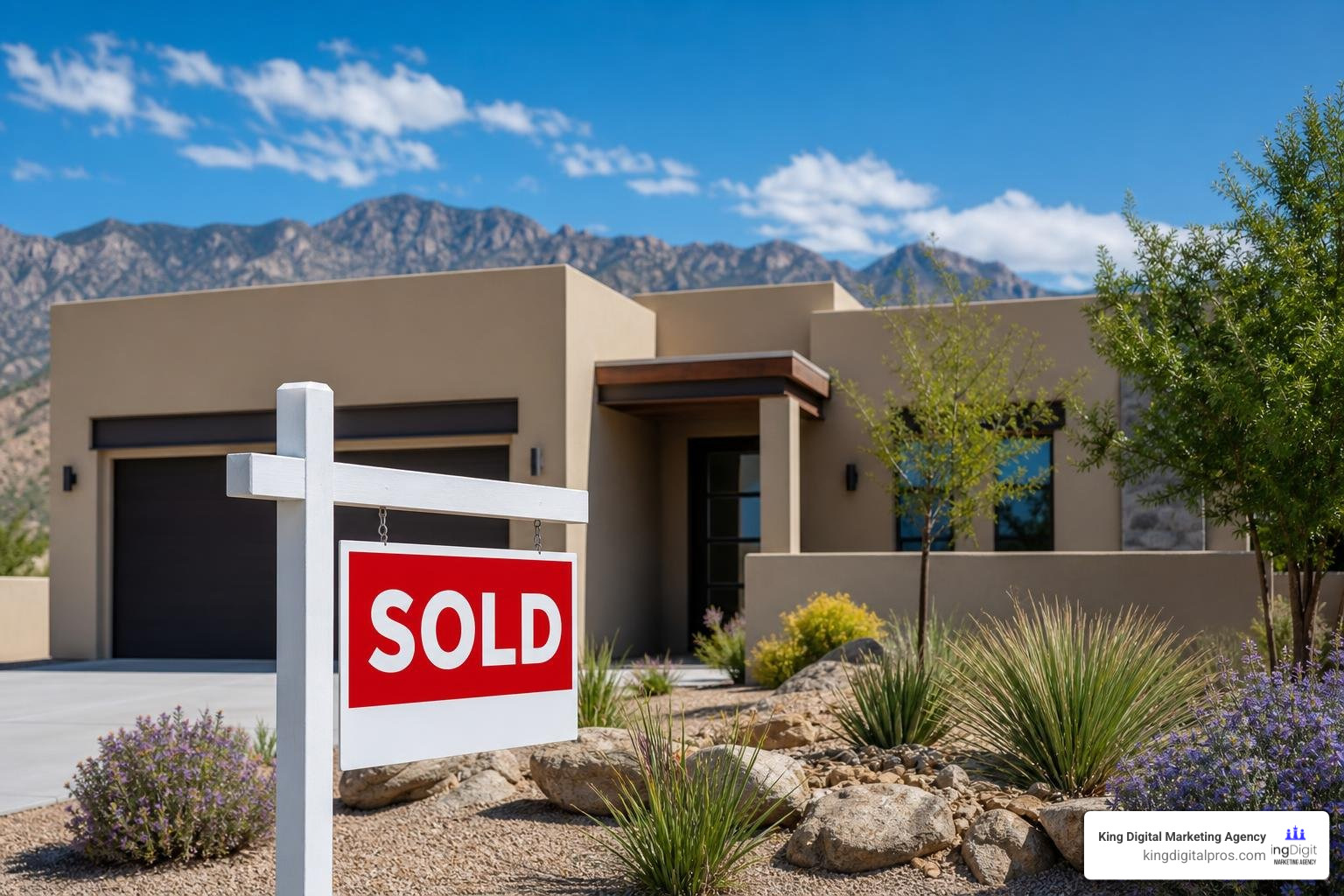
The Difference Between Copywriting and Content Writing for Real Estate
While often used interchangeably, copywriting and content writing serve distinct roles in your digital marketing funnel. Understanding this difference is key to allocating your marketing budget effectively.
- Real Estate Copywriting: This is highly transactional, short-form writing designed to drive immediate action. Think of your MLS property descriptions, landing page headlines, Facebook ad copy, and call-to-action buttons. The goal is simple: convert the reader now. To dive deeper into this specialized skill, explore our comprehensive guide on Real Estate Copywriting.
- Real Estate Content Writing: This is educational, informative, and focused on long-term relationship building. It includes blog posts, neighborhood guides, market reports, and detailed buyer or seller playbooks. The goal is to build trust, establish authority, and capture organic search traffic over time.
While copywriting gets you the immediate click, content writing builds the compounding organic visibility that keeps leads flowing for years. For a deeper look at how top-tier agencies scale this approach, check out the Billion Dollar Playbook: Real Estate Content Writing.
Why Real Estate Professionals Need a Dedicated Content Strategy
Relying solely on paid ads or purchasing expensive third-party portal leads is a recipe for razor-thin margins. In contrast, a dedicated content strategy offers a sustainable, compounding asset that reduces your overall lead acquisition costs. For instance, teams utilizing content-driven SEO have achieved lead acquisition costs as low as $21 – a fraction of what most agents pay for portal leads.
Google’s search algorithms heavily prioritize E-E-A-T (Experience, Expertise, Authoritativeness, and Trustworthiness), especially for “Your Money or Your Life” (YMYL) topics like real estate. To rank well in local searches across Albuquerque, Rio Rancho, or Santa Fe, your content must show real-world experience and deep local knowledge.
A scattershot approach of writing random posts whenever inspiration strikes will not cut it. You need a structured plan that maps to search intent. To understand how structured blogging drives business growth, read our insights on Business Blog Writing.
Core Content Types That Drive Real Estate Leads
To build a robust pipeline, your content strategy should balance two primary categories of content: Transaction Content and Authority Content.
| Content Category | Focus | Examples | Role in Funnel |
|---|---|---|---|
| Transaction Content | Capture active, immediate buyers and sellers | Property descriptions, landing pages, listing FAQs | Bottom of the Funnel (Conversion) |
| Authority Content | Build trust, educate, and capture early-stage searchers | Neighborhood guides, market reports, process blogs | Top/Middle of the Funnel (Awareness & Trust) |
By combining these types, you capture prospects at every stage of their journey, whether they are just starting to think about moving to Corrales or are ready to write an offer on a home in Los Alamos.
Writing Compelling Property Descriptions and Listing Copy
Your listing description is often the first detailed interaction a buyer has with a property. Yet, many agents treat it as a boring checklist of features. To stand out, you must use storytelling to paint a picture of the lifestyle the home offers.
- Lead with a Lifestyle Hook: Instead of starting with “3 beds, 2 baths in Albuquerque,” try: “Imagine sipping your morning coffee on a private, sun-drenched brick patio with sweeping views of the Sandia Mountains.”
- Use Sensory Language: Replace generic buzzwords like “gorgeous” or “charming” with specific, sensory details. Instead of “nice kitchen,” write: “The kitchen features slab granite countertops, a commercial-grade gas range, and a breakfast bar designed for lively evening gatherings.”
- Mind the Limits and Rules: Most MLS systems enforce character limits (often around 1,024 characters). Front-load your most compelling features in the first 50 words so they do not get cut off by “read more” buttons on syndication sites.
- Stay Compliant: Always adhere to the Fair Housing Act. Describe the physical attributes and amenities of the property, not the types of people you think should live there. Avoid phrases like “perfect for young families” or “great for active retirees.”
For a complete breakdown of writing listings that capture attention and close deals, refer to Copywriting Real Estate: The Complete 2026 Guide to Writing Listings That Sell Fast.
Creating High-Value Neighborhood Guides and Market Reports
Hyperlocal content is one of the highest-return investments you can make. Buyers are not just purchasing a house; they are buying into a school district, a commute, and a community.
[Target Persona: Relocating Professional]
  |
  v
[Search Query: "Best neighborhoods near Los Alamos National Lab"]
  |
  v
[Your Hyperlocal Guide to Los Alamos & White Rock]
  |
  v
[Lead Capture: "Download our 2026 Relocation Guide"]
When writing neighborhood guides for markets like Taos, Santa Fe, or the East Mountains, tailor your writing to specific buyer personas. For example, a guide to Corrales should highlight horse properties, local wineries, and the agricultural lifestyle, while a guide to Rio Rancho might focus on master-planned communities, parks, and school ratings.
Market reports should translate dry data into practical advice. Do not just list median sales prices and days on market; explain what those numbers mean for a buyer or seller trying to make a move this month. To learn how to structure these high-value pieces, explore our guide to Content Writing Services.
SEO and Local Search Optimization Strategies
Having the best-written content in New Mexico does not matter if no one can find it. To drive consistent leads, your content must be optimized for both traditional search engines and local map results.
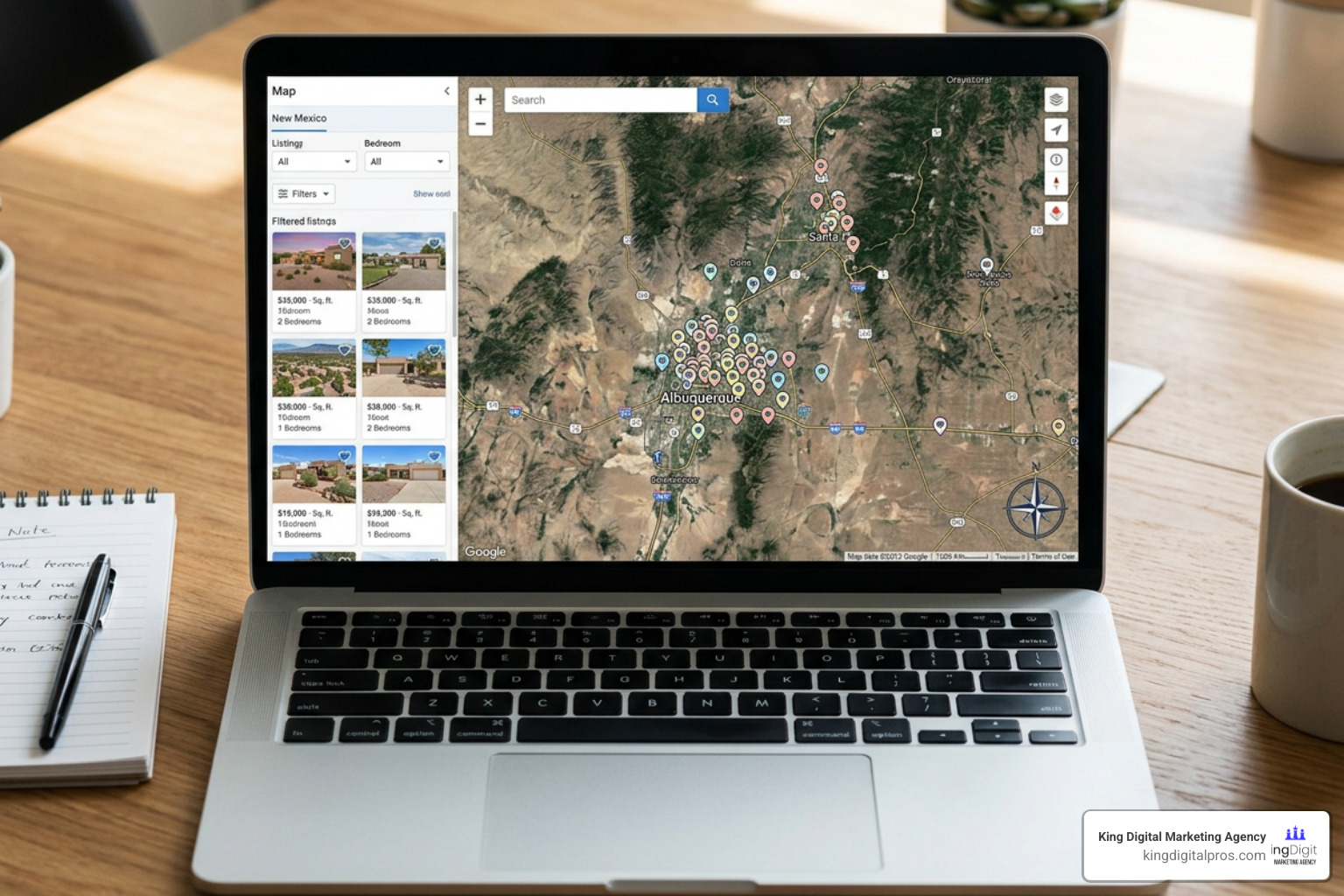
Best Practices for Content Writing for Real Estate SEO
Effective SEO is about matching search intent with high-quality, structured information. Here are the core practices we use to ensure real estate content ranks:
- Smart Keyword Selection: Target long-tail, localized keywords with a low-to-medium Keyword Difficulty (KD under 40) and steady search volume (500+ monthly searches). For example, instead of trying to rank for “homes for sale,” target “historic homes for sale in Santa Fe NM” or “living in Tijeras NM.”
- Clear Heading Hierarchy: Use a logical structure with one H1 for the title, H2s for main sections, and H3s for subsections. This helps search engine crawlers – and busy readers – quickly understand your page.
- Optimize Meta Tags: Write compelling meta titles (55-60 characters) and meta descriptions (150-160 characters) that include your primary keyword and a clear call to action.
- In-Depth Content: Google rewards comprehensive resources. While a quick listing update can be short, your cornerstone guides and neighborhood profiles should be detailed, accurate, and highly useful.
For professional assistance in executing these technical standards, check out our dedicated Copywriting Services.
Optimizing for Local Search and Map Pack Visibility
For real estate brokerages and agents, local visibility is everything. When someone searches for “real estate agent near me” in Albuquerque, Rio Rancho, or Cedar Crest, you want to appear in the coveted Google Local 3-Pack.
This is where your content strategy intersects with map listing management. At King Digital Marketing Agency, we specialize in optimizing Google Business Profiles to maximize local visibility.
To boost your local search performance:
- Maintain NAP Consistency: Ensure your Name, Address, and Phone number (NAP) are identical across your website, Google Business Profile, Yelp, and local business directories.
- Incorporate Geo-Modified Keywords: Naturally weave local geographic terms (neighborhoods, crossroads, nearby landmarks) into your website content and profile updates.
- Generate and Respond to Reviews: Encourage clients from Edgewood, Sandia Park, or Tijeras to leave detailed reviews mentioning the specific areas where you helped them buy or sell.
By aligning your on-site content with a fully optimized Google Business Profile, you build a dominant local presence. To compare professional options for managing this process, see our review of Copywriting Companies.
Frequently Asked Questions About Real Estate Writing
How often should real estate agents publish new blog content?
Consistency is far more important than sheer volume. For most individual agents and small teams, publishing one to two high-quality blog posts per month is a highly sustainable and effective starting point. If you have more marketing bandwidth or work with a professional agency, moving to a weekly publishing schedule can accelerate your search momentum.
The key is to maintain a consistent calendar so search engine crawlers regularly index your site and your audience knows when to expect fresh market updates.
Can AI tools replace professional real estate content writers?
While AI tools like ChatGPT are excellent for brainstorming topics, creating initial outlines, and drafting simple listing descriptions, they cannot fully replace human writers. AI lacks real-world, localized experience. An AI tool does not know the unique vibe of the Corrales Harvest Festival, the specific traffic patterns of the commute from Rio Rancho to Albuquerque, or the subtle nuances of water rights in Taos.
Furthermore, relying solely on unedited AI text risks compliance issues with Fair Housing laws and can result in generic, dry content that fails to build emotional connections. A hybrid model – using AI to assist with efficiency while a professional human writer injects local expertise, voice, and compliance oversight – is the most effective approach in 2026.
How long does it take to see results from real estate SEO content?
SEO is a compounding, long-term asset, not an overnight quick fix. Typically, you will begin to see initial search indexing and minor traffic movements within 90 days of consistent publishing. Significant growth in organic rankings, local map visibility, and consistent lead generation usually occurs between months 4 and 9.
While it requires patience upfront, this content continues to generate highly qualified, free leads long after it is published, unlike paid advertising which stops producing the moment you turn off the budget.
Conclusion
In 2026, standing out in the real estate market requires more than just placing a sign in a yard or running generic online ads. It requires a distinct brand voice, deep local authority, and a strategic approach to content writing for real estate that meets buyers and sellers exactly where they are searching. By consistently publishing valuable neighborhood guides, clear market reports, and lifestyle-driven property descriptions, you build an organic marketing asset that works for your business day and night.
At King Digital Marketing Agency, we help real estate professionals across Albuquerque, Rio Rancho, Santa Fe, and surrounding communities turn online searches into client relationships. By pairing high-value content creation with expert Google Business Profile and map listing optimization, we ensure your business stands out exactly where local clients are looking.
Ready to build a distinct brand and capture better organic leads? Elevate your brand with professional content creation services and let us help you dominate your local market today.
