Why Your Digital Footprint Determines Your Business Success
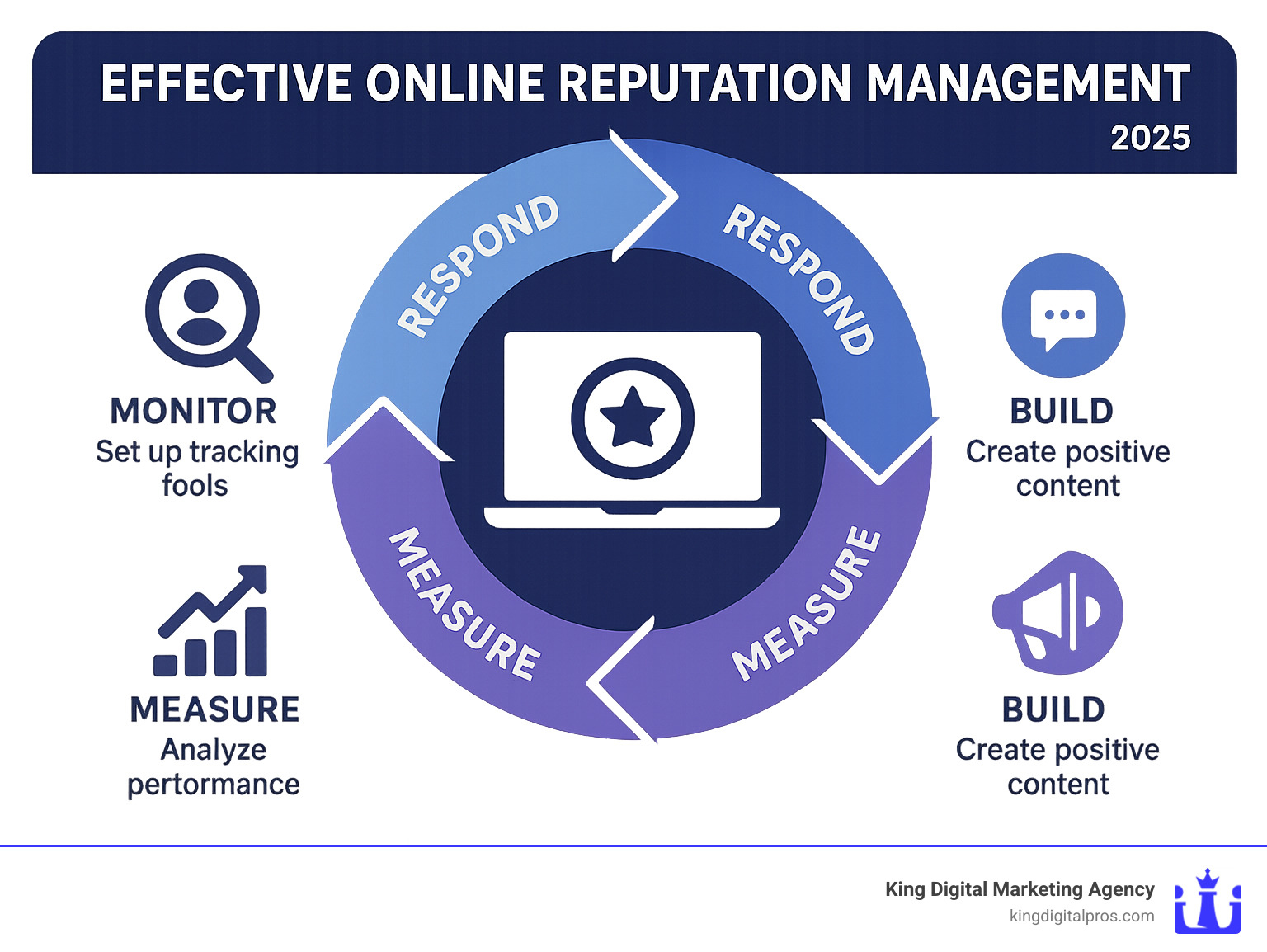
Effective online reputation management is the strategic process of monitoring, influencing, and controlling how your business appears in online search results, reviews, and social media. Here’s what it involves:
Core Components:
- Monitor – Track mentions across review sites, social media, and search results
- Respond – Address feedback professionally within 24-48 hours
- Build – Create positive content to outrank negative results
- Protect – Prevent reputation damage through proactive strategies
Key Benefits:
- Increases customer trust and credibility
- Improves local SEO rankings (reviews account for 16% of ranking factors)
- Drives higher conversion rates (93% of consumers check reviews before buying)
- Attracts better employees and business partners
With 97% of consumers searching online for local businesses, what others say about you online directly impacts your reputation and bottom line. A single negative review can damage years of hard work, while a strong online reputation can justify premium pricing and drive sustainable growth.
I’m Bernadette King, founder of King Digital Marketing Agency, where I’ve helped countless local businesses transform their online presence through effective online reputation management strategies. My experience building multiple successful businesses taught me that reputation isn’t just about damage control – it’s about proactive growth and competitive advantage.
Why Your Online Reputation Matters
Your online reputation isn’t just another marketing checkbox – it’s become the foundation of your business success. With social media platforms experiencing unprecedented growth and millions joining digital conversations daily, your brand is being discussed whether you’re part of those conversations or not.
Your online reputation is like your business’s digital handshake. Before customers ever contact you, they’ve already formed opinions based on what they found online. That Google search, those review snippets, and your social media presence work together to either build trust or create doubt.
Tangible Business Benefits
Effective online reputation management delivers measurable results that directly impact your bottom line. One of our clients, a local roofing company, saw their lead generation double after we helped them improve their Google rating from 3.5 to 4.7 stars.
Your local SEO rankings get a significant boost from positive reviews. Online reviews account for about 16% of the factors Google uses to determine local search rankings. This means your reputation literally controls whether potential customers can find you when searching for your services.
The competitive advantage becomes clear when bidding against other businesses. While competitors struggle with negative reviews or minimal online presence, your strong reputation helps you win more contracts and command higher prices.
Talent attraction improves dramatically as well. Companies with positive online reputations attract 50% more qualified job candidates. Better candidates mean lower turnover, stronger performance, and less hiring headaches.
Individual Advantages
For business owners and professionals, managing your personal online reputation opens doors you might not even know existed.
Your career prospects expand when you build a strong personal brand online. Speaking opportunities, board positions, and strategic partnerships often come to people who are visible and respected in their industries.
Networking becomes more effective when people can research you beforehand and find impressive, professional content. That first handshake at a business event carries more weight when the other person has already seen your expertise online.
Personal branding through consistent, valuable content sharing positions you as someone worth listening to. This leads to media interviews, conference speaking invitations, and business opportunities that might never have surfaced otherwise.
Core Principles of Effective Online Reputation Management
Building a strong online reputation isn’t about gaming the system or hiding from criticism. It’s about creating genuine connections with your customers and handling feedback with grace and professionalism.
Effective online reputation management starts with understanding that your reputation is being shaped right now, whether you’re actively managing it or not. Every day, customers are talking about businesses like yours online. The question isn’t whether these conversations are happening – it’s whether you’re part of them.
The most successful businesses share four key approaches:
First, they think ahead instead of just reacting. Proactive strategy means building positive content and encouraging happy customers to share their experiences before problems arise.
Second, they accept transparency and authenticity in all communications. Customers can spot fake responses from a mile away, and nothing damages trust faster than corporate-speak that sounds robotic.
Third, they never stop listening. Continuous monitoring means setting up systems that work around the clock, not just checking reviews when you remember to.
Finally, they remember that reputation affects everyone who interacts with their business. Your stakeholder-focused approach needs to consider customers, employees, suppliers, and your local community.
What Is Effective Online Reputation Management?
Effective online reputation management is the ongoing process of monitoring what people say about your business online and taking steps to influence those conversations positively. It’s part detective work, part customer service, and part content creation.
The key is understanding the difference between what you control and what you don’t. Your website, social media profiles, and content you create are owned media – you have direct control. Reviews, social media mentions, and news coverage are earned media – you can influence them, but you can’t control them completely.
Key Benefits of Effective Online Reputation Management
Research consistently shows that consumers trust online reviews as much as personal recommendations from friends and family.
Trust and credibility form the foundation of every successful business relationship. When potential customers search for your services, they’re looking for someone they can trust to do the job well. A strong collection of positive reviews and professional responses to feedback signals that you care about customer satisfaction.
The financial impact is real and measurable. Businesses with higher star ratings consistently see better conversion rates and can often charge premium prices. Even a small improvement in your overall rating can translate to significant revenue growth over time.
Crisis prevention might be the most valuable benefit of all. When you’re actively monitoring your online presence, you catch small issues before they become big problems. A single unhappy customer can be turned into a satisfied advocate with the right response, but only if you know they’re unhappy in the first place.
Monitoring & Responding: The First Line of Defense
Imagine trying to protect your home without knowing who’s knocking at your door. That’s exactly what running a business without reputation monitoring feels like.
Effective online reputation management starts with building a comprehensive listening system. Think of it as your business’s radar – constantly scanning for mentions, reviews, and discussions that could impact your reputation.
Your monitoring needs to cast a wide net because your customers are everywhere. Review platforms like Google My Business and Yelp are obvious starting points, but don’t forget about industry-specific sites that your customers trust.
Social media monitoring requires special attention because conversations move fast and spread quickly. Someone might mention your business in a Facebook group or tweet about their experience without tagging you directly.
Search results deserve daily attention too. When someone googles your business name, what story do the first ten results tell? Understanding how search results shape perceptions helps you prioritize which content needs attention first.
Setting Up Listening Posts for Effective Online Reputation Management
Creating an effective monitoring system doesn’t require expensive enterprise software. Start with the basics and expand as your needs grow.
Google Alerts remain one of the most reliable free monitoring tools available. Set up alerts for your business name, but don’t stop there. Include common misspellings, your name as the business owner, and phrases like “King Digital Marketing review” or “King Digital Marketing complaint.”
Your keyword strategy should think like your customers. What words do they use when they’re frustrated? Terms like “scam,” “terrible service,” or “waste of money” paired with your industry can catch conversations you’d otherwise miss.
Team responsibilities matter more than fancy tools. Assign someone to check alerts every morning – make it part of their routine like checking email. Weekly deep-dive sessions should review trends, identify patterns, and plan responses to emerging issues.
Best Practices for Review Responses Using the 3-A Formula
Responding to reviews isn’t just about making one customer happy – it’s about showing hundreds of future customers how you handle problems.
The 3-A formula works because it mirrors how we naturally resolve conflicts in person. Acknowledge the customer’s experience first. Apologize for their negative experience, even when you believe the customer is wrong. Take Action by explaining your next steps or inviting continued conversation offline.
The seven-day rule isn’t arbitrary – research shows customers expect responses within a week, but faster is always better. A quick, genuine response beats a delayed masterpiece every time.
Here’s how this looks in practice: “Thank you for sharing your experience with our Google Business Profile optimization service, Sarah. I’m truly sorry our initial communication didn’t meet your expectations regarding timeline updates. We’ve since implemented weekly check-in calls for all clients to ensure better transparency throughout the process. I’d love to discuss how we can improve your experience – please call me directly at [phone number] when convenient.”
Choosing the Right Tools & Platforms
Finding the perfect reputation management tools can feel overwhelming with so many options available. You don’t need the most expensive platform to get started – you just need the right fit for your business size and goals.
Essential features make the difference between tools that help and tools that overwhelm. Look for collaborative workspaces where your team can coordinate responses without stepping on each other’s toes.
Multichannel monitoring is non-negotiable in today’s digital world. Your customers aren’t just leaving reviews on Google – they’re posting on Facebook, tweeting complaints, and discussing your business in local community groups.
Modern platforms use AI and automation to make your life easier. These smart features can analyze whether a mention is positive or negative, suggest response templates, and even flag urgent issues that need immediate attention.
Reporting and analytics help you prove your reputation management efforts are working. You’ll want to track sentiment trends, response times, and how your online reputation impacts actual business results.
| Feature | Monitoring Tools | Review Management Platforms |
|---|---|---|
| Cost | Usually free to low-cost | Mid to high-range pricing |
| Focus | Alert and track mentions | Respond and manage reviews |
| Automation | Basic alerts | Advanced response workflows |
| Reporting | Simple dashboards | Comprehensive analytics |
Matching Tools to Business Needs
Small businesses with tight budgets can start with Google Alerts and direct platform management. Set up alerts for your business name, check your Google My Business profile daily, and respond to reviews manually. It’s not fancy, but it’s effective online reputation management on a shoestring budget.
Growing businesses need more sophisticated tools as customer volume increases. A dedicated reputation management platform becomes essential when you’re getting dozens of reviews monthly.
Larger businesses require enterprise-level solutions with advanced analytics, crisis management protocols, and dedicated team access.
Implementation Tips for Effective Online Reputation Management
Start small and test everything. Launch a pilot program with one location or a small team before rolling out company-wide.
Train your team thoroughly on whatever tools you choose. The fanciest reputation management platform becomes useless if your staff doesn’t know how to use it properly.
Set realistic expectations for results. Effective online reputation management takes time to show measurable impact. Most businesses see significant improvements within 6-12 months, but complex reputation challenges can take 1-2 years to fully resolve.
Crisis & Reputation Building Playbook
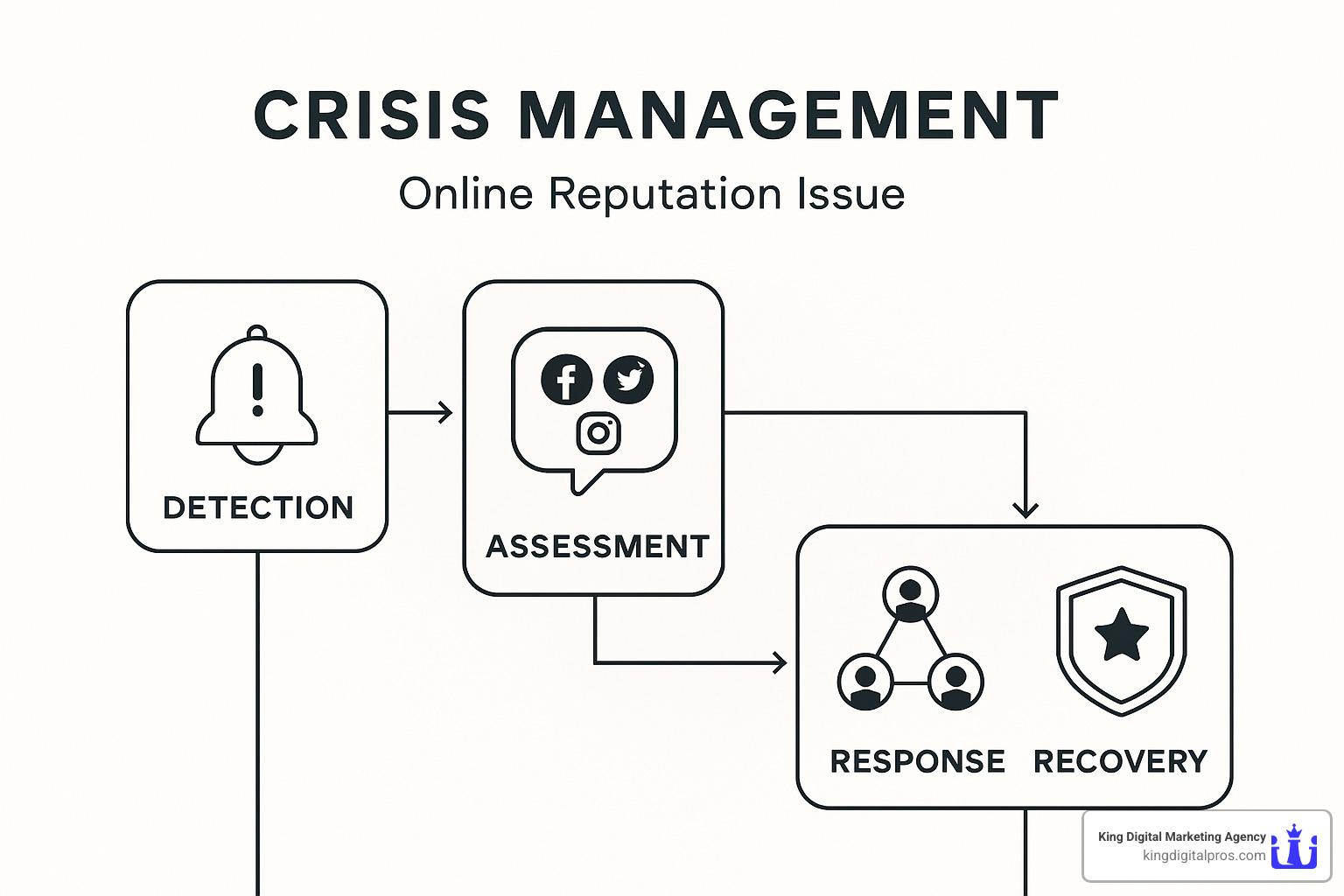
Nobody wants to face a reputation crisis, but having a solid playbook ready can make the difference between a minor hiccup and a business-threatening disaster.
The truth is, crisis situations reveal the strength of your effective online reputation management systems. When negative news breaks or angry customers take to social media, your response in those critical first hours shapes how the entire situation unfolds.
Crisis warning signs appear faster than you might expect. A sudden flood of negative reviews, a viral social media post criticizing your business, or unexpected news coverage can transform your quiet Tuesday into a reputation emergency.
Your response timeline becomes crucial during these moments. Within the first hour, you need to understand what’s happening and get your key team members involved. The next four hours are for developing your response strategy. Your first 24 hours determine whether you control the narrative or let it control you.
Negative Review Playbook
Handling negative reviews well can actually strengthen your reputation. I’ve watched businesses turn their harshest critics into loyal customers by responding thoughtfully and taking real action to fix problems.
Start with detective work before you write any public response. Check your internal records, talk to the team members involved, and understand exactly what happened.
The magic happens when you move conversations offline quickly. Serious complaints need personal attention, not public debates. Provide your direct phone number or email address and invite the customer to discuss the situation privately.
The follow-up step is where most businesses drop the ball. After resolving issues privately, update the public conversation to show other potential customers that you stand behind your work.
Social Media Firestorms & Proactive Reputation Building
Social media moves fast, but that speed can work for you if you’re prepared. Real-time monitoring during business hours helps you catch problems while they’re still manageable.
Building goodwill before you need it provides the best protection against reputation attacks. Share valuable, helpful content regularly that demonstrates your expertise and genuine care for customer success.
Community involvement creates a network of supporters who know your character firsthand. Local event sponsorships, charity partnerships, and community service work build relationships that extend beyond business transactions.
Your team members serve as your most authentic reputation ambassadors. Employee advocacy works because people trust recommendations from real individuals more than corporate messaging.
Frequently Asked Questions about Online Reputation Management
How long does reputation repair usually take?
This is probably the most common question I hear from business owners, and I understand why. When you’re dealing with negative reviews or search results, you want to know when the pain will end.
The honest answer? Effective online reputation management takes time, but the timeline depends on several factors. Most businesses see meaningful improvements within 6-12 months of consistent effort. However, if you’re dealing with serious reputation damage, you might be looking at 1-2 years for full recovery.
Here’s what affects your timeline: Severity matters most – a handful of bad reviews will recover much faster than a major crisis. Consistency accelerates progress – businesses that monitor and respond daily see results faster than those who check in weekly. Content volume makes a difference – the more high-quality, positive content you create, the quicker you’ll push down negative results.
The good news? You’ll often see some improvements within the first few months. New positive reviews, better response rates, and improved search results can start appearing relatively quickly once you implement a solid strategy.
Can I remove negative content from Google?
I wish I could tell you there’s a magic button to delete negative content, but the reality is more complicated. Google only removes content that violates their specific policies, and legitimate negative reviews or criticism usually don’t qualify for removal.
Google will consider removing content that contains personal information like social security numbers, fake reviews that clearly violate platform guidelines, copyrighted material used without permission, or content that violates legal requirements.
But here’s what works better than trying to remove content: suppression strategies. Instead of fighting to delete negative results, focus on creating so much positive content that the negative stuff gets buried on page two or three of search results.
The most effective approach involves optimizing your website and social profiles for better search rankings, encouraging satisfied customers to share positive reviews and testimonials, and developing a consistent content marketing strategy that showcases your expertise and customer success stories.
What KPIs prove my strategy is working?
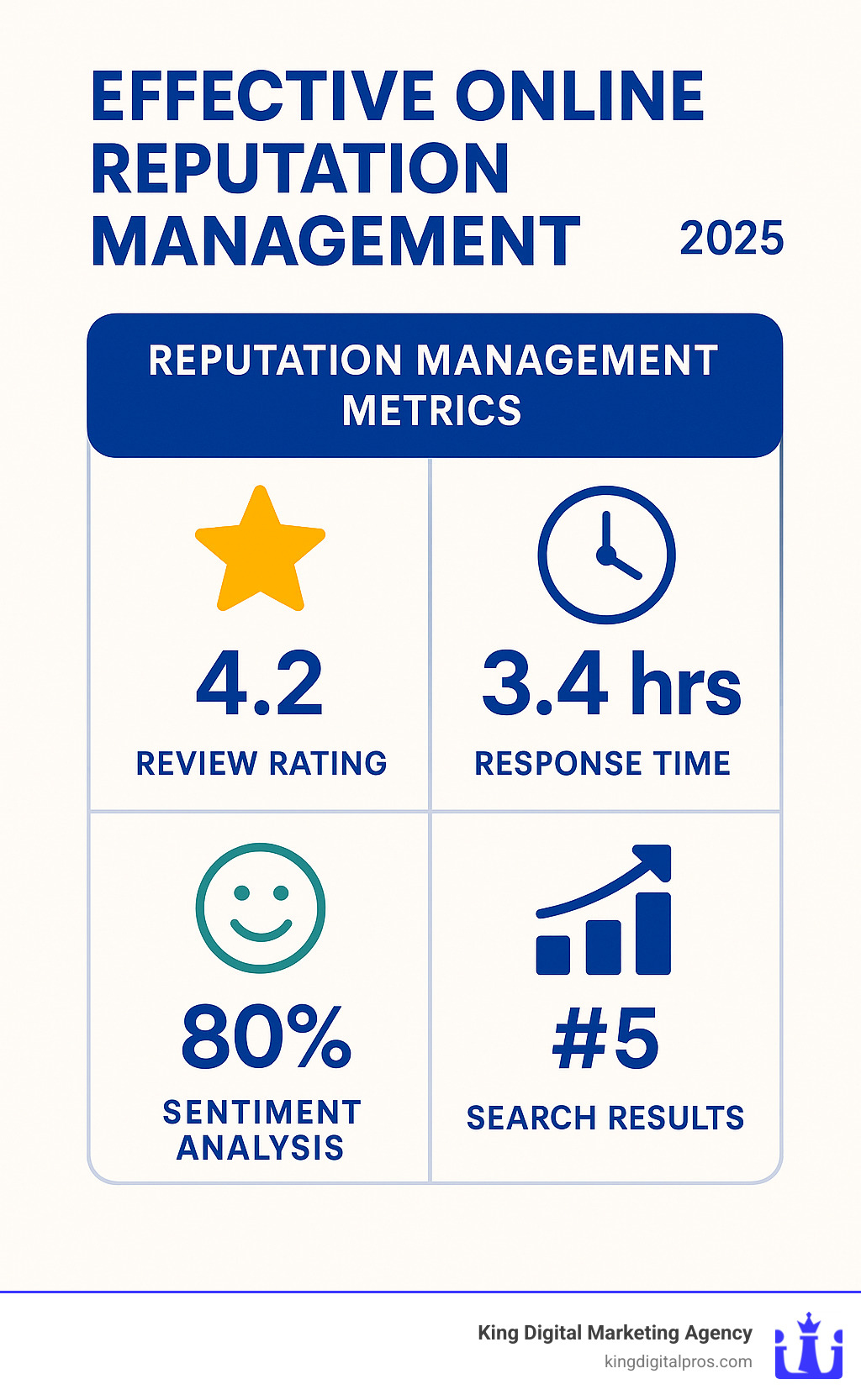
Measuring reputation management success isn’t about vanity metrics – you need numbers that actually connect to business results.
Review performance tells the most immediate story. Your average star rating across all platforms should steadily improve over time. Track the total number of reviews you receive monthly and measure your response rate to reviews (aim for 100%) and average response time (we target under 24 hours).
Search results reveal your long-term reputation health. Monitor where your website appears in branded searches – it should dominate the first page. Count how many positive results appear when someone searches your business name.
The metrics that matter most are business impact measurements. Watch your conversion rate from online searches – it should improve as your reputation strengthens. Monitor changes in customer acquisition costs and customer lifetime value.
For crisis management, measure time to detect issues, average resolution time for complaints, and the percentage of negative situations you successfully convert to positive outcomes.
The key is tracking these metrics monthly and looking for trends rather than daily fluctuations. According to research from BrightLocal, businesses that actively manage their online reputation see measurable improvements in customer trust and conversion rates over time.
Conclusion
Your journey through effective online reputation management brings us to a simple truth: your digital presence isn’t just part of your marketing strategy anymore – it’s the foundation of your entire business success. Every day you wait to take control of your online reputation is another day your competitors gain ground while potential customers form opinions about your business without your input.
The strategies we’ve explored together aren’t just theoretical concepts – they’re practical tools that work. Proactive reputation building always beats scrambling to fix problems after they explode. Consistent monitoring and genuine responses create trust that no amount of fancy advertising can buy. Authentic communication during both good times and challenging moments builds the kind of customer loyalty that sustains businesses for decades.
At King Digital Marketing Agency, we’ve watched local businesses completely transform their growth trajectory once they understood this fundamental truth. A plumbing company that went from 2.3 stars to 4.8 stars saw their lead volume triple. A restaurant that started responding to every review personally became the most recommended spot in their neighborhood. These aren’t lucky breaks – they’re the predictable results of strategic reputation management.
Your online reputation works 24 hours a day, seven days a week. It’s selling your services while you sleep, answering questions about your business during family dinners, and influencing decisions in boardrooms you’ll never see. The question isn’t whether this digital word-of-mouth matters – it’s whether you’re actively shaping those conversations or just hoping they go well.
The tools and techniques we’ve covered give you everything needed to take control. Start with the basics: set up your monitoring systems, respond to every review, and begin creating positive content that showcases your expertise. Build from there as you see results and gain confidence.
Reputation management isn’t about perfection – it’s about authentic engagement and continuous improvement. Your customers don’t expect you to be flawless; they expect you to care enough to listen, respond, and make things right when issues arise.
The businesses thriving in today’s digital marketplace understand that their reputation is their most valuable asset. They invest in it, protect it, and leverage it for sustainable growth. The businesses struggling are often those still treating their online presence as an afterthought.
For additional insights and professional support in implementing these strategies, the reputation management experts at Pros.com offer comprehensive resources that can accelerate your progress.
Your digital footprint is already shaping your business success. The only question is whether you’re directing that influence or leaving it to chance. Take control, stay consistent, and watch as your improved online reputation becomes the growth engine your business deserves.
