Why Your Online Business Presence Determines Your Success

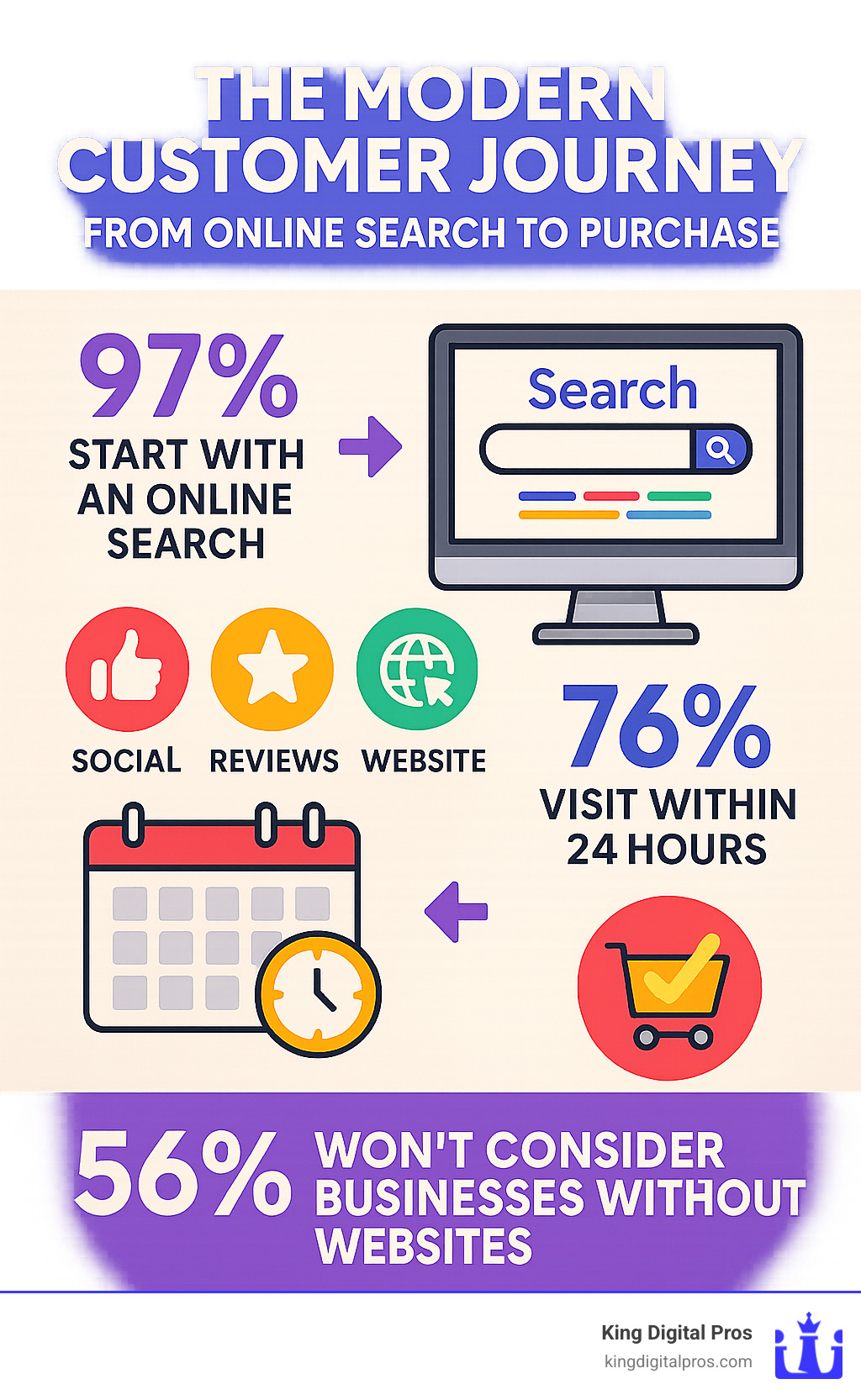
Improve online business presence isn’t just marketing jargon—it’s the difference between thriving and barely surviving in today’s digital marketplace. When 97% of consumers search online for local products and services, your digital footprint directly impacts your bottom line.
Quick ways to improve your online business presence:
• Optimize your website for mobile and search engines
• Claim and complete Google Business Profile and directory listings
• Create valuable content that answers customer questions
• Engage actively on social media platforms where your customers spend time
• Encourage and respond to customer reviews
• Use email marketing to nurture leads and retain customers
• Run targeted ads to reach new audiences
• Monitor your reputation across all online channels
The statistics tell a compelling story. 75% of consumers judge a company’s credibility based on website design alone. Meanwhile, businesses that blog regularly get 3.5x more traffic and 4.5x more leads than those that don’t.
But here’s what many business owners miss: your online presence includes everything customers can find about you—not just what you control. Third-party reviews, social media mentions, and directory listings all shape how potential customers perceive your business.
I’m Bernadette King, and I’ve helped hundreds of local businesses improve online business presence through strategic digital marketing that actually drives revenue. My approach focuses on practical, ROI-driven tactics that busy business owners can implement without getting overwhelmed by technical complexity.
What an Online Business Presence Is—and Why It Drives Revenue
Your online business presence is like having a digital storefront that never closes. While you’re sleeping, potential customers are finding your business, reading reviews, and deciding whether to choose you over the competition.
But it’s so much more than just a website. Your online presence includes every single place where customers can find information about your business on the internet. This means your website serves as home base, while your Google Business Profile puts you on the map—literally. Your social media profiles let customers see your personality, and online directories like Yelp and Bing ensure you’re findable everywhere people search.
Don’t forget about customer reviews (yes, even the ones that make you cringe a little), paid advertisements you run, and third-party mentions where other people talk about your business. All of these pieces work together to create the complete picture of who you are online.
Here’s the reality check: 97% of people start their search for products and services online. If you’re not showing up in those searches, you might as well be invisible. That’s not dramatic—it’s just math.
Your digital presence also builds legitimacy in ways that surprise many business owners. When 75% of consumers judge your trustworthiness based on your website design alone, you realize that your online appearance directly impacts your credibility. A professional, well-maintained digital presence signals that you’re a real business worth trusting.
Today’s customers don’t follow a straight line from findy to purchase. They might find you on Google, check your Facebook page, read reviews, visit your website, then call you three days later. This omnichannel footprint means being present everywhere that matters multiplies your chances of being chosen.
Trust building happens through consistency too. When customers see the same business information, hours, and phone number across all platforms, they feel confident you’re legitimate. But if they spot inconsistencies? 80% of consumers lose faith in businesses when they find conflicting online details.
Key Benefits for Every Business Type
Whether you’re running a small retail shop, professional service, or restaurant, enhancing your online business presence delivers measurable results across four key areas.
Brand awareness grows naturally when you show up consistently across multiple platforms. Customers start recognizing your business name, logo, and messaging, making you their go-to choice when they’re ready to buy.
Sales lift happens because more visibility creates more opportunities. When you appear in search results, social media feeds, and directory listings, you generate more clicks, phone calls, appointment bookings, and foot traffic.
Customer support becomes easier and more effective when you can answer questions, address concerns, and build relationships in real time through your online channels. Happy customers become repeat customers.
Data insights from your digital presence help you understand what’s working and what isn’t. You can track which marketing efforts bring the best return on investment and adjust your strategy accordingly.
Components You Must Control
To truly improve online business presence, focus your energy on the digital assets you can directly manage and optimize.
Your website acts as your digital headquarters—the place where customers go for detailed information, to make purchases, or to contact you. It needs to load quickly, look professional, and work perfectly on mobile devices.
Social media profiles give your business a voice and personality. They’re where you share updates, engage with customers, and build a community around your brand. Choose platforms where your customers actually spend time rather than trying to be everywhere at once.
Content creation through blog posts, videos, and helpful guides positions you as an expert while answering the questions your customers ask most often. This builds trust and helps you rank higher in search results.
Directory listings like Google Business Profile, Yelp, and Bing put your business information in front of people actively searching for what you offer. Keep these updated and complete for maximum impact.
Review management means actively encouraging satisfied customers to leave feedback and responding professionally to all reviews—both positive and negative. Your responses show future customers how you handle service.
Paid advertising through search engines and social media platforms helps you reach new audiences and stay visible even when your organic reach is limited. Smart ad spending can deliver excellent returns when done strategically.
Strategies to Improve Online Business Presence
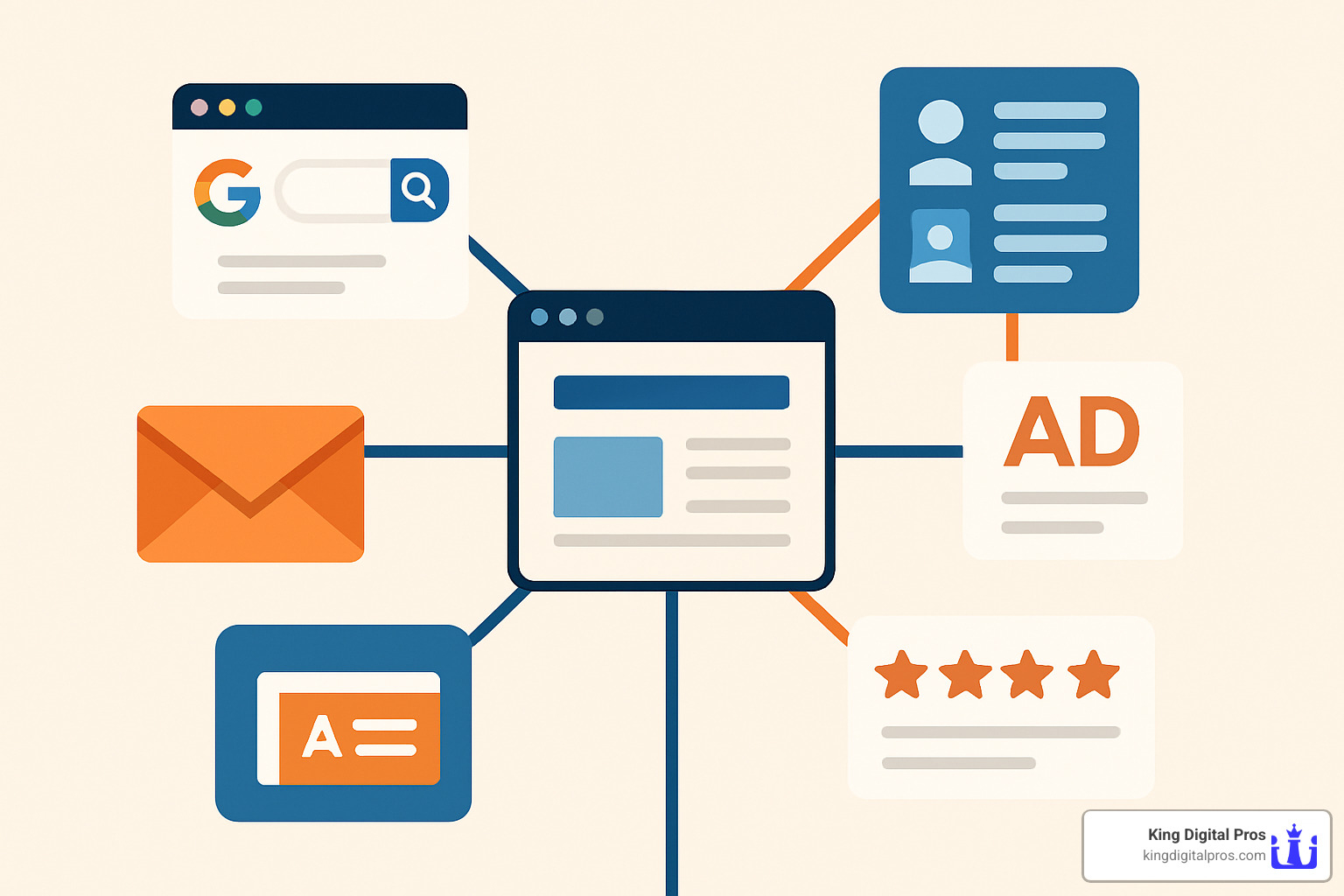
When it comes to building a powerful online presence, think marathon, not sprint. The businesses that succeed take a holistic roadmap approach—they don’t just throw up a website and hope for the best. Instead, they work on their website, search visibility, social proof, and customer engagement all at the same time.
The secret sauce? Taking a phased approach that lets you tackle one piece at a time without getting overwhelmed. Let me walk you through the strategies that actually move the needle for your business.
Build a Fast, Accessible, SEO-Friendly Website
Your website is your digital headquarters—the place where everything else points back to. But here’s the thing: just having a website isn’t enough anymore. It needs to work beautifully on phones, load lightning-fast, and make visitors feel confident about doing business with you.
Mobile-first design isn’t optional when over 60% of your traffic comes from smartphones. Your site needs to look and work perfectly on a tiny screen first, then scale up to desktop. Add SSL security (that little padlock in the browser) because it signals trust and helps your search rankings.
The user experience makes or breaks everything. Your visitors should find what they need in seconds, not minutes. Intuitive navigation, clear buttons that tell people what to do next, and fast load times under two seconds keep people from hitting the back button.
Google’s Core Web Vitals measure how quickly your site loads, how responsive it feels, and whether things jump around while loading. These technical factors directly impact where you show up in search results.
Statistic about 75% of consumers judging your credibility by your website design? That’s not vanity—that’s revenue. A professional-looking site builds trust before you even have a conversation.
For businesses ready to invest in their digital foundation, our SEO-Friendly Website Design service handles all the technical details while you focus on running your business.
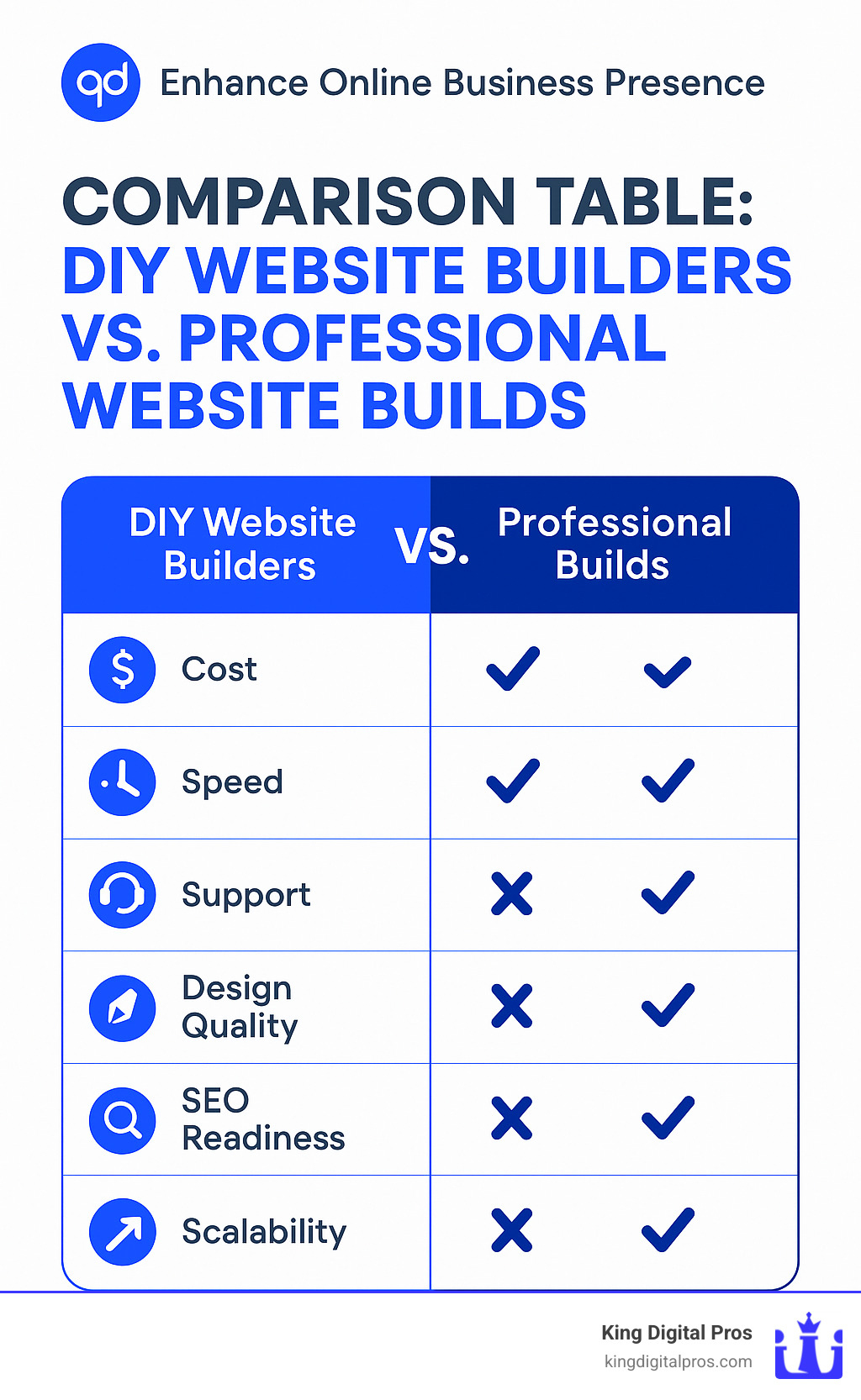
If budget’s tight, DIY builders like Wix and Squarespace can get you started. But when you’re ready to scale and seriously compete, hiring a professional usually pays for itself in better search rankings and more conversions.
Use SEO to Improve Online Business Presence
SEO is how you show up when customers search for what you offer. Here’s the opportunity: only 49% of small businesses invest in SEO, which means there’s a massive chance to leap ahead of your competition.
Keyword research forms the foundation—you need to know exactly what words and phrases your customers type into Google. Then comes on-page SEO, where you optimize your page titles, headers, descriptions, and images to match those searches.
Technical SEO fixes the behind-the-scenes issues that slow down your site or confuse search engines. Think broken links, slow loading images, and pages that don’t work on mobile.
Backlinks from reputable websites act like votes of confidence. When other businesses, local organizations, or industry publications link to your site, Google sees you as more trustworthy. You can earn these through guest posts, local partnerships, or sponsoring community events.
Schema markup helps Google understand exactly what your business offers, where you’re located, and what your hours are. This technical code can help you show up in those rich results with star ratings and business information.
For local businesses, local SEO optimization of your Google Business Profile and directory listings captures those crucial “near me” searches when people need your services right now.
Our SEO Services team handles the technical complexity while you focus on serving customers.
Leverage Social Media to Improve Online Business Presence
Social media is your business megaphone, but you don’t need to shout everywhere. Smart businesses pick one or two platforms where their customers actually spend time—Facebook for local businesses, Instagram for visual brands, LinkedIn for B2B services.
Audience targeting using platform insights helps you understand who’s following and engaging with your content. This data guides everything from posting times to content topics.
Storytelling transforms your business from just another option into a brand people remember. Share your origin story, behind-the-scenes moments, and customer success stories that make people feel connected to your mission.
Video content dominates social media because it generates 1,200% more shares than text and images combined. Even simple phone videos of your team at work or quick tips can build massive engagement.
Consistency in posting and responding to comments shows you’re active and engaged. People trust businesses that show up regularly, not just when they’re trying to sell something.
User-generated content turns your customers into your marketing team. When people post photos with your products or share their experience, it’s worth more than any ad you could buy.
The numbers tell the story: 91% of consumers visit a brand’s website after following them on social media, and 89% make a purchase. Social media bridges the gap between awareness and sales.
For easy management across platforms, Hootsuite lets you schedule posts and track engagement from one dashboard.
Master Online Directories & Reviews
Your Google Business Profile often creates the first impression of your business. Map listings and directories like Yelp, Bing, and Apple Maps are how customers find you and decide whether to trust you.
Claiming and completing your profile means filling out every single field—business hours, services, photos, descriptions. Empty fields signal that you don’t care about details.
NAP accuracy (Name, Address, Phone number) must be identical across every platform. Inconsistent information confuses customers and hurts your search rankings.
Regular photos and updates keep your profile fresh and engaging. Show your products, your team, your location, and any special events or seasonal offerings.
Proactive review requests from happy customers build your reputation. Don’t be shy—most satisfied customers are happy to help if you just ask at the right moment.
Responding to reviews shows you care about customer experience. Thank people for positive reviews and address negative ones professionally. Here’s why this matters: 80% of consumers lose trust when they see unanswered complaints.
Need expert help? Our Google Business Listing Help service optimizes your profiles, while our Reputation Management solutions protect and improve your online reputation.
Create Value-Packed Content & Email Journeys
Content marketing educates, inspires, and converts visitors into customers. Businesses that blog four times a week get 3.5x more traffic and 4.5x more leads than those that don’t.
Blog cadence matters less than consistency and value. Write about topics your customers actually care about—frequently asked questions, how-to guides, local event coverage, and industry insights.
Video shorts let you repurpose written content into engaging visual stories for YouTube, TikTok, and Facebook. Even simple talking-head videos build trust and personality.
Podcasts and infographics reach different learning styles. Some people prefer listening during commutes, while others want visual explanations they can save and share.
Email list building creates your most valuable marketing asset—direct access to interested prospects. Offer helpful resources, exclusive discounts, or insider tips in exchange for email addresses.
Email marketing reaches people where they actually pay attention. 99% of users check their inbox daily, making email one of the most reliable ways to nurture leads and retain customers.
Our Copywriting team creates content that educates your audience while driving business results.
Amplify With Paid Media & Conversion Tactics
Sometimes organic growth needs a boost. Paid advertising puts your business in front of customers immediately, even if you’re new or competing in a crowded market.
Search ads place you at the top of Google for high-intent searches when people are ready to buy. Social ads let you target precise demographics, interests, and behaviors on Facebook, Instagram, or LinkedIn.
Retargeting re-engages visitors who looked at your website but didn’t convert the first time. These warm prospects often convert at much higher rates than cold traffic.
Local Service Ads appear in “near me” searches with Google’s badge of credibility. These ads include customer reviews and direct booking options.
ROAS tracking (Return on Ad Spend) ensures your advertising investment generates profitable results, not just website visits.
Our PPC Management and Conversion Optimization services maximize every advertising dollar.
Quick-win ad formats that work for most businesses:
• Google Search Text Ads
• Facebook Lead Ads
• Instagram Stories Ads
• Google Local Service Ads
• YouTube Video Ads
The key is starting small, testing what works, then scaling the winners while cutting the losers.
Measure, Refine, and Scale Your Digital Footprint
Here’s the truth: if you’re not measuring your online presence, you’re basically throwing darts in the dark. I’ve seen too many business owners invest time and money into digital marketing, only to wonder why they’re not seeing results. The answer? They weren’t tracking the right things.
When you improve online business presence, you need to know what’s working and what’s not. Think of it like running a restaurant—you wouldn’t guess how many customers you served or what dishes were popular. You’d count, measure, and adjust your menu based on real data.
The good news is that digital marketing gives you incredible insights. You can see exactly where your visitors come from, what they do on your site, and which marketing efforts turn into actual customers. But you need the right KPIs (key performance indicators) to focus on what matters most.
Start with Google Analytics to track your website visitors, how long they stay, and which pages they find most interesting. Use PageSpeed Insights to make sure your site loads quickly—because nobody waits for slow websites anymore. Run A/B tests on your headlines and calls-to-action to see what gets people to pick up the phone or fill out your contact form.
Don’t forget about your reputation either. Keep monitoring your reviews and ratings across all platforms. One negative review that goes unanswered can undo weeks of good marketing work.
Our Lead Tracking Services take the guesswork out of measuring what’s actually driving real results for your business.
Essential Metrics & Tools
Let’s get specific about what you should be watching. Website traffic tells you if people are finding you, but dig deeper—where are they coming from? Are they staying long enough to actually read about your services?
Search rankings matter because moving up just one spot on Google can dramatically increase your clicks. Track your position for the keywords that bring in your best customers, not just the ones with the highest search volume.
Click-to-call actions are gold for local businesses. When someone searches for your service on their phone and calls you directly from the search results, that’s a hot lead. You want to see this number growing month over month.
Sentiment monitoring helps you stay ahead of reputation issues. Are people saying good things about you online? What’s the overall tone when your business gets mentioned? Sometimes you’ll find opportunities to improve your service just by listening to what customers are really saying.
Keep your directory accuracy in check too. If your phone number is wrong on Yelp but right on Google, you’re confusing potential customers and losing calls. Your conversion rates tell the ultimate story—how many website visitors actually become paying customers?
Google Alerts is a free tool that’ll notify you whenever your business gets mentioned online. Set it up once and you’ll never miss an important conversation about your brand.
Mobilize Your Team & Avoid Pitfalls
Your employees can be your secret weapon for building online presence. When your team shares your content and talks about your business online, you can reach 10x more people than you would on your own. It’s like having a marketing team that already knows and loves your business.
Get your staff involved in employee advocacy. Encourage them to share your blog posts, celebrate company wins, and show off the great work you do together. Just make sure everyone uses the same branding consistency—same logos, same messaging, same professional tone.
Training your team on how to respond to reviews and social media comments professionally is crucial. One poorly handled online interaction can damage relationships you’ve spent years building.
I’ve seen businesses make the same mistakes over and over again. Ignoring negative reviews doesn’t make them disappear—it makes them more prominent and tells future customers you don’t care. Inconsistent business information across platforms confuses both customers and search engines.
Don’t try to be everywhere at once either. Spreading yourself too thin on every social network means you won’t do any of them well. Pick the platforms where your customers actually spend time and focus your energy there.
Neglecting mobile optimization is still surprisingly common, even though most of your customers are searching on their phones. And here’s the biggest mistake of all: forgetting to measure and adjust your strategies. What worked last year might not work this year, and you’ll only know if you’re paying attention to the data.
Frequently Asked Questions about Enhancing Online Business Presence
How long does it take to see results?
The honest answer? Improve online business presence is like planting a garden—you’ll see some green shoots quickly, but the real harvest takes time.
Most businesses notice their first wins within 1–3 months. You might see your Google Business Profile climbing higher in map searches, fresh customer reviews rolling in, or your website starting to rank for local keywords. These early victories feel great and show you’re on the right track.
The bigger changes happen around the 6–12 month mark. That’s when the compounding effects really kick in. Your blog posts start ranking higher, bringing steady organic traffic. Your social media following grows into an engaged community. Most importantly, you’ll see consistent leads turning into real revenue growth.
Think of it this way: every piece of content you create, every review you earn, and every social media post you share builds on the last. It’s like compound interest for your business visibility.
Do I need to be on every social network?
Absolutely not! This might be the biggest mistake I see business owners make. They spread themselves thin trying to post on Facebook, Instagram, Twitter, LinkedIn, TikTok, and Pinterest—and end up doing a mediocre job everywhere.
Here’s what works better: pick 1–2 platforms where your customers actually spend time, then commit to being genuinely helpful and engaging there. A local restaurant might thrive on Instagram and Facebook, while a B2B consultant could focus entirely on LinkedIn.
The key is consistency and quality engagement. It’s much better to have meaningful conversations with your community on one platform than to post sporadically across five different networks. Your customers will notice the difference, and so will the algorithms that determine who sees your content.
What budget should I allocate to paid ads?
Start small and scale what works—that’s my golden rule for ad spending. I recommend beginning with 5–10% of your monthly revenue as a test budget. So if your business brings in $10,000 per month, try starting with $500–$1,000 in ads.
The magic happens when you track everything carefully. Run small tests on different ad formats and audiences, then double down on whatever delivers the best return on investment. You might find that Google Local Service Ads bring you qualified leads at $30 each, while Facebook ads cost $80 per lead. Guess where you’ll want to spend more?
Even modest budgets can deliver impressive results when managed wisely. I’ve seen local businesses generate thousands in revenue from just a few hundred dollars in well-targeted ads. The secret isn’t spending more—it’s spending smarter and measuring what actually drives customers through your door.
Conclusion
Building a strong online presence isn’t magic—it’s the result of smart planning, consistent effort, and staying flexible as your customers’ habits evolve. The businesses that thrive today are the ones that meet their customers where they already are: online, searching, comparing, and deciding.
Improve online business presence by following this proven roadmap. Start with a mobile-friendly website that loads fast and looks professional. Invest time in SEO and claim every local listing you can find. Create content that actually helps your customers solve problems. Show up authentically on social media and nurture relationships through email. Ask for reviews (and respond to them). Use targeted ads to reach new audiences. Then monitor everything, involve your team, and keep refining what works.
The beauty of this approach? You don’t have to do everything at once. Pick one or two strategies that feel manageable and build momentum from there. Small, consistent actions compound into big results over time.
At King Digital Marketing Agency, we’ve seen how the right digital strategy transforms businesses across New Mexico—from Albuquerque restaurants that now have lines out the door to Santa Fe service providers booked solid for months. We specialize in optimizing Google Business Profiles and local online visibility because we know that’s where most customers start their journey.
Ready to stop guessing and start growing? Learn more about our full-service solutions or reach out for a personalized strategy session. Your future customers are searching right now—let’s make sure they find you.