Small business geofencing: Unlock Local Growth 2025
Why Local Businesses Are Turning to Geofencing Marketing
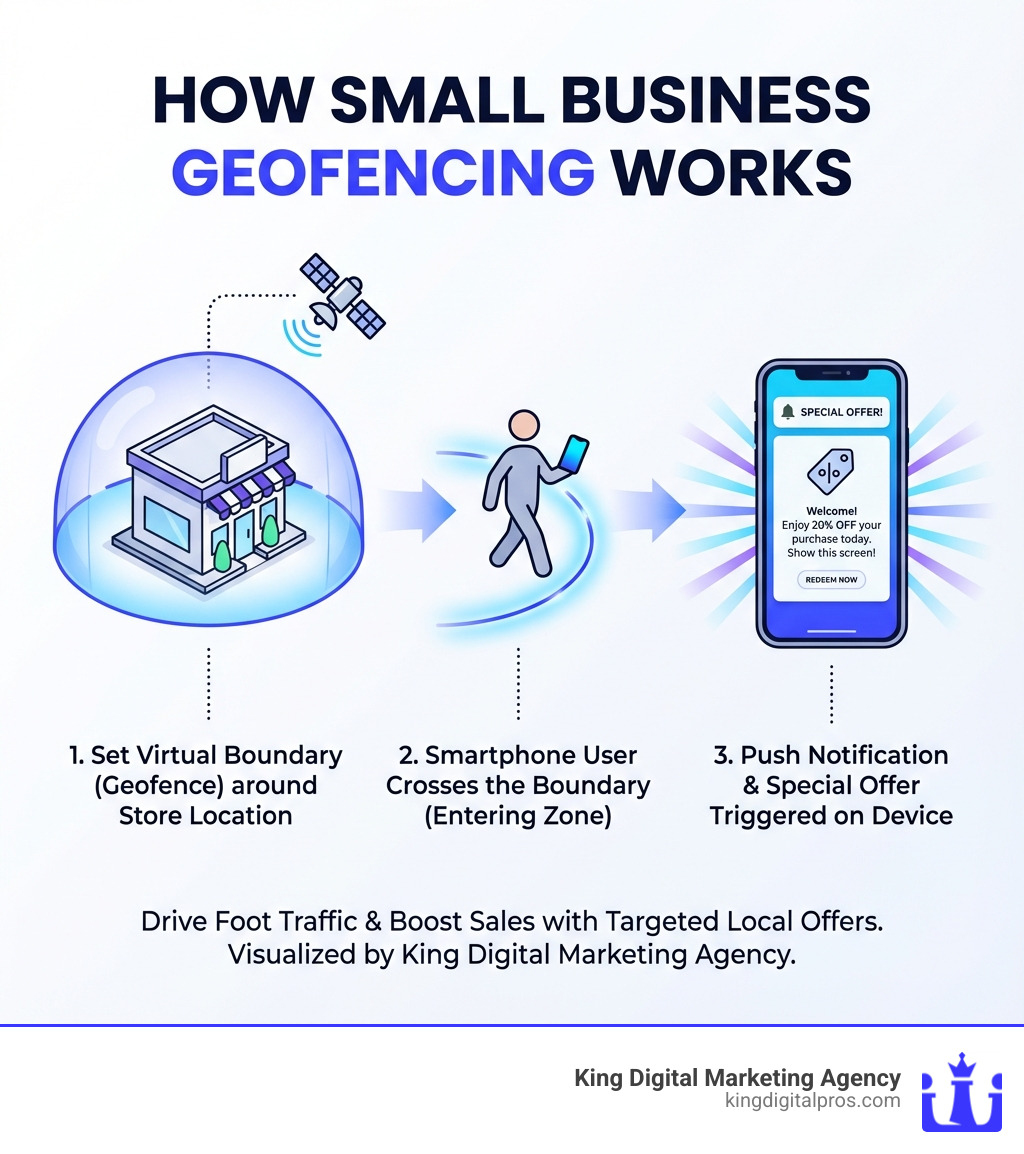
Small business geofencing is a location-based marketing strategy that uses GPS, Wi-Fi, or cellular data to create virtual boundaries around specific geographic areas-like your store, a competitor’s location, or a local event. When potential customers enter these zones with their smartphones, they receive targeted ads, push notifications, or special offers in real time.
Quick Overview: Small Business Geofencing Essentials
- What it is: Virtual fences around physical locations that trigger mobile ads or messages.
- How it works: GPS/Wi-Fi technology detects when users enter a defined area.
- Key benefit: Significantly higher conversion rates than non-targeted campaigns.
- Typical cost: $4-$15 per 1,000 impressions (CPM).
- Best for: Driving foot traffic, competing with nearby businesses, and personalizing offers.
- Success rate: Over half of shoppers visit a retailer after receiving a location-based message.
Imagine strolling past a coffee shop and your phone buzzes with a notification: “Welcome! Show this message for 20% off your latte-next 30 minutes only.” That’s geofencing in action.
As a local business owner, you’re competing for attention in a crowded market. While traditional advertising casts a wide net, geofencing targets customers exactly when and where they’re most likely to buy, maximizing your budget. This strategy is proven to drive foot traffic and deliver a higher return on investment than many traditional methods.
But the technology can feel complex and overwhelming. That’s where this guide comes in. We’ll walk you through the essentials of small business geofencing, from setup to success measurement, with practical, jargon-free steps.
I’m Bernadette King, founder of King Digital Marketing Agency. I’ve helped dozens of local businesses transform their digital presence with targeted strategies like geofencing. My approach is simple: focus on what drives real, measurable results-more foot traffic, more sales, and a better ROI on your marketing spend.
Explore more about Small business geofencing:
What is Geofencing and How Does It Work for Small Businesses?
At its core, geofencing creates a “virtual fence” around a real-world location. When a mobile device with location services enabled enters or exits this predefined area, it triggers a marketing action, like a push notification for a flash sale at your Albuquerque boutique or an ad for a lunch special at your Santa Fe restaurant.
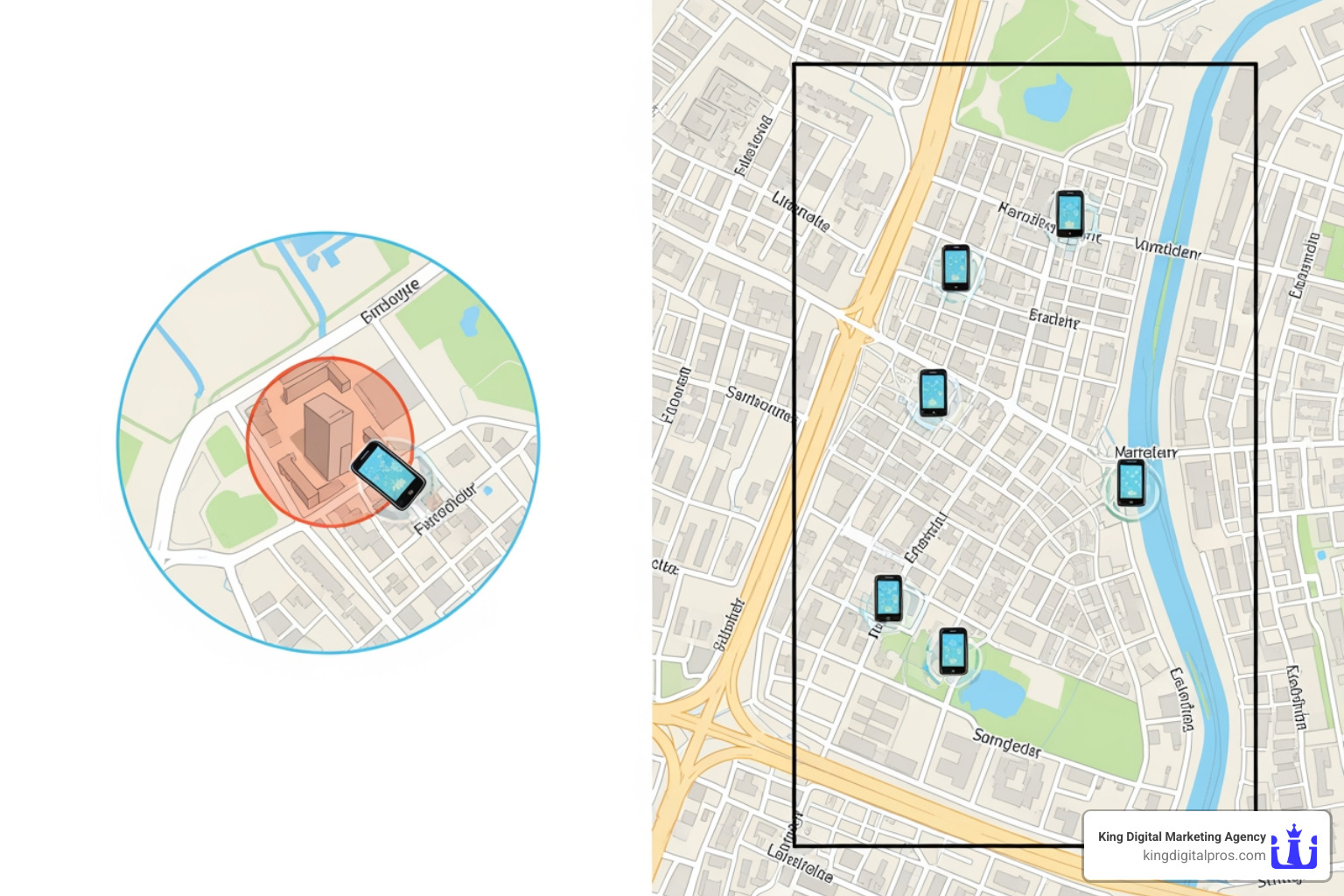
This technology relies on GPS, Wi-Fi, or cellular data to detect a user’s location. When a device crosses the geofence, the system delivers your targeted message in real time, connecting with customers when they are physically near your business. To dive deeper into the basics, check out our Geofencing Marketing Meaning Guide.
It’s important to distinguish geofencing from geotargeting. Geofencing uses a dynamic boundary to trigger an immediate action based on entry or exit. Geotargeting uses broader location data (like a city or zip code) to serve ads to a general audience without the real-time trigger, making geofencing far more precise and immediate.
The Technology Behind the Fence
The process starts by defining a specific radius or custom polygon shape on a map using GPS coordinates. This could be a circle around your Grants retail store or a custom shape covering a local event in Los Alamos.
For geofencing to work, users typically need an app with location services enabled and must grant consent-a vital step for privacy. Once permission is granted, the app monitors the device’s position. When it enters a geofence, your pre-programmed message is delivered. This data is usually collected anonymously, focusing on aggregate patterns rather than individual identification.
Geo-Conquesting: A Competitive Edge
A powerful strategy is “geo-conquesting,” which involves setting up geofences around your competitors. Imagine a customer waiting in line at a rival coffee shop in Corrales receives a notification from you offering “20% off any drink-skip the wait!”
This is a strategic way to offer a compelling alternative when a customer is actively seeking a product you provide. The famous Burger King “Whopper Detour” campaign, which geofenced McDonald’s locations to offer a 1-cent Whopper via their app, drove millions of downloads and boosted sales. For local businesses in Taos or Edgewood, this tactic helps you attract customers with a buying mindset and compete effectively with larger rivals.
Key Benefits of Using Geofencing for Local Marketing
Investing in geofencing directly impacts your bottom line by bringing more customers through your door, increasing sales, and optimizing your marketing budget. For attracting local clientele in New Mexico, it’s a game-changer. For a comprehensive guide, explore our Attract Local Customers Ultimate Guide.
Drive Foot Traffic and In-Store Sales
Geofencing excels at its primary goal: driving foot traffic. By delivering real-time offers to nearby customers, you create an immediate incentive to visit.
- Immediate Action: Proximity marketing generates impulse buys. A timely alert for a “Happy Hour” at your Santa Fe bar or a “Flash Sale” at your Albuquerque boutique can turn a passerby into a customer.
- Proven Results: Statistics confirm its effectiveness. 45% of retailers report increased foot traffic, with some seeing up to a 20% increase in in-store traffic after implementing geofencing.
- High Engagement: 53% of shoppers visited a retailer after receiving a location-based message, showing that consumers are receptive to relevant, local offers.
Achieve Higher ROI on Your Ad Spend
For small businesses, every marketing dollar counts. Geofencing is a highly efficient, targeted approach that reduces wasted ad spend.
- Better Conversions: Geofencing campaigns average a 20% higher conversion rate than non-targeted digital campaigns, meaning more people take your desired action.
- Superior ROI: A remarkable 80% of marketers say geo-targeted ads outperform traditional advertising in ROI. This means you get more value from every dollar spent.
- Manageable Costs: Campaigns typically run $4-$15 CPM (cost per 1,000 impressions), allowing you to control your budget by focusing on hyper-local zones. For a deeper dive, see our guide on Geofencing Advertising Cost.
Personalize the Customer Experience
Personalization is expected in today’s market. Geofencing delivers highly relevant messages that resonate with customers based on their immediate context.
- Contextual Relevance: An offer for your bakery as someone walks past is convenient and thoughtful. This level of relevance is powerful.
- Building Loyalty: Timely, useful offers improve the customer experience and build stronger relationships. More than 70% of consumers favor advertisements that are customized to their preferences.
- Action-Oriented: Personalization drives action. In fact, 3 out of 4 consumers took an action after receiving a message when approaching a specific location.
- Data Insights: Geofencing provides valuable data on consumer behavior, helping you identify patterns, understand peak times, and refine strategies for even greater personalization, which is crucial for your Local Business Reputation.
Setting Up Your First Small Business Geofencing Campaign
Ready to launch your first geofencing campaign? The process is straightforward with careful planning, strategic placement, and compelling messaging.
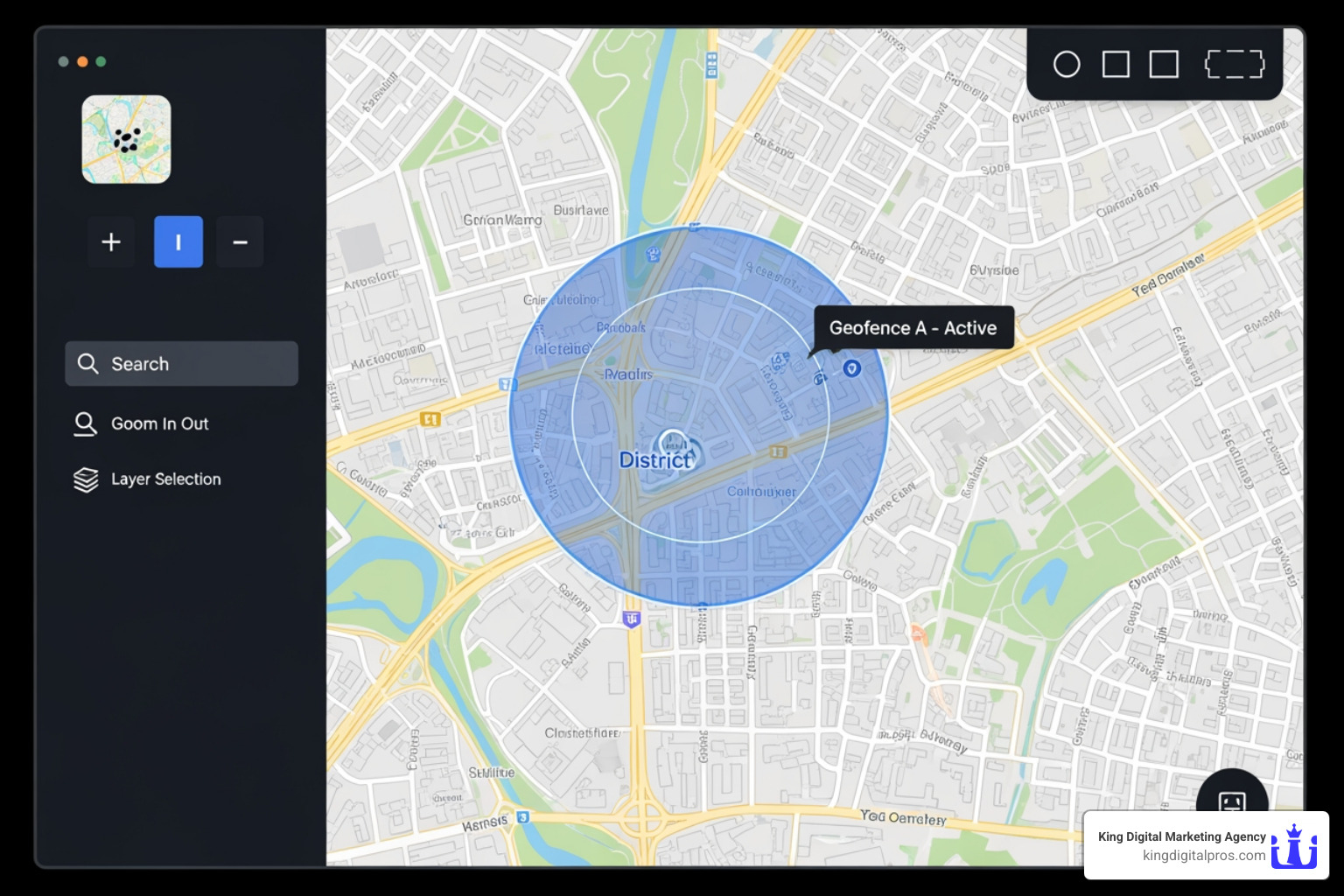
Follow these steps to get your campaign off the ground:
- Define Your Objectives: Start with a clear goal, whether it’s increasing foot traffic to your Rio Rancho shop or promoting an event in Santa Fe.
- Choose the Right Platform: Select a platform that fits your budget and needs, from Google Ads to specialized geofencing providers.
- Identify Your Target Audience: Define who you want to reach based on demographics, interests, and behaviors, such as tourists in Taos or local families in Edgewood.
- Define Your Geofence Locations: Pinpoint the exact areas where your target audience is likely to be.
- Craft Compelling Messages: Create an irresistible offer and message to capture attention.
- Set Your Budget: Determine your campaign spend and duration.
- Launch and Monitor: Launch your campaign and closely track its performance.
For more on reaching local customers, see our Local PPC Advertising Complete Guide.
Best Practices for Defining Your Geofence
The success of your campaign hinges on where you draw your virtual boundaries.
- The 4-5 Minute Rule: Set your geofence to a 4-5 minute walk or drive from your business. This targets people who can act immediately, preserving the offer’s urgency, which is key in walkable areas like downtown Santa Fe.
- Strategic Size and Shape: Use custom polygon shapes for precision, such as encompassing a shopping mall, a park in Grants, or a specific city block.
- Targeting Event Venues: Geofence local events like concerts, farmers’ markets, or festivals in Los Alamos to target a captive audience with relevant offers.
- Complementary Businesses: Target customers near related businesses. A bike shop could geofence nearby trails, while a spa in Corrales could target a local gym.
- A/B Testing Locations: Experiment with different geofence locations and sizes to see which ones yield the best results.
Creating Compelling Offers and Ad Copy
Your ad copy and offer are critical for grabbing attention and driving action.
- Strong Call-to-Action (CTA): Be direct. Use clear instructions like, “Show this message for 15% off” or “Visit us now for a free consultation.”
- Sense of Urgency: Geofencing thrives on immediacy. Use phrases like “Limited-time offer” or “Expires today” to encourage immediate visits.
- Clear Value Proposition: Clearly state the benefit. Whether it’s a discount, a freebie, or a solution to a problem, make it obvious why they should care.
- Concise and Engaging: Keep messages brief, punchy, and visually appealing for small mobile screens.
- Local Relevance: Tailor your message to the location. An offer for refreshing drinks is more effective if you’re targeting people near a park in the East Mountains.
Measuring Success and Integrating Geofencing with Other Strategies
To maximize impact, you must track performance and integrate geofencing with your broader marketing efforts. This data helps refine your strategy, optimize spending, and ensure the best possible ROI. For a holistic view, explore our Local Marketing Strategy Complete Guide.
Key Metrics to Track for Small Business Geofencing
We track several key performance indicators (KPIs) to gauge effectiveness:
- Impressions: The number of times your ad was displayed in the geofenced area.
- Click-Through Rate (CTR): The percentage of people who clicked your ad after seeing it. A high CTR indicates a compelling offer.
- Store Visits (Walk-Through Rate): The number of people who physically visit your store after seeing an ad. Many platforms offer attribution models to track this key metric.
- Cost Per Visit (CPV): The average cost to bring one person into your store via the campaign.
- Conversion Rate: The percentage of visitors who made a purchase or completed a desired action.
- Return on Ad Spend (ROAS): The total revenue generated for every dollar spent on the campaign, indicating true profitability.
Continuously monitoring these metrics allows for data-driven adjustments to optimize campaigns in Albuquerque, Santa Fe, and beyond.
Integrating Geofencing with Your Marketing Mix
Geofencing is most powerful when integrated with your other marketing channels.
- Combining with Email and SMS: Send a follow-up email or SMS to users who entered your geofence but didn’t convert. For example, a customer who passed your Rio Rancho store could receive an extended discount the next day.
- Social Media Ad Integration: Use geofencing data to create custom audiences on platforms like Facebook and Instagram, retargeting them with specific ads to amplify your message.
- Aligning with Local SEO Best Practices: Increased foot traffic from geofencing can signal to search engines that your business is popular, potentially boosting your local rankings. Our Local SEO Best Practices guide offers more insights.
- Retargeting Audiences: Retarget users who entered a geofence across various websites and apps to keep your brand top-of-mind and increase the likelihood of a future conversion.
A cohesive marketing ecosystem makes your geofencing campaigns more potent, driving consistent growth.
Compliance, Pitfalls, and the Future of Geofencing
Using small business geofencing comes with responsibilities. Understanding data privacy, emerging regulations, and common pitfalls is key to running effective and ethical campaigns.
Navigating Data Privacy and Compliance
Customer trust is paramount. Privacy must be at the forefront of any location-based marketing strategy.
- User Consent (Opt-In): This is non-negotiable. Users must explicitly agree to share their location and receive notifications, typically managed via an app or third-party platform. Guidance from organizations like the Federal Trade Commission can help you shape clear disclosures and consent flows.
- GDPR & CCPA Principles: Adhering to the principles of major data protection regulations like the EU’s GDPR and California’s CCPA is a best practice, emphasizing transparency, data minimization, and giving users control over their information.
- Transparency: Clearly communicate why you need location data and how it benefits the customer (e.g., “Allow location services for exclusive nearby offers!”). Plain-language privacy policies and easy opt-out options build confidence.
- State-Specific Laws: Be aware that privacy regulations can vary by state, with some restrictions on geofencing near sensitive locations like healthcare facilities. It’s crucial to stay informed; you can Discover geofencing laws by state here.
- Anonymized and Aggregated Data: Most geofencing data is aggregated and anonymized, focusing on trends rather than identifying individuals. Work with vendors that clearly document how they hash or anonymize device identifiers and limit data retention.
- Public Perception: Respecting privacy builds goodwill. With many consumers expressing concern about how their data is used, ethical handling is as important as legal compliance. Aligning with trusted best practices from sources like the International Association of Privacy Professionals can strengthen your reputation.
Common Pitfalls to Avoid
Avoid these common traps to ensure your campaign’s success:
- Fences Too Large: Overly large geofences dilute your message and waste ad spend. Stick to the 4-5 minute rule for maximum impact, especially in dense areas like downtown Albuquerque.
- Irrelevant Offers: Your offer must be highly relevant to the location and the user’s likely needs. A tire shop discount sent to someone near a Santa Fe bakery is just noise.
- Poor Timing: Time your messages appropriately. A lunch special notification sent at 9 PM is ineffective.
- Excessive Notifications: Bombarding users with alerts is intrusive and will cause them to opt out. Less is more.
- Not Tracking Results: The biggest mistake is failing to track KPIs. Without data on impressions, clicks, and conversions, you’re flying blind.
Looking Ahead: The Future of Geofencing
Geofencing is evolving rapidly as new technologies roll out.
- AI-Powered Optimization: Machine learning is increasingly used to analyze location data and engagement patterns, helping platforms automatically refine geofence sizes, timing, and messaging to improve performance.
- Augmented Reality (AR) Experiences: As AR tools become more common in everyday apps, geofences can trigger immersive experiences such as interactive store tours, in-store treasure hunts, or AR coupons that appear when a user points their phone at a storefront.
- Omnichannel Attribution: Better integration between online and offline data will make it easier to see how geofencing influences not only in-store sales, but also phone calls, form fills, and repeat visits.
Staying informed about these developments allows your small business to adapt early, maintain compliance, and keep your small business geofencing campaigns both effective and customer-friendly.
Frequently Asked Questions about Small Business Geofencing
Here are answers to common questions we receive from New Mexico business owners about small business geofencing.
What industries benefit most from geofencing?
Geofencing is versatile and benefits most businesses that rely on foot traffic or local engagement, including:
- Retail: Boutiques in Corrales or Taos can announce flash sales.
- Restaurants & Cafes: Eateries in Albuquerque or Rio Rancho can promote daily specials and happy hours.
- Automotive: Car dealerships in Santa Fe can target competitor lots, while service centers in Grants can send maintenance reminders.
- Real Estate: Agents can notify buyers about open houses in specific Edgewood or Sandia Park neighborhoods.
- Event Management: Promoters can offer deals for concerts or festivals in Los Alamos.
- Service-Based Businesses: Tradespeople can target specific commercial areas or neighborhoods with service offers.
Do I need a mobile app to use geofencing?
No, a dedicated app isn’t strictly required, though it offers the most control. The main options are:
- Your Own App: The most powerful method for delivering personalized notifications and building direct engagement.
- Third-Party Apps: Run ads through a network of other apps whose users have opted into location sharing.
- SMS Marketing: Trigger text messages to opted-in subscribers when they enter a geofence.
While an app is a strong asset for personalization, effective campaigns can be run without one.
Is geofencing too expensive for a small business?
No, geofencing is surprisingly cost-effective. Campaigns are typically priced on a CPM (cost per 1,000 impressions) model, ranging from $4-$15 CPM. You have full control over your budget and can start with a small, hyper-local campaign in a place like Cedar Crest to test the results. Given that its ROI often outperforms traditional ads, it’s a smart investment that targets only genuinely interested and nearby customers.
Conclusion
Small business geofencing is a present-day powerhouse for local businesses in a mobile-first world. It offers unparalleled precision to drive foot traffic to your Santa Fe store or attract customers from competitors in Albuquerque.
The accessibility of geofencing levels the playing field, allowing small businesses to reach ideal customers at the perfect moment. With the right strategy, you can compel them to choose your business over the competition.
At King Digital Marketing Agency, we specialize in empowering local businesses across New Mexico, from Rio Rancho to Taos, to master these cutting-edge digital strategies. Our expertise in optimizing Google Business Profiles and leveraging advanced tools ensures your business stands out.
Don’t let this opportunity pass you by. Take the next step to master location-based marketing with our Geofencing Software guide.
