
YouTube SEO 101: Ultimate Guide
What is YouTube SEO and Why Does It Matter?
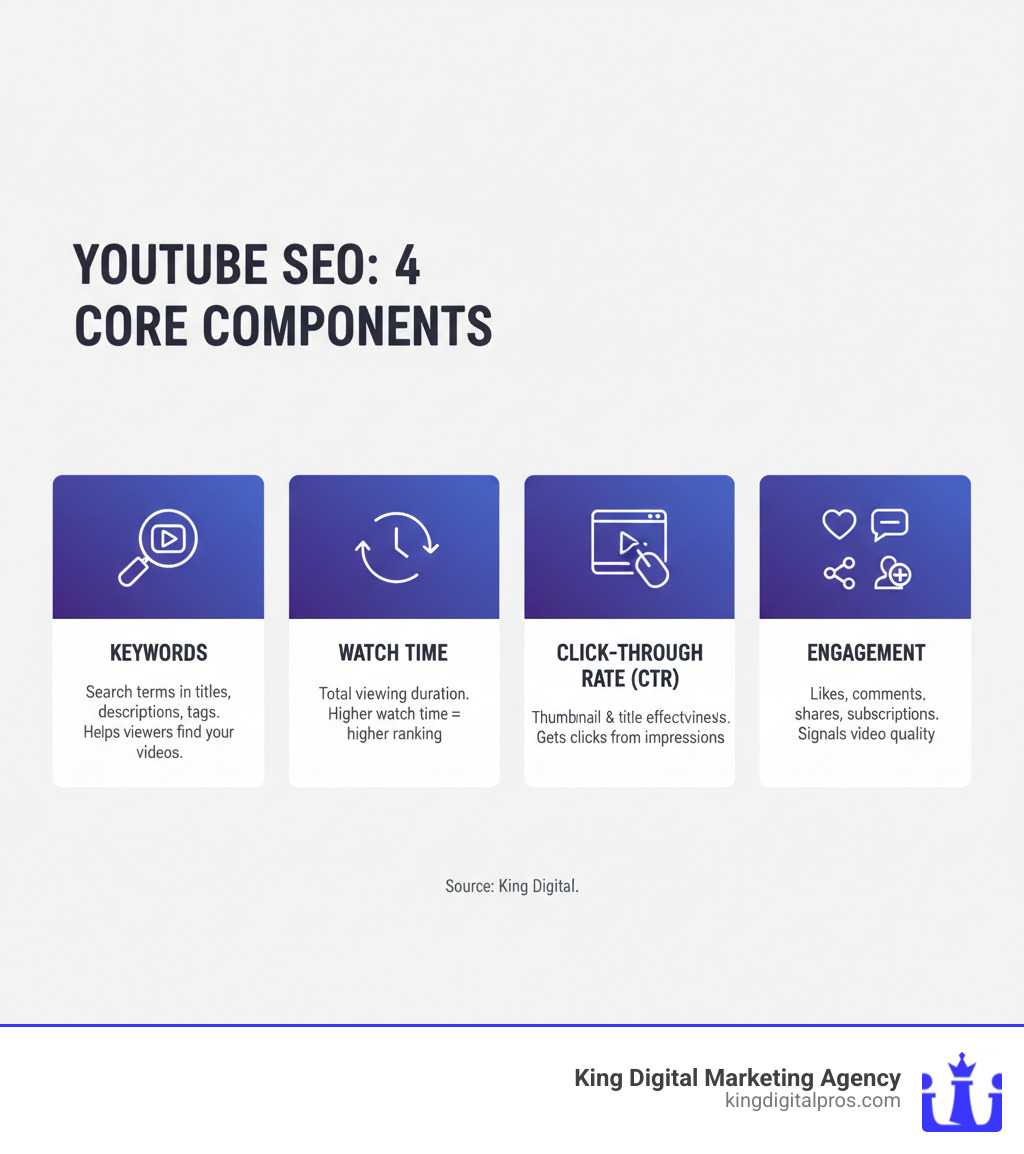
YouTube SEO is the process of optimizing your videos and channel to rank higher in YouTube’s search results and recommendations. The core components include:
- Keywords – Using relevant search terms in titles, descriptions, and tags.
- Watch Time – How long viewers stay engaged with your content.
- Click-Through Rate (CTR) – The percentage of people who click your video after seeing it.
- Engagement – Likes, comments, shares, and subscriptions your video generates.
With 2.7 billion users, YouTube is the world’s second-largest search engine. Without proper optimization, your content simply gets lost in the noise.
Why should local business owners care? Because YouTube videos don’t just rank on YouTube-they also appear in Google search results. This means optimizing your videos can boost your visibility on both platforms, helping you attract more customers without a huge ad spend.
The good news? YouTube SEO isn’t rocket science. It’s about understanding what YouTube’s algorithm wants (engaged viewers) and delivering that through strategic optimization.
I’m Bernadette King, founder of King Digital, and I’ve spent years helping local businesses grow online. Throughout this guide, I’ll walk you through proven YouTube SEO tactics that work for busy business owners.
Understanding the YouTube Algorithm in 2025

YouTube’s recommendation engine is responsible for about 70% of what people watch. Your YouTube SEO strategy must appeal to both search queries and this powerful recommendation system.
The algorithm has two main goals: helping people find what they’re searching for and suggesting videos they’ll love. In 2025, it’s better at this than ever.
Key Ranking Factors
Here’s what makes the algorithm feature your video:
-
Watch time: This is a top priority. The longer your videos keep people on the YouTube platform, the more YouTube will trust and promote your content.
-
Audience retention: This measures the percentage of your video people watch. High retention signals engaging content, while early drop-offs are a red flag to the algorithm.
-
Click-through rate (CTR): This is the percentage of people who click your video after seeing it. A strong CTR proves your thumbnail and title are compelling and accurately represent your content.
-
Engagement signals: Likes, comments, shares, and subscriptions tell YouTube that viewers are actively connecting with your video, not just passively watching. According to YouTube Help, these signals help the algorithm understand viewer sentiment.
-
Relevance: This is how well your video’s title, description, tags, and actual content match a viewer’s search query.
In 2025, advanced AI has transformed how YouTube understands content. The platform now analyzes your video’s audio and visuals to understand its true context and even detect misleading clickbait. This sophistication means your videos can be cited in Google’s AI Overviews, helping you improve search ranking across multiple platforms.
The bottom line: Create authentic, valuable content that genuinely helps your audience. The 2025 algorithm rewards creators who deliver on their promises and keep viewers engaged.
The Core of Your YouTube SEO Strategy: From Keywords to Content
Effective YouTube Keyword Research
If nobody can find your video, it doesn’t matter how great it is. YouTube SEO starts with keyword research-finding the exact terms your audience uses.
-
Use YouTube’s Search Bar: Start typing a topic and see what YouTube’s autocomplete suggests. These are popular, real searches that can be great long-tail keywords.
-
Analyze Competitors: Study successful channels in your niche. See what keywords they use in their titles and which topics get the most views to understand what your audience wants.
-
Explore the YouTube Studio Research Tab: This built-in tool shows you what your audience is searching for and highlights content gaps-topics with high search interest but low video availability.
-
Spot Trends with Google Trends: Set Google Trends to “YouTube Search” to find trending topics before they peak, allowing you to create timely content.
-
Target Long-Tail Keywords: Instead of a broad term like “SEO tips,” target a specific phrase like “SEO tips for small business owners.” The audience is smaller but more qualified, and you’ll have a better chance to rank.
-
Understand Search Intent: Does the searcher want a definition, a tutorial, or a service? Your video must deliver exactly what they expect.
On-Page Video Optimization: Signaling Your Content’s Relevance
Once you have your keywords, you need to place them strategically to tell the algorithm what your video is about.
-
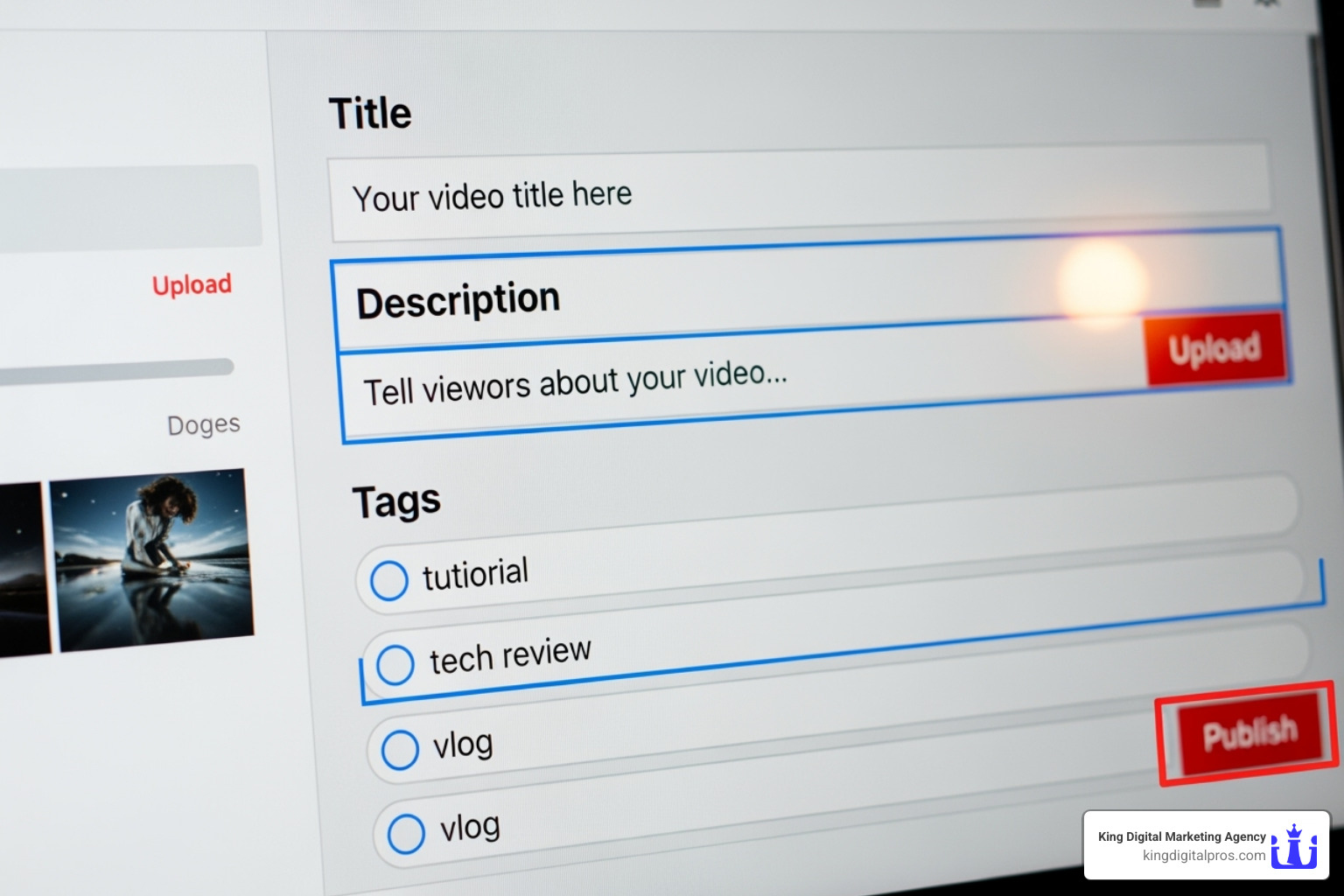
Video File Name: Before uploading, rename your file to include your keyword (e.g., youtube-seo-tips-for-beginners.mp4).
-
Video Title: Your title is your first impression. Place your primary keyword near the beginning and keep it under 60 characters. Make it engaging with numbers or questions, but ensure it’s accurate.
-
Description: The first 1-2 sentences should include your primary keyword and hook the viewer. Use the rest of the 5,000 characters to provide a detailed summary with related keywords.
-
Timestamps: Break your video into chapters with descriptive, keyword-rich titles. This helps viewers steer and helps YouTube understand your content’s structure.
-
Tags: While YouTube Help says tags play a “minimal role,” they can help with misspellings and context. Use your primary keyword first, then 5-12 related terms.
-
Closed Captions (SRT Files): Uploading your own accurate transcript makes every word in your video searchable. It also improves accessibility and can boost viewing time by 38%, according to a 3Play Media study.
Boosting Clicks and Watch Time
Optimization gets you seen; a great thumbnail and content get you watched.
-
Custom Thumbnails: Your thumbnail is your billboard. 90% of top-performing videos use custom thumbnails. Create a bright, high-contrast image (1280×720 pixels) with clear text that accurately represents your video. A solid click-through rate is between 2% and 10%.
-
The Hook: You have about 15 seconds to prove your video is worth watching. Start with a strong hook that gets straight to the value proposition.
-
Engaging Content: A well-paced, valuable video shot on a smartphone will always outperform a boring, high-production one. Video length should serve the content; don’t add fluff.
-
Cards and End Screens: Use cards to link to related content during your video. Use end screens in the final 5-20 seconds to suggest other videos and encourage subscriptions.
-
Encourage Engagement: Ask for likes, comments, and shares. Pose questions to spark discussion in the comments. This holistic approach is how you improve your Digital Marketing Conversion Rate on the platform.
Advanced Tactics and Channel-Level Optimization
Optimizing individual videos is crucial, but a well-organized channel signals professionalism and authority to YouTube, making it more likely to recommend your content.
Optimizing Your Entire YouTube Channel for SEO
Treat your channel like a business storefront-it should be organized and easy to steer.
-
Channel Keywords: In your YouTube Studio settings, add broad terms that define your channel’s focus (e.g., “baking tips,” “cake decorating”).
-
About Page: This is a powerful, often-neglected SEO tool. Write a clear, keyword-rich description of what your channel offers and who it’s for. Link to your website and social profiles.
-
Consistent Branding: Use professional banner art and a recognizable profile picture. A consistent brand builds trust and recognition.
-
Channel Trailer: Create a short (30-60 second) trailer that showcases your best content and gives new visitors a compelling reason to subscribe.
-
Playlists: Group related videos into playlists with keyword-optimized titles and descriptions. This encourages binge-watching, keeps viewers on your channel longer, and helps YouTube understand your expertise. This is similar to how SEO Friendly Website Design organizes a site for findability.
A Quick Guide to YouTube Shorts SEO
With 152 million monthly users in the US, Shorts are a massive opportunity you can’t ignore.
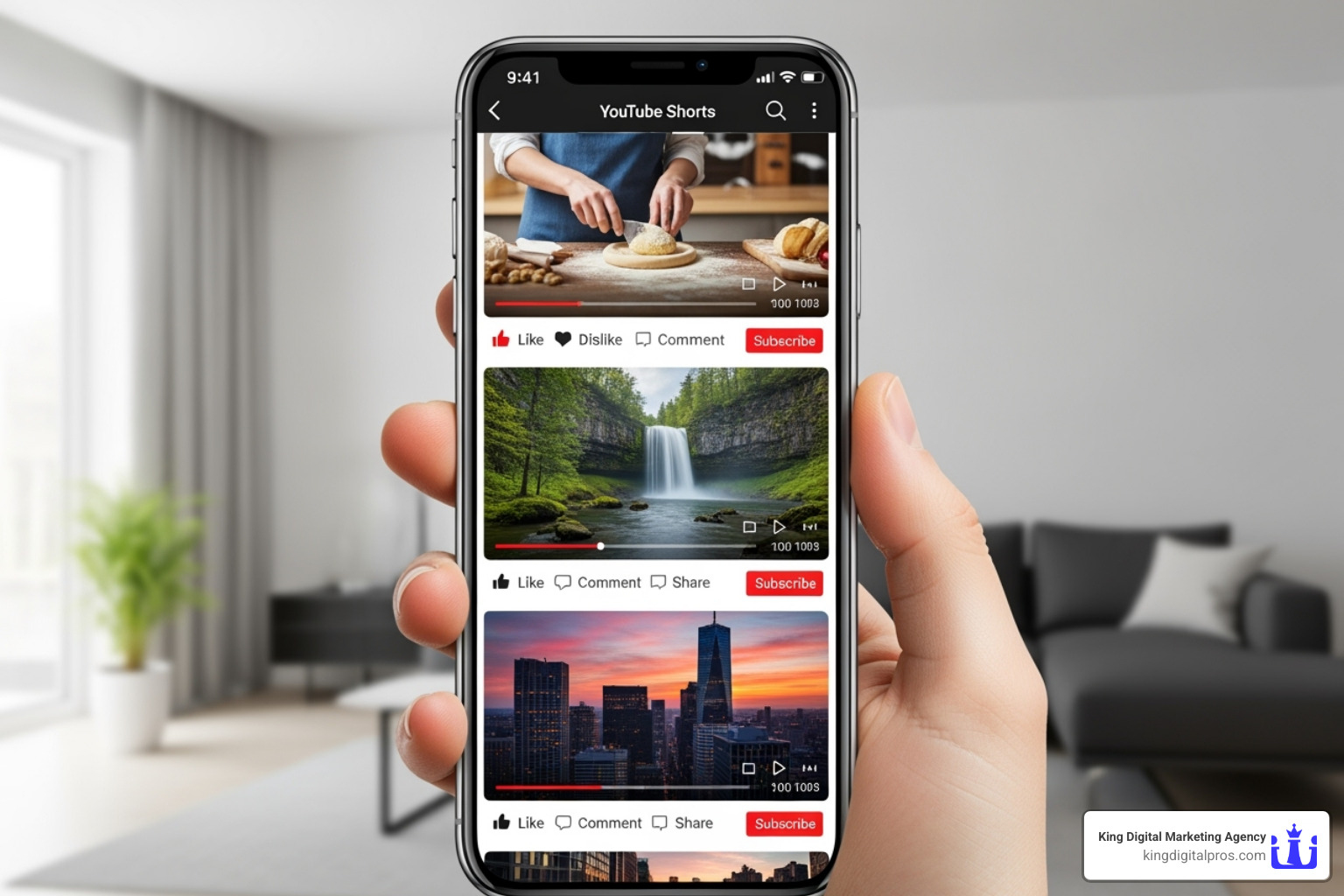
- Format: Always shoot in vertical (9:16 aspect ratio).
- Hook: Grab attention within the first three seconds. Get straight to the point.
- Trending Audio: Using popular sounds can dramatically boost your visibility in the Shorts feed.
- Metadata: Write a keyword-optimized title and a brief description. Use 2-3 relevant hashtags.
- Strategy: Repurpose snippets from your longer videos into Shorts to drive traffic to your full-length content.
Common YouTube SEO Mistakes to Avoid
- Keyword Stuffing: Don’t cram keywords unnaturally. It looks spammy to both viewers and the algorithm.
- Skipping Metadata: Always fill out your description and tags to give YouTube crucial context.
- Misleading Clickbait: A high bounce rate from a misleading title or thumbnail will destroy your rankings.
- Using Auto-Generated Thumbnails: Always create a compelling custom thumbnail. It’s critical for CTR.
- Not Saying Your Keyword: YouTube’s AI transcribes your audio. Speaking your target keyword reinforces its relevance.
- Ignoring Analytics: Use your data to understand what’s working and refine your strategy.
- Inconsistent Publishing: Stick to a regular schedule to build audience expectations and signal reliability.
- Neglecting Community Engagement: Respond to comments to foster discussion. Engagement is a key ranking signal.
Measuring, Promoting, and Scaling Your Success
Optimizing your content is just the start. To succeed with YouTube SEO, you must analyze performance, promote your videos, and refine your strategy based on data.
Using YouTube Analytics to Refine Your Strategy
Think of YouTube Analytics as your performance coach. To access it, go to the Analytics tab in YouTube Studio.
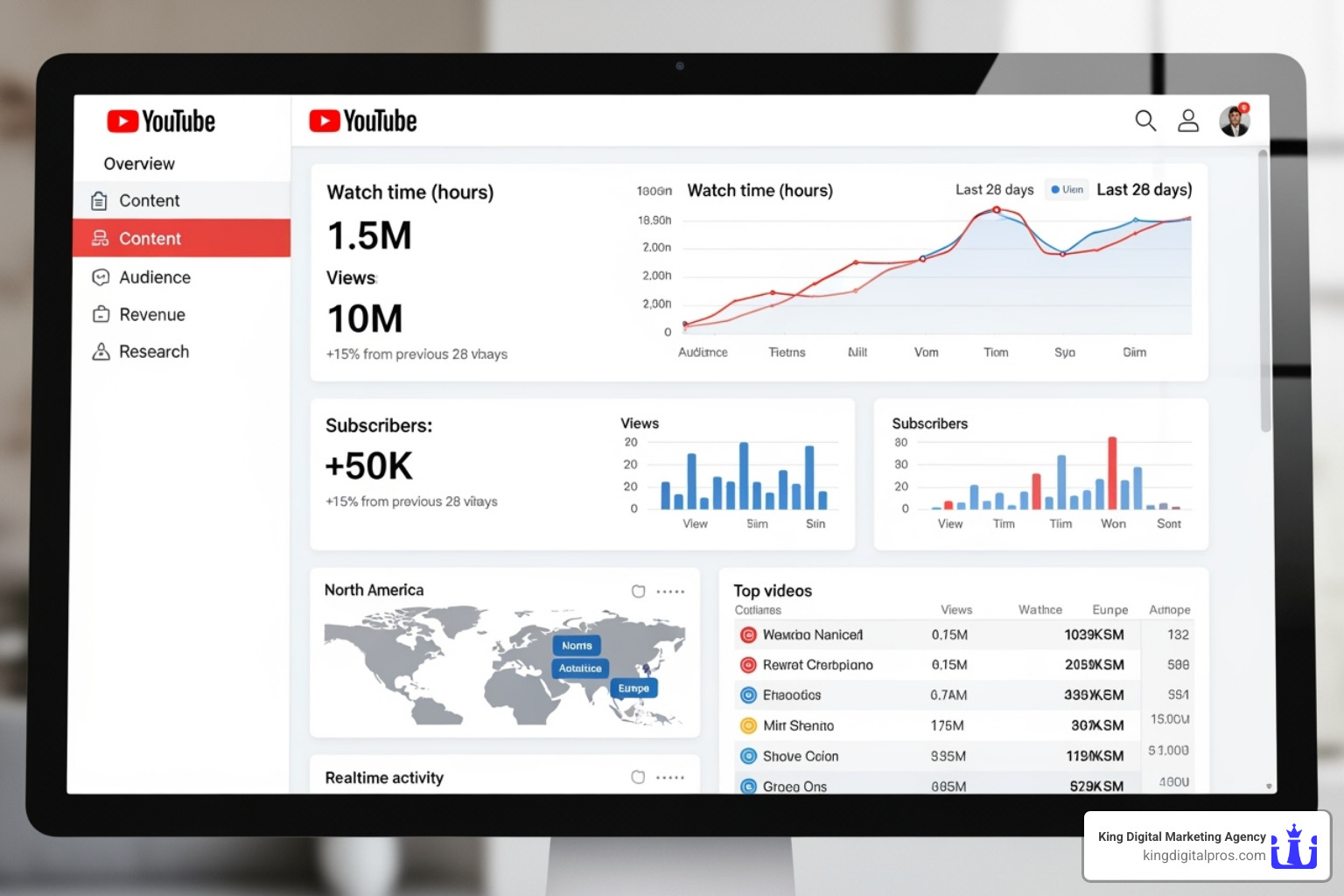
Here are the key metrics to watch:
- Views, Watch Time, and Subscribers: These are the basics of reach and growth. Watch time is a top ranking factor.
- Audience Retention: This graph shows exactly where viewers drop off, revealing opportunities to improve your content.
- Traffic Sources: This shows how viewers find you (e.g., YouTube search, suggested videos). Use it to diagnose issues with your keyword or recommendation strategy.
- Click-Through Rate (CTR): A low CTR indicates your thumbnail or title isn’t compelling enough to earn the click.
- Top YouTube Search Terms: This report shows the exact keywords people use to find you. Use it to generate new content ideas.
Review these metrics weekly to make informed, data-driven decisions that grow your channel.
Promoting Videos to Gain Initial Traction
Even a perfect video needs an initial push. Those first views and engagement signals tell the algorithm your content is worth promoting.
- Embed videos on your website. This improves your site’s SEO and drives relevant traffic to your channel.
- Share new videos with your email list. Your subscribers are a highly engaged audience likely to watch longer.
- Cross-promote on social media. Create native posts that tease the video and give people a reason to click through.
- Answer questions on Q&A sites like Quora. Provide a helpful answer and link your video as a resource.
- Add a link to your channel in your email signature.
This multi-channel approach is crucial for helping local businesses Attract More Customers through video.
Essential YouTube SEO Tools
Dedicated tools can save you time and provide deeper insights.
- Keyword Research: Start with free options like Google Trends (for YouTube), YouTube’s autocomplete, and the YouTube Studio Research tab. For more data, consider Ahrefs or Semrush.
- Competitor Analysis: Browser extensions like vidIQ and TubeBuddy overlay stats directly on YouTube, revealing competitor strategies.
- Thumbnail Creation: Canva makes it easy to design professional, click-worthy thumbnails, even for non-designers.
- Analytics & Reporting: Tools like Cyfe or Morningfame can offer different perspectives on your data beyond YouTube’s native analytics.
These are some of the Must Have Marketing Tools for building a successful YouTube presence.
Conclusion: Your Next Steps to YouTube Dominance
We’ve covered the essentials of YouTube SEO, from understanding the algorithm and keyword research to channel-wide optimization and promotion. This is an ongoing process that requires consistent effort and adaptation, not a one-time task.
The key to success is combining authentic, valuable content with the strategic optimization tactics we’ve discussed. When you focus on helping your audience, the algorithm rewards you.
As a local business owner, YouTube is a powerful tool for reaching customers who are actively searching for solutions. By making your videos findable and helpful, you position your business for growth.
At King Digital Marketing Agency, we specialize in helping local businesses use video to cut through the noise and connect with customers. A strong YouTube SEO strategy is a long-term investment that builds momentum and authority in your niche.
Ready to turn your channel into a customer-generating machine? Explore our expert YouTube SEO Services and let us craft a winning strategy for your business. Your path to YouTube dominance starts now.
