
Restaurant Review Management: Master 5-Star Success
Why Online Reviews are the Main Course for Restaurant Success
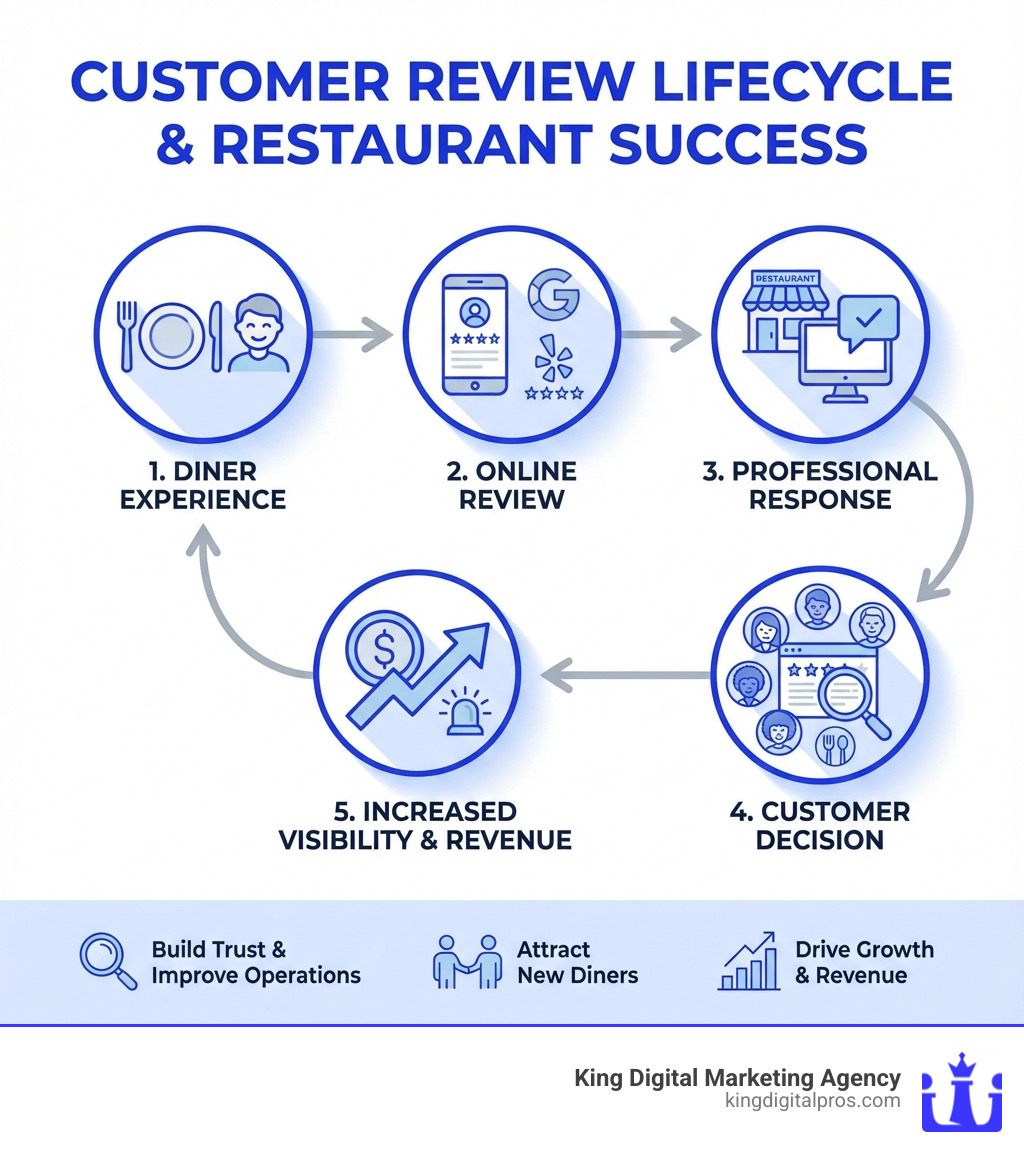
Restaurant review management is the ongoing process of monitoring, analyzing, and responding to customer feedback across platforms like Google, Yelp, TripAdvisor, and social media to build trust, improve operations, and drive revenue. Here’s what you need to know:
- Monitor reviews on Google, Yelp, TripAdvisor, Facebook, and delivery apps
- Respond promptly to both positive and negative feedback with professionalism
- Analyze trends in feedback to improve service, food quality, and operations
- Leverage positive reviews on your website and social media to attract new diners
- Address negative reviews with empathy and offer offline resolution
Online reviews have become the new word-of-mouth for restaurants. 90% of diners research restaurants online before deciding where to eat, and 84% trust online reviews as much as personal recommendations. This isn’t just about reputation – it directly impacts your bottom line. According to Harvard Business Review research, a one-star increase on Yelp can lead to a 5-9% boost in revenue for restaurants.
The stakes are high. 33% of diners won’t eat at a restaurant with less than a 4-star rating, and 94% of consumers say a negative review has convinced them to avoid a business. Yet 70% of customers who leave negative feedback hope to receive a response – and only 38% actually get one. That gap represents both a challenge and an opportunity.
I’m Bernadette King, founder of King Digital Marketing Agency, and I’ve helped countless local businesses transform their online presence through strategic restaurant review management and reputation monitoring. Over the years, I’ve seen how the right approach to review management can turn struggling restaurants into thriving community favorites.
Related content about restaurant review management:
Setting the Table: Key Platforms and Proactive Feedback Collection
In today’s digital landscape, every diner can be a critic, and their reviews can reach thousands with a few clicks. This makes active restaurant review management not just important, but essential. We believe in a proactive approach, which means not just reacting to feedback, but actively seeking it out and claiming your digital storefronts.
Claiming your local business listings across various platforms is the first crucial step. It ensures your restaurant’s information is accurate and allows you to officially respond to reviews, which is vital for search engine rankings and building customer trust. We’ve seen how a well-maintained online presence can significantly boost visibility for local eateries across Albuquerque, Santa Fe, and beyond.
The Most Important Review Platforms for Restaurants
For restaurants in New Mexico, focusing on a few key platforms can make all the difference:
- Google Reviews: These are arguably the most important. They appear prominently in Google Search and Maps results, directly influencing your visibility and decision-making for potential diners. A strong star rating and numerous positive reviews can have a significant impact on Attracting Customers Via Google Maps. Many of our clients in Los Alamos and Taos have seen direct benefits from optimizing their Google Business Profile.
- Yelp: A powerhouse in the restaurant review space, Yelp can significantly impact your revenue. Research shows that a one-star increase on Yelp can lead to a 5-9% boost in restaurant revenue, a statistic we’ve seen play out for businesses from Rio Rancho to Grants.
- TripAdvisor: Especially important for restaurants in tourist destinations like Santa Fe and Taos, TripAdvisor caters to travelers seeking dining recommendations. 90% of respondents considered online reviews important when choosing a restaurant, highlighting its influence.
- Facebook Reviews: Beyond just a social media presence, Facebook reviews provide valuable social proof and allow for direct engagement with your community.
- Delivery Apps (Grubhub, OpenTable, Uber Eats, etc.): With the rise of online ordering, reviews on delivery platforms are critical. Diners often check these before placing an order, making them an integral part of your online reputation.
How to Effectively Collect Customer Feedback
To truly master restaurant review management, you need a robust system for collecting feedback. This isn’t just about waiting for reviews to appear; it’s about proactively asking for opinions and making it easy for customers to share their experiences.
On-Site Methods:
- QR Codes: Placing QR codes on tables, menus, or receipts that link directly to a short feedback form or your Google review page can streamline the process.
- Verbal Requests: Empower your staff to politely ask satisfied customers for feedback, whether it’s a quick chat at the table or a reminder as they leave.
- Comment Cards: While a bit old-school, well-designed comment cards can still capture valuable insights, especially for those who prefer a non-digital approach.
Digital Methods:
- SMS & Email Surveys: Digital surveys sent via text or email after a visit are highly effective. We’ve seen that 98% of texts are opened within the first 2 minutes, compared to email open rates that average between 20-30% and are usually read two days later, according to data from Adobe. This makes SMS a powerful tool for immediate feedback capture.
- Automated Review Systems: Integrating feedback requests into your POS or online ordering system can automate the process, ensuring consistent outreach.
- Importance of Google Business Listing Help: Optimizing your Google Business Profile isn’t just for visibility; it’s also where many customers will leave their first review. Ensuring your profile is complete and inviting is a foundational step in collecting feedback.
The Chef’s Special: A Complete Strategy for Restaurant Review Management
Once you’ve set the stage by claiming your listings and implementing feedback collection methods, the real work of restaurant review management begins. This involves a strategic three-step process: analyzing feedback, crafting thoughtful responses, and leveraging positive reviews.
Step 1: Analyze Feedback to Find Actionable Insights
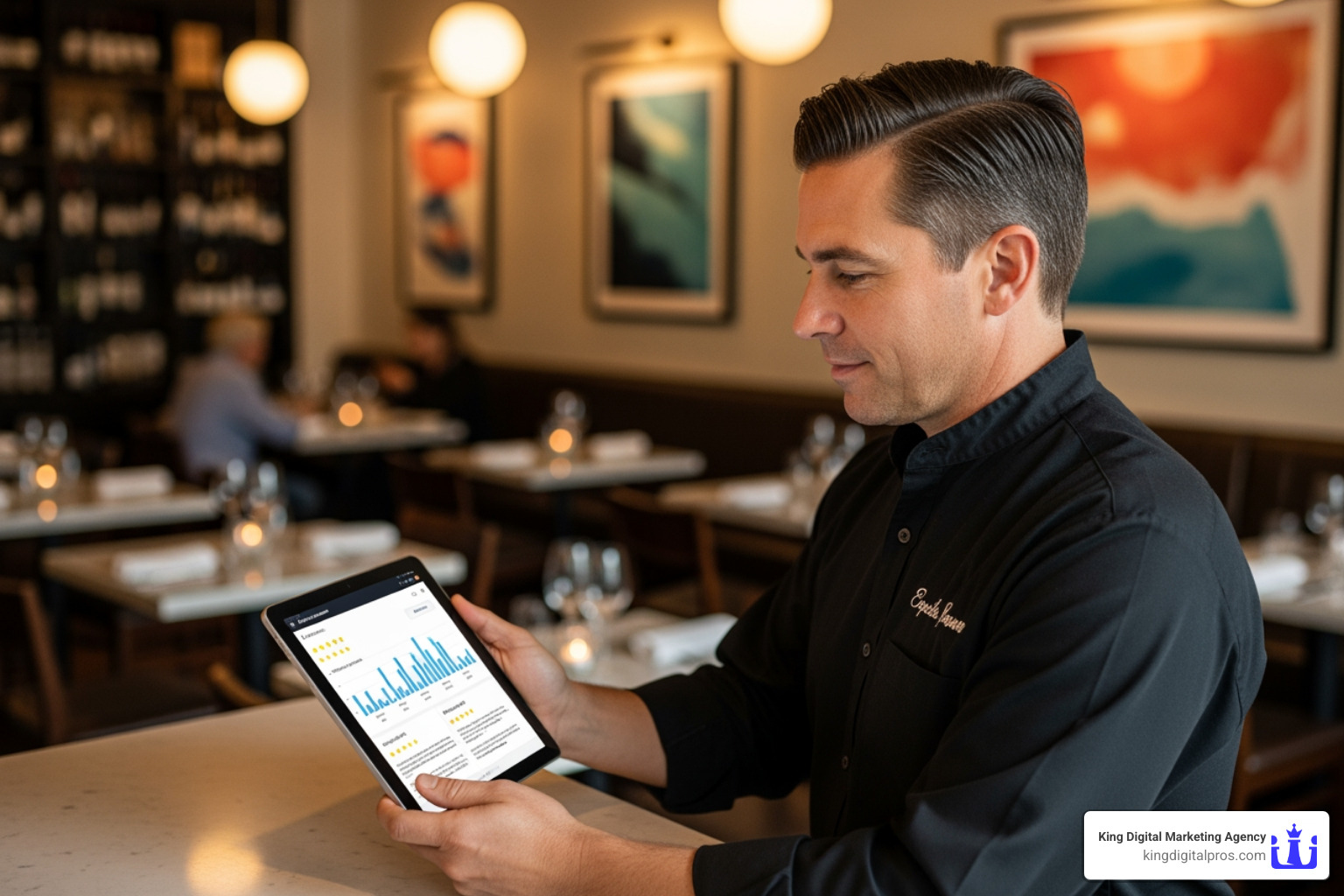
Collecting feedback is only half the battle; the true value lies in what you do with it. We encourage our clients in Cedar Crest and Edgewood to think of reviews as a goldmine of data for operational improvements.
- Identifying Trends: Look beyond individual reviews to spot recurring themes. Are multiple customers mentioning slow service on weekends? Is a particular dish consistently praised or critiqued? Tools like AI-driven word clouds can visualize sentiment, highlighting common issues or strengths related to service quality, food quality, or ambiance. For example, if reviews frequently mention “limited parking” or “long wait times,” you know where to focus your efforts.
- Using Analytics for Operational Improvements: This analytical approach allows for data-driven decisions. If a dish is often returned or seldom ordered, it might signal a problem with its recipe or presentation. Recurring complaints about slow service could indicate a need for staff training on efficiency or communication. Integrating these insights into your marketing strategy can also be powerful, allowing you to highlight popular offerings and attract more diners. Our services in Manage Customer Feedback can help you turn raw data into actionable strategies.
Step 2: The Art of the Response (Positive and Negative)
Responding to reviews is where you truly connect with your customers and show you value their input. The quality and timeliness of your response can significantly impact your restaurant’s reputation. The willingness of consumers to recommend your brand again can be doubled by combining speed of response, quality of solution, and a genuine perception of the response.
Here are the essential components of a perfect review response:
- Timely: Respond as quickly as possible, especially to negative reviews. This shows attentiveness and care.
- Personalized: Avoid generic, canned responses. Use the reviewer’s name (if available) and refer to specific details in their review.
- Professional: Maintain a courteous and respectful tone, even when faced with unfair criticism.
- Action-oriented (for negative reviews): Outline steps you’re taking to address the issue or invite further discussion.
Template for Positive Reviews:
When a diner leaves a glowing review, it’s an opportunity to reinforce their positive experience and encourage repeat visits.
- Thank them: Start with sincere gratitude.
- Acknowledge specifics: Mention what they praised (e.g., “We’re delighted you enjoyed our green chile cheeseburger and the friendly service!”).
- Engage/Invite back: Ask a thoughtful question or invite them to return (“We look forward to welcoming you back soon for another taste of New Mexico!”).
- Subtle marketing: You can subtly mention a special or new menu item relevant to their praise.
Example: “Sarah, thank you so much for your phenomenal 5-star review! We strive to create a warm, relaxed atmosphere at our restaurant, so we’re delighted you enjoyed spending your anniversary evening with us. Please come back to celebrate future special occasions!”
Template for Negative Reviews: Acknowledge; Apologize; Take Offline; Resolve.
Negative reviews are tough, but they’re also opportunities to demonstrate excellent customer service and turn a detractor into a loyal customer. We recommend the “TACT” approach:
- Thank them: Thank them for their feedback, even if it’s negative.
- Apologize: Sincerely apologize for their disappointing experience. Take accountability without making excuses.
- Continue the conversation offline: Offer to speak with them directly to understand the issue better and find a solution. Provide contact information (phone number, email).
- Treat them: Offer an incentive or a meaningful resolution to make amends.
Example: “John, thank you for your review. We’re very sorry to hear your server did not adequately describe the fish special preparation. Providing an exceptional dining experience is extremely important to us. Please call or email me directly so we can make this right.”
Step 3: Leverage Positive Reviews to Attract New Customers
Positive reviews are marketing gold. We help our clients in areas like Corrales and Sandia Park effectively use these testimonials to attract new diners and build a stronger brand.
- Showcasing Reviews on Your Website: Create a dedicated “Testimonials” page or integrate a review feed directly onto your homepage.
- Social Media Content: Share snippets of 5-star reviews on your Facebook and Instagram. A graphic featuring a glowing quote and a delicious dish can be incredibly impactful.
- Testimonials as Social Proof: Use positive feedback in your marketing materials, from print ads to email newsletters. People trust peer recommendations, and showcasing these reviews builds immense credibility.
- How Positive Reviews Boost Your Local Business Reputation: A consistent stream of positive feedback improves your overall online image, making your restaurant more appealing to potential customers searching for dining options in the local area.
Overcoming Common Challenges in Your Restaurant Review Management
Even with the best intentions, managing online reviews comes with its problems. From frustrating fake reviews to the sheer volume of feedback, we understand these challenges for businesses in places like Tijeras and Edgewood.
Handling Negative and Fake Reviews
- Turning a Negative Review into an Opportunity: While difficult to hear, negative feedback offers some of the most valuable insights for improvement. By responding professionally and offering a resolution, you not only address the reviewer’s concerns but also show potential customers that you take feedback seriously and are committed to excellence. This can turn a negative experience into a powerful testament to your customer service.
- Process for Reporting Fake Reviews: Unfortunately, fake or malicious reviews can occur. Most platforms (Google, Yelp, Facebook) have mechanisms for reporting these. Look for reviews that lack specific details, seem overly aggressive without cause, or come from suspicious profiles. While removal isn’t guaranteed, flagging them is important. The best defense against fake reviews is to continuously build a high volume of legitimate, positive reviews that will naturally outweigh any fraudulent ones.
- Building a Base of Positive Reviews to Mitigate Damage: Proactively encouraging satisfied customers to leave reviews helps create a strong foundation. This influx of genuine, positive feedback acts as a buffer, making any isolated negative or fake reviews less impactful on your overall rating.
Managing High Volume and Saving Time
The sheer volume of reviews across multiple platforms can be overwhelming. This is where technology and smart strategies come into play for effective restaurant review management.
- Centralized Dashboards: Instead of logging into multiple sites, invest in a reputation management software that aggregates all your reviews into one powerful dashboard. This saves immense time and ensures you don’t miss any feedback. Platforms like OpenTable offer solutions that pull reviews from Google, Yelp, and their own platform into one place.
- AI and Automation Tools: Artificial intelligence can revolutionize your response strategy. AI-powered review management tools can offer custom, automated response suggestions, saving time and effort while maintaining a consistent brand voice. Some systems can even automate responses to highly positive reviews, freeing up your team to focus on more complex negative feedback.
- Response Templates: Develop a library of customizable response templates for common scenarios (e.g., praise for food, comment on service, complaint about wait time). These templates provide a starting point, which you can then personalize to make each response unique and genuine.
- Review Management Services: For busy restaurant owners, engaging with professional review management services can be a game-changer. We specialize in monitoring, analyzing, and responding to reviews, allowing you to focus on running your business while we ensure your online reputation shines.
Frequently Asked Questions
How do online reviews impact my restaurant’s search ranking?
Online reviews significantly impact your restaurant’s visibility in search engine results, especially for local searches. Here’s how:
- Review Quantity and Quality: Search engines, particularly Google, consider both the number of reviews and their average star rating. More positive reviews signal a popular and reputable business.
- Review Velocity: The frequency of new reviews also plays a role. A steady stream of recent reviews indicates an active and thriving business.
- Local SEO Signals: Reviews are a critical local SEO signal. They tell Google how relevant and trustworthy your business is to local searchers. This directly influences your appearance in Google’s local pack (the map results at the top of local searches).
- E-E-A-T (Experience, Expertise, Authoritativeness, Trustworthiness): Google’s E-E-A-T guidelines emphasize the importance of demonstrating these qualities. A robust collection of positive reviews from real customers strongly contributes to your trustworthiness and authority in your local culinary niche. For a deeper dive into this, explore our guide to Local SEO for Restaurants.
What’s the single most important thing in responding to a negative review?
The single most important thing in responding to a negative review is showing genuine empathy and a commitment to resolution. It’s not just about what you say, but how you make the customer feel. A prompt, empathetic, and professional response that acknowledges their disappointment and offers a concrete path to resolution can turn a detractor into a loyal customer. The goal is to demonstrate that you care about their experience and are willing to take steps to make things right. This approach can double a customer’s willingness to recommend your brand again.
Can I ask customers to remove a bad review?
While it might be tempting to ask a customer to remove a bad review, we generally advise against it. Directly pressuring a customer can often backfire, leading to more frustration and potentially even more negative feedback on other platforms.
Instead, focus your efforts on the “take the conversation offline” step. If you successfully resolve the customer’s issue privately, they might voluntarily update or remove their review. This happens because you’ve demonstrated excellent customer service and restored their trust. The key is to earn the change, not demand it. Focus on fixing the problem and providing a stellar experience, and let the customer decide if they want to amend their public feedback.
Conclusion: Turn Feedback into Your Five-Star Advantage
In the busy restaurant scene of New Mexico, from the vibrant streets of Albuquerque to the serene landscapes of Taos, effective restaurant review management is no longer a luxury – it’s a necessity. It’s the secret ingredient that transforms customer feedback into a powerful marketing tool, building trust, fostering loyalty, and ultimately filling more tables.
By proactively managing your online presence, listening to your customers, and responding thoughtfully, you’re not just reacting to criticism; you’re actively shaping your brand’s narrative. A strong online reputation, especially with robust Google Profile Management, is a cornerstone of local marketing, ensuring that when diners search for their next great meal, your restaurant shines.
At King Digital, we specialize in helping local businesses build a stellar reputation that drives real-world results. We understand the unique challenges and opportunities for restaurants in our community. Ready to take control of your online reputation and fill more tables? Explore our expert Reputation Management services.