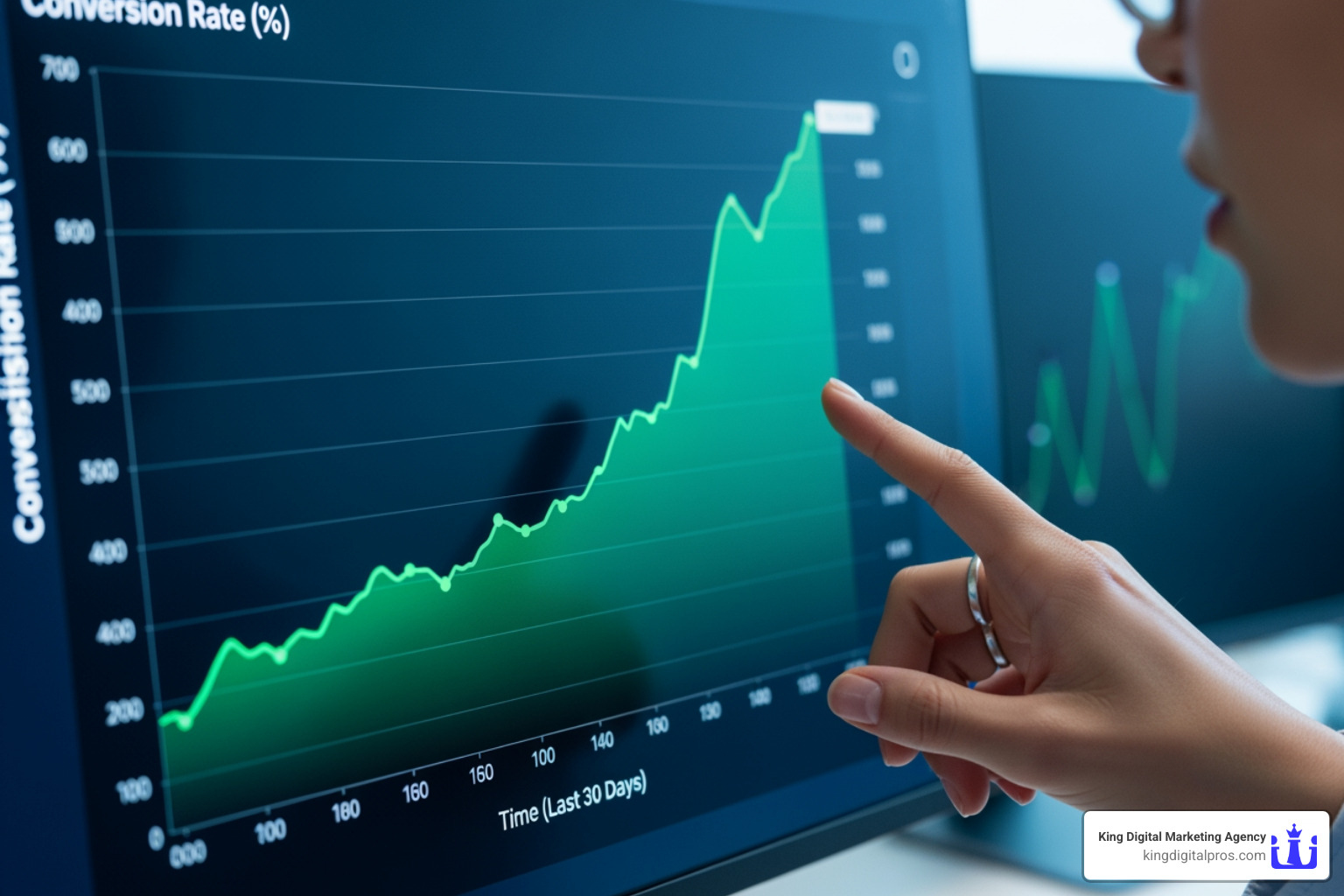
Boost conversion rates: 20 Sky-High Strategies
Why Conversion Rates Matter More Than Traffic
To boost conversion rates is to turn more website visitors into paying customers without increasing your ad spend. It’s about working smarter, not spending more. Key strategies include:
- Fixing friction points: Speed up your site, simplify checkout, and add trust signals.
- Testing everything: A/B test headlines, CTAs, and page layouts.
- Leveraging social proof: Display reviews, testimonials, and trust badges.
- Creating urgency: Use scarcity tactics and time-limited offers.
- Optimizing for mobile: A majority of shoppers now buy on mobile devices.
Many businesses drive traffic to their website, but visitors leave without buying. With the average ecommerce conversion rate hovering around 2%, 98 out of 100 visitors walk away. This is a huge opportunity.
Small changes can yield massive results. Optimizing site speed, simplifying checkout, or adding reviews can boost conversion rates significantly, generating more revenue from the traffic you already have.
I’m Bernadette King, founder of King Digital. I’ve spent years helping businesses transform online visibility into sales through targeted strategies that boost conversion rates. Let me show you how to turn more of your visitors into customers.
Understanding Conversion Rate Fundamentals
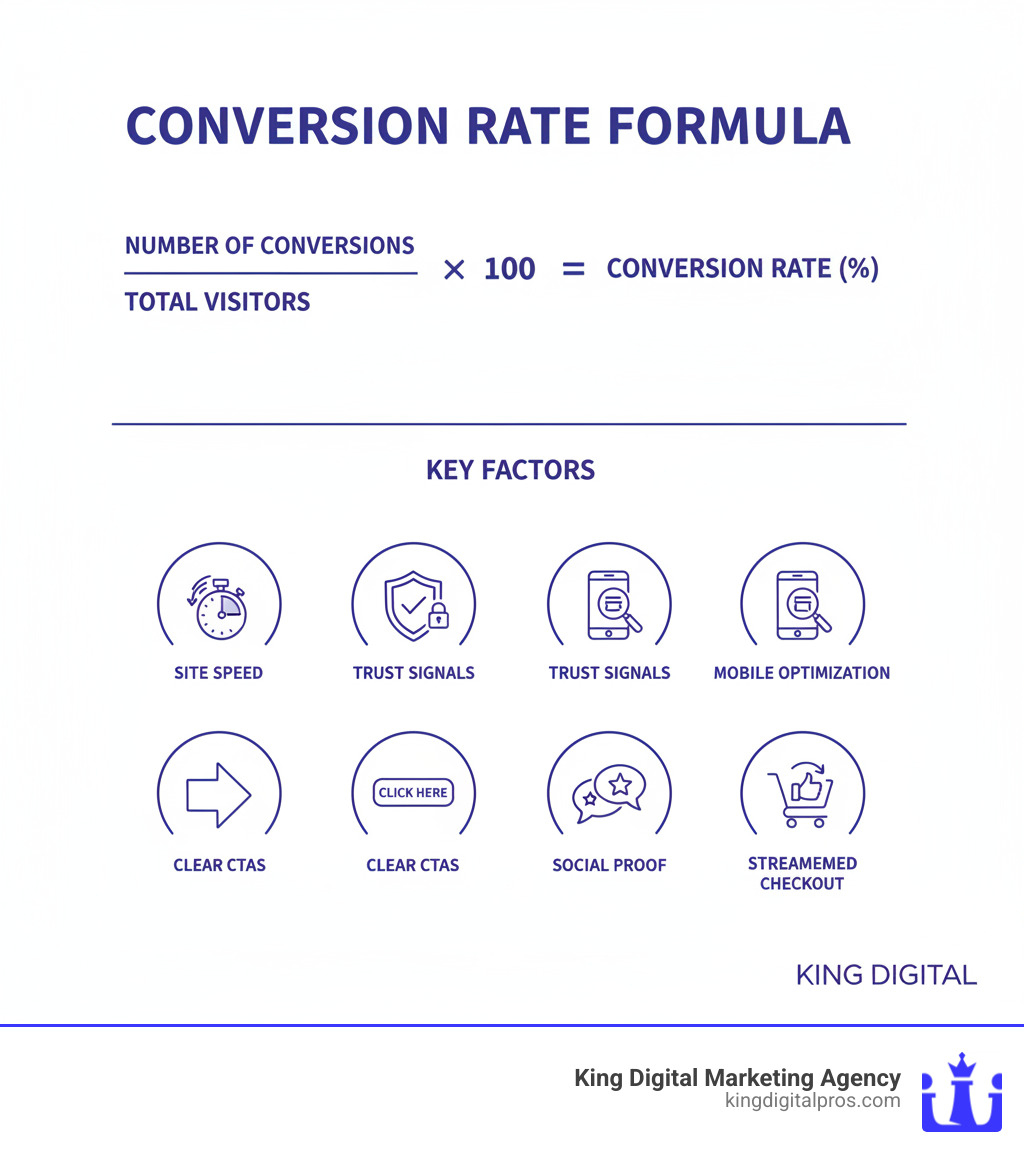
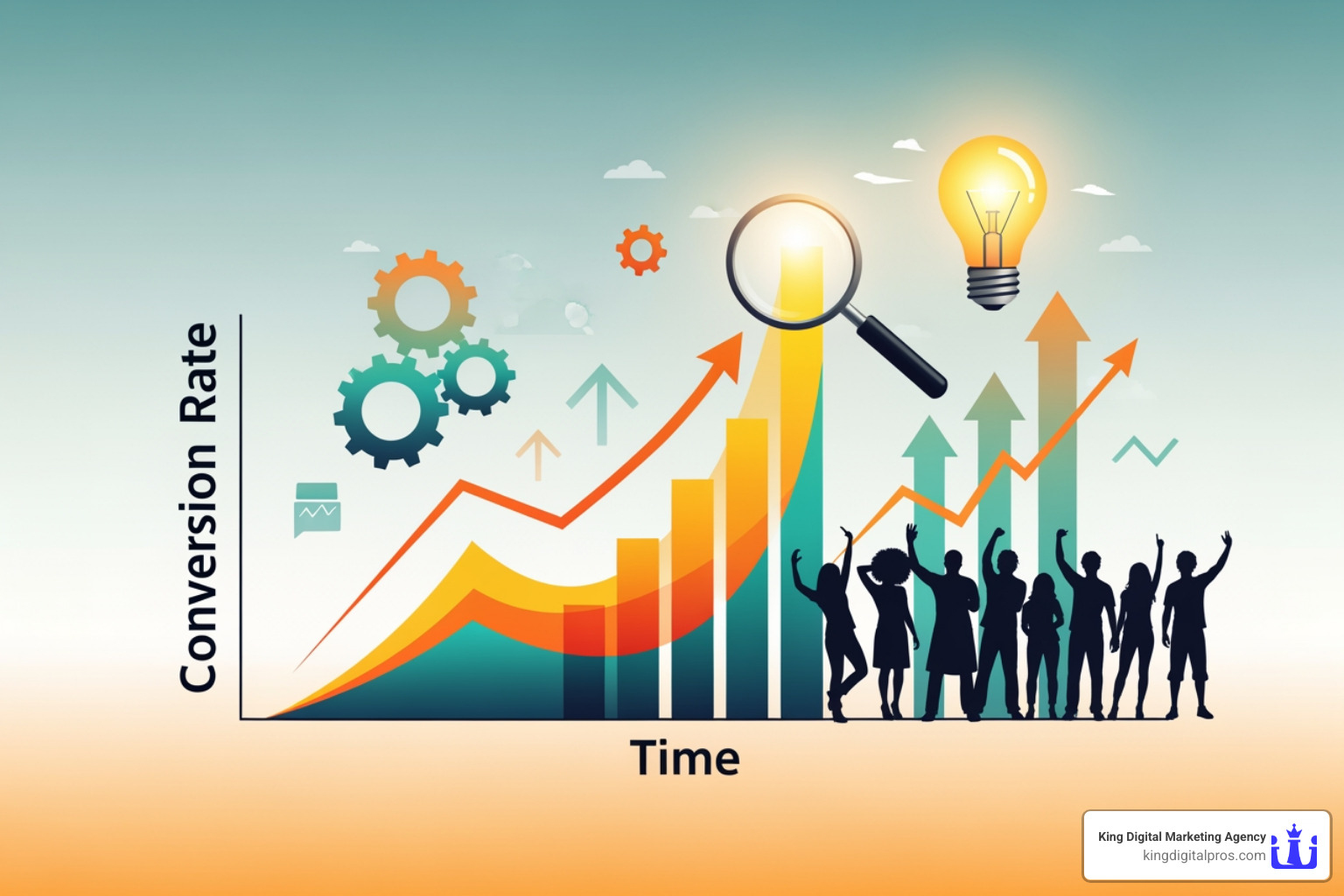
Your conversion rate is your business’s report card, telling you how many people who show interest actually follow through. A conversion rate is the percentage of people who complete a desired action, whether it’s making a purchase, signing up for a newsletter, or downloading a guide.
The math is simple: divide the number of conversions by the total number of visitors, then multiply by 100. For a physical store, if 2,000 people enter and 400 buy, your conversion rate is a solid 20%. Online, the formula is the same. The average ecommerce conversion rate is around 2%, which means there’s massive room for improvement.
Why focus on this? Because when you boost conversion rates, you get more value from every marketing dollar you’ve already spent. It’s about optimizing what you have, not just buying more ads.
It’s also helpful to distinguish between macro conversions (your main goals, like a sale) and micro conversions (smaller steps, like adding to cart or an email signup). Micro conversions are the breadcrumbs leading to your primary goal, and tracking them helps you see where users get stuck.
Optimizing the Customer Experience in Retail and Ecommerce
Your customer’s experience determines your conversion rate. Every touchpoint either moves them closer to a purchase or pushes them away.
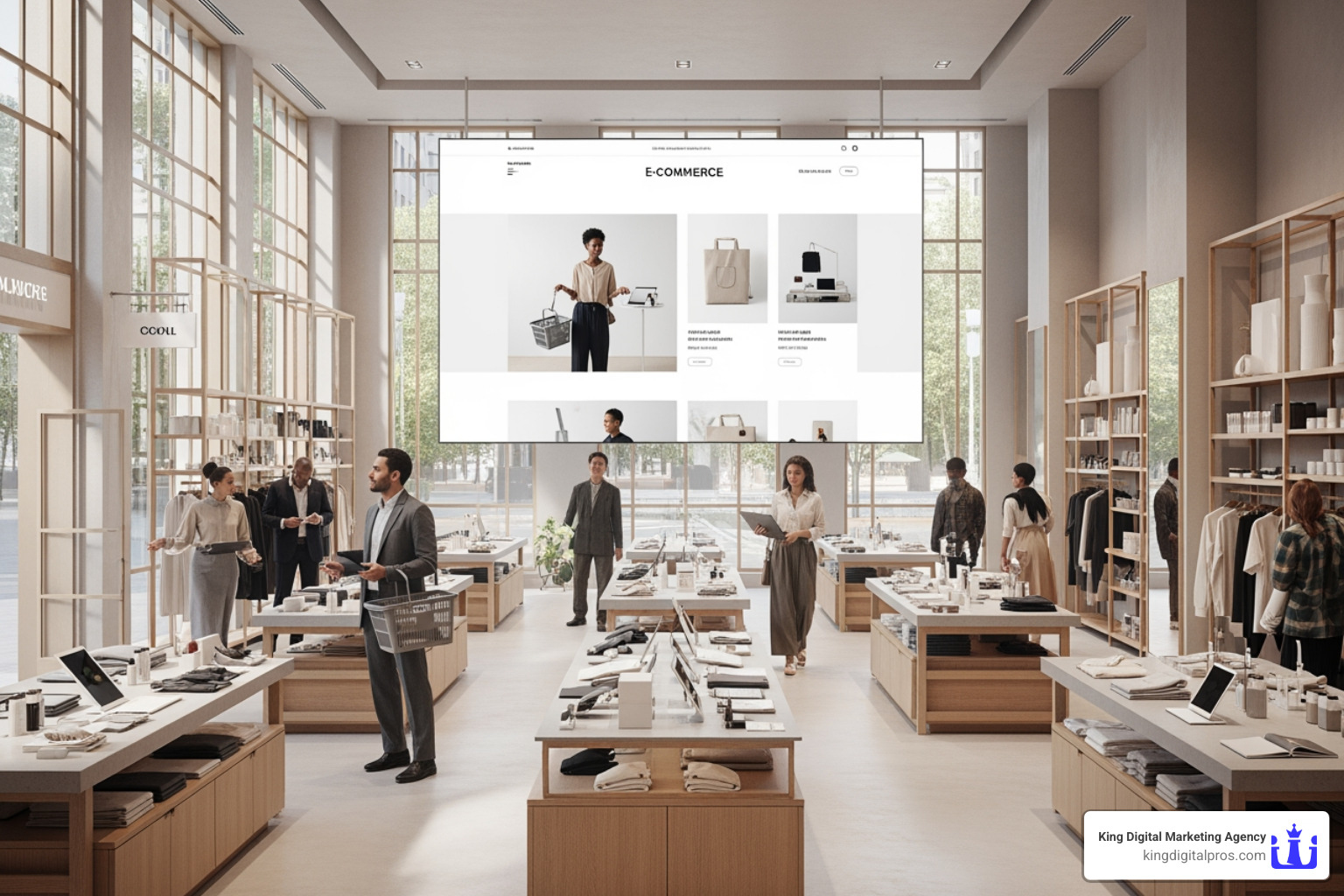
In physical stores, a clean entrance and well-placed displays guide customer attention. Smart merchandising – grouping related items – makes shopping easier. The longer people stay (dwell time), the more they buy. Research shows a 1% increase in dwell time can boost sales by 1.3-2%.
Online, website speed is paramount. A one-second delay can hurt conversions, and with 70% of shoppers buying on mobile, your site must be fast and flawless on small screens. Mobile-first design is not a buzzword; it’s a requirement for survival. If customers can’t find what they need in seconds, they’ll go elsewhere. That’s why we always ask businesses, Is Your Website Converting?. The answer is the first step toward improvement.
The Human Element: Staff and Support
Technology is a tool, but people buy from people. In retail, staff training in proactive, genuine engagement is key. Asking open-ended questions uncovers real needs far better than a simple “Can I help you?”
Online, this personal touch comes from live chat implementation. It provides instant answers to customers hesitating over a purchase, removing obstacles in real-time. Making customer support accessible across multiple channels (email, phone, chat) shows you value your customers’ time. Excellent support builds the trust that naturally helps boost conversion rates. Every interaction is a chance to prove you’re worth buying from and helps you Attract More Customers.
Building Trust and Urgency to Drive Action
People won’t buy from you if they don’t trust you. Once you’ve earned that trust, a little well-placed urgency can turn “maybe later” into “yes, now.”

Trust begins with your value proposition. Why should someone choose you? Answer this question clearly and immediately. As Paul Graham said, you should explain your product as if you’re talking to a close friend. If it sounds like marketing jargon, rewrite it.
Credibility also comes from a professional website, visible contact information, and transparent policies. Trust signals like security badges, money-back guarantees, and clear return policies tell visitors they’re safe. A generous return policy removes the perceived risk that stops people from clicking “buy.”
Leverage Social Proof and Testimonials
We are social creatures; we look to others before making decisions. Social proof reassures potential customers that they’re making a smart choice.
Customer reviews are essential. Research shows that 70% of online shoppers read reviews before buying. Display them prominently, and don’t fear a few less-than-perfect ratings – they increase the credibility of the positive ones.
Testimonials put a face and story to the experience, with video testimonials being particularly powerful. User-generated content, like customer photos or videos of your product in action, provides authentic proof that resonates. This is how you start Leveraging Your Reputation: by letting happy customers do the selling for you. For B2B or high-ticket items, case studies provide a detailed roadmap from problem to solution.
Craft Compelling CTAs and Use Psychological Triggers
Your Call to Action (CTA) is the bridge between interest and action. The best CTAs use action-oriented language focusing on benefits. Instead of “Click Here,” try “Get Your Free Guide” or “Save 20% Today.”
Your CTA button should also stand out visually with a contrasting color and be surrounded by white space to draw the eye. Now, let’s add psychological triggers that boost conversion rates.
Scarcity is effective when used honestly. “Only 3 Left in Stock” or “Sale Ends Tonight” creates urgency by tapping into our fear of missing out. However, this must be authentic. Fake scarcity destroys trust.
Personalization is another powerful tool. Personalized CTAs have been shown to convert over 200% better than generic ones. Showing product recommendations based on browsing history or using dynamic content that changes based on the visitor makes your site feel custom-built for them. This level of attention makes people feel valued and leads to more conversions.
Streamlining the Path to Purchase
The journey from interest to purchase should be effortless. Every complication is a reason for a customer to leave.

Checkout process friction is a major conversion killer. Nearly half of all shoppers (48%) will abandon their cart during checkout if extra costs like shipping and taxes are too high. Be transparent about all costs from the start.
Forcing customers to create an account is another huge friction point. Always offer a guest checkout option. Similarly, providing multiple payment options like PayPal, Apple Pay, or installment plans like Klarna accommodates more customers and can boost conversion rates.
Even with a perfect checkout, some carts will be abandoned. Use abandoned cart recovery emails to gently nudge customers back. These automated reminders have high open rates and can recover a significant portion of lost sales. Finally, loyalty programs give customers a reason to return, creating repeat business. For more on this, explore our Conversion Funnel Optimisation Best Practices.
How to Boost Conversion Rates by Simplifying Forms
Long, complicated forms kill conversions. Every extra field is another reason for a customer to give up. The solution is to minimize form fields to the absolute essentials. Do you really need their phone number right now? If not, cut it.
The famous $300 million button case study proves this point. A major retailer replaced its “Register” button with a “Continue” button for guest checkout. The result was a $300 million revenue increase in one year because customers could buy without jumping through hoops.
For longer forms, progress indicators (e.g., “Step 2 of 3”) reduce anxiety and encourage completion. The ultimate in simplicity is one-click checkout (Shop Pay, Apple Pay), which lets returning customers buy in seconds. This convenience is a massive conversion booster, especially on mobile.
| Long Checkout Form (Example) | Simplified Checkout Form (Example) |
|---|---|
| Full Name | First Name |
| Company Name (Optional) | Last Name |
| Email Address | Email Address |
| Phone Number (Optional) | Shipping Address |
| Billing Address | Payment Method |
| Shipping Address | |
| Create Password | |
| Confirm Password |
The simplified version asks only for what’s needed to complete the transaction. Your customers will thank you with their business.
How to Boost Conversion Rates Through Measurement and Iteration
Conversion optimization is never “done.” It’s a continuous cycle of measuring, testing, and refining. The most successful businesses make data-driven decisions based on what their customers are actually doing.
Start by identifying conversion barriers – the friction points where potential customers drop off. This could be slow page loads, a confusing checkout, or surprise shipping costs. Beyond your main conversion rate, monitor other key performance indicators (KPIs) like time on page, cart abandonment rate, and drop-off points in your funnel. Adopting this iterative mindset is central to understanding What Is Conversion Rate Optimisation. Even small, incremental improvements compound into significant revenue growth over time.
Implement A/B Testing and Analyze Results
A/B testing (or split testing) removes the guesswork from optimization. You create two versions of a page – a control (Version A) and a variation (Version B) – show them to different audience segments, and see which one performs better.
You can test almost anything: headlines, CTAs, page layouts, images, and pricing. I’ve seen a simple color change on a “Buy Now” button increase conversions by 21%. The key is to start with a clear hypothesis based on statistical hypothesis testing principles. For example: “We believe changing our CTA to ‘Get Free Shipping’ will increase clicks because it highlights a key benefit.”
Always test one variable at a time, or you won’t know what caused the change. And be patient – use reliable testing tools and wait for statistical significance before declaring a winner. Rushing leads to false conclusions. When done right, A/B testing turns optimization into a science. Our Services: Conversion Optimization can help you run these tests effectively.
Gather and Act on Customer Feedback
Data tells you what is happening; customer feedback tells you why. Use simple on-site surveys to ask questions like, “What almost stopped you from buying today?”
Visual tools are also powerful. Heatmaps and scroll maps show where people click and how far they scroll. I once found that 80% of visitors never saw the “Add to Cart” button; a simple layout change fixed the issue and boosted sales by 34%. Session recordings let you watch anonymized user journeys, revealing moments of confusion or hesitation. Research from the Nielsen Norman Group shows that observing just five users can uncover 85% of usability problems.
The magic happens when you act on this feedback. If users can’t find your return policy, make it prominent. If they abandon carts at the shipping step, test showing costs earlier. This feedback loop is how you Manage Customer Feedback and achieve sustainable growth.
Frequently Asked Questions about Boosting Conversion Rates
What is a good conversion rate?
There’s no single magic number. The average e-commerce conversion rate is around 2%, but a “good” rate depends on your industry, product price, and traffic source. For example, arts and crafts sites might see 4% rates, while high-ticket items will naturally convert lower.
The most important benchmark is your own baseline performance. If you improve from 1.5% to 2%, that’s a huge win. Focus on consistent improvement over hitting an arbitrary industry standard. Also, note that desktop conversion rates are often twice as high as mobile rates, highlighting the need for a flawless mobile experience, especially since 70% of shoppers buy on mobile.
What are the most common CRO mistakes to avoid?
After years of helping businesses boost conversion rates, I see the same fixable mistakes repeatedly.
- Ignoring mobile users: With 70% of purchases happening on phones, a poor mobile experience is a costly error.
- Making decisions without data: Don’t change your site based on a hunch. Use analytics and user testing to guide your decisions, then validate with A/B tests.
- Overcomplicating the user experience: Cluttered layouts, confusing navigation, and long forms create friction. When faced with too many choices, people often choose nothing.
- Focusing only on the homepage: Most conversions happen on product pages or during checkout. Optimize the entire customer journey, not just the front door.
- Using fake scarcity tactics: Deceptive tactics like fake low-stock alerts destroy trust. Authentic urgency works; deception backfires.
How long does it take to see results from CRO efforts?
The timeline varies. Some changes, like fixing a broken button or simplifying a form, can deliver an immediate impact. These quick wins are great for building momentum.
Other optimizations, especially A/B tests, require patience. You need enough traffic to reach statistical significance, which can take days for high-traffic sites or months for smaller ones. The key is to understand that CRO is an ongoing process, not a one-time fix. Customer expectations change, and technology evolves. The businesses that see the best long-term results treat optimization as a continuous journey of learning and improvement.
Conclusion
Think back to the storefront with window shoppers but few buyers. You now have the tools to change that story. When you boost conversion rates, you’re not just tweaking a spreadsheet; you’re fundamentally improving how your business grows. Every improvement, from a faster page to a simpler checkout, turns more visitors into paying customers.
The strategies we’ve covered—understanding fundamentals, optimizing the customer experience, building trust, creating urgency, and continuously measuring—are proven approaches that can multiply your revenue from the traffic you already have.
However, conversion optimization is never truly “done.” It’s a continuous journey of testing and refinement. But before this magic can happen, you need the most crucial ingredient: qualified traffic. The best conversion tactics are useless if the right people aren’t finding you.
At King Digital Marketing Agency, we specialize in driving ready-to-convert customers to local businesses. Whether you’re a franchise in Albuquerque or a small business in Santa Fe, we understand the local market. We lay the foundation that makes conversion optimization powerful.
Ready to turn your traffic into revenue? Explore our Services: Lead Scoring Services to learn how we identify your most valuable leads, ensuring your efforts are focused on prospects most likely to become loyal customers.