Why Local Business Reviews Management is Your Secret Weapon for Growth
Local business reviews management is the systematic process of monitoring, generating, responding to, and leveraging customer reviews across platforms like Google, Yelp, and Facebook to build trust and drive sales.
Quick Overview – What Local Business Reviews Management Includes:
- Monitoring – Track reviews across 50+ platforms in real-time
- Generation – Ethically request reviews via email, SMS, and in-person asks
- Response – Reply professionally to positive and negative feedback
- Protection – Flag fake reviews and manage reputation crises
- Promotion – Showcase best reviews on your website and social media
- Analytics – Measure review velocity, sentiment, and ROI impact
The numbers don’t lie: 97% of people search for local businesses online, and 86% read reviews before making a purchase decision. Reviews can increase sales by up to 270%, while a single one-star rating boost can drive 5-9% more revenue according to Harvard research.
I’m Bernadette King, founder of King Digital Marketing Agency, and I’ve helped hundreds of local businesses transform their online reputation through strategic local business reviews management. Over the past decade, I’ve seen how the right review strategy can turn struggling businesses into local market leaders.
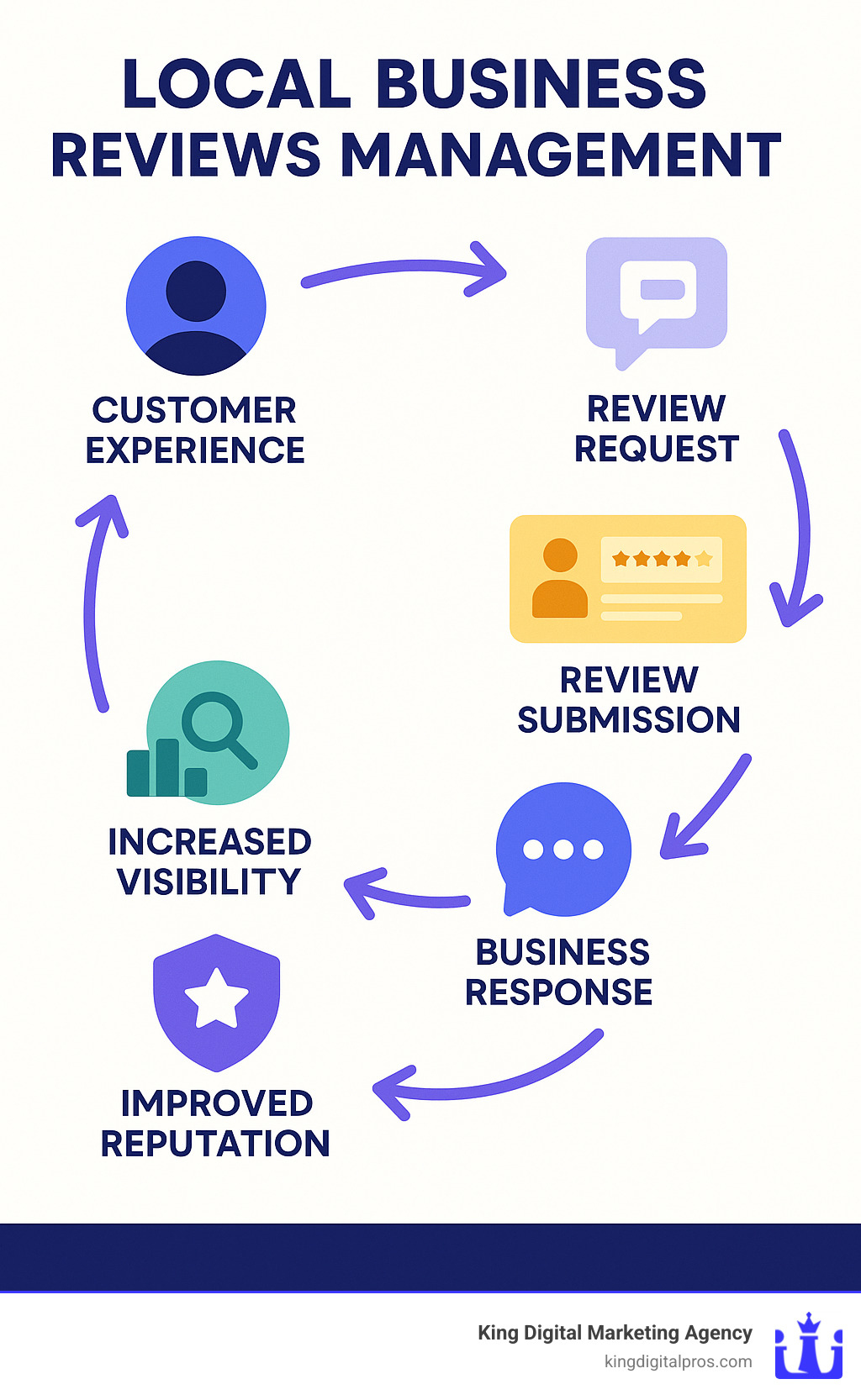
What Is Local Business Reviews Management & Why It Matters
Local business reviews management is the complete process of actively monitoring, encouraging, and responding to customer feedback across every platform where your business appears.
Think about the last time you picked a restaurant or hired a contractor. You probably checked Google reviews, maybe scrolled through Yelp, and looked at their Facebook page. That’s exactly what your potential customers are doing right now.
Here’s what should grab your attention: 77% of consumers read reviews before spending money with a local business. Even more telling, 92% read at least two reviews before making their decision. According to research on consumer trust and online reviews, 68% of consumers are more likely to use a local business with positive reviews.
That famous Harvard study found that restaurants saw a 5-9% revenue increase for every one-star improvement in their rating. If your business brings in $500,000 a year, better review management could mean an extra $25,000 to $45,000 annually.
The SEO Impact of Local Business Reviews Management
Google treats reviews like digital gold when deciding which businesses to show in local search results. Reviews are one of the top three ranking factors, right alongside proximity and relevance.
The algorithm pays attention to review volume, recency, and response rate. Google wants to see that you’re consistently earning fresh feedback and actively engaging with your community.
This is exactly why our Google Business Listing Help service puts such emphasis on review optimization. We’ve watched businesses leap from page three of search results straight into the coveted local 3-pack simply by implementing a smart review strategy.
There’s a magic number every business owner should know: 3.3 stars out of 5 is the minimum rating most customers will consider. Drop below that threshold, and you become practically invisible to potential customers.
Revenue & Retention Benefits
The financial impact goes beyond just looking good online. Products and services with reviews have a 270% higher purchase likelihood than those without any customer feedback.
Customers who leave positive reviews become emotionally invested in your success. They’re more likely to return, spend more per visit, and recommend you to friends and family. Smart businesses also use positive reviews as upselling opportunities and benefit from reduced customer acquisition costs when strong reviews shorten the sales cycle.
Building a Winning Local Reviews Strategy
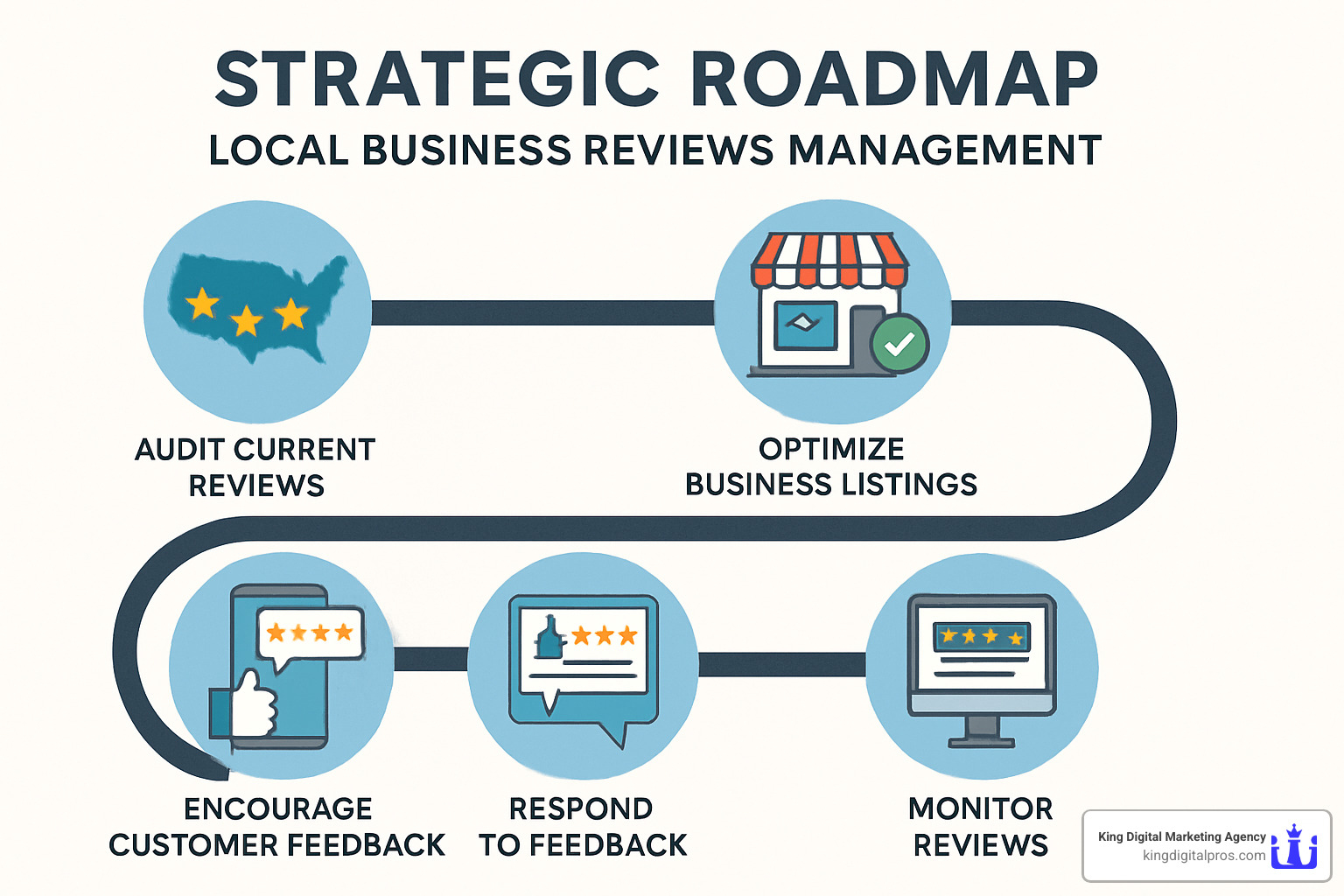
Successful local business reviews management requires a strategic roadmap that turns happy customers into powerful advocates for your business.
Start by conducting a thorough audit of your current review landscape. Search for your business on Google, Yelp, Facebook, and industry-specific directories. Note common themes, complaint patterns, and what customers consistently praise.
Next, claim and optimize your business listings across all platforms. Make sure your business name, address, phone number, hours, and description are identical everywhere. Inconsistent information confuses both customers and search engines.
Prioritize which platforms deserve your attention. While Google dominates local search, focus your energy where your specific customers actually spend time. A high-end restaurant might prioritize Yelp, while a B2B consultant should focus on LinkedIn and Google.
Key Components of a Successful Local Business Reviews Management Plan
Every winning review strategy has six interconnected components:
Monitoring forms the foundation. You need real-time alerts for new reviews because timing matters enormously. Half of all reviewers expect responses within a week.
Generation is where the magic happens. Systematically request feedback when customer satisfaction peaks – immediately after successful service delivery.
Response protocols separate amateur operations from professional ones. Every review deserves acknowledgment, whether it’s a glowing five-star testimonial or a frustrated complaint.
Promotion amplifies your best reviews beyond their original platforms. Showcase compelling testimonials on your website, social media, and marketing materials.
Insights analysis turns feedback into actionable business improvements. Look for patterns that reveal training opportunities or operational inefficiencies.
Escalation workflows prepare you for challenges. Have clear processes for fake reviews, defamatory content, and reputation crises.
Choosing Review Sites That Matter Most
Google My Business isn’t optional – it’s essential. Google reviews directly influence local search rankings and appear prominently in search results.
Facebook becomes crucial for consumer-facing businesses, especially retail, restaurants, and personal services. Facebook’s social sharing capabilities create organic word-of-mouth amplification.
Industry-specific platforms often carry more weight than general review sites. Healthcare providers need presence on Healthgrades. Legal professionals should monitor Avvo. Home service providers can’t ignore Angie’s List.
Focus your primary efforts on two or three platforms where your ideal customers actually look for businesses like yours. It’s better to excel on fewer platforms than spread yourself thin.
Generating & Encouraging Positive Reviews Ethically
The secret to getting great reviews is asking happy customers at exactly the right moment – when they’re genuinely thrilled with your service and the experience is still fresh.
Timing makes all the difference. For service businesses, ask immediately after completing a successful project. For retail purchases, wait 2-3 days so customers can use what they bought. For restaurants, ask right after that perfect meal when emotions are running high.
Email remains your most powerful tool. 70% of reviews come from post-transactional review request emails. But these can’t be generic messages that feel like spam.
SMS is quickly becoming a game-changer. Text messages feel more personal and immediate, with SMS usage for review requests rising by 6% in 2023.
Don’t underestimate asking in person. When your team naturally incorporates review requests into customer conversations, response rates can be surprisingly high.
For our Reputation Management clients, combining multiple touchpoints – an in-person ask, followed by personalized email, then gentle SMS reminder – can triple review generation.
Proven Tactics to Get More 5-Star Feedback
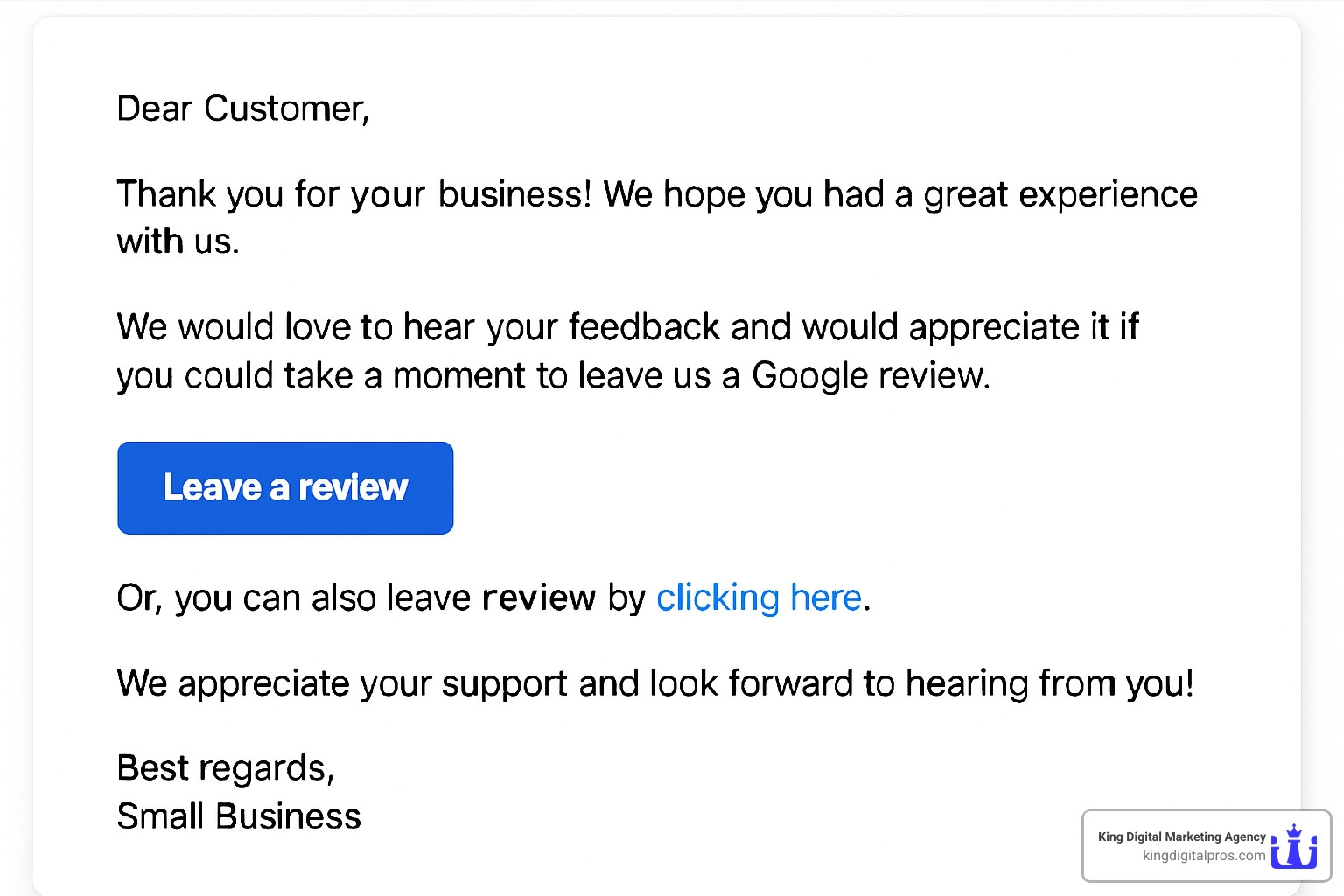
The post-transaction sweet spot is your golden window. Send review requests within 24-48 hours of completing service when satisfaction is at its peak.
Personalization is everything. Reference the specific service you provided, mention team members by name, or recall project details. This shows you remember and value the relationship.
Make reviewing ridiculously easy. Include direct links to your Google My Business profile rather than vague instructions. Every extra click dramatically reduces completion rates.
Try the two-ask strategy. First, ask if they were satisfied. If yes, then ask for a review. This prevents unhappy customers from taking complaints public while encouraging satisfied customers to share positive experiences.
QR codes are surprisingly effective for instant reviews. Place them on receipts, invoices, and business cards. Mobile users can scan and review in seconds.
Staff incentives create review ambassadors. When your team understands that reviews impact business growth, they naturally become more enthusiastic about asking for feedback.
Legal & Ethical Guidelines
FTC compliance is non-negotiable. Never pay for reviews without transparent disclosure, and avoid practices that could mislead consumers about authenticity.
Platform terms of service vary significantly. Google prohibits review gating – only asking satisfied customers to leave reviews. Most platforms ban incentivized reviews entirely.
SMS consent requirements are strict. Text message review requests require explicit opt-in consent. Always include clear unsubscribe options.
Fake reviews are business suicide. Beyond being ethically wrong, they violate platform terms and can result in permanent listing suspension.
Transparency builds trust. If you offer incentives for reviews (where allowed), disclose this clearly and ensure reviewers mention it in their feedback.
Responding, Monitoring & Defending Your Reputation
Think of local business reviews management as your digital customer service desk that never closes. Every review is a public conversation that hundreds of potential customers will read.
Set up real-time alerts through Google My Business, Yelp for Business, and Facebook Business Manager. For multiple platforms, reputation management software can centralize all feedback into one dashboard.
Response timing matters: businesses that respond within 24 hours see significantly higher customer satisfaction scores according to Moz’s research on local reviews. More than 50% of customers expect responses within 7 days, and 1 in 4 expect it within just 3 days.
Every response serves double duty – addressing the original reviewer while showing future customers how you handle relationships and problems.
Best Practices for Answering Reviews (Positive & Negative)
For positive reviews, respond with genuine warmth and specificity. Use their name, mention the specific service or team member they loved, and naturally weave in keywords. “Thanks for choosing our plumbing services, Sarah! We’re thrilled Mike could fix your kitchen sink so quickly” works better than generic responses.
Negative reviews require a different approach. Respond quickly and professionally, never defensively. Acknowledge their concerns, apologize for shortcomings, and offer to resolve the issue offline with your direct contact information.
Your response to negative reviews often matters more to future customers than the original complaint. A thoughtful, empathetic response can actually boost your reputation more than generic positive reviews.
The golden rule: take heated discussions offline immediately. Provide your phone number or email and invite private discussion.
Dealing With Fake or Defamatory Reviews
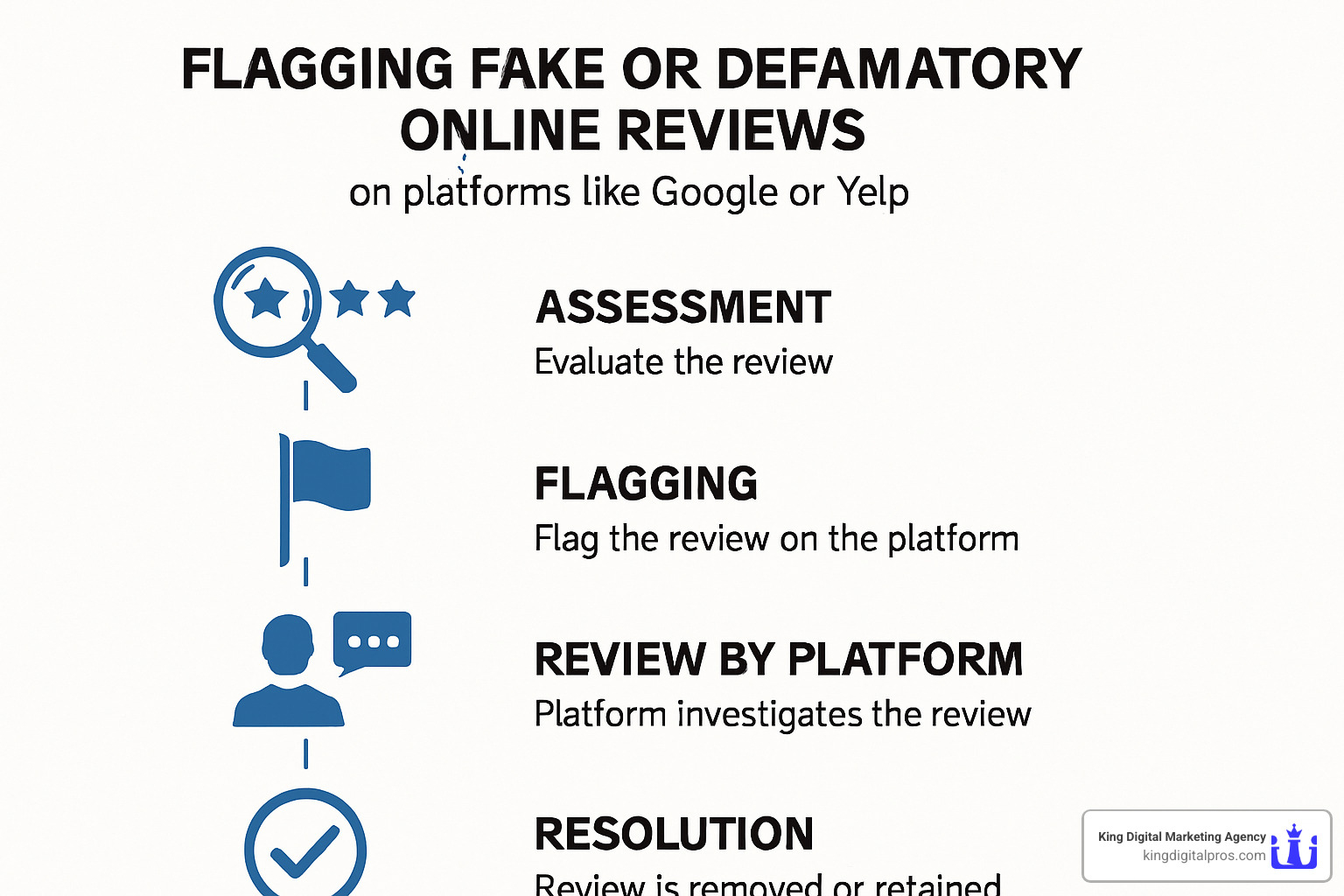
Determine if the review violates platform policies. Reviews from competitors or non-customers, defamatory content, personal attacks, and obvious spam typically violate terms of service.
Document everything immediately. Take screenshots, note dates and times, and gather evidence proving the reviewer wasn’t your customer.
Each platform has its own reporting process. Google lets you flag inappropriate content through Google My Business, while Yelp requires contacting support with detailed evidence.
While waiting for platform investigation, respond professionally to fake reviews. Other potential customers are watching, and a calm, professional response shows integrity.
For seriously defamatory content platforms won’t remove, consider consulting with an attorney specializing in online reputation law.
Tools, Automation & Metrics for Review Success
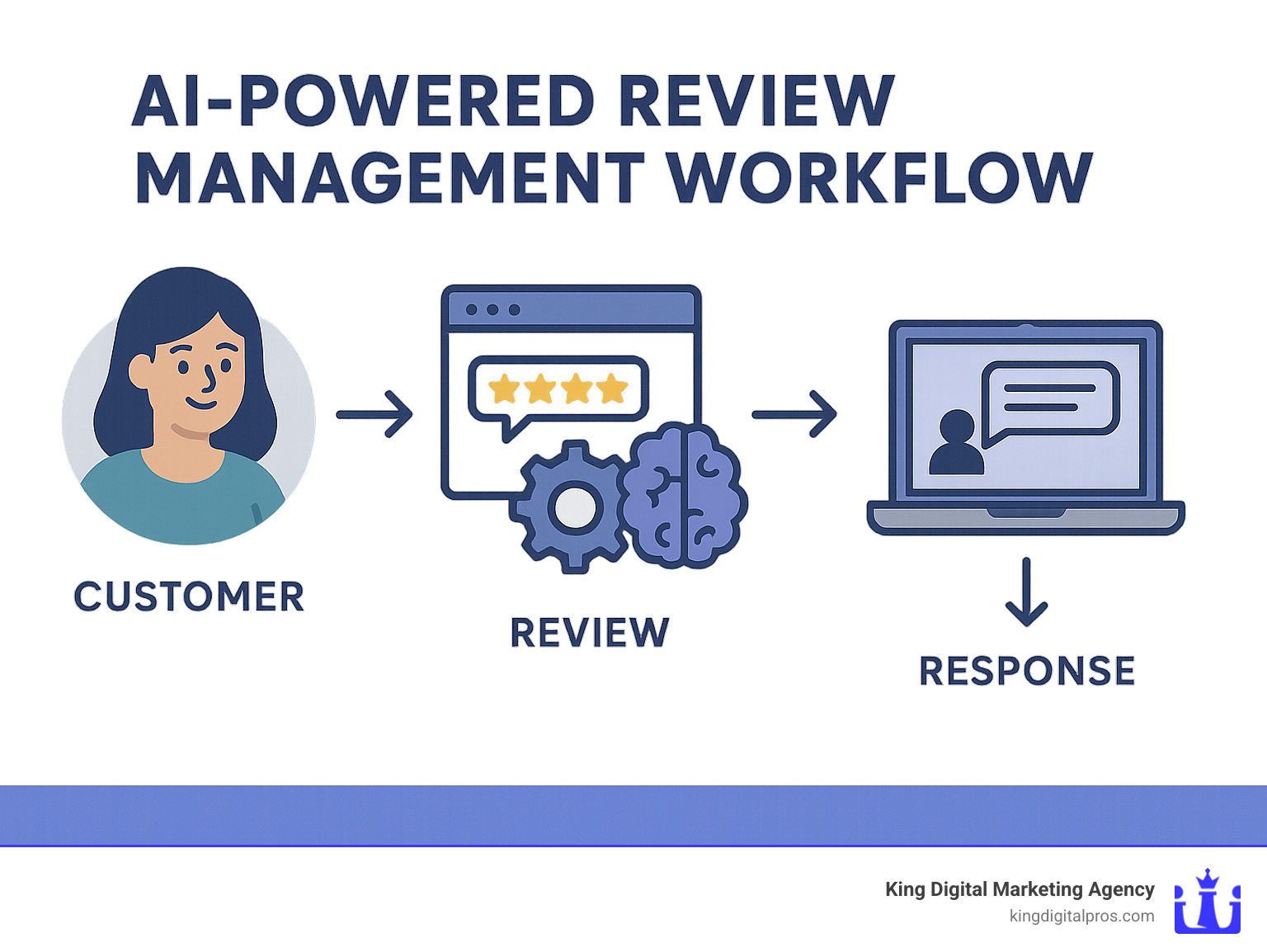
Modern local business reviews management technology amplifies your personal touch rather than replacing it. The right tools handle routine tasks so you can focus on building genuine customer relationships.
Dashboard consolidation brings everything into one clean interface instead of logging into multiple platforms daily. AI-powered responses analyze review content and suggest personalized responses matching your brand voice. Automated review requests work behind the scenes, sending invitations when customers complete purchases or finish service appointments.
Sentiment analysis goes deeper than star ratings to understand emotional tone, while competitive benchmarking gives market intelligence about how your performance stacks up against local competitors.
Selecting Review Management Software
Multi-platform support should be your starting point – monitoring everywhere customers might leave reviews, not just Google and Yelp.
Integration capabilities determine how smoothly tools fit your existing workflow. Look for connections with your CRM, email marketing platform, and customer service tools.
Response management features offer customizable templates, approval workflows, and collaboration tools for team environments.
Analytics depth separates basic tools from business-changing platforms. Beyond star ratings and review counts, seek sentiment analysis, keyword tracking, and competitive benchmarking.
Scalability ensures your investment grows with your business, whether adding locations, hiring team members, or expanding services.
Measuring Success of Local Business Reviews Management
Average star rating trends tell your reputation story over time. Track monthly rather than obsessing over daily fluctuations.
Review velocity measures how consistently you generate new feedback. Businesses earning 3-5 new reviews monthly typically see better local search performance.
Response rate and response time directly impact customer satisfaction and local SEO. Aim for responding to 100% of reviews within 24-48 hours.
Sentiment scoring reveals emotional tone behind reviews, helping identify trends that star ratings might miss.
Conversion attribution connects review efforts to actual revenue. Track how many customers mention finding you through reviews and monitor sales increases following review improvements.
Local search ranking improvements show how review management impacts visibility. Monitor your position in local search results for key service terms.
The key is connecting these metrics to your business goals, whether increasing foot traffic, generating leads, or improving customer retention.
Frequently Asked Questions about Local Business Reviews Management
How do online reviews influence my local search ranking?
Think of online reviews as Google’s way of asking your neighbors what they think about your business. Local business reviews management directly impacts where you show up when people search for businesses like yours in your area.
Google’s algorithm treats reviews as one of the top three ranking factors for local search results. When someone searches for “best pizza near me” or “reliable plumber,” Google looks at your review quantity, quality, recency, and response rate to decide if you deserve a spot in those coveted top three local results.
Here’s what really matters: reviews account for approximately 15% of local ranking factors, making them one of the most powerful elements you can actually control. Unlike some SEO factors that take months to influence, improving your review profile can boost your local rankings within weeks.
The magic happens when you maintain steady review generation velocity. Google favors businesses that consistently earn new feedback over those with stagnant review profiles from years ago. A business with 50 recent reviews will typically outrank a competitor with 100 old reviews, even when other factors are similar.
According to research from BrightLocal, businesses in the top local search positions have an average of 25% more reviews than those ranking lower. The takeaway? Consistent review generation isn’t just nice to have – it’s essential for local search visibility.
What’s the fastest way to earn more genuine reviews?
The secret sauce combines multiple touchpoints throughout your customer journey, creating natural opportunities for satisfied customers to share their experiences.
Start with in-person asks – this remains the highest-converting method. Train your team to naturally incorporate review requests into customer interactions. A simple “We’d love to hear about your experience today – would you mind sharing a quick review?” works wonders when delivered at the right moment.
Follow immediately with personalized email requests that reference the specific service provided. Include direct links to your Google My Business profile rather than generic “review us online” instructions. Every extra click reduces completion rates significantly.
QR codes are game-changers for mobile customers. Place them on receipts, invoices, and business cards linking directly to your review profiles. Mobile users can scan and review in seconds while your service is still fresh in their minds.
The combination approach works best. Our clients who use in-person asks, immediate email follow-up, and convenient mobile access typically triple their review generation rate within 30 days. The key is making it ridiculously easy for happy customers to share their positive experiences.
Remember the timing sweet spot: ask when customer satisfaction peaks. For service businesses, that’s immediately after successful project completion. For retail, it’s 2-3 days after purchase when customers have had time to use the product.
How should I respond to a 1-star review that’s unfair?
Take a deep breath first. I know it stings when you receive harsh criticism that feels unjustified, but your response becomes a powerful marketing tool for future customers.
Respond quickly and professionally, focusing on the hundreds of potential customers who will read your response rather than just the original reviewer. Acknowledge their experience, apologize for any shortcomings, and offer to resolve the issue offline with your direct contact information.
Your response should accomplish three things: show empathy, demonstrate accountability, and invite resolution. Something like: “Thank you for sharing your feedback, [Name]. I’m sorry your experience didn’t meet expectations. I’d love to discuss this further and make things right. Please call me directly at [phone number] so we can resolve this.”
Never argue or become defensive publicly. This makes you look unprofessional and can escalate the situation. Instead, use your response to demonstrate your commitment to customer satisfaction and problem-solving approach.
Here’s the surprising truth: many potential customers actually trust businesses more when they see professional, empathetic responses to negative feedback. According to Harvard Business Review research, customers view businesses that respond to negative reviews as more trustworthy and customer-focused.
The goal isn’t to win an argument – it’s to show future customers how you handle challenges with grace and professionalism. Sometimes that one-star review becomes your best marketing tool when you respond perfectly.
Conclusion
Your journey with local business reviews management is about building a reputation engine that works around the clock to bring new customers to your door while keeping existing ones coming back.
Every positive review is like having a satisfied customer personally recommend you to hundreds of potential buyers. That’s word-of-mouth marketing at digital speed.
The businesses that win in today’s local markets have stopped leaving their reputation to chance. They treat local business reviews management as seriously as product quality or customer service. Because in today’s world, your online reputation is your business.
The most successful businesses don’t see reviews as a separate marketing task. They’ve woven review generation and management into their natural customer experience. When asking for feedback becomes as routine as saying “thank you,” positive reviews flow naturally.
Local business reviews management levels the playing field. A small family restaurant can outrank a chain if they consistently deliver better experiences and manage their reputation more thoughtfully.
At King Digital Marketing Agency, we’ve seen this change with local businesses across New Mexico. From small shops in Santa Fe to growing service companies in Albuquerque, businesses that take control of their online reputation consistently outperform those that don’t.
Once you have the right processes in place, they run themselves while continuously building your competitive advantage. Your competitors are probably still hoping good reviews will just happen. While they’re waiting, you can be building the stellar online reputation that makes customers choose you before they even walk through your door.
Ready to turn your customer satisfaction into your most powerful marketing asset? Learn more about how we can help you start leveraging your reputation to drive sustainable growth for your local business.
The best time to start managing your reviews was yesterday. The second-best time is right now.