Why Your Business Needs to Be Found on Maps
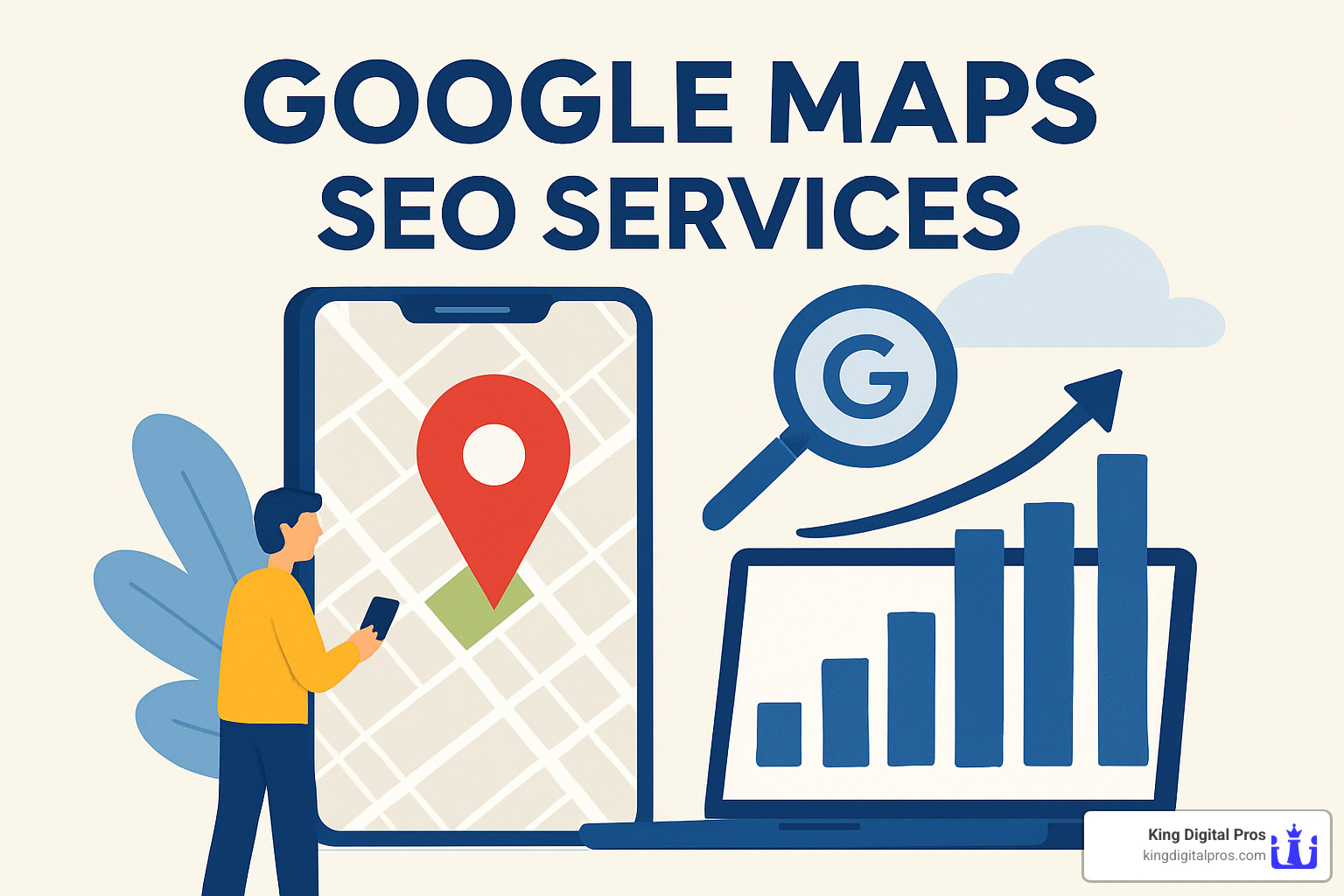
Google Maps SEO services help local businesses improve their visibility in Google Maps search results. If you’re searching for a way to boost your local presence, here’s what you need to know:
- Definition: Professional optimization of your Google Business Profile to appear higher in Google Maps and local search results
- Cost: Typically ranges from $300-$1000/month based on market competitiveness
- Key components: GBP verification, NAP consistency, review management, local citations
- Timeline: Initial results in 30-90 days; competitive rankings in 3-6 months
Gone are the days when customers flip through the Yellow Pages to find local businesses. Today, nearly one-third of all mobile searches are location-based, with 76% of people who search for something nearby on their smartphone visiting a business within 24 hours. If your business isn’t optimized for Google Maps, you’re essentially invisible to these potential customers.
The stakes are high: businesses appearing in Google’s coveted “3-pack” (the top three map listings) receive a staggering 126% more traffic than businesses ranked 4-10. For small businesses with physical locations, this isn’t just a nice-to-have—it’s essential for survival.
What makes Google Maps SEO different from traditional website SEO is its focus on proximity, relevance, and prominence. While your website might rank well nationally, Google Maps prioritizes businesses that are geographically close to the searcher and have strong local signals.
I’m Bernadette King, founder of King Digital Marketing Agency, with extensive experience providing Google Maps SEO services that have helped hundreds of local businesses achieve top map rankings and increase their foot traffic by up to 58%. Let me guide you through the essentials of putting your business on the map—literally.
Google Maps SEO vs. Traditional SEO: Why Local Intent Wins
Picture this: Someone’s walking through downtown Albuquerque, craving caffeine, and pulls out their phone to search “coffee shops.” They’re not looking for a blog post about coffee bean origins—they want directions to the nearest latte, pronto! This perfectly illustrates the fundamental difference between traditional SEO and Google Maps SEO services: local intent signals someone who’s ready to buy right now.
Traditional SEO casts a wide net, aiming to rank your website for specific keywords across broad geographic areas. It’s about building brand awareness, driving website traffic, and generating leads over time—often with a lengthy, complex conversion path.
Google Maps SEO, however, targets those magical “I want to go” micro-moments—when users are actively searching for a local business and ready to take immediate action. These “near me” searches have skyrocketed in recent years, with Google reporting a staggering 900% increase in mobile searches including phrases like “near me,” “open now,” and “can I buy.”
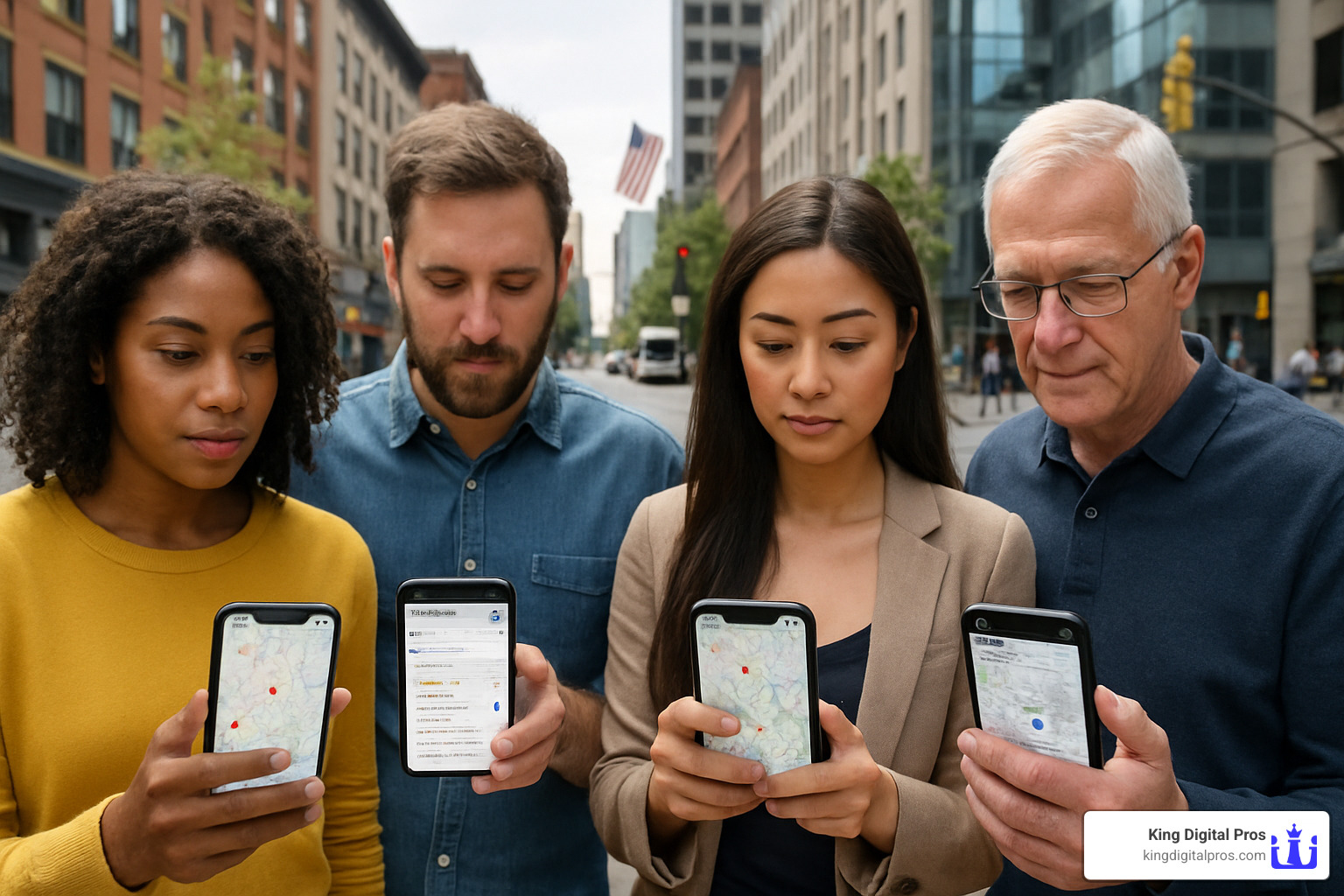
What makes local intent so powerful is that it often results in zero-click searches—where customers find everything they need directly in the search results without visiting your website. Your Google Business Profile becomes a mini-storefront right in the search results, displaying your hours, phone number, reviews, and even allowing direct messaging.
Key Differences That Affect Strategy
Understanding these crucial differences shapes how we approach Google Maps SEO services for local businesses:
SERP Layout: When local intent is detected, Google prominently displays the Map Pack (or 3-Pack) above organic listings, giving these results prime real estate that captures immediate attention and clicks.
Ranking Factors: While traditional SEO heavily weighs content quality and backlinks, Maps SEO dances to a different tune. Proximity to the searcher becomes paramount, alongside category relevance, NAP (Name, Address, Phone) consistency, review quality and quantity, and citation accuracy across the web.
Conversion Path: The beauty of Maps SEO is its directness. Traditional SEO might require multiple touchpoints before conversion, but local searches often lead to immediate action—with 78% of local mobile searches resulting in an offline purchase within just 24 hours.
Content Requirements: Rather than demanding regular, in-depth blog posts, Maps SEO thrives on accurate business information, quality photos that showcase your business, and consistent engagement with customers through review responses and regular GBP posts.
For businesses serving Albuquerque, Rio Rancho, Santa Fe, and other New Mexico communities, this means your Google Maps SEO services strategy must be laser-focused on local signals that tell Google you’re the most relevant, closest, and most prominent option for nearby searchers. When someone in your area is having that “I need this now” moment, you want to be the business that appears at the top of their map results—ready to welcome them through your doors.
How Google Determines Local Rankings: Relevance, Distance, Prominence
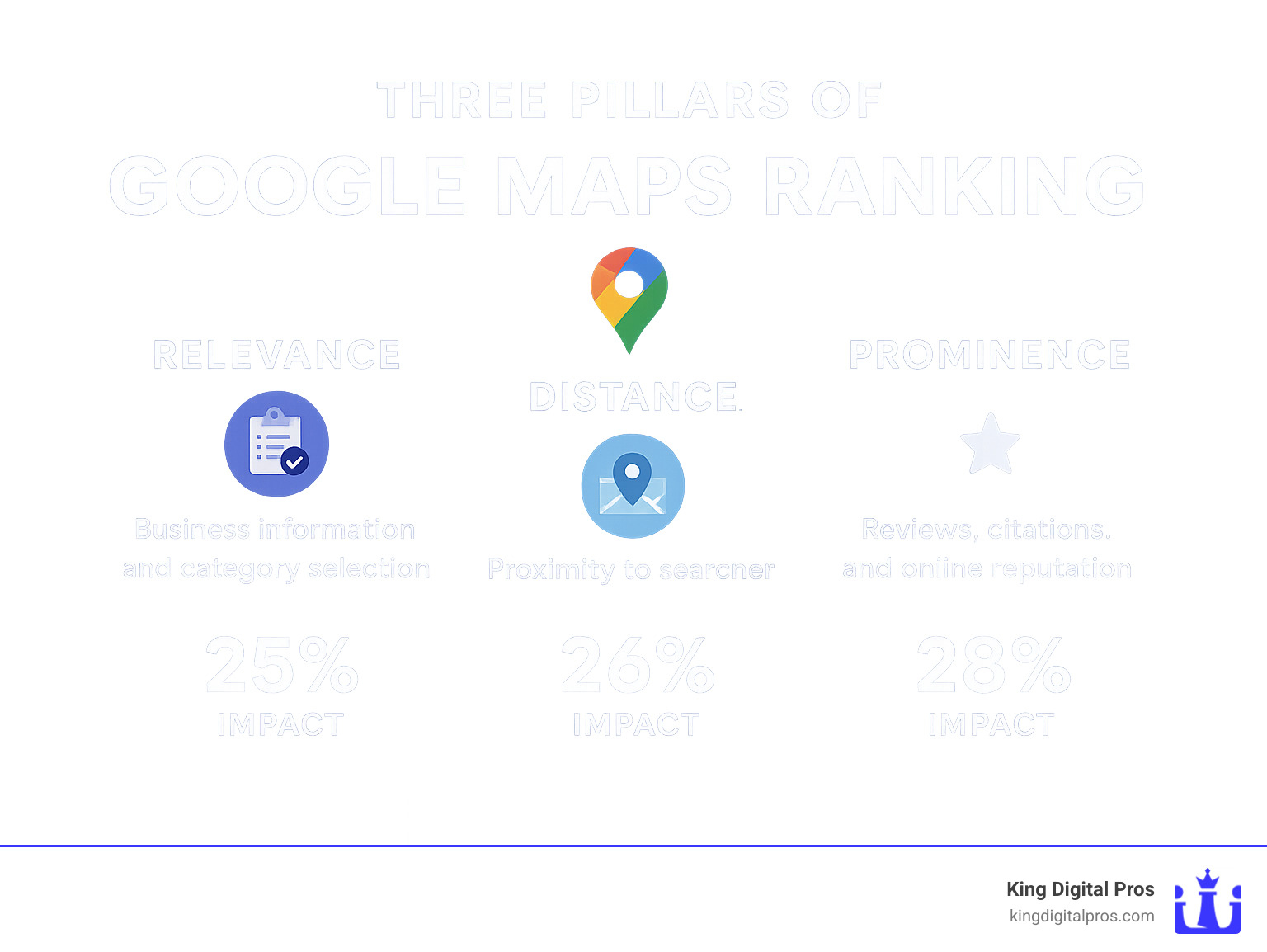
When it comes to local search rankings, Google isn’t keeping any secrets. They’ve clearly told us what matters: relevance, distance, and prominence. Understanding these three pillars is essential for any effective Google Maps SEO services strategy.
Relevance
Think of relevance as Google’s way of matching the right businesses to the right searches. If someone in Santa Fe is craving tacos, Google wants to show them taco shops, not hardware stores (no matter how fantastic that hardware store might be).
Your business shows relevance through several key signals. You’ll want to select the most accurate business categories (primary and secondary), create a natural but keyword-rich business description, and provide complete information about your hours, services, and unique attributes. Your website content should align perfectly with what your business actually does, and your photos should visually confirm your business type. When all these elements align, Google sees you as highly relevant to matching searches.
Distance
Distance is pretty straightforward – how far is your business from the person searching? This factor shifts constantly depending on who’s searching and where they are. While you can’t control where your customers are standing when they search, you can influence how Google perceives your service reach.
Make sure your address is spot-on accurate. If you serve customers beyond your physical location, set up proper service areas in your profile. For businesses serving multiple neighborhoods or towns, creating location-specific pages can help you appear more relevant to searches from those areas, even if they’re not right next door to your storefront.
Prominence
Prominence is essentially Google’s measure of how well-known and trusted your business is. Think of it as your local business reputation score. This is where the bulk of your Google Maps SEO services efforts will likely focus.
Your prominence builds through several factors: the quantity, quality, and recency of your reviews; consistent citations across the web; links to your website from respected local sources; mentions in local publications; user engagement with your Google Business Profile (clicks, calls, direction requests); and various social signals and online mentions.
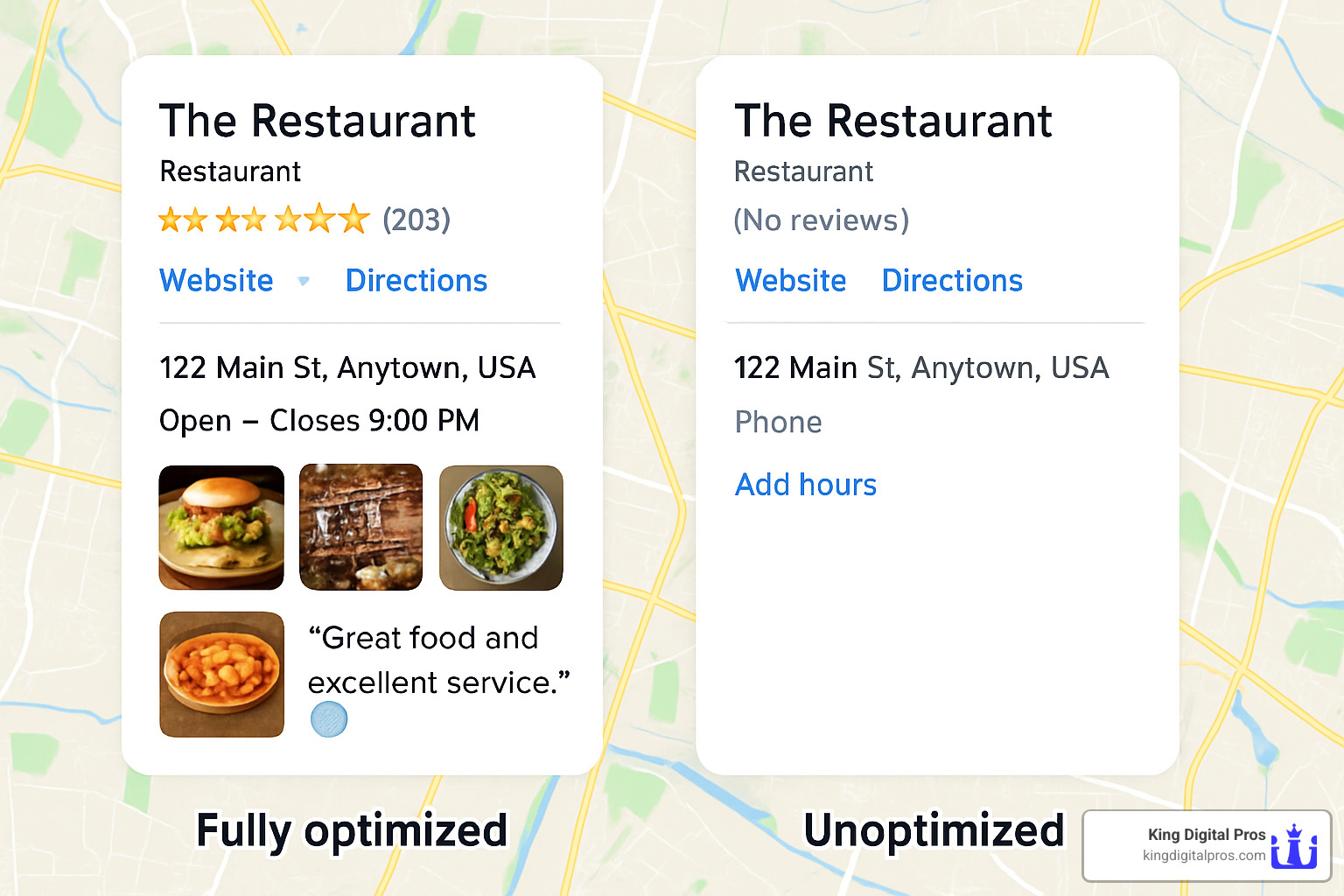
Signals You Control vs. Signals You Influence
Not all ranking factors are created equal when it comes to your ability to directly impact them. Understanding this distinction helps you prioritize your efforts.
You directly control your business information accuracy, category selection, photo quality and quantity, how you respond to reviews, and the regular posts you make on your Google Business Profile. You also control your website optimization for local keywords and implementation of schema markup.
Other signals you can influence, but not directly control, include your review volume and sentiment, citations across directories, local backlinks and mentions, user engagement metrics, and click-through rates from search results.
At King Digital Marketing Agency, we’ve seen businesses in New Mexico markets like Albuquerque and Santa Fe make remarkable progress by focusing first on the signals they directly control. Once those foundations are solid, we help them gradually build influence over external signals through strategic outreach and reputation management. This two-phase approach typically delivers the most sustainable results in the shortest time frame.
The weight of these three pillars – relevance, distance, and prominence – varies depending on the search and the market, but together they form the complete picture Google uses to determine which businesses appear in those valuable top map positions.
Google Maps SEO Services: A Step-by-Step Optimization Framework
Implementing effective Google Maps SEO services requires a systematic approach. Here’s our proven framework that has helped businesses across New Mexico achieve top map rankings:
Setting Up a Google Business Profile with Google Maps SEO Services
The foundation of any Google Maps strategy is a fully optimized Google Business Profile. Here’s how to get it right:
Claim and verify your listing: Visit business.google.com to claim your business. Verification typically happens via postcard (3-5 business days), but some businesses may qualify for phone or email verification.
Choose the right primary category: This is perhaps the single most important selection you’ll make. Be as specific as possible—”Mexican Restaurant” is better than just “Restaurant.”
Add secondary categories: Don’t overlook these—they help you appear for related searches.
Complete every field possible: The more information you provide, the better Google understands your business:
- Business name (exactly as it appears on your signage, no keyword stuffing)
- Address (consistent with what appears elsewhere online)
- Phone number (preferably a local number, not toll-free)
- Website URL (ideally a location-specific page if you have multiple locations)
- Business hours (including special hours for holidays)
- Attributes (payment methods, accessibility features, etc.)
- Products and services
Add high-quality photos: Businesses with 100+ images on their profile receive 520% more calls than those with fewer photos. Include:
- Exterior shots (from all approaches)
- Interior shots
- Team photos
- Product/service photos
- Behind-the-scenes images
Write a compelling business description: Use your 750 characters wisely, incorporating relevant keywords naturally while describing what makes your business unique.
Set up messaging: Enable the messaging feature to allow customers to text you directly from your listing.
Maintaining NAP Consistency with Google Maps SEO Services
NAP (Name, Address, Phone) consistency is the backbone of local SEO. When your business information is consistent across the web, it builds trust with both users and search engines.
Here’s how to maintain perfect NAP consistency:
Conduct a citation audit: Use tools like BrightLocal or Moz Local to identify where your business is listed and spot inconsistencies.
Create a master NAP document: Document your exact business name, address format, and phone number to use consistently everywhere.
Fix discrepancies: Work through each directory where your information appears and update it to match your master NAP.
Add structured data to your website: Implement LocalBusiness schema markup on your website to clearly communicate your NAP to search engines.
Include NAP in your website footer: This ensures it appears on every page of your site.
As Avram Gonzales, a respected local SEO expert, notes: “Your business could be invisible online—just because of inconsistent NAP details!” We’ve seen businesses in Los Alamos and Taos jump several positions in map rankings simply by standardizing their NAP across all platforms.
Leveraging Reviews & Reputation for Map Prominence
Reviews are perhaps the most powerful signal for Google Maps rankings—and they’re becoming increasingly important each year.
Effective review management includes:
Developing a systematic review generation strategy:
- Train staff to ask satisfied customers for reviews
- Follow up with email or text requests after service
- Make it easy with direct review links
- Consider a reputation management system for automation
Responding to ALL reviews: Both positive and negative reviews deserve responses. This shows Google and potential customers that you’re engaged and care about feedback.
Optimizing review responses: When responding, naturally incorporate relevant keywords and location information where appropriate.
Monitoring review sentiment: Track common themes in feedback and address operational issues that generate negative reviews.
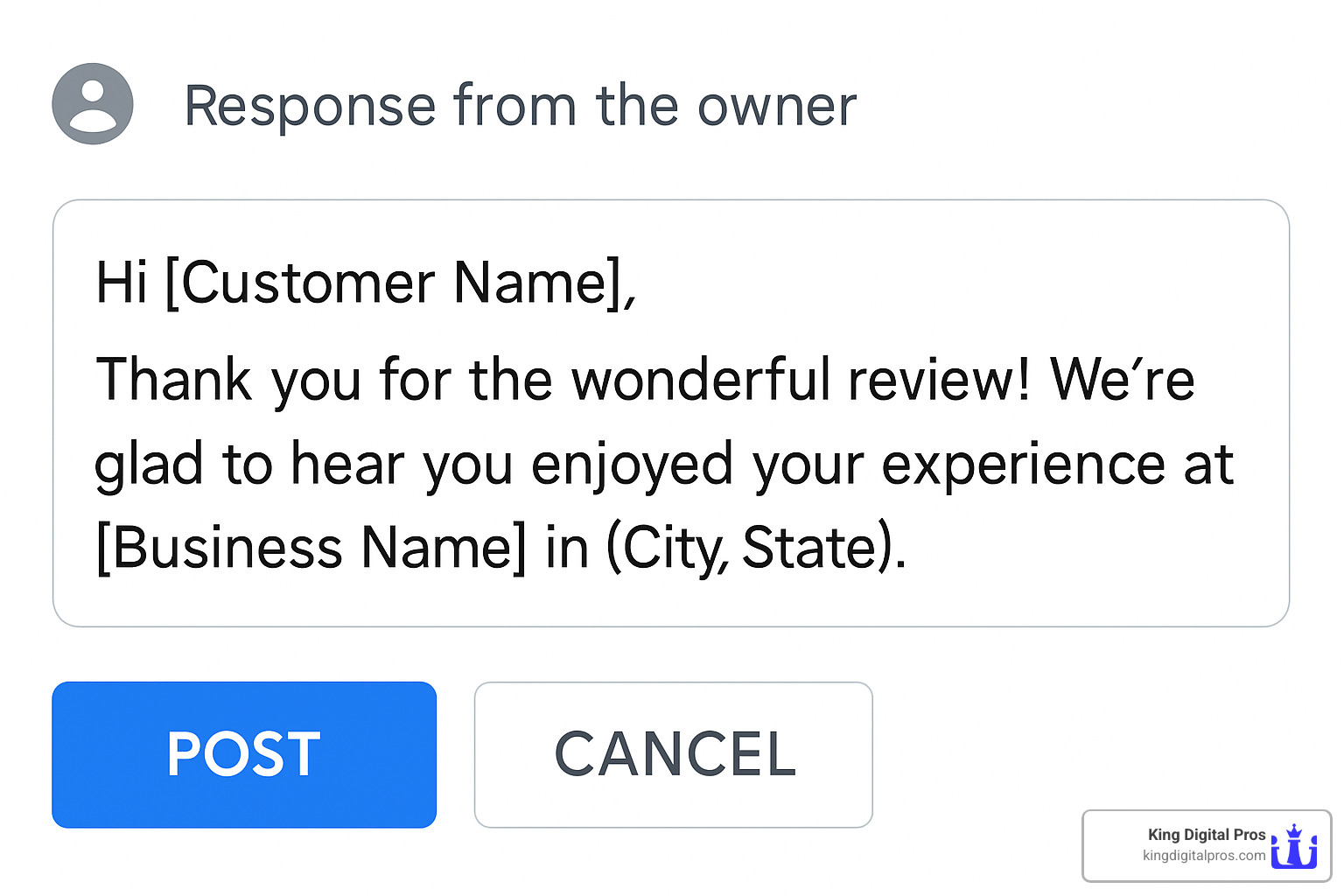
Our clients in Corrales and Cedar Crest have seen their review counts double within 3 months using our systematic approach, directly correlating with improved map rankings.
Building Local Citations & Backlinks That Move the Needle
Citations are mentions of your business NAP on other websites, while backlinks are hyperlinks pointing to your site. Both are crucial for Google Maps SEO services.
Top citation sources to prioritize:
- Google Business Profile (primary)
- Bing Places
- Apple Maps
- Yelp
- Facebook Business
- Better Business Bureau
- Yellow Pages
- Foursquare
- Local Chamber of Commerce
- Industry-specific directories
Effective local link building strategies:
- Join local business associations: Chambers of Commerce, business improvement districts, and professional associations often list members with links.
Sponsor local events: Community sponsorships usually come with website mentions and links.
Get local press coverage: Develop relationships with local journalists in Albuquerque, Santa Fe, and other New Mexico markets.
Create locally relevant content: Publish content about local events, news, or guides that naturally attract links.
Partner with complementary businesses: Develop relationships with non-competing local businesses for mutual linking opportunities.
Citation quality matters more than quantity. A listing on your local Chamber of Commerce website carries more weight than dozens of generic directory listings.
Creating City Pages & Local Content to Expand Reach
While your physical location limits where you can appear in the Map Pack, you can expand your reach through strategic content creation:
Develop city-specific landing pages: If you serve multiple areas (like Albuquerque, Rio Rancho, and East Mountains), create dedicated pages for each location with:
- Location-specific content (not duplicate content)
- Local landmarks and references
- Testimonials from local customers
- Embedded Google Map of the area
- Location-specific schema markup
Create local content assets: Develop resources specifically for your service areas:
- “Best of” guides for your industry in specific locations
- Local event sponsorship announcements
- Community involvement stories
- Location-specific FAQs and service information
Implement proper internal linking: Connect your location pages with strategic anchor text to help Google understand the relationship between your business and these areas.
This strategy has helped our clients in Edgewood, Sandia Park, and Tijeras expand their reach beyond their physical location, capturing organic traffic from surrounding areas even when they can’t appear in the Map Pack for those locations.
Measuring Success & Pricing: From DIY Tools to Managed Campaigns
When it comes to Google Maps SEO services, knowing whether your efforts are working is just as important as implementing them. Let’s talk about how to track your progress and what kind of investment you should expect.
KPIs and Reporting Cadence That Matter
Success in Google Maps isn’t a mystery—it’s measurable. The trick is focusing on the right metrics that actually indicate growth:
Your Map Pack position tells the most immediate story. Are you showing up in the coveted top 3 spots when someone searches for your services in your area? Tools like BrightLocal and Semrush can track this for you automatically, saving you from manually checking rankings every day (we’ve all been there!).
Your Google Business Profile insights reveal the real engagement story. I love showing clients how many people actually saw their listing (search views), whether users found them on Maps or regular Search, and—most importantly—what actions those viewers took. When we see direction requests climbing month over month, that’s when business owners really start smiling.
Review metrics matter tremendously too. Not just your total count (though that’s important), but also your average rating, how frequently you’re receiving new reviews, and what customers are actually saying. The sentiment behind reviews often reveals operational improvements that can boost your business beyond just your maps ranking.
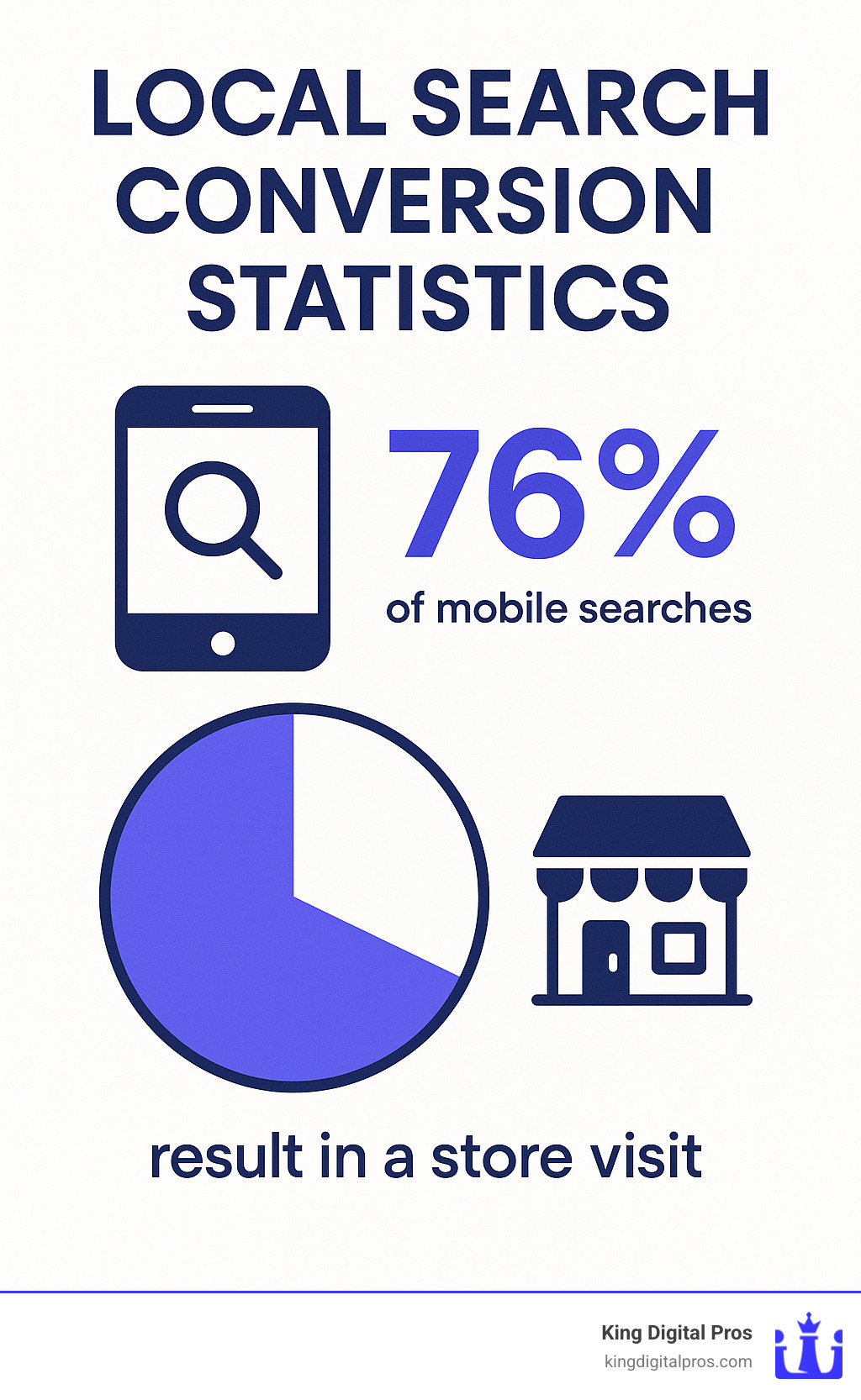
Website traffic from Maps and conversions from that traffic complete the picture. After all, visibility that doesn’t generate business isn’t worth much. We recommend monthly reporting for most businesses—frequent enough to spot trends but not so frequent that you don’t give strategies time to work. Then, every quarter, it’s smart to step back and review the bigger picture to adjust your approach.
Typical Costs & Service Tiers Explained
I’m often asked, “What should I budget for Google Maps SEO services?” The answer depends on your goals and how hands-on you want to be.
The DIY route can be surprisingly affordable. Your Google Business Profile is free to claim and manage. Basic citation tools run between $79-$300 per year, while review management platforms typically cost $50-$200 monthly. If you have the time and inclination to learn the ropes, this can be a viable path.
For professional services, you’ll typically find options at three levels:
Basic Google Maps Optimization ($300-$500 monthly) covers the essentials: getting your GBP properly set up, building basic citations, monitoring and responding to reviews, and providing monthly reports on your progress. This tier works well for businesses in less competitive markets or those just starting their local SEO journey.
Comprehensive Local SEO ($500-$800 monthly) adds more muscle with advanced citation building, proactive review generation strategies, regular competitor analysis, and weekly posts to your GBP to keep it fresh and engaging. At this level, you’ll also get schema markup implementation—technical stuff that makes a real difference in how Google understands your business.
Premium Local Dominance ($800-$1,500 monthly) is for businesses serious about owning their local market. Beyond everything in the comprehensive package, you’ll get dedicated location pages developed, strategic local link building, integrated reputation management across platforms, and a custom reporting dashboard with a dedicated account manager who knows your business inside and out.
At King Digital Marketing Agency, we’ve deliberately chosen not to lock clients into contracts. We believe our results should keep you with us, not legal obligations. Most businesses we work with see their rankings start to move within 30-90 days, with truly competitive positions achieved within 3-6 months, depending on your starting point and how fierce your local competition is.
The most expensive option isn’t always the right one—what matters is finding the approach that aligns with your goals and delivers a solid return on investment for your specific business situation.
Common Pitfalls, Scams, and Frequently Asked Questions about Google Maps SEO
Let’s talk about the darker side of Google Maps SEO services – the stuff nobody wants to encounter but everyone should know about. I’ve seen too many business owners fall victim to bad practices that not only waste money but can actually harm their online presence.
When navigating Maps SEO, there are several dangerous practices you’ll want to steer clear of. Adding keywords to your business name might seem clever (like “Albuquerque Best Plumber – 24/7 Emergency Service”), but it’s actually a direct violation of Google’s guidelines and can get your listing suspended faster than you can say “keyword stuffing.” Similarly, purchasing fake reviews or filtering out negative feedback before it’s posted are big no-nos that can result in penalties.
Some businesses think creating multiple listings will increase their visibility – it won’t. Each physical location should have exactly one listing. And while a virtual office or P.O. box might save on overhead costs, Google requires businesses to have a genuine physical presence at their listed address to appear in Maps results. Last but not least, those cheap backlink packages promising hundreds of links? They’re likely to trigger penalties rather than boost your rankings.
How can you spot potential scams? Be wary of anyone guaranteeing #1 rankings – no ethical SEO professional can promise this. If the price seems unusually low compared to market rates, there’s probably a reason (and not a good one). Promises of immediate results, lack of transparency about methods, vague reporting metrics, and long-term contracts with harsh cancellation penalties are all red flags that should have you running in the opposite direction.
FAQ #1 – How long does it take to reach the 3-Pack?
This is probably the question I get asked most often, and the honest answer is: it depends. The timeline varies based on your current optimization level, how competitive your market is, your business age and existing reputation, and how consistently you implement optimization efforts.
In smaller New Mexico markets like Grants or Taos, businesses might see 3-Pack rankings within 1-3 months. But if you’re in highly competitive industries or locations like Albuquerque or Santa Fe, you’re typically looking at 4-8 months of consistent effort.
I always recommend focusing less on “reaching the 3-Pack” as your only goal and more on tracking incremental improvements in visibility, customer actions, and conversions. Even moving from position #10 to position #4 can significantly boost your business visibility and bring in new customers.
FAQ #2 – Are paid Local Services Ads necessary?
Google Local Services Ads (LSAs) appear above both the Map Pack and traditional ads and feature that coveted “Google Guaranteed” badge. They’re effective, but they’re not necessary for every business.
Think of LSAs as a complement to organic Maps SEO, not a replacement. They’re currently only available for certain industries (primarily home services, legal, and financial), and they require background checks and insurance verification to qualify.
My recommendation? Invest in organic Maps SEO first to build a sustainable foundation that will serve your business for years to come. Then, if your industry qualifies and your budget allows, consider LSAs as an additional traffic source to capture even more local customers.
FAQ #3 – What guarantees should a provider give?
Reputable Google Maps SEO services providers should offer transparency about methods and timelines, regular reporting with clear metrics, and month-to-month agreements rather than long-term contracts. They should also have a clear onboarding process with a deliverables schedule and demonstrate ethical adherence to Google’s guidelines.
Be very cautious of providers guaranteeing specific rankings or immediate results – these are promises that simply can’t be ethically kept. Instead, look for guarantees around communication, reporting, and adherence to best practices.
At King Digital Marketing Agency, we offer a 30-day satisfaction guarantee on our services. If you’re not happy with our communication, transparency, or initial work, you can cancel without penalty. We believe in earning your business every month through results and excellent service, not by locking you into lengthy contracts.
Conclusion: Your Roadmap to Google Maps Success
After diving into the details of Google Maps SEO services, you might be wondering where to begin. The good news? You don’t need a degree in digital marketing to get your business on the map—you just need a clear plan and consistent execution.
Think of local search visibility like tending a garden. Plant the right seeds, nurture them regularly, and you’ll eventually harvest the results. By focusing on Google’s three pillars of local search—relevance, distance, and prominence—you can systematically grow your visibility to nearby customers who are actively looking for what you offer.
Here’s your straightforward path to success:
First, build a solid foundation with a fully optimized Google Business Profile. This is your digital storefront, and every detail matters—from your business hours to the quality of your photos.
Next, establish trust through consistent NAP information everywhere your business appears online. When Google sees the same name, address, and phone number across the web, it gains confidence in your legitimacy.
Then, generate authentic social proof by encouraging happy customers to share their experiences through reviews. Remember to respond thoughtfully to every review—yes, even the occasional negative one.
As you gain momentum, expand your digital footprint with strategic citations and local links. Quality matters more than quantity here—a mention on your local Chamber of Commerce website carries more weight than dozens of generic directories.
To reach beyond your immediate area, extend your reach through location-specific content that speaks directly to the communities you serve. This helps you connect with potential customers even when you can’t appear in their local map results.
Finally, measure and refine your approach based on real performance data. What gets measured gets improved, and small adjustments can lead to significant gains over time.
For businesses across New Mexico’s diverse communities—from busy Albuquerque to artistic Santa Fe, scientific Los Alamos to scenic Taos—local visibility isn’t just nice to have; it’s essential for survival. With 78% of local mobile searches resulting in an offline purchase within 24 hours, your presence (or absence) on Google Maps directly impacts your revenue.
At King Digital Marketing Agency, we’ve walked alongside hundreds of local businesses as they’ve transformed their digital presence through expert Google Maps SEO services. We’ve seen how improved map visibility translates into ringing phones, appointment bookings, and foot traffic through the door.
Whether you’re starting from scratch or looking to outrank aggressive competitors, we provide the expertise, tools, and consistent effort needed to get your business on the map—and keep it there. We believe in building partnerships, not just providing services, which is why we focus on transparency, education, and measurable results.
Ready to stop getting lost in local search? Learn more about our services or contact us today for a free local visibility audit. Let’s put your business on the map, together—where your customers can find you right when they need you most.