Digital marketing for startups: Avoid 5 Fatal Errors
Why Digital Marketing for Startups Can Make or Break Your Business
Digital marketing for startups is the difference between becoming a success story and joining the 90% of new businesses that fail. Here’s what you need to know:
Essential Digital Marketing for Startups:
- Build your foundation first: Clear goals, defined audience, high-converting website
- Start with high-ROI channels: SEO, content marketing, email (not everything at once)
- Measure what matters: Track CAC, conversion rates, and actual revenue-not vanity metrics
- Scale what works: Test small, double down on winners, cut losers fast
- Adapt by stage: Pre-launch buzz -> launch splash -> post-launch momentum -> growth scaling
The harsh truth? Most startups don’t fail because they have a bad product. They fail because around 90% of them never connect with the right audience at the right time. Digital marketing solves this problem – if you approach it strategically.
You don’t need a massive budget. You need a plan.
This guide walks you through exactly how to build a digital marketing strategy that drives real growth, from laying your foundation to scaling successfully. You’ll learn which channels to prioritize, how to measure what actually matters, and how to avoid the costly mistakes that sink most startups.
I’m Bernadette King, founder of King Digital Marketing Agency, and I’ve spent years helping local businesses and franchise owners cut through the noise and build sustainable growth through strategic digital marketing for small businesses. The principles that work for established businesses work even better for startups – when applied correctly.
For broader context on why so many new ventures struggle to reach customers, see this overview of global startup survival patterns from the U.S. Small Business Administration. It underscores how critical it is to connect with the right market early.
The Indispensable Foundation: Goals, Audience, and Your Digital HQ
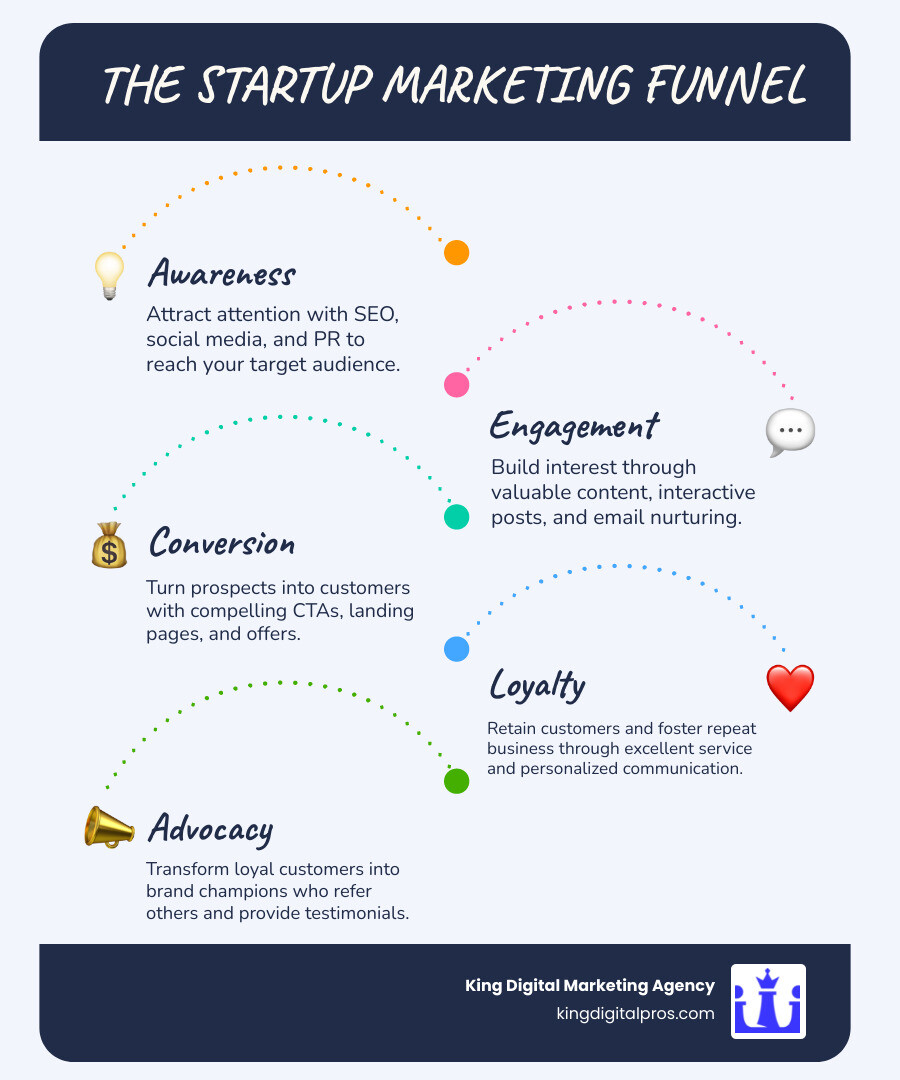
Before we even think about flashy campaigns or trending social media dances, we need a rock-solid foundation. Imagine building a skyscraper without blueprints – it simply won’t stand. The same goes for digital marketing for startups. Our primary goals are typically clear: to build brand awareness, generate leads, and acquire customers. But “more sales” isn’t a goal; it’s a wish. We need SMART goals: Specific, Measurable, Achievable, Relevant, and Time-bound. For instance, “Increase qualified leads from our website by 30% in Q3” is a SMART goal we can actually work towards.
Next, we must know who we’re talking to. Creating detailed buyer personas helps us understand our ideal customers inside and out – their pain points, where they hang out online, and what language resonates with them. This ensures our messaging hits home. Simultaneously, a thorough competitor analysis reveals what others are doing well, where their content or strategy gaps lie, and how we can differentiate our startup. Our Unique Value Proposition (UVP) clearly states what we do and why we’re different, making us stand out. Finally, achieving product-market fit – ensuring our product or service truly meets an unmet need in the market – is paramount before scaling any marketing efforts.
For an in-depth look at how structured research supports product-market fit, you can review this guide to startup market research from Harvard Business School Online. It reinforces how critical it is to validate assumptions with real customer insight.
Why Digital Marketing for Startups is a Non-Negotiable
For startups, digital marketing isn’t just an option; it’s a lifeline. It offers a cost-effective way to advertise, build brand awareness, and drive targeted traffic to our websites. This allows even bootstrapped ventures to compete with bigger brands and scale rapidly. Think of it as leveling the playing field.
Traditional marketing often requires hefty budgets, but digital channels can be incredibly precise and measurable. This means we can allocate our limited resources to strategies that deliver the best return. Consider this: 97% of consumers who use search engines perform an online search to find a business or service they need. If we’re not online, we’re simply invisible to nearly all potential customers.
Studies from organizations like Pew Research Center consistently show how deeply search and mobile internet use are embedded in everyday buying behavior, especially for local services and emerging brands.
The ability to track every click, conversion, and customer journey gives us an unprecedented advantage. We can see what’s working, what’s not, and pivot our strategies quickly. This agility is crucial for startups. As a digital marketing agency for small businesses, we’ve seen how a strong digital presence can transform local startups in places like Albuquerque and Santa Fe, allowing them to connect with their community and grow.
Your Digital Home Base: A High-Converting Website
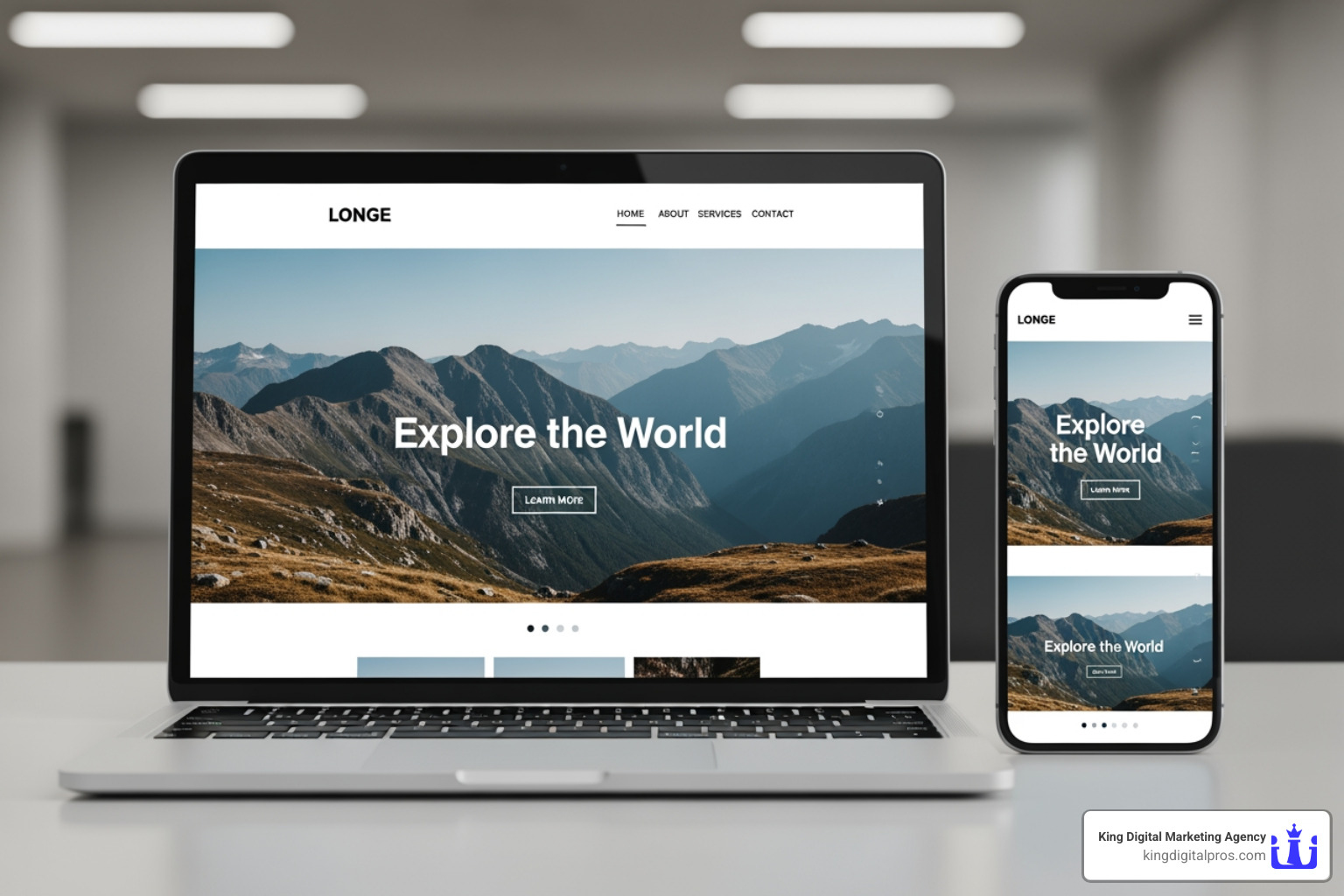
Our website is our 24/7 salesperson, our digital storefront, and often the very first impression potential customers have of our startup. It needs to be more than just pretty; it needs to be a high-converting machine. A compelling website has a crystal-clear Unique Value Proposition (UVP), seamless User Experience (UX), and is designed mobile-first. Why mobile-first? Because most users will find us on their phones.
Speed is another non-negotiable. Aim for website load times under 3 seconds; anything slower and we risk losing visitors before they even see our brilliant offering. Independent benchmarks from sources like Google’s Web.dev repeatedly show how page speed and Core Web Vitals influence both user behavior and search visibility.
Finally, strong, clear Calls-to-Action (CTAs) guide visitors to the next step, whether it’s signing up for a newsletter, requesting a demo, or making a purchase. We ensure our sites are built with SEO friendly website design principles in mind, and offer website update services to keep them performing optimally. After all, the goal is to make sure our website is converting visitors into customers.
Core Digital Marketing Strategies for Startups
With our foundation set, it’s time to explore the strategies that will attract, engage, and convert our target audience. Startups can’t afford to do everything, so prioritizing channels and adopting a lean marketing approach is key. We focus on growth hacking – rapid experimentation to find what works best – and leverage inbound marketing to draw customers in, rather than blasting them with unwanted messages.
Content is King: Building Assets That Work 24/7
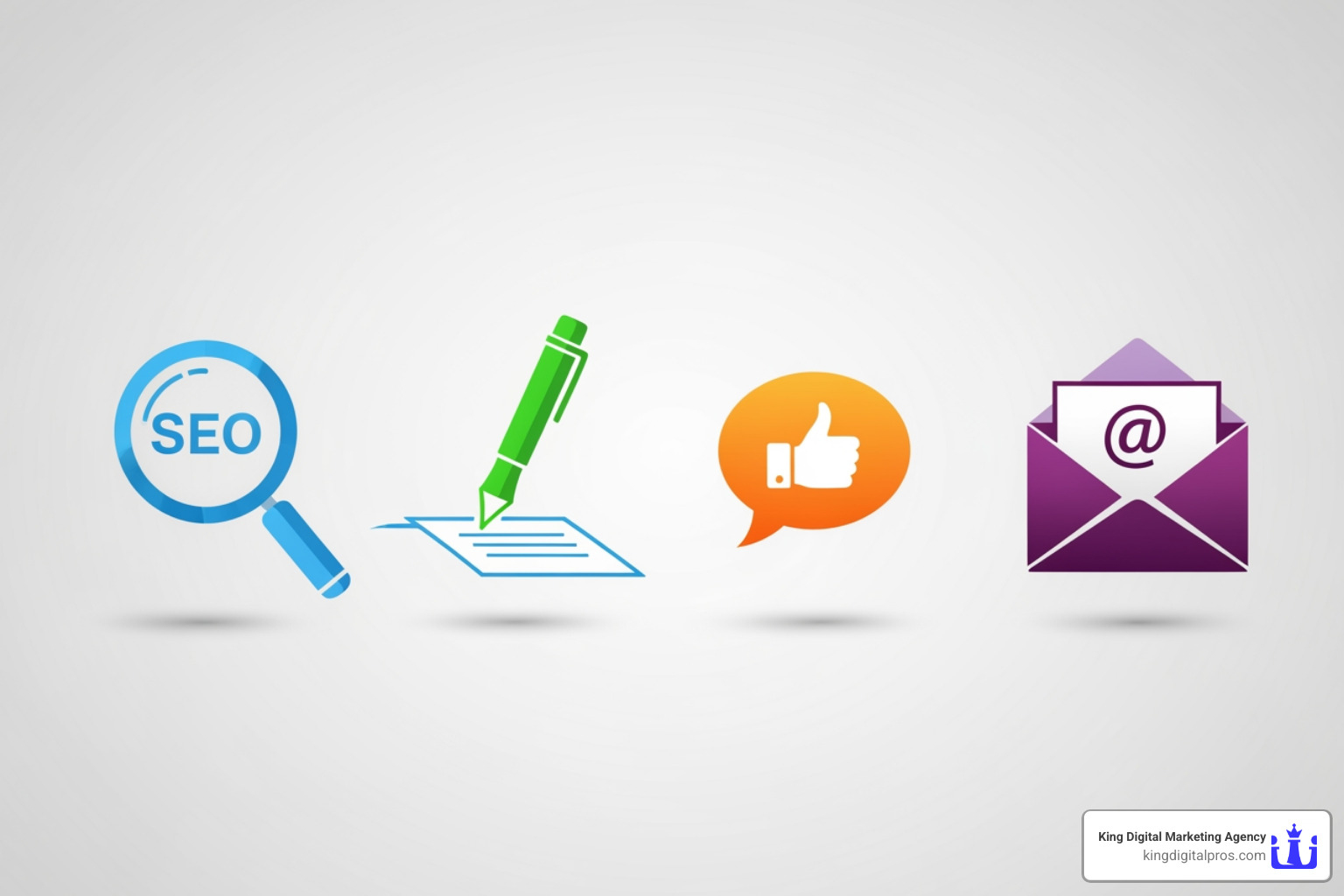
Content marketing is about creating valuable, relevant information that attracts, engages, and retains our audience. It’s about building assets that continuously generate leads and trust, working for us 24/7. This can take many forms: blog posts, how-to guides, checklists, and videos. The beauty of content is its versatility; we can repurpose a single blog post into social media snippets, an email newsletter, or even a short video.
The key is to focus on solving our audience’s problems and answering their questions. When we provide value, we build trust and establish ourselves as an authority. Case studies across the industry show that consistent, high-quality content can dramatically increase both organic traffic and lead volume over time. For example, research compiled by the Content Marketing Institute highlights how educational resources often outperform traditional ads for early-stage awareness.
We excel at helping businesses with their content writing business needs and providing expert copywriting services to ensure every word counts.
Get Found Organically: SEO for Long-Term Wins
Search Engine Optimization (SEO) is like free, targeted advertising once we rank. It’s the process of optimizing our website to achieve higher rankings on search engine results pages, driving organic traffic – which often has a high conversion rate.
For startups, mastering on-page SEO basics is crucial:
- Keyword research: Identifying the terms our target audience uses to find our products or services.
- Compelling title tags and meta descriptions: These are what users see in search results and entice them to click.
- High-quality content: That genuinely answers user queries and provides value.
- Logical site structure and internal linking: Making it easy for search engines (and users) to steer our site.
- Image alt text: Helping search engines understand our images.
Beyond on-page, link building (acquiring backlinks from reputable sites) boosts our website’s authority. And for local startups in our service areas like Rio Rancho, Taos, or Los Alamos, Local SEO is a game-changer. Optimizing our Google Business Profile is paramount; it ensures we show up in “near me” searches and on Google Maps, directly connecting us with local customers looking for our services. This is where our local marketing expertise ultimate guide truly shines, helping businesses grow locally.
If you want a neutral, technical perspective on how search engines evaluate sites, Google’s own Search Central documentation is a helpful reference.
Build Your Tribe: Social Media & Community Engagement
Social media isn’t just for sharing cat videos; it’s a powerful tool for startups to build brand awareness, engage with customers, and foster a loyal community. The trick is choosing the right platforms where our audience spends their time and focusing on engagement over simply broadcasting messages. Authenticity trumps polish here.
We encourage user-generated content (UGC), as independent surveys consistently show that people place strong trust in peer recommendations and customer reviews they see online. This social proof is invaluable for startups. By actively engaging with our followers – asking questions, responding to comments, and participating in relevant conversations – we build a genuine tribe around our brand. Whether it’s developing a strategy for social media for businesses or running targeted social media advertising campaigns, we help startups connect meaningfully.
For additional guidance on building healthy, transparent online communities, see the advertising and disclosure best practices from the Federal Trade Commission.
Nurture and Convert: The Unbeatable ROI of Email Marketing
While social media trends come and go, our email list remains our owned asset – a direct line to our most interested audience. Email marketing might seem old-fashioned, but it consistently delivers impressive results and remains one of the highest-ROI digital channels.
Building an email list starts with offering value through lead magnets – free resources like e-books, checklists, or exclusive content in exchange for an email address. Once we have subscribers, we nurture them with:
- Welcome series: Automated emails that introduce our brand and onboard new subscribers.
- Newsletters: Regular updates, valuable content, and promotions.
- Personalization and segmentation: Tailoring messages based on user behavior and interests to make them highly relevant.
This approach builds loyalty, drives repeat business, and fosters strong customer relationships. We also help startups implement robust CRM leads strategies to manage and optimize their customer interactions.
To better understand why email remains so effective, you can review benchmark reports from sources like DMA Global and other industry bodies that track open rates, click-throughs, and revenue impact across sectors.
A Phased Approach: Evolving Your Marketing from Launch to Scale
Our digital marketing for startups strategy isn’t static; it evolves with our business. The timing of our marketing efforts is crucial, and what works pre-launch will differ from what drives growth post-launch. We adapt our strategy and budget allocation as we move through different stages.
Pre-Launch: Building Buzz and an Initial Audience
Even before our product or service is ready, we can start building anticipation. This pre-launch phase is about establishing an online presence and generating excitement.
- “Coming soon” page: A simple landing page with a clear value proposition and an email signup form.
- Building an email list: Our earliest and most engaged audience.
- Engaging in online communities: Participating in relevant forums, Reddit threads, or Facebook groups to understand our audience and subtly introduce our concept.
- Seeding content: Sharing sneak peeks, behind-the-scenes glimpses, or early access opportunities.
Launch & Post-Launch: Making a Splash and Maintaining Momentum
Launch day is our moment to shine! We orchestrate a content blitz across all our channels, supported by strategic press outreach to gain media attention. Paid ad campaigns can provide an immediate boost in visibility and traffic.
Post-launch, the focus shifts to maintaining momentum and optimizing for conversions. We actively collect testimonials and reviews to build social proof, which is invaluable for new businesses. We analyze our conversion funnel to identify bottlenecks and implement retargeting campaigns to re-engage visitors who didn’t convert initially.
Growth Stage: Scaling What Works and Exploring New Channels
Once we have a proven product-market fit and a steady stream of customers, we enter the growth stage. This is where we scale what’s working and explore new opportunities.
- Increasing ad spend: Doubling down on profitable paid campaigns.
- Expanding content production: Creating more in-depth resources, videos, and thought leadership pieces.
- Marketing automation: Implementing tools to streamline repetitive tasks like email sequences and social media scheduling.
- A/B testing: Continuously experimenting with different ad copy, landing pages, and website elements to boost our conversion optimization.
- Exploring partnerships: Collaborating with complementary businesses or influencers to reach new audiences.
Measuring, Optimizing, and Future-Proofing Your Growth
The beauty of digital marketing is its measurability. We don’t just guess what works; we use data to make informed decisions, continuously iterate, and refine our strategies. This data-driven approach is what separates successful startups from those that fizzle out.
Measuring ROI in Digital Marketing for Startups
For startups, every marketing dollar must work hard. That’s why measuring Return on Investment (ROI) is paramount. We focus on Key Performance Indicators (KPIs) that directly impact our bottom line:
- Customer Acquisition Cost (CAC): How much it costs to acquire a new customer.
- Customer Lifetime Value (LTV): The total revenue a customer is expected to generate over their relationship with our business. Ideally, LTV should be significantly higher than CAC.
- Conversion Rate: The percentage of visitors who complete a desired action (e.g., make a purchase, fill out a form).
- Return on Ad Spend (ROAS): The revenue generated for every dollar spent on advertising.
We also use Dave McClure’s “Pirate Metrics” (AARRR) to track the customer journey: Acquisition, Activation, Retention, Revenue, and Referral. These metrics provide a holistic view of our marketing effectiveness. Understanding how to measure marketing ROI is fundamental, and our marketing ROI calculator complete guide provides the tools to do just that.
To complement this, analytics platforms such as Google Analytics offer powerful, free ways to track user behavior and attribution across your website and campaigns, giving startups enterprise-grade insight without enterprise costs.
The AI Advantage: How Startups Can Leverage Emerging Tech
Artificial Intelligence (AI) isn’t just a buzzword; it’s rapidly changing digital marketing for startups. With a growing share of marketing professionals implementing or seriously testing AI in their workflows, startups have a unique opportunity to leverage these tools for efficiency and competitive advantage.
AI can assist with:
- Content creation: Generating ideas, drafting outlines, and even writing initial copy.
- Automation: Automating routine tasks like email scheduling, social media posting, and chatbot responses.
- Data analysis: Sifting through vast amounts of data to identify patterns, predict trends, and optimize campaigns.
- Personalization: Delivering highly custom content and offers to individual users.
- Chatbots: Providing instant customer support and guiding users through sales funnels.
Short-form interactive videos, often improved by AI, have been shown in multiple industry reports to boost sales and conversions significantly when used thoughtfully in landing pages and social feeds.
Our Agentic AI marketing services are designed to help startups integrate these powerful tools for lead scoring, segmentation, and conversion optimization. For broader context, organizations like McKinsey & Company regularly publish neutral research on how AI is reshaping marketing productivity and customer experience.
Common (and Avoidable) Startup Marketing Mistakes
Even with the best intentions, startups often stumble. Here are some common pitfalls and how to avoid them:
- Marketing too late (or too early): Launching marketing efforts before product-market fit is established wastes resources. Waiting too long means missed opportunities. The sweet spot is building buzz pre-launch, then scaling strategically.
- Not defining the target audience: Without clear buyer personas, our marketing messages will be generic and ineffective. We need to know who we’re talking to.
- Ignoring data and ROI: Focusing on “vanity metrics” (like page views) instead of sales-correlated KPIs (like conversion rate or LTV) leads to wasted budgets. Track everything, analyze, and iterate.
- Spreading resources too thin: Trying to be everywhere and do everything with a limited budget is a recipe for mediocrity. Prioritize a few high-impact channels and master them before expanding.
- Inconsistent branding and messaging: Our brand voice, visuals, and core message must be consistent across all channels. Confusion breeds distrust.
Independent guides from sources like the U.S. Chamber of Commerce echo these themes, emphasizing focus, clarity, and measurement as non-negotiables for young companies.
Frequently Asked Questions about Startup Marketing
How much should a startup spend on digital marketing?
There’s no one-size-fits-all answer, but a common guideline suggests B2C startups might allocate 5-10% of their revenue to marketing, while B2B might be 2-5%. However, for startups, especially in early stages, it’s often about starting with what you can afford to test, focusing on high-ROI channels, and then scaling your spending based on proven performance. If a campaign brings in $5 for every $1 spent, we’d be foolish not to invest more.
Surveys from organizations like the U.S. Small Business Administration highlight that newer businesses often start below these benchmarks and ramp up as they identify which channels reliably generate revenue.
What are the first marketing hires a startup should make?
In many startups, the founder is the first marketer, often doing everything themselves. In fact, in a notable share of startups, the owner is the only person doing the marketing. As we grow, the first “hire” might be a versatile “T-shaped” marketer – someone with broad marketing knowledge but deep expertise in one or two key areas (like SEO or content). Alternatively, partnering with specialized freelancers or a digital marketing agency like ours can provide expert support without the overhead of a full-time employee, especially for critical tasks like local SEO or paid advertising.
For additional perspective on building an early-stage marketing team, neutral resources such as the HubSpot Blog share frameworks for deciding which skills to bring in-house versus outsource.
How can I promote my startup with no budget?
Promoting a startup with no budget requires creativity and elbow grease, but it’s absolutely possible. Focus on “free” channels and organic growth:
- SEO: Optimizing our website content for search engines can bring in organic traffic over time.
- Content creation: Blogging, creating helpful guides, or short videos on social media.
- Organic social media: Engaging authentically on platforms where our audience gathers.
- Building an email list: Offering valuable lead magnets for sign-ups.
- Networking: Both online in communities and offline at local events in places like Grants or Edgewood.
- Referrals and reviews: Encouraging happy customers to spread the word.
Many of these activities are supported by free tools – such as basic versions of email service providers or social scheduling platforms – which let you test and learn before committing budget. For a neutral overview of scrappy tactics, see the small-business marketing resources collected by Score.org.
Conclusion: Your Launch Sequence Starts Now
Launching a startup is a thrilling, challenging journey. While the odds can seem stacked against us, strategic digital marketing for startups provides the launchpad we need to connect with our audience, drive growth, and build a sustainable business. Remember to lay a strong foundation, prioritize smart strategies over chasing every trend, and let data guide your decisions.
We’ve seen the power of this approach for countless local businesses in New Mexico, from Cedar Crest to Tijeras, helping them not just survive, but thrive. Your journey to growth begins with a single, strategic step.
Explore our Digital Marketing Services to build your launchpad
