Boost customer acquisition: Ultimate Guide 2026
Why Customer Acquisition is the Lifeblood of Every Growing Business
Boost customer acquisition effectively, and you open up sustainable revenue, market share, and long-term business stability. Here’s what you need to know to get started:
- Define your target audience through detailed customer personas and research
- Leverage proven digital channels including SEO, content marketing, social media, and paid advertising
- Optimize for conversion by improving landing pages, adding social proof, and reducing friction
- Measure what matters by tracking Customer Acquisition Cost (CAC), Customer Lifetime Value (CLV), and conversion rates
- Build sustainable systems using data-driven insights, automation, and cross-team collaboration
Attracting new customers is a challenge every business faces, but with the right customer acquisition strategies, you can turn this challenge into a growth opportunity. Whether you’re a SaaS company, an eCommerce brand, or a local service provider, understanding how to systematically bring in new paying customers determines whether your business thrives or merely survives.
Customer acquisition is essential for boosting your company’s profits, increasing brand awareness, and building a stable foundation for the future. It’s not just about getting more traffic-it’s about attracting the right customers who will buy from you, return again, and tell others about your business. The most successful companies don’t rely on luck or single tactics. They build repeatable, data-driven acquisition systems that work across multiple channels.
The landscape has changed dramatically. Nearly 70% of all online experiences start with a search engine query, making SEO and content marketing non-negotiable for most businesses. Social media platforms offer unprecedented targeting capabilities, while email marketing continues to deliver an impressive ROI of $21 or more for every dollar spent. Referral programs turn happy customers into acquisition engines, and product-led growth strategies let potential customers experience value before committing.
But here’s the reality: it costs five times more to acquire a new customer than to retain an existing one. That’s why smart acquisition strategies balance efficiency with effectiveness, measuring not just how many customers you attract, but how much each customer costs to acquire (CAC) and how much revenue they generate over time (CLV).
I’m Bernadette King, and I’ve spent years helping businesses develop scalable customer acquisition strategies that drive measurable growth. Throughout this guide, I’ll share proven tactics to boost customer acquisition for your business, whether you’re just starting out or looking to optimize existing efforts.
Essential Boost customer acquisition terms:
- Lead Tracking Services
- Lead conversion tracking
- internet lead management
Understanding Your Customer: The Foundation of Acquisition
Before we even think about tactics, we need to understand who we’re trying to attract. This is where customer research becomes the bedrock of any successful strategy to boost customer acquisition. It’s the process of collecting data and insights that help us deeply understand our target audience-and empathize with their experience.
We start by defining our target audience. This isn’t just a vague idea; it’s a deep dive into demographics like age, gender, location (especially crucial for local businesses in Albuquerque, Santa Fe, and surrounding New Mexico areas), and income levels. But it goes beyond surface-level data. We need to identify their pain points – what problems are they trying to solve? What frustrations do they encounter?
This understanding then allows us to create detailed customer personas. These semi-fictional representations of our ideal customers include their motivations, challenges, goals, and online behaviors. For instance, a local plumbing service in Rio Rancho might create a persona for a homeowner struggling with a leaky faucet, detailing their typical online search behavior and preferred communication methods. Research shows that tailoring content to specific personas can significantly improve conversion rates; one company saw 124% more visitors convert into leads after creating more specific content custom to personas.
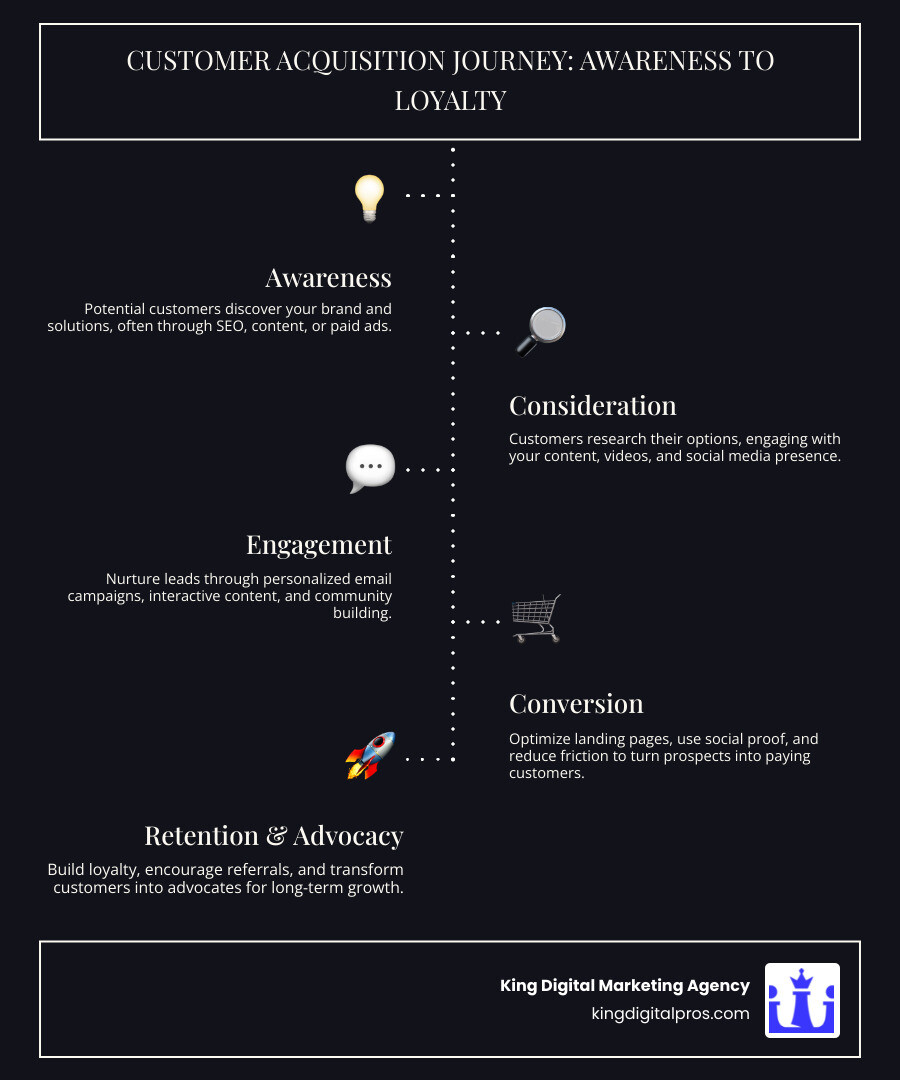
Mapping the customer journey is another critical step. This involves visualizing the entire path a potential customer takes from initial awareness of a problem or need to their ultimate purchase and beyond. By identifying every touchpoint, we can ensure our messaging and solutions are available and relevant at each stage.
It’s also important to differentiate between customer acquisition and customer retention. While acquisition focuses on bringing in new customers, retention is about keeping existing ones engaged and satisfied. Both are vital for growth, but they have different costs and strategies. It’s a well-known fact that it costs five times more to acquire a new customer compared to retaining an existing customer. This doesn’t mean we ignore acquisition, but it highlights the importance of a balanced approach. If customers are leaving sooner than they should, focusing on retention first can be more sustainable. After all, 80% of customers are more likely to stick around after a great experience, and an existing customer has a 27% chance of buying again after their first purchase, which jumps to 45% after their second. By effectively managing customer feedback, we can improve satisfaction and loyalty.
Proven Digital Strategies to Boost Customer Acquisition

To truly boost customer acquisition, we need a multi-channel approach. Relying on a single marketing channel is precarious. A multi-channel strategy combines various digital channels like SEO, content marketing, social media, paid ads, and email to diversify our reach, reduce risk, and identify the most successful pathways for our business. This comprehensive marketing strategy ensures we’re reaching potential customers wherever they are in their online journey.
Using Content Marketing and SEO for Organic Growth
Content marketing and SEO are the dynamic duo for organic customer acquisition. Content marketing involves creating and distributing valuable, relevant content-from blog posts and videos to whitepapers and ebooks. This establishes our authority in our niche, helps us acquire, engage, and persuade people to become paying customers. For a business in Taos, creating content about local events or unique cultural experiences can attract a highly relevant audience.
SEO, or search engine optimization, is about making sure that valuable content is easily findable. It involves optimizing our website content to earn unpaid, organic traffic from search engines. Improving SEO is one of the best ways to increase organic traffic to our site, meaning we can bring more visitors to our business without needing to spend a fortune on paid advertising. By conducting Local SEO Keyword Research and focusing on keywords relevant to our New Mexico locations, we can significantly Improve Search Ranking and attract highly motivated local customers. Optimizing for search engines increases our visibility and attracts more visitors to our site. Content marketing is an evergreen tactic for attracting customers, establishing authority in our niche by creating valuable and insightful material.
Engaging Audiences with Social Media and Video Marketing
Social media is a modern and powerful tool for customer acquisition, offering unique opportunities to engage with potential customers. Platforms like Facebook, Instagram, TikTok, and LinkedIn allow brands to engage with their audience where they spend their time. For businesses in places like Grants or Cedar Crest, local community groups on Facebook can be goldmines for engagement. Whether it’s through organic posts or paid amplification, social media provides a direct line to our audience.
Video marketing can significantly boost customer acquisition by providing a dynamic way to showcase products, answer questions, and engage with potential customers. Videos are a powerful tool because they provide an engaging way to explain complex products, showcase customer testimonials that build trust, and increase brand visibility on platforms like YouTube and social media. User-generated content (UGC), like customer videos or photos, is particularly impactful; people who engage with UGC convert 161% more often than those who don’t interact with it. Leveraging YouTube SEO Complete Guide can help us optimize our video content for findability. Our Social Media for Businesses guide can offer more insights.
Accelerating Growth with Paid Advertising and Referral Programs
For rapid customer acquisition, paid advertising is often the answer. Digital ads are a quick way to generate traffic, leads, and sales. Pay-per-click (PPC) ads on platforms like Google and social media apps like Facebook and Instagram can drive immediate results. Google Ads, in particular, are favored by 98% of marketers due to their vast reach and versatile ad platform. Effective PPC Management can ensure these campaigns are cost-efficient and targeted.
Referral programs leverage the immense power of word-of-mouth marketing. They encourage existing customers to refer new ones in exchange for rewards. This is incredibly effective because 88% of people trust recommendations from their network above all other advertising, and 42% trust online reviews as much as personal recommendations. Referral programs deliver strong ROI, often increasing revenue two to five times, depending on the industry. Referred customers are also 61% more likely to refer others, making it one of the simplest ways to increase customer lifetime value. Companies like Dropbox and PayPal famously used referral programs to achieve massive growth, demonstrating their power.
Nurturing Leads with Strategic Email Marketing
Email marketing remains incredibly effective for customer acquisition. It allows businesses to connect with potential customers directly in their inboxes, building relationships, keeping prospects engaged, and securing conversions. Email marketing remains one of the most effective customer acquisition channels with an impressive ROI; 78% of marketers report an ROI of $21 or more for every dollar spent.
We can use email marketing at different stages of the buyer journey. For new subscribers, a welcome series of emails introduces our brand, showcases best-sellers, and presents an offer. Research shows welcome series emails have high conversion rates, averaging 3.04%. For those who abandon their shopping carts, email marketing is one of the most straightforward methods to reduce Customer Acquisition Cost (CAC); the average cart abandonment rate is 69.57%, but abandoned cart recovery emails can recoup significant revenue. Personalization and segmentation are key to effective email marketing, ensuring our messages resonate with specific audience groups. Understanding How to Calculate ROI for Email Marketing helps us optimize our campaigns for maximum impact.
Optimizing for Conversion: Turning Visitors into Customers
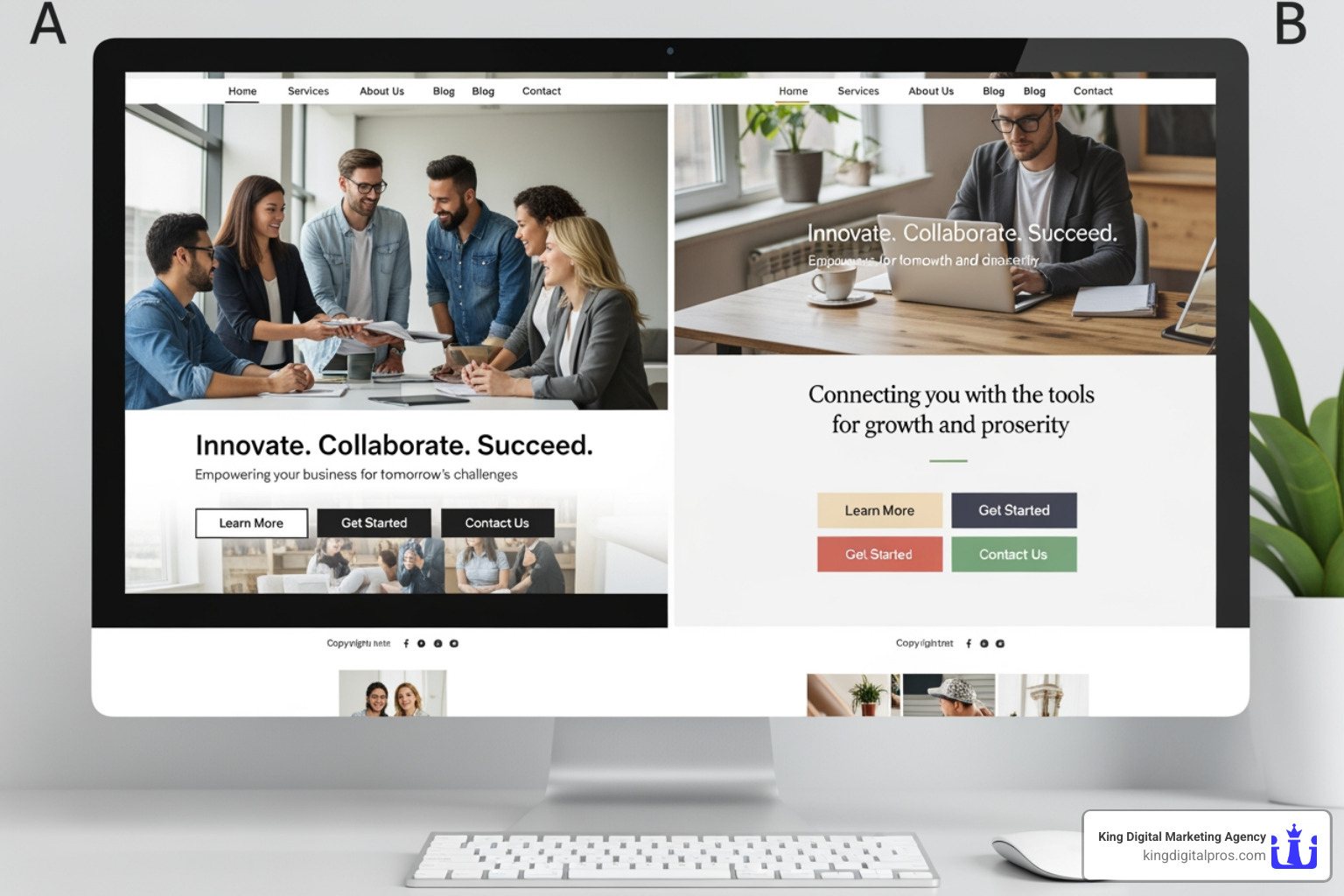
Getting visitors to our website is only half the battle; the next step is converting them into paying customers. This requires meticulous landing page optimization and enhancing overall website engagement. A well-designed landing page can significantly increase conversion rates. This means concise information, clear calls-to-action (CTAs), and a seamless user experience.
A/B testing is crucial here. By running A/B tests, we can understand what works and what doesn’t. We might test different headlines, button colors, images, or even entire page layouts to see which version performs better. This data-driven approach helps us continuously refine our pages for optimal conversion.
Social proof plays a massive role in building trust and encouraging conversions. Customer testimonials, reviews, and user-generated content are powerful. A study found that 95% of customers read online reviews before they shop, and 63% of customers are more likely to purchase from a site that has user reviews. If a customer lands on a product page with zero reviews, it’s a turn-off. We help businesses Boost Conversion Rates by leveraging positive feedback. For more insights, consult our Conversion Optimization Complete Guide.
Product-led growth tactics are also gaining traction, especially for SaaS and digital products. This strategy uses the product itself as the main vehicle for acquisition, customer retention, and expansion. Offering free trials or freemium models allows potential customers to experience the product’s value before committing to a purchase. For example, Headspace saw a 10% increase in free-to-paid conversion rates due to their gamified onboarding experience, making the learning process more enjoyable and reducing cognitive load.
Building a Sustainable and Data-Driven Acquisition Model
To truly boost customer acquisition for the long haul, we need to move beyond one-off campaigns and build a sustainable, data-driven acquisition model. This involves understanding the process and tactics our business uses to attract and convert new customers.
Traditionally, customer acquisition was viewed through a linear funnel: Awareness, Consideration, Conversion. However, the customer acquisition flywheel model offers a more continuous and powerful alternative. Unlike the funnel, which loses momentum after a sale, the flywheel is a continuous loop that helps a company maintain momentum throughout the customer lifecycle. It emphasizes delighting existing customers, who then become advocates, driving new customer acquisition through word-of-mouth and referrals. This model requires inter-team collaboration, aligning marketing, sales, product, and customer success teams towards shared goals.
Data-driven insights are critical to refining our acquisition strategies. We use customer research to understand patterns and predict behavior. AI and automation can significantly improve these efforts by enabling personalized marketing strategies, efficient targeting through predictive analytics, automated engagement, and advanced A/B testing. Our Agentic AI Marketing Services Lead Scoring Segmentation Conversion Optimization solutions leverage these technologies.
Implementing a continuous feedback loop is also essential. Regularly surveying prospects and new customers about their experience, conducting interviews, and analyzing user behavior helps us spot friction points and identify improvement opportunities. This constant learning and adaptation allows us to optimize every touchpoint. For deeper analysis, we use Conversion Funnel Analysis to understand where customers drop off and why.
Key Metrics to Measure and Boost Customer Acquisition Success
Measuring success is paramount. We focus on key metrics to ensure our acquisition efforts are both effective and profitable:
- Customer Acquisition Cost (CAC): This is the total amount spent to gain a new customer. We calculate CAC by dividing total sales and marketing expenses by the number of new customers acquired over a given period. For a SaaS business, acquiring a customer can cost upwards of $395. Keeping CAC in check is crucial for profitability.
- Customer Lifetime Value (CLV): CLV represents the total value a customer brings to our business over their lifetime. It’s a forward-looking metric that helps us understand the long-term profitability of our customer relationships.
- LTV:CAC Ratio: This ratio is a critical indicator of our acquisition strategy’s health. An LTV:CAC ratio of 3:1 or higher is generally considered healthy for most businesses, meaning a customer is worth at least three times what it cost to acquire them.
- Acquisition Rate: This is the percentage of leads that become customers, helping us gauge the effectiveness of our campaigns in converting interest into sales.
- Conversion Rates: The percentage of website visitors who take a desired action (e.g., make a purchase, fill out a form). Global average conversion rates sit at 2-3%, but sites with smart pricing, excellent user experience, and clear customer intent can hit 5% or more. E-commerce conversion rates average 1.65-2%.
- Payback Period: This metric tells us how long it takes to recoup the cost of acquiring a customer. Payback periods of 12 months or less are generally sustainable, with high performers hitting 5-7 months.
We use tools like our Digital Marketing ROI Calculator and robust Lead Conversion Tracking to monitor these metrics, allowing us to make data-driven decisions and continuously optimize our strategies.
Frequently Asked Questions about Customer Acquisition
What are the most effective acquisition strategies for different business types?
The “best” strategy depends on the business type:
- SaaS (Software as a Service): Product-led growth (free trials, freemium models), content marketing (thought leadership, how-to guides), SEO, and referral programs are highly effective. For a SaaS company, the typical customer acquisition process follows awareness, consideration, and conversion stages, often driven by the product itself.
- eCommerce: Social media advertising with user-generated content, email marketing (especially abandoned cart recovery, welcome series), customer reviews (63% of customers are more likely to purchase from a site with user reviews), and targeted paid ads are crucial.
- Lead Generation: Content marketing (gated content like whitepapers), SEO, lead scoring systems (79% of B2B marketers don’t have an effective one), making it easy for prospects to reach you immediately, and optimizing landing pages are key.
- B2B vs. B2C: B2B often involves longer sales cycles, requiring in-depth content, webinars, and strong sales enablement. B2C can leverage emotional appeals, visual content, and broader reach through social media. For B2B, 91% of buyers are influenced by word of mouth.
How long does it take to see results from customer acquisition efforts?
This varies significantly based on the strategy:
- Paid Advertising: Can generate quick results, often within days or weeks, as it immediately puts your message in front of your target audience.
- SEO and Content Marketing: These are long-term plays. While initial improvements might be seen in a few weeks, significant organic traffic growth and improved search rankings often take several months or even longer. However, the results are compounding and more sustainable.
- Social Media: Organic growth can be slow but builds community over time. Paid social can yield quicker results.
- Email Marketing: Can show immediate returns, especially with targeted campaigns like abandoned cart recovery, but building a strong list and nurturing leads takes time.
The key is patience and consistency, especially with organic strategies. The compounding effects of well-executed SEO and content marketing will continue to pay dividends long after the initial effort.
How can small businesses with limited budgets boost customer acquisition?
Small businesses, particularly those serving local communities in New Mexico, can effectively boost customer acquisition even with limited budgets by focusing on cost-effective strategies:
- Focus on Organic Channels: Invest time in SEO and content marketing. Optimizing your Google Business Profile is critical for local visibility in places like Albuquerque, Santa Fe, and Los Alamos. Creating high-quality blog posts that answer common customer questions can drive organic traffic over time without direct ad spend.
- Social Media Engagement: Build an organic presence on platforms where your target audience spends time. Engage with local communities, share valuable content, and respond to comments. This builds brand awareness and loyalty at little to no direct cost.
- Referral Programs: Leverage your existing happy customers. Encourage them to refer new business with small incentives. This is word-of-mouth marketing at its best and often leads to highly qualified leads.
- Email Marketing: Start building an email list early. Email marketing offers an impressive ROI and allows for direct, personalized communication with leads and customers.
- Strategic Partnerships: Collaborate with complementary local businesses. For example, a bakery in Corrales could partner with a local coffee shop for joint promotions.
- Optimize for Local SEO: Ensure your business appears prominently in local search results. This includes accurate Google Business Profile information, local citations, and localized content. Our Digital Marketing Agency for Small Businesses specializes in helping local companies thrive.
Conclusion: Your Next Steps to Exponential Growth
Successfully boosting customer acquisition is not a single action but a continuous, evolving process. We’ve explored the foundational importance of understanding your customer, the power of multi-channel digital strategies-from organic growth through SEO and content marketing to rapid acceleration with paid ads and referrals-and the critical role of conversion optimization and data-driven models.
The businesses that thrive are those that accept a holistic approach, constantly testing, learning, and adapting their strategies. It’s about building a sustainable flywheel where satisfied customers fuel future growth, rather than a linear funnel that stops at conversion.
To effectively measure the success of your new strategies, it’s crucial to implement robust lead tracking services. At King Digital Marketing Agency, we specialize in helping local businesses in New Mexico, from Albuquerque to Taos, optimize their online presence and attract more customers. Our expertise in managing Google Business Profiles and implementing custom digital marketing strategies can help you transform your customer acquisition efforts into exponential growth.
Ready to take your business to the next level? Contact us today, and let’s craft a customer acquisition strategy that works for you.
