Franchise Review Management: Mastering 2026 Success
Why Your Franchise’s Online Reputation Can Make or Break Your Business
Franchise review management is the strategic process of monitoring, generating, and responding to customer reviews across all franchise locations to protect brand reputation, improve local search visibility, and drive customer trust. It involves balancing centralized oversight with local responsiveness to ensure consistent brand messaging while addressing location-specific customer feedback.
Key components of effective franchise review management:
- Monitoring reviews across Google, Yelp, Facebook, and other platforms for all locations
- Responding promptly to both positive and negative reviews (within 24-48 hours)
- Generating authentic reviews through post-purchase follow-up and customer engagement
- Analyzing review data to identify operational trends and improvement opportunities
- Maintaining brand consistency while allowing for local personalization
- Leveraging technology like AI and centralized dashboards to scale efforts
Imagine this: a customer has a terrible experience at one of your franchise locations and posts a scathing one-star review. Within hours, that single review isn’t just affecting that location-it’s casting doubt over your entire franchise network. Meanwhile, just three miles away, another location with spotless operations and five-star reviews is thriving. This is the franchise reputation paradox: your brand is only as strong as your weakest location’s online presence.
The stakes are higher than ever. More than 63% of consumers check online reviews on Google before visiting a business, and 88% of customers are more likely to use a business that responds to all its reviews. For franchises, where one bad location can tank brand perception nationwide, review management isn’t optional-it’s essential for survival.
But here’s the challenge: managing reviews across multiple locations means dealing with decentralized responsibility, maintaining brand consistency, and handling high volumes of feedback. Review signals account for about 15% of Google’s local search algorithm, making this not just a customer service issue but a critical local SEO and revenue driver.
As Bernadette King, founder of King Digital Marketing Agency, I’ve helped franchise owners and multi-location businesses transform their online reputation through strategic franchise review management that balances corporate control with local authenticity. With experience building scalable systems that drive visibility and conversion, I understand the unique complexities franchises face in protecting their brand across every location.
Why Online Reputation is a Franchise’s Most Valuable Asset
In today’s digital landscape, your franchise’s online reputation isn’t just a bonus-it’s the bedrock of your brand. For multi-location businesses stretching across communities like Albuquerque, Santa Fe, and the East Mountains, a strong digital presence is paramount. It dictates brand perception, influences customer trust, and directly impacts purchasing decisions. We know that 92% of consumers read online reviews of a local business before their first visit. This means that before a single customer walks through the door of your Rio Rancho or Corrales location, they’ve likely already formed an opinion based on what they’ve read online.
Online reviews are the modern-day “word-of-mouth,” and they carry immense weight. They’re what helps build or erode customer trust, differentiate your business from competitors, and even influence your visibility in local search results. Think about it: when someone in Grants, NM, searches for a service you offer, what’s the first thing they see? Often, it’s a list of local businesses with star ratings and snippets of reviews. A consistently high-rated franchise stands out, immediately signaling reliability and quality. This is how we build a strong Local Business Reputation for our clients.

The Direct Impact of Reviews on Sales and SEO
The influence of online reviews extends far beyond mere perception; it directly translates into sales and improved search engine optimization (SEO). Consider these compelling statistics:
- Consumer Behavior: Nearly 90% of consumers trust online reviews as much as personal recommendations from friends and family. This trust is even higher among younger demographics, with 91% of 18- to 34-year-olds relying on reviews. A Frontiers in Psychology study confirms that 93% of consumers say online reviews affect their shopping choices.
- Conversion Rates: Positive reviews from verified buyers can increase conversion rates by 15%. This means that for every 100 potential customers viewing your business, an additional 15 might choose you simply because of compelling reviews.
- Star Ratings vs. Review Volume: While star ratings are important, 62% of consumers actually choose businesses with the most reviews over those with the highest star ratings. This highlights the importance of not just getting good reviews, but getting a consistent volume of them across all your locations, from Los Alamos to Taos.
- Local Pack Rankings: Reviews are a significant factor in how highly your business ranks in local search results. Review signals account for about 15% of Google’s local search algorithm. This means actively managing your reviews directly contributes to your visibility in Google’s local pack, driving more traffic and potential customers to your physical locations.
Reviews aren’t just feedback; they’re a powerful marketing tool that impacts your bottom line and your ability to be found online.
The Ripple Effect: How One Location Affects the Entire Brand
For franchises, the stakes are uniquely high. A single bad review for one location in Cedar Crest or Edgewood doesn’t just affect that specific store; it can make prospective customers question the integrity and quality of your entire brand. We’ve seen how an isolated incident can spiral into a broader brand perception issue.
Imagine a customer in Sandia Park having a poor experience at one of your outlets. Their negative review, shared online, can quickly create a ripple effect, causing potential customers in Tijeras, or even Albuquerque, to hesitate before visiting any of your locations. This is the challenge of brand dilution and inconsistent customer experience. Customers don’t typically differentiate between “that specific franchisee” and “the brand.” To them, it’s all your brand. If one location fails to meet expectations, it can undermine the shared brand identity that you’ve worked so hard to build.
This “weakest link” problem is why comprehensive franchise review management is not just about individual locations, but about safeguarding the reputation of the entire network. A consistently positive experience across all your New Mexico locations reinforces trust and strengthens your brand as a whole.
Building Your Comprehensive Franchise Review Management Strategy
Developing an effective franchise review management strategy requires a delicate balance between centralized oversight and local autonomy. It’s about providing a clear framework from corporate while empowering franchisees to engage authentically with their local customers. Our goal is to create a seamless system that covers everything from review generation to monitoring and response protocols, all while leveraging the power of social media engagement.
Best Practices for Generating Authentic Reviews
The first step in building a strong online reputation is to proactively generate authentic, positive reviews. This isn’t about buying reviews or pressuring customers; it’s about making it easy for happy customers to share their experiences.
Here are some best practices we recommend for our multi-location clients in New Mexico:
- Automated Requests (SMS/Email): After a positive customer interaction or service completion, send automated requests via SMS or email, providing a direct link to your preferred review platforms (like Google Business Profile). This makes the process incredibly convenient for the customer.
- In-Store Prompts (QR Codes): Use subtle in-store signage with QR codes that customers can scan to leave a review. This is especially effective in high-traffic locations like our Albuquerque and Santa Fe clients.
- Staff Training: Train your staff across all locations to deliver exceptional customer service consistently. Happy customers are more likely to leave reviews. Additionally, empower them to gently ask satisfied customers for feedback. This should be a natural part of their customer interaction, not a forced sales pitch.
- Post-Purchase Follow-up: For services that involve a longer customer journey, a follow-up email or call can be a great opportunity to solicit a review, especially if the customer expresses satisfaction.
- Avoiding Incentivization: We cannot stress this enough: never incentivize reviews with discounts or freebies. This practice can violate FTC regulations (which we’ll discuss later) and erode trust. Focus on earning great reviews organically by simply providing an excellent product or service.
- Focusing on Customer Experience: The best way to generate positive reviews is to consistently deliver outstanding customer experiences. When customers feel valued and their needs are met, they are naturally inclined to share their positive stories. This is how you truly build and maintain a Leveraging Your Reputation for long-term success.
How to Respond to All Reviews: Positive and Negative
Responding to reviews is not just good manners; it’s a critical component of your franchise review management strategy. We know that 88% of consumers are more likely to use a business that responds to all its online reviews. This shows customers that you are engaged, care about their feedback, and are committed to customer satisfaction.
Here’s how we advise our clients to approach review responses:
- Acknowledge Positive Feedback: Don’t let positive reviews go unnoticed! A simple, personalized “thank you” goes a long way. Acknowledge their specific comments and reiterate your brand’s values. This reinforces their positive experience and encourages others to share theirs.
- Empathy and Professionalism for Negative Reviews: When faced with a negative review, always respond with empathy and professionalism. Acknowledge the reviewer’s experience, apologize for any shortcomings, and express a genuine desire to resolve the issue. Avoid getting defensive or arguing; this can escalate the situation and damage your brand.
- Personalization and Response Templates: While templates can ensure brand consistency, personalize each response where possible. Refer to specific details mentioned in the review (if appropriate) and sign off with a local name or title. This human touch makes a significant difference. A McKinsey study on personalization found that personalized communication influences 76% of consumers’ brand consideration.
- De-escalation and Taking Conversations Offline: For serious complaints, your response should invite the customer to connect with you directly offline (e.g., via phone or email). This moves the conversation out of the public eye and allows for a more detailed, private resolution. 45% of consumers are more likely to visit a local business if the owner responds to a negative review. This demonstrates your commitment to making things right.
Effective Manage Customer Feedback is about turning every review, good or bad, into an opportunity to strengthen customer relationships and improve your business.
The Role of Centralized vs. Local Autonomy in Franchise Review Management
One of the central challenges in franchise review management is striking the right balance between corporate control and local flexibility. Who owns the review strategy? The most successful franchises realize that both franchisors and franchisees own the strategy together. The franchisor provides the vision, tools, and guardrails, while the franchisee provides the local soul and immediate action.
Let’s look at the different models:
| Feature | Centralized (Corporate Control) | Decentralized (Local Empowerment) | Hybrid Model |
|---|---|---|---|
| Brand Consistency | High; corporate ensures uniform messaging and tone. | Low; risk of varied responses and brand dilution. | Moderate to High; corporate guidelines with local personalization. |
| Response Speed | Can be slower due to corporate approval processes. | Fast; local managers can respond immediately. | Balanced; local initial response with corporate escalation. |
| Local Insight | Limited; corporate may lack understanding of local nuances. | High; local managers understand specific customer issues. | High; combines local context with corporate oversight. |
| Scalability | Easy to scale processes and tools across many locations. | Challenging to ensure quality and consistency across all locations. | Good; balances efficiency with local engagement. |
| Workload | Centralized team handles all responses. | Individual franchisees manage their own reviews. | Shared; local handles basic, corporate handles complex/escalated. |
| Risk Mitigation | Strong; corporate can quickly address potential PR crises. | Weak; a single franchisee error can impact the entire brand. | Strong; early detection and structured escalation. |
For many of our clients in New Mexico, a hybrid model often proves most effective. Franchisors can establish clear guidelines, provide response templates, and monitor overall performance, while individual franchisees are empowered to respond to day-to-day reviews with a local touch. Serious complaints or specific keywords can trigger an escalation to corporate for guidance. This collaborative approach is vital for multi-location success, as highlighted in ” How Franchisors and Franchisees Can Work Together on Reputation Management.”
Advanced Tactics: Technology, Data, and Legal Guardrails
Beyond the basics, advanced franchise review management leverages technology and data to turn customer feedback into a powerful engine for operational improvements, trend analysis, and competitive benchmarking. It also requires navigating the legal and ethical landscape to ensure compliance.
Leveraging AI and Technology for Franchise Review Management
Managing thousands of reviews across dozens or hundreds of locations manually is simply not feasible. This is where AI and specialized technology come into play, streamlining the entire process for your franchises in places like Albuquerque, Rio Rancho, and Santa Fe.
- Sentiment Analysis: AI-powered tools can analyze the sentiment of reviews, identifying whether they are positive, negative, or neutral, and even categorizing common themes (e.g., “slow service,” “friendly staff,” “cleanliness”). This allows us to quickly grasp the overall customer perception across all locations.
- Automated Alerts: Set up alerts for new reviews, especially negative ones or those containing specific keywords. This ensures that your team can respond promptly, often within the critical 24-48 hour window that customers expect.
- AI-Assisted Responses: While we always advocate for a human touch, AI can generate initial draft responses that are on-brand and professional. These can then be reviewed and personalized by a local manager, significantly speeding up response times while maintaining quality. Some businesses have reduced response times to as little as 15 minutes using AI tools.
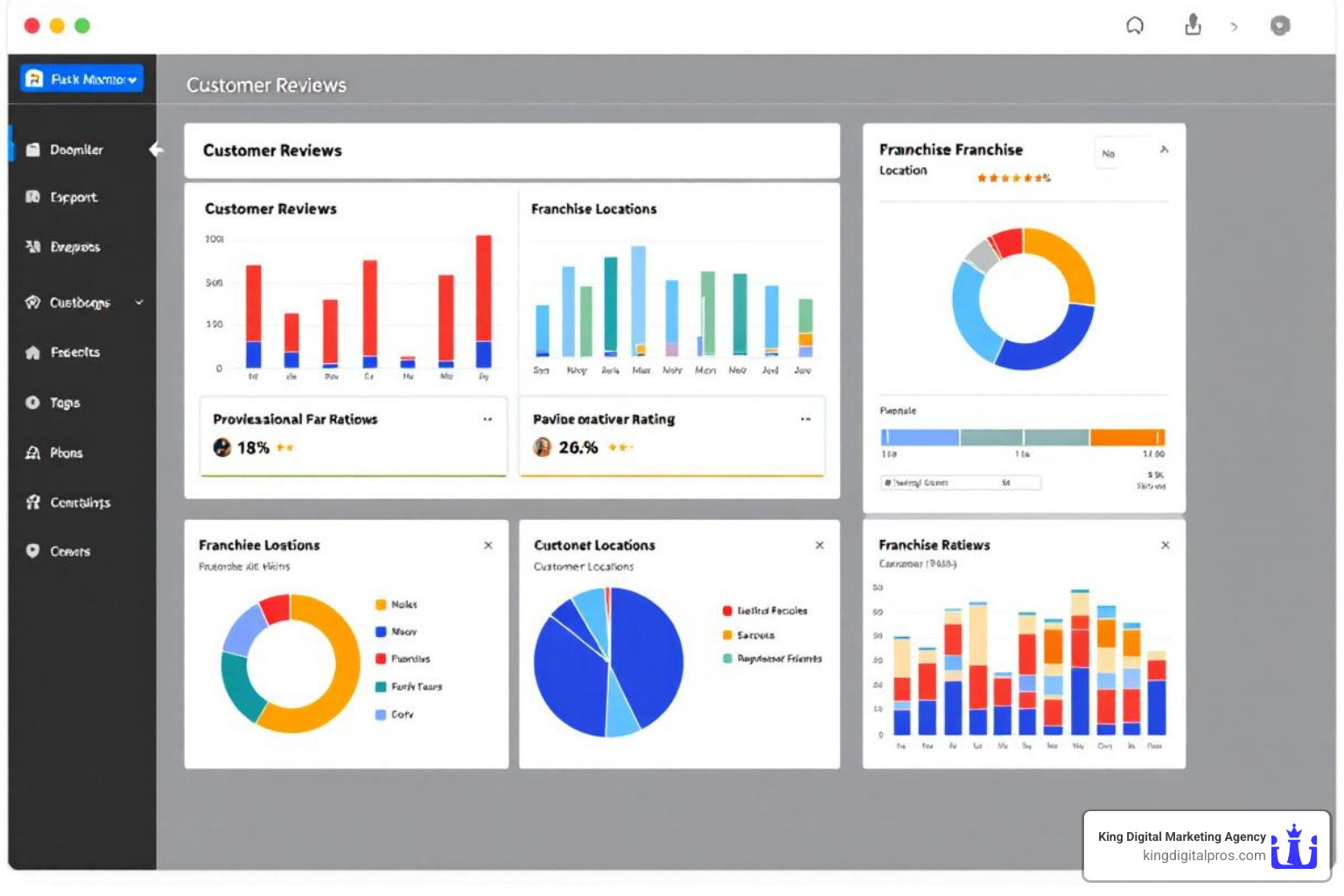
- Centralized Dashboards: A robust franchise review management platform provides a centralized dashboard where you can view, monitor, and respond to all reviews across all platforms and locations from a single interface. This is invaluable for multi-location businesses, offering a holistic view of your online reputation.
- Performance Tracking: These platforms also allow you to track key performance indicators (KPIs) like average star rating, response times, and review volume over time, helping you measure the effectiveness of your strategy.
To learn more about the tools that can revolutionize your approach, explore our Customer Review Management Software Complete Guide.
Turning Review Data into Actionable Business Intelligence
Reviews are not just for public display; they are a treasure trove of free, real-time feedback that can drive significant business improvements. By analyzing aggregated review data from your locations in Los Alamos, Taos, and beyond, you can gain invaluable insights:
- Identifying Operational Trends: Are multiple franchisees in the East Mountains getting complaints about slow service or a particular product? Are certain locations consistently praised for something others could learn from? Review data can flag these system-wide trends, allowing you to address root causes proactively.
- Improving Products/Services: Customer feedback often highlights areas where your offerings can be improved. Perhaps customers frequently suggest a new menu item, or express dissatisfaction with a specific service aspect. This direct input is invaluable for continuous improvement.
- Staff Training Opportunities: Reviews can pinpoint specific training needs. If multiple reviews mention a particular staff member or a common customer service issue, it’s an opportunity for targeted training across your locations.
- Validating New Initiatives: When you launch a new product, service, or operational change, review data can provide immediate feedback on its reception, helping you fine-tune or scale your efforts.
- Pinpointing High-Performing Locations: By identifying locations with consistently high ratings and positive feedback, you can study their best practices and replicate them across the network. This internal benchmarking is a powerful tool for growth.
We help our clients leverage these insights through Online Feedback Solutions to make data-driven decisions that improve customer satisfaction and operational efficiency.
Navigating Legal and Ethical Waters: FTC Regulations
In online reviews, transparency and authenticity are paramount, and legal regulations are becoming increasingly strict. As a franchise, it’s crucial to understand and adhere to guidelines set by bodies like the Federal Trade Commission (FTC).
- Fake Reviews: The FTC has finalized rules that prohibit the creation, purchase, or dissemination of fake reviews, including those generated by AI or written by individuals without genuine experience. Fines can reach substantial amounts per violation. This means ensuring that all reviews for your locations in Grants, Cedar Crest, or Edgewood are genuine and not manufactured.
- Review Gating: This refers to practices where businesses filter reviews, only directing satisfied customers to public review sites while sending dissatisfied ones to a private feedback form. While collecting private feedback is good, intentionally suppressing negative public reviews can be seen as misleading and is prohibited.
- Endorsement Guidelines: If you offer any incentives for reviews (which we advise against), these must be clearly disclosed. However, the safest and most ethical approach is to simply ask for reviews without any compensation.
- Authenticity: The core principle is authenticity. Reviews should reflect real customer experiences. This also extends to employee reviews; while current and former employees can offer valuable insights (especially to potential franchisees), these should be clearly identified as such.
It’s essential for franchises to be aware of and comply with these rules. For detailed information, refer to The FTC’s rule on fake reviews.
Frequently Asked Questions about Franchise Reputation
How do online reviews influence potential franchisees?
Online reviews play a significant, often underestimated, role in attracting potential franchisees. Diligent candidates perform extensive due diligence, and customer reviews are a key part of their research. They’re looking for:
- Assessing Brand Health: Reviews offer an unvarnished look at the overall health and public perception of the brand. Consistent positive reviews across many locations signal a strong, well-managed brand.
- Operational Transparency: Potential franchisees use reviews to identify common operational issues, understand how the franchisor and existing franchisees address them, and gauge the consistency of service delivery.
- Competitive Analysis: They compare the brand’s reviews to those of competitors, looking for insights into market positioning and customer satisfaction within the industry.
- Employee Reviews: Beyond customer feedback, potential franchisees also research reviews from current and former employees at corporate headquarters and even at existing franchise locations on platforms like Glassdoor.com and Indeed.com. These provide insights into the internal culture, support systems, and day-to-day operational realities, which are crucial for their investment decision.
A strong, transparent online reputation not only attracts more qualified candidates but also contributes to franchisee attraction and retention, creating a healthier, more stable network.
What are the biggest mistakes franchises make in managing reviews?
Despite the clear importance of online reviews, we often see franchises making common, avoidable mistakes. These can severely undermine their reputation and growth potential:
- Ignoring Reviews (Positive or Negative): This is perhaps the biggest blunder. Ignoring positive reviews misses an opportunity to reinforce customer loyalty, while ignoring negative ones signals indifference, potentially alienating the customer and deterring prospective ones.
- Arguing with Customers: Engaging in public arguments or defensive rebuttals with reviewers is a major turn-off. It makes the business appear unprofessional and can quickly escalate a minor complaint into a PR nightmare.
- Using Robotic, Impersonal Responses: While templates are useful, overly generic or AI-generated responses that lack personalization can come across as insincere or tone-deaf, especially if they don’t address the specific points raised in the review.
- Lack of a Clear Strategy: Without defined roles, guidelines, and processes for franchise review management, responses can be inconsistent, delayed, or missed entirely across different locations.
- Inconsistent Responses Across Locations: If one location responds promptly and professionally while another ignores reviews or responds poorly, it creates a disjointed brand experience that erodes trust in the entire franchise.
Avoiding these pitfalls requires a proactive, structured approach to franchise review management that prioritizes customer engagement and brand consistency.
How can we measure the ROI of our reputation management efforts?
Measuring the Return on Investment (ROI) of your franchise review management efforts is crucial to demonstrating its value and refining your strategy. While some benefits are qualitative, many can be quantified:
- Key Performance Indicators (KPIs):
- Average Star Rating: Track the overall star rating across all platforms and locations.
- Review Volume and Velocity: Monitor the number of new reviews received and how frequently they are posted. A steady stream indicates active engagement.
- Response Rate and Time: Measure the percentage of reviews responded to and the average response time.
- Local Search Ranking Improvements: Track your visibility in local search results (e.g., Google’s local pack) for relevant keywords in areas like Albuquerque, Santa Fe, and Rio Rancho. Improved rankings often correlate with better review management.
- Website Clicks from GBP: Monitor the number of website visits, phone calls, and direction requests originating from your Google Business Profile listings. These are direct indicators of increased local interest.
- Conversion Rate Increases: A stronger online reputation often leads to higher conversion rates (e.g., more website visitors becoming customers, more foot traffic turning into sales).
- Customer Loyalty Metrics: While harder to directly attribute, a positive online reputation contributes to repeat business and customer loyalty, which can be measured through customer surveys and retention rates.
By consistently tracking these metrics, we can demonstrate how strategic franchise review management directly contributes to the growth and success of your multi-location business.
Conclusion: Unifying Your Brand Voice for Lasting Success
Franchise review management is no longer a peripheral task; it’s a core pillar of your multi-location business strategy. We’ve seen how online reviews directly impact brand perception, customer trust, purchasing decisions, and even your visibility in local search results across New Mexico. From the busy streets of Albuquerque to the serene landscapes of Taos, every review tells a story about your brand.
The key to lasting success lies in a comprehensive approach that balances centralized oversight with local autonomy. By implementing best practices for generating authentic reviews, responding thoughtfully to all feedback, leveraging advanced technology like AI for efficiency, and rigorously analyzing review data for actionable insights, your franchise can build an unshakeable online reputation. Navigating the legal and ethical considerations, particularly around FTC regulations, ensures your efforts are not only effective but also compliant and trustworthy.
At King Digital Marketing Agency, we understand the unique complexities of managing online reputation for multi-location businesses. We empower our clients to take control of their brand’s narrative, turning every review into an opportunity for growth and customer connection. By unifying your brand voice and maintaining a proactive approach to franchise review management, you don’t just react to feedback-you shape it, drive continuous improvement, and foster lasting success across your entire network.
It’s time to stop leaving your brand’s reputation to chance. Take control of your digital narrative and ensure every location, from Grants to Edgewood, reflects the excellence your brand stands for. Protect your brand with expert Reputation Management Services today.
