Lead Scoring Email Marketing: Stop 79% Loss!
From Packed Inboxes to Prioritized Prospects
Lead scoring email marketing is the process of assigning numerical values to your email subscribers based on their demographics, behavior, and engagement. This allows you to identify and prioritize the leads most likely to convert into customers.
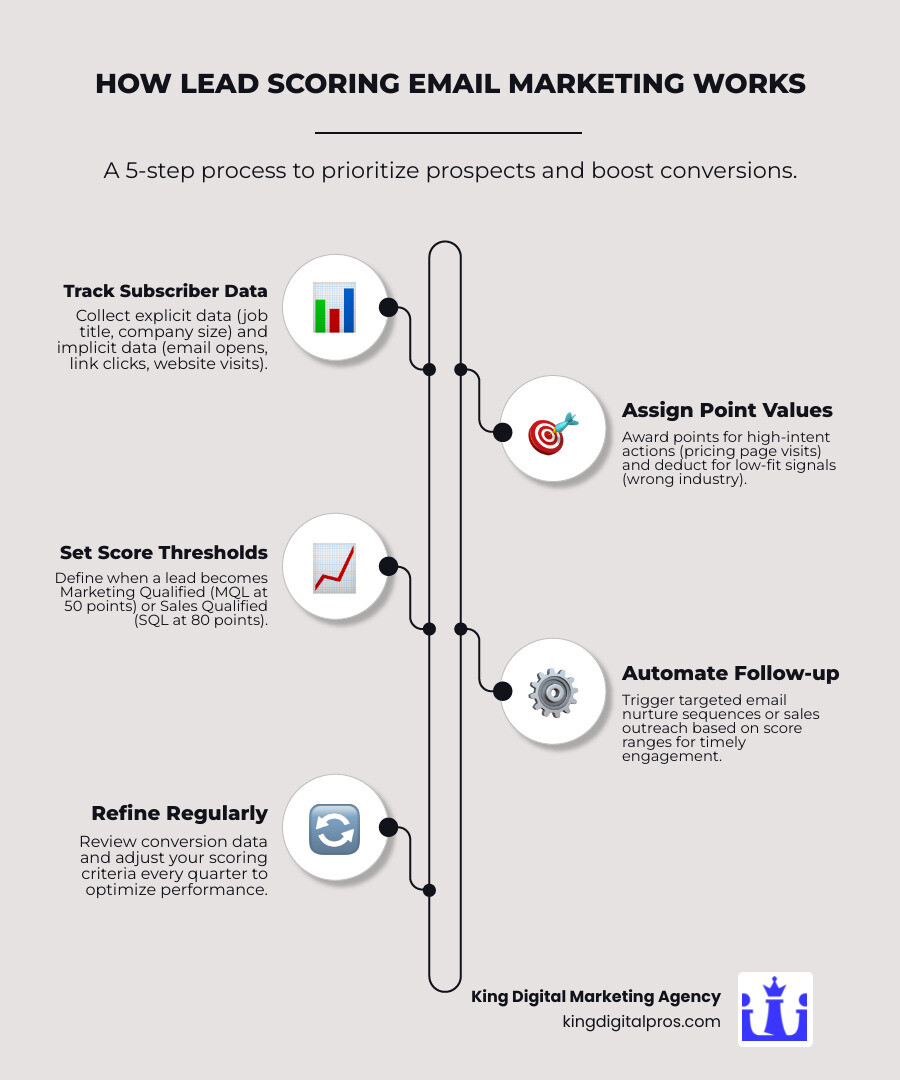
Quick Answer: How Lead Scoring Email Marketing Works
- Track subscriber data: Collect explicit data (job title, company size) and implicit data (email opens, link clicks, website visits).
- Assign point values: Award points for high-intent actions (pricing page visits = 20 points) and deduct for low-fit signals (wrong industry = -10 points).
- Set score thresholds: Define when a lead becomes Marketing Qualified (MQL at 50 points) or Sales Qualified (SQL at 80 points).
- Automate follow-up: Trigger targeted email nurture sequences or sales outreach based on score ranges.
- Refine regularly: Review conversion data and adjust your scoring criteria every quarter.
Every marketer knows that not all leads are created equal-in fact, 79% of generated leads don’t convert into sales. The challenge isn’t just generating more leads; it’s identifying which ones deserve immediate attention and which need more nurturing.
Lead scoring creates a data-driven system to rank subscribers, automatically routing hot leads to sales while keeping warm prospects engaged with targeted content. This alignment transforms your email list from a generic database into a prioritized pipeline.
I’m Bernadette King, founder of King Digital. I’ve spent my career helping businesses turn email subscribers into qualified leads through strategic lead scoring email marketing systems. A well-designed scoring model can transform a cluttered inbox into a predictable revenue engine.
The ‘Why’: Key Benefits of Integrating Lead Scoring with Email Marketing
Simply generating leads isn’t enough when 79% of them don’t convert into sales. Lead scoring email marketing provides a smarter way to manage your pipeline, offering several key benefits.
Sales Team Efficiency
Sales reps spend a significant portion of their time on non-selling tasks, including researching and prioritizing prospects. Lead scoring acts as a filter, presenting your team with leads who are genuinely interested and a good fit. This allows reps to focus on high-potential conversations instead of cold-calling disengaged contacts.
Increased ROI
By concentrating resources on high-quality leads, your return on investment naturally soars. You send the right message to the right person at the right time, maximizing engagement while minimizing wasted ad spend and sales efforts. To learn more about measuring this impact, explore our guide on calculating your email marketing ROI.
Improved Conversion Rates
By identifying and nurturing leads based on their score, you dramatically improve the chances of converting them. A sales rep can reach out with a personalized offer to a highly engaged lead, while lower-scoring leads continue receiving educational content until they show more intent.
Improved Personalization
A lead’s score tells a story about their interests and position in the buyer’s journey. This allows you to segment your lists dynamically, ensuring each subscriber receives content that resonates with their current needs-from educational whitepapers for those researching to demo invitations for those showing buying signals.
Shorter Sales Cycles
When sales teams receive pre-qualified, interested leads, the sales process accelerates. Much of the initial findy is already done, as the lead’s score indicates their fit and intent, allowing for conversations that move more quickly toward a close.
Better Sales Forecasting
A robust lead scoring system provides a clearer view of your pipeline. You can predict with greater accuracy how many leads are likely to convert in a given timeframe, leading to more reliable sales forecasts and better resource allocation.
Data-Driven Decisions
Lead scoring removes guesswork by forcing you to define what makes a good lead, track specific behaviors, and measure outcomes objectively. You can continuously optimize your marketing and sales processes based on real-world performance data, not assumptions.
Building Your Scoring Model: The Engine of Your Strategy
An effective lead scoring email marketing model combines different data points to identify who is ready to buy. It requires understanding what information matters most for your business.
Explicit vs. Implicit Data: What to Track
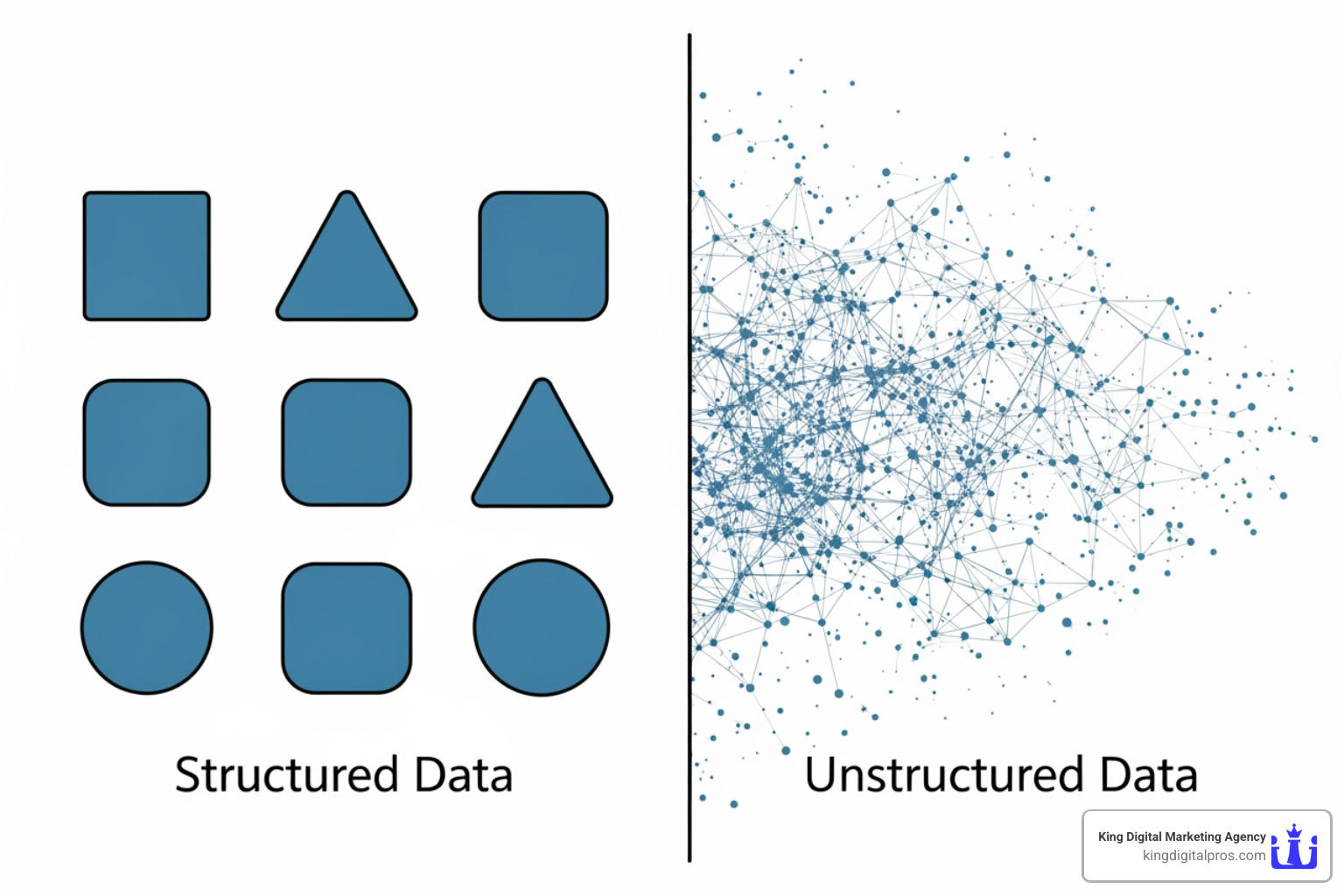
Your model needs two types of data: what people tell you and what they show you.
Explicit data is information provided directly by your leads, such as job title, company size, or location. This data helps determine if a lead is a good fit. For B2B, firmographic data-like industry, company revenue, or technology used-is especially valuable. As noted in research on firmographics, these company-level attributes are strong predictors of lead quality.
Implicit data is behavioral information that shows a lead’s level of interest. This includes website activity (pages visited, time on site), email engagement (opens, clicks, replies), and social media interactions. A click-through on an email campaign or a download of a pricing guide are strong implicit signals.
Common Scoring Models for Email Marketing
Most successful systems blend multiple approaches into a hybrid model.
- Demographic models award points based on how well a lead matches your ideal customer profile (e.g., +10 for “Director of Marketing”).
- Behavioral models track actions across your digital properties (e.g., +5 for visiting a product page).
- Engagement models focus on interactions with your marketing channels, especially email (e.g., +3 for a link click, +7 for a reply).
- Predictive models use AI and statistical methods like logistic regression to analyze historical data and identify complex patterns that predict conversion.
- Hybrid models combine demographic fit with behavioral interest, providing the most comprehensive and accurate view of a lead’s potential.
The Role of Negative Scoring and Decay
A smart scoring system also knows when to subtract points.
Negative scoring deducts points for actions that signal poor fit or disinterest. Examples include unsubscribing from your email list, extended inactivity, or having a job title or industry that doesn’t match your target audience. It can also help filter out spam by penalizing bot-like form entries.
Score decay addresses the fact that interest fades over time. This feature automatically reduces a lead’s score if they haven’t engaged with your brand recently. It ensures your sales team focuses on prospects with current, active interest, keeping your pipeline fresh and relevant.
A Practical Guide to Lead Scoring Email Marketing
With the theory covered, let’s focus on implementation. Building a lead scoring email marketing system is a practical process of bridging the gap between marketing and sales.

Step 1: Define Your Ideal Customer and MQL Criteria
Before scoring, you must know who you’re scoring for. Start by defining your Ideal Customer Profile (ICP), considering demographics for B2C or firmographics (industry, company size) for B2B.
Next, define your lead stages:
- Marketing Qualified Lead (MQL): A lead who has shown enough interest to be nurtured by marketing but isn’t ready for a sales call.
- Sales Qualified Lead (SQL): A lead who has shown direct buying intent, such as requesting a demo or filling out a contact form.
Crucially, sit down with your sales team. As HubSpot consultant Ryan Durling notes, “The biggest lift in lead scoring is not defining how many points something is worth, it’s making sure everyone internally is aligned.” Use their frontline insights and your CRM data to define what truly makes a lead qualified. For more on this, see our guide to sales lead management.
Step 2: Assign Point Values to Key Attributes and Actions
Now, assign points based on attributes and behaviors. The relationship between the point values is more important than the exact numbers.
- High-value actions (e.g., 20-30 points): These signal strong buying intent. Examples include requesting a demo, filling out a contact form, or repeatedly visiting your pricing page.
- Medium-value actions (e.g., 5-15 points): These show active research and engagement. Think downloading a case study, attending a webinar, or clicking a link in a key email.
- Low-value actions (e.g., 1-3 points): These indicate initial interest, such as subscribing to a newsletter or following on social media.
Also, assign points for explicit data that matches your ICP (e.g., +10 for a target job title) and negative points for poor-fit signals (e.g., -5 for a competitor’s domain).
Step 3: Set Your Score Thresholds for Action
Thresholds turn your scores into an automated workflow.
- MQL Threshold (e.g., 50 points): When a lead hits this score, they are considered warm enough for more targeted marketing nurturing.
- SQL Threshold (e.g., 80 points): At this score, the lead has shown clear buying intent and should be routed to the sales team for immediate follow-up.
Create nurturing buckets for leads below the MQL threshold. Cold leads (0-20 points) might get top-of-funnel educational content, while warm leads (21-49 points) receive content related to their specific interests.
Define a clear handoff process and use automation triggers to notify sales, enroll leads in specific email sequences, and ensure no opportunity falls through the cracks. This automation is key to optimizing your funnel, a topic we cover in our guide to conversion funnel optimisation best practices.
Best Practices for Optimization and Personalization
Implementing lead scoring email marketing is not a one-time setup; it requires ongoing refinement and a commitment to personalization. The goal is to use your scoring data to deliver more relevant communications.
How to use lead scoring for email list segmentation
One of the most powerful uses of lead scoring is creating dynamic list segments that automatically update based on subscriber behavior.
- Cold Leads (Low Scores): These subscribers need nurturing. Send them foundational educational content or re-engagement campaigns to rekindle their interest.
- Warm Leads (Mid-Range Scores): This group is engaged but not yet sales-ready. Provide them with content custom to their specific pain points, such as case studies or targeted blog posts.
- Hot Leads (High Scores): These leads are primed for a sales conversation. They should receive priority treatment, such as a personalized email from a sales rep or a direct invitation to book a consultation.
For leads whose scores have decayed, use targeted re-engagement campaigns with a compelling offer to bring them back into the fold.
Best practices for lead scoring email marketing
To master lead scoring email marketing, adopt these key practices:
- Regularly review and refine: Your scoring model should evolve with your market and business. Review it quarterly and after any major campaign or product launch.
- Align sales and marketing: Continuous collaboration is essential. Hold regular meetings to ensure both teams agree on lead definitions and the handoff process.
- Use marketing automation: Manual scoring is impossible at scale. A robust automation platform is necessary to track behavior, assign points, and trigger actions efficiently.
- Personalize content based on score: Tailor your email subject lines, content, and offers to a lead’s score. A high-scoring lead needs a different message than a new subscriber.
- Account for the complex B2B journey: Today’s B2B buyers do most of their research independently. According to Gartner, they spend very little time with sales reps. Your scoring must reward online research behaviors like content consumption and time on site.
- Test your model: A/B test point values, thresholds, and nurture sequences. According to Invesp, companies that excel at lead nurturing generate 50% more sales-ready leads at a 33% lower cost. Rigorous testing is how you get there.
Frequently Asked Questions about Email Lead Scoring
Here are answers to common questions about implementing lead scoring email marketing.
How often should I update my lead scoring model?
We recommend quarterly reviews as a baseline. However, you should also review your model whenever you see a significant drop in performance, after major market shifts, or when you launch a new product. Most importantly, maintain a sales feedback loop. Your sales team’s real-world experience is invaluable for refining your criteria and ensuring scores reflect actual lead quality.
Can I have more than one lead scoring model?
Yes, and you often should. A one-size-fits-all approach doesn’t work if you have diverse offerings or audiences. Consider creating separate models for:
- Different products or services with distinct buying cycles.
- Different buyer personas who exhibit unique behaviors.
- New business vs. upsell opportunities for existing customers.
- Different geographic regions, like Albuquerque vs. Santa Fe, if local factors influence buying signals.
Only create multiple models if the differences genuinely impact lead qualification, as each requires separate maintenance.
What’s a good starting score for a new lead?
Start new leads at a zero-point baseline. This creates a clean slate where every point earned reflects genuine engagement and fit, preventing score inflation. A lead who reaches your MQL threshold of 50 points will have truly earned it through their actions.
The only exception is to assign a small number of initial points (e.g., +5) based on a high-quality sign-up source, such as a referral from a current customer. However, keep these initial bonuses minimal to ensure the score primarily reflects post-subscription behavior.
Boost Your Sales Funnel with Expert Lead Scoring
Lead scoring email marketing is a fundamental shift from guesswork to strategy. It transforms a cluttered inbox into a prioritized pipeline by focusing your efforts on leads who are most likely to convert.
Instead of treating every subscriber the same, you can now give the right attention to the right person at the right time. This ability to prioritize and personalize is what separates thriving businesses from those stuck in the past. The value is significant: according to the Aberdeen Group, companies with effective lead scoring see a 192% higher MQL-to-SQL conversion rate.
At King Digital Marketing Agency, we specialize in helping businesses connect with the customers who matter most. While we’re known for our expertise in Google Business Profiles, we understand that your email list is one of your most valuable assets. We help you harness its power through intelligent lead scoring email marketing strategies.
We build custom scoring models that reflect your unique customer journey, whether you’re a local business in Albuquerque or a franchise with locations in Santa Fe and Grants. We’ll help you align your sales and marketing teams and set up the automation to make it all run smoothly.
Ready to turn your email list into a predictable revenue engine? Let’s stop valuable leads from slipping through the cracks. Get professional lead scoring services with King Digital and build a system that turns subscribers into your best customers.
