Local Citation Building: Your #1 SEO Weapon
Why Your Business Needs Local Citations to Be Found Online
Local citation building is the process of creating consistent online mentions of your business’s name, address, and phone number (NAP). It’s a fundamental local SEO strategy that boosts your search rankings and helps customers find you.
Key steps for building local citations:
- Ensure NAP consistency everywhere online.
- Claim major directories like Google Business Profile, Yelp, and Bing Places.
- Submit to data aggregators to distribute your info widely.
- Target industry-specific directories relevant to your business.
- Monitor and maintain your listings for accuracy.
Local citations help search engines verify your business’s existence and location, which is crucial for ranking in local search results. When your business information appears consistently across reputable platforms, Google trusts your data more and shows your business to more potential customers. Research indicates that strong citation signals can significantly boost online search performance. Independent industry research consistently highlights citations as a core local ranking signal.
However, citations are also how customers find your phone number, hours, and directions. Inconsistent listings confuse search engines and frustrate people trying to give you their business. The problem is that most businesses either ignore citations or claim a few profiles and never update them, allowing inconsistencies and duplicate listings to accumulate while competitors with cleaner data pull ahead.
I’m Bernadette King, founder of King Digital Marketing Agency. I’ve spent years helping local businesses improve their visibility with strategic local citation building. This guide will walk you through how to build, manage, and leverage local citations to dominate your market.
The Foundation: What Are Local Citations and Why Do They Matter?
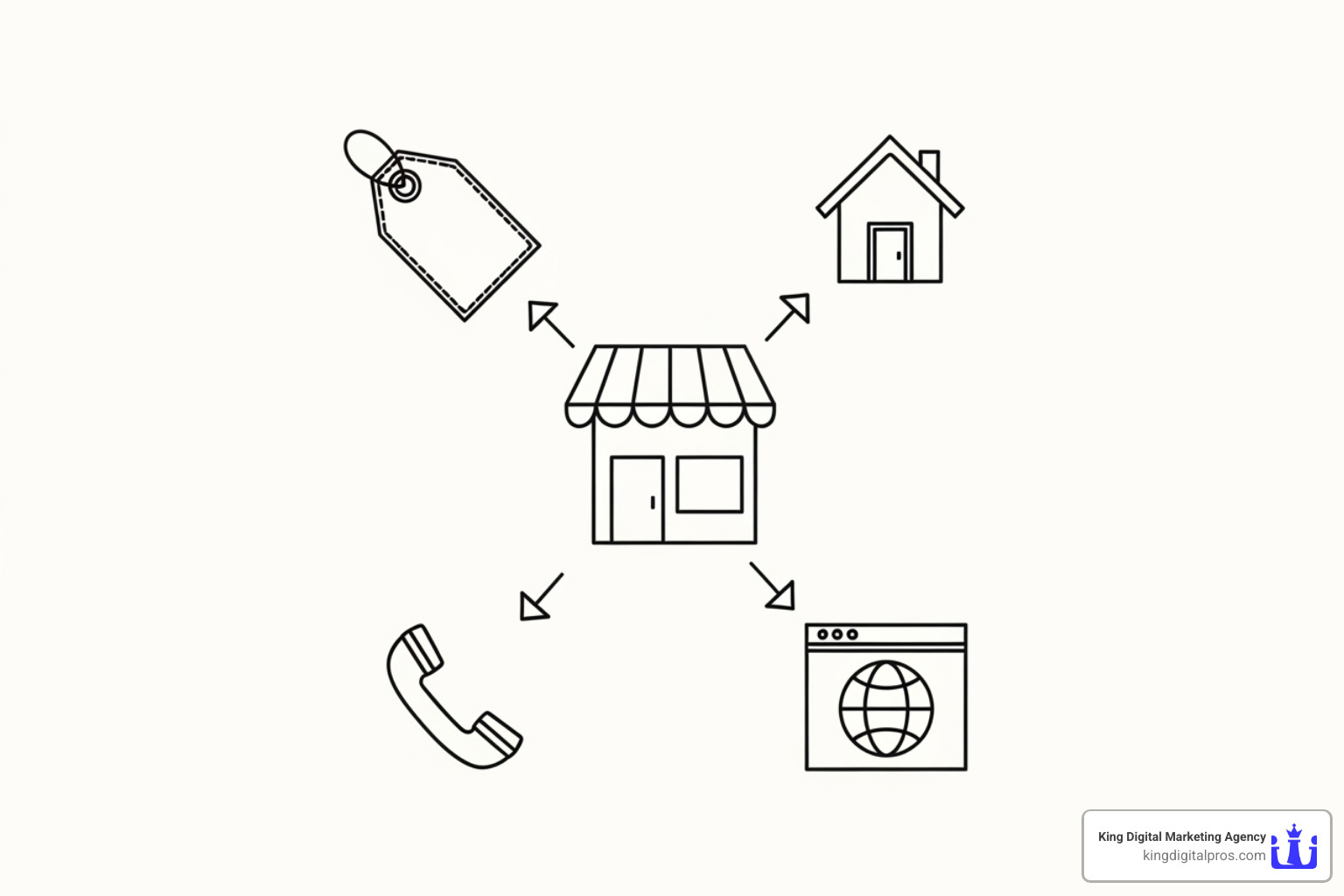
Imagine local citation building as creating a digital trail of breadcrumbs leading customers to your door. A local citation is any online mention of your business’s core information: Name, Address, and Phone number (NAP). It can also include your website, hours, and services.
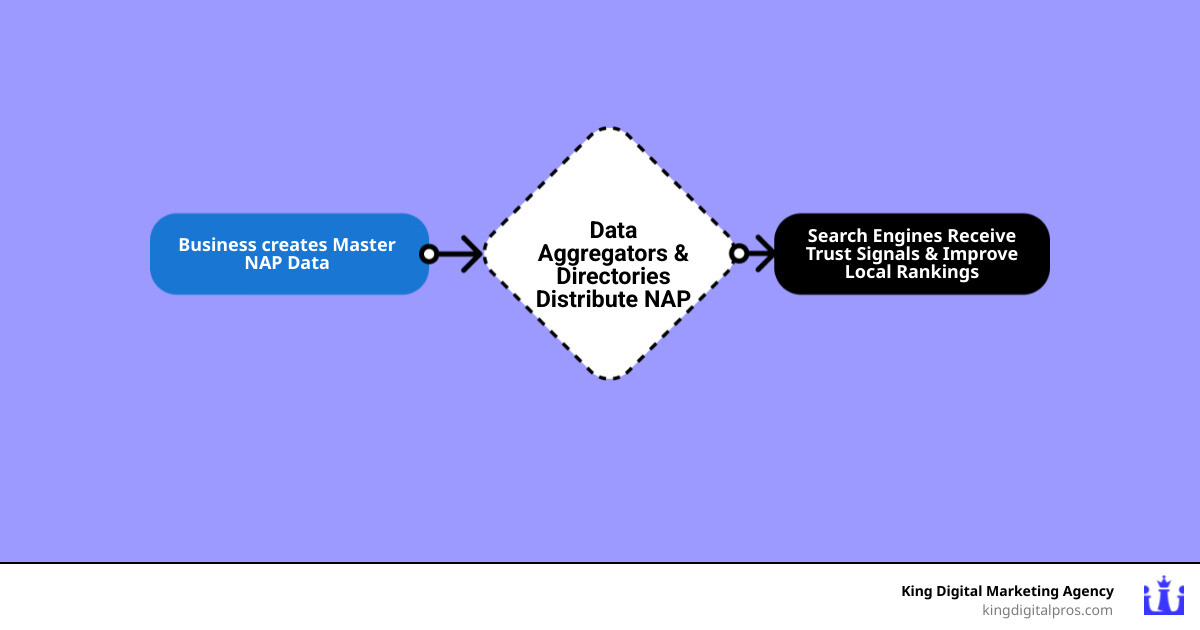
These digital breadcrumbs are a cornerstone of local SEO, especially for businesses in areas like Albuquerque, Santa Fe, or Rio Rancho. Search engines view them as trust signals. When your NAP data is identical everywhere—a state we call NAP consistency—it tells search engines you’re a legitimate, trustworthy business. This consistency boosts your visibility and pushes you higher in local search rankings.
Beyond search engines, accurate citations create a better customer experience. A potential customer in Grants, NM, who finds a wrong phone number or an old address is a lost lead. Conversely, spot-on citations mean more website traffic and quality leads. The benefits are clear: better visibility, higher rankings, increased credibility, and a smoother customer journey. Learn more in our guide to Local SEO Best Practices.
Structured vs. Unstructured Citations: Understanding the Difference
Knowing the difference between structured and unstructured citations is vital for a strong local citation building strategy.
Structured Citations are organized listings on business directories where your NAP data fits into predefined fields. They are formal and easy for search engines to parse.
Common sources for structured citations include:
- General Directories: Yelp, Yellow Pages, Bing Places, Foursquare, Better Business Bureau (BBB).
- Social Media Profiles: Facebook, Instagram, and LinkedIn have “About” sections for NAP details.
- Review Sites: Google Business Profile is critical, along with industry-specific sites like TripAdvisor or Zocdoc.
- Mapping Services: Apple Maps and Waze also rely on structured data.
Unstructured Citations are mentions of your business in less formal contexts, such as blog posts, news articles, or forum discussions. Even if an unstructured citation only includes your business name and a link, it still signals relevance to search engines. A mention in a local news article about an event in Corrales, NM, can be very powerful.
The High Cost of Inaccuracy
Sloppy or inconsistent citation information can be surprisingly damaging.
First, it erodes consumer trust. If a customer finds conflicting information online—an old address or a disconnected number—they’ll likely move on to a competitor. This means lost sales.
Inaccurate data can also lead to negative reviews. A customer who drives to your Rio Rancho, NM, location only to find it closed due to outdated hours will not be pleased. These negative experiences can harm your online reputation.
From an SEO perspective, you’re looking at damaged search rankings. Google’s algorithms prefer consistency. When your business information varies, it creates uncertainty, and Google is less likely to recommend your business in local or “near me” searches.
Poor citation management confuses search engines and undermines your other local SEO efforts. To ensure your digital storefront is accurate and trustworthy, effective Google Business Profile Management is essential.
The Blueprint: A Step-by-Step Guide to Local Citation Building
Building a strong local citation profile requires a solid, systematic plan. This blueprint transforms scattered business listings into a cohesive network of trust signals that both search engines and customers can rely on. Local citation building is one of the most reliable ways to connect with customers actively searching for your services.
Let’s walk through each step, so you know exactly what to do and why it matters.

Step 1: Audit Existing Citations and Establish NAP Consistency
Before building, you must audit what’s already out there. The citation audit process involves searching for your business on major platforms like Google, Yelp, and Facebook, as well as using specialized tools to scan hundreds of directories at once.
We look for inconsistencies: variations in your business name, old phone numbers, or previous addresses. Each variation is a potential point of confusion for Google and your customers. Once identified, we begin correcting errors by claiming and updating listings. This cleanup work is tedious but essential for building a solid foundation.
Finally, we create a master NAP document. This is your single source of truth, containing your exact business name, complete address, primary phone number, website URL, and a polished business description. From now on, every new or updated citation must match this document perfectly to build powerful trust signals. This process aligns with our comprehensive Reputation Management services, ensuring every aspect of your digital presence is positive and accurate.
Step 2: A Practical Guide to Local Citation Building
Now, we build your citation profile strategically. We don’t just submit your information everywhere; we are selective about where your business appears.
We start by prioritizing platforms with the highest impact. The major directories come first: Google Business Profile, Apple Maps, Bing Places, Yelp, and Facebook. These are the heavy hitters that customers use daily.
Next, we submit to data aggregators. These companies distribute your information to hundreds of smaller directories, spreading your information far and wide efficiently.
Then, we target industry-specific directories. A plumber needs to be on Angi, while a restaurant should be on TripAdvisor. We research which directories matter most for your industry to ensure you’re visible to the right audience.
Finally, we focus on geo-specific directories, such as your local chamber of commerce or city business directories for Albuquerque or Santa Fe.
For each platform, we use your master NAP, a compelling business description, correct business categories, and high-quality photos or videos. Accuracy during this manual submission process is critical. For more information on managing your core business information, Google’s own guide on how to edit your Business Profile is an excellent resource.
Step 3: Manage, Maintain, and Leverage Your Citations
Local citation building is not a one-time project. Citations require ongoing monitoring to remain effective. We regularly check for new inconsistencies, outdated information, or duplicate listings. When your business changes—adjusting hours, adding services, or relocating—every citation must be updated promptly to avoid losing customers.
Maintenance also involves leveraging your listings. Customer reviews on platforms like Google Business Profile and Yelp significantly influence rankings and customer decisions. Responding to reviews—both positive and negative—shows potential customers that you value their experience and feedback.
Finally, we measure ROI to ensure the work is paying off. We track local search rankings, website traffic from directories, and leads generated from your citations, such as phone calls and direction requests. These metrics tell us what’s working and where to adjust our strategy. Our Lead Tracking Services can help connect your online presence to real business results.
Advanced Strategies to Dominate Your Local Market
Once your foundational citations are in place, it’s time to outmaneuver the competition. This is where local citation building shifts from a simple task to a strategic advantage. Businesses that dominate competitive markets like Albuquerque and Santa Fe are not just present online—they are strategically positioned where their competitors aren’t.
Let’s explore how to move beyond the basics and create a citation strategy that sets your business apart.
Opening up Niche and Hyper-Local Opportunities
The most valuable directories for your business may not be the most famous ones. While Google and Yelp are essential, a real competitive advantage often comes from industry-specific directories your competitors have overlooked.
A dental clinic listed on the American Dental Association and Healthgrades positions itself where patients are actively searching. Similarly, a plumber in Grants, NM, will benefit more from trade-specific directories than from generic listings. These niche platforms signal to search engines and customers that you are an established professional in your field.
The same applies to geo-specific directories. A listing with the Taos, NM, Chamber of Commerce or a community website in Edgewood, NM, demonstrates deep local roots. We also analyze top-performing businesses in your area to identify where your competitors are listed that you aren’t, revealing valuable citation opportunities.
For businesses offering professional services, these nuances are critical. Our guide on Local SEO for Service Businesses dives deeper into these strategies. For more on finding your audience, the U.S. Small Business Administration offers tips on creating a small business website, which aligns with the goal of targeted online visibility.
Creative Local Citation Building: Beyond the Directories
True local market leaders understand that local citation building extends beyond standard directory listings.
- Local Associations: A feature in a member spotlight from the Albuquerque Chamber of Commerce creates a citation that is also a powerful endorsement.
- Sponsorships: Sponsoring a local event in Sandia Park, NM, or a youth sports team generates organic mentions on event websites, social media, and local news outlets. These community-focused citations signal genuine local engagement.
- Local Press: Engaging with local journalists or bloggers can result in articles that include your business details, creating high-quality unstructured citations.
- Community Involvement: Hosting charity events or offering free workshops often leads to online mentions on community forums, government websites, and social media.
These creative approaches build genuine community connections while improving your search visibility. See how this translates into customer acquisition in our Attract Local Customers Ultimate Guide.
Future-Proofing Your Citations for AI and Voice Search
Your local citation building strategy must evolve with search technology. The rise of AI and voice-activated devices is changing how people find businesses.
AI search visibility is the new frontier. AI assistants like ChatGPT rely on consistent, accurate business data to make recommendations. A clean citation profile makes your business more likely to be recommended.
Voice search uses more conversational queries, like “Hey Google, find a plumber near me in Taos, NM.” Your business information must be structured to match how people actually speak.
Schema markup for local businesses is the technical foundation for this. By adding structured data code to your website, you communicate directly with search engines and AI systems, telling them exactly what your business is and does. This removes ambiguity and can significantly improve your local search rankings. See Google’s guidance on Local business structured data and the Schema.org LocalBusiness specification for implementation details.
Staying ahead of algorithm trends means having a solid, consistent, and comprehensive citation profile that can adapt as search evolves. To ensure your business remains visible, learn how we can Optimize Local Search for your market.
Manual vs. Automated: Choosing Your Citation Building Approach
When it comes to local citation building, you must decide whether to do it yourself, use an automated service, or blend both. The right choice depends on your budget, time, and the competitiveness of your local market, whether it’s busy Albuquerque or the quieter East Mountains.
Manual citation building offers complete control. You dictate exactly how your business appears on every platform, ensuring accuracy on niche directories that automated tools might miss. However, this approach is incredibly time-consuming. Manually managing listings across dozens of sites can take weeks of work—time better spent running your business.
Automated citation services offer speed and scalability. They can update hundreds of platforms quickly, maintaining consistency and reducing human error. Many also include monitoring features to catch inaccuracies or duplicate listings.
The trade-off is that automated services involve subscription fees and offer less granular control over specialized industry sites. They excel at broad distribution but may lack the customization needed for niche platforms.
| Feature | Manual Citation Building | Automated Citation Building |
|---|---|---|
| Pros | Full control over details; high accuracy on niche sites; access to specialized directories | Rapid distribution; efficient for multiple locations; reduces NAP errors; includes monitoring |
| Cons | Very labor-intensive; difficult to scale; repetitive work | Subscription costs; less flexibility for custom entries; may miss niche opportunities |
So, which to choose? Manual building is suitable for new businesses with a single location or for targeting highly specialized directories. It’s also essential for the initial audit and cleanup phase.
Automated services are ideal for managing multiple locations or for ongoing maintenance and monitoring across core directories.
In our experience, a hybrid approach delivers the best results. We use automated tools for broad distribution and consistency, then manually target valuable, industry-specific platforms that require a personal touch. This strategy provides wide coverage without sacrificing the depth that competitive local citation building demands.
Choosing the right method is a strategic decision. Our Consulting and Advising services can help you determine the best approach for your business goals.
Frequently Asked Questions about Local Citation Building
It’s natural to have questions about local citation building. Here are straightforward answers to some common concerns.
How many citations does my business actually need?
There’s no magic number; quality matters more than quantity. Every local business should be listed on the 10-20 most important sites, like Google Business Profile, Yelp, and Facebook. A solid benchmark for a competitive market like Albuquerque is around 50 high-quality citations.
We often use competitor benchmarking. If your top competitor in Santa Fe has 70 citations, we aim to match or exceed that number. The primary goal is to ensure your information is accurate and consistent across all relevant platforms.
How long does it take to see results from citation building?
Patience is key in SEO, and local citation building is a gradual process. Some directories publish listings immediately, while others take time to verify your business details. Search engines also need time to crawl and index these new listings, which can take 30 to 45 days.
The real results, like improved rankings and traffic, have a compounding effect. As more consistent citations are indexed, your online authority grows, leading to more significant improvements over several months. It’s a steady climb, not a sudden leap.
Is citation building a one-time task?
No, it’s an ongoing process, like tending a garden. Here’s why:
- Business Information Changes: If your hours, phone number, or location in Taos or Edgewood changes, you must update all your citations to maintain consistency.
- New Directory Opportunities: New industry-specific or local community sites emerge over time, offering fresh opportunities to expand your reach.
- Regular Audits: Citations can become inaccurate or duplicated over time. Annual audits are crucial to catch and fix these issues before they harm your local SEO.
Maintaining accurate citations is a continuous effort that solidifies your online presence and helps your business thrive in local search.
Conclusion
As you now know, local citation building is the bedrock of how local businesses get found online. From ensuring NAP consistency to targeting niche directories, citations work to build trust with both search engines and potential customers.
Most businesses either ignore citations or set them up once and forget them. However, consistent and accurate listings are what separate businesses that dominate local search from those that remain invisible. They ensure a customer finds your correct phone number instead of driving to a competitor.
Building and maintaining citations requires a commitment to accuracy and consistency. Whether you choose a manual, automated, or hybrid approach, your citations are a long-term asset that continually works to improve your visibility, drive traffic, and generate leads in Albuquerque, Santa Fe, and across New Mexico.
At King Digital Marketing Agency, we have perfected the art and science of local citation building. We know how to fix messy citation profiles and leverage them to get you found by customers who are ready to buy. Your time is better spent running your business—not tracking down inconsistencies.
Ready to stop being invisible in local search? Let’s build a citation profile that works for you. Find how our approach can transform your visibility by exploring our services for a digital marketing agency for small businesses. Your customers are searching—let’s make sure they can find you.
